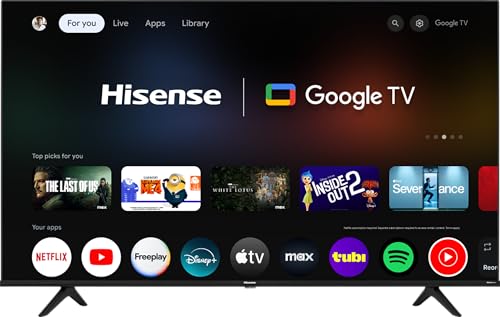
Best Outdoor HDTV Antenna: Which One Fits the Way You Use It?
Disclosure: We may earn a commission when you buy through links on this page, at no extra cost to you. As an Amazon Associate I earn from qualifying purchases. Learn more

The best outdoor hdtv antenna for your home: suburban, rural, RV and multi TV picks with range and setup tips.
An outdoor antenna is the most reliable way to watch free local TV in HD and 4K, with no monthly bill. Major networks, local news, sports and NEXTGEN TV broadcasts all come through the air, and an antenna on the roof, in the attic or on an RV pulls in far more channels than an indoor model. But the best antenna depends on where you live, how far you are from broadcast towers, how many TVs you want to connect and whether you need it at home or on the road. This guide to the best outdoor hdtv antenna starts with your situation, then matches the features that matter to it.
We cover who should buy which type of antenna, the key features to compare, common mistakes, how to make an antenna last and answers to common questions. Every antenna in the table above is sold new on Amazon US. Installing on a roof involves ladders and heights; if you are not comfortable, hire a professional installer, keep antennas well away from power lines and ground the mast and cable as local electrical codes require.


Who Should Buy Which Outdoor HDTV Antennas?
Suburban homes near towers should buy a multi directional antenna, rural homes far from towers should buy a long range directional antenna, RV owners should buy an RV antenna and homes with several TVs should buy an antenna with an amplifier or multiple outputs. Here is how to match an antenna to your home.
Before choosing, look up your address on a reception map. It lists each station's distance, direction, signal strength and whether it broadcasts on UHF or VHF. That one step tells you whether you need a compact multi directional antenna, a long range directional model or an amplifier.
For Suburban Homes Near Broadcast Towers
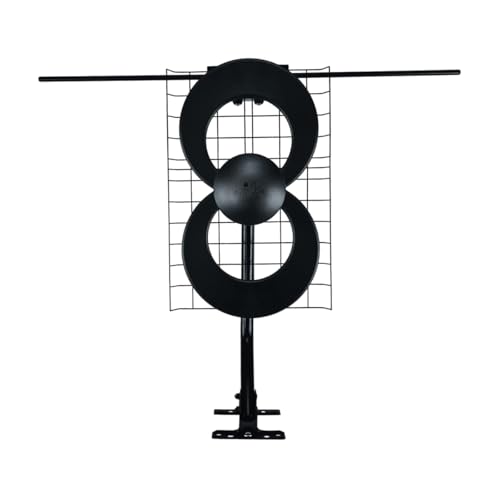
Homes within about 30 to 60 miles of towers do best with a compact multi directional antenna. Antennas Direct says its ClearStream 2V, at around $100, uses double loops with UHF and Hi-VHF elements and a reflector for 60 plus mile range, mounts indoors, in an attic or outdoors on a 20 inch mast and carries a lifetime antenna warranty.
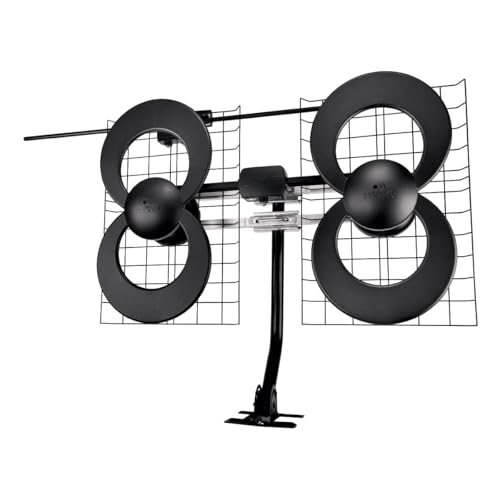
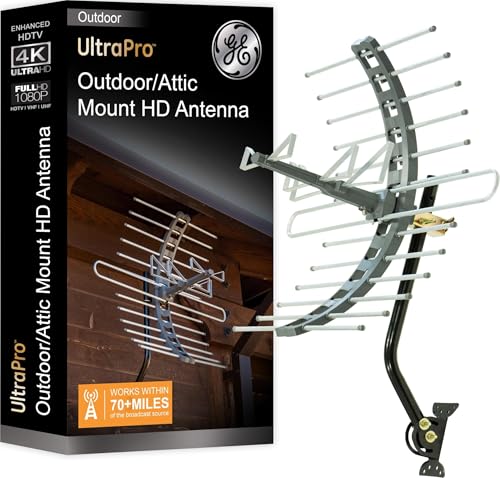
The ClearStream 4V, at around $135, adds four loops and a 43 degree horizontal reception pattern for more channels in suburban and rural areas. The GE Outdoor HD antenna, at around $39, offers 70 plus mile range in an attic friendly design with a limited lifetime replacement pledge, according to GE.
Multi directional antennas pick up towers in more than one direction without a rotator, which suits suburbs where towers sit in different places.
Suburban installs often work well in the attic, which hides the antenna and avoids roof work. If reception is weak in the attic, move the antenna to the gable end facing the towers or mount it outside on the roof or a chimney.
For Rural Homes Far From Towers
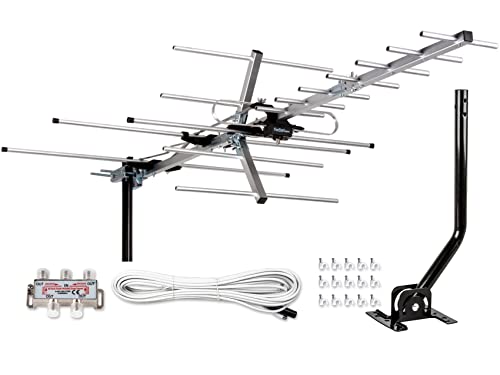
Rural homes need long range directional antennas mounted as high as possible. Five Star's Yagi antenna, at around $60, uses extended elements for VHF and UHF and includes 40 feet of coax, a 20 inch J pole and a 4 way splitter, and Five Star advertises range up to 200 miles depending on distance and obstructions.
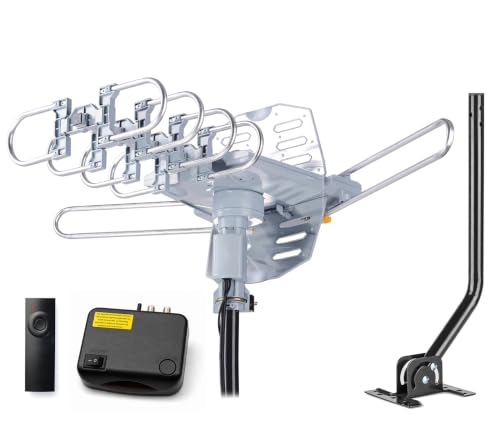
The Antennas Direct 8 Element Bowtie, at around $121, lists 70 mile UHF range with brackets that let its two panels aim in different directions. Motorized options like the PBD Amplified antenna, at around $50, rotate 360 degrees by remote to aim at towers in different directions.
Real range depends on terrain, trees and tower power, so check a reception map before buying.
Height matters most in rural areas. Each extra few feet above trees and rooftops can bring in more stations. A taller mast, secured with guy wires, often helps more than a larger antenna mounted low.
For RV Owners and Travelers
RV owners need antennas built for travel. Winegard's Sensar IV RVW-395, at around $180, is a crank up batwing antenna with a built in amplifier and 65 mile range, NEXTGEN TV and 4K compatibility and an app with a channel finder to help aim it, according to Winegard.
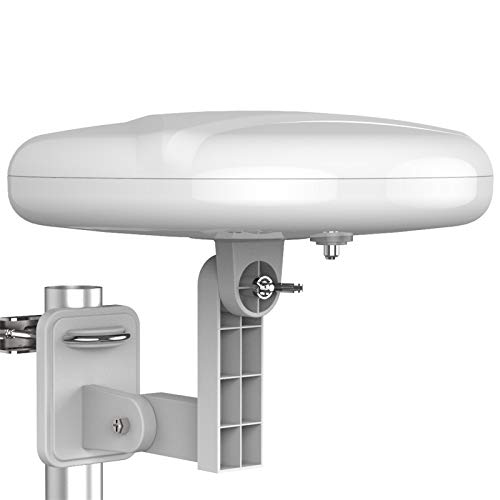
The 1byone omni directional antenna, at around $53, also suits RVs and boats since it receives from all directions without aiming, and includes a built in preamp and 4G LTE filter.
Channels change as you travel, so rescan your TV at each stop.
Crank up batwing antennas like Winegard's fold flat for travel and raise at camp. Remember to lower the antenna before driving to avoid damage from branches and low clearances.
For Homes With Several TVs
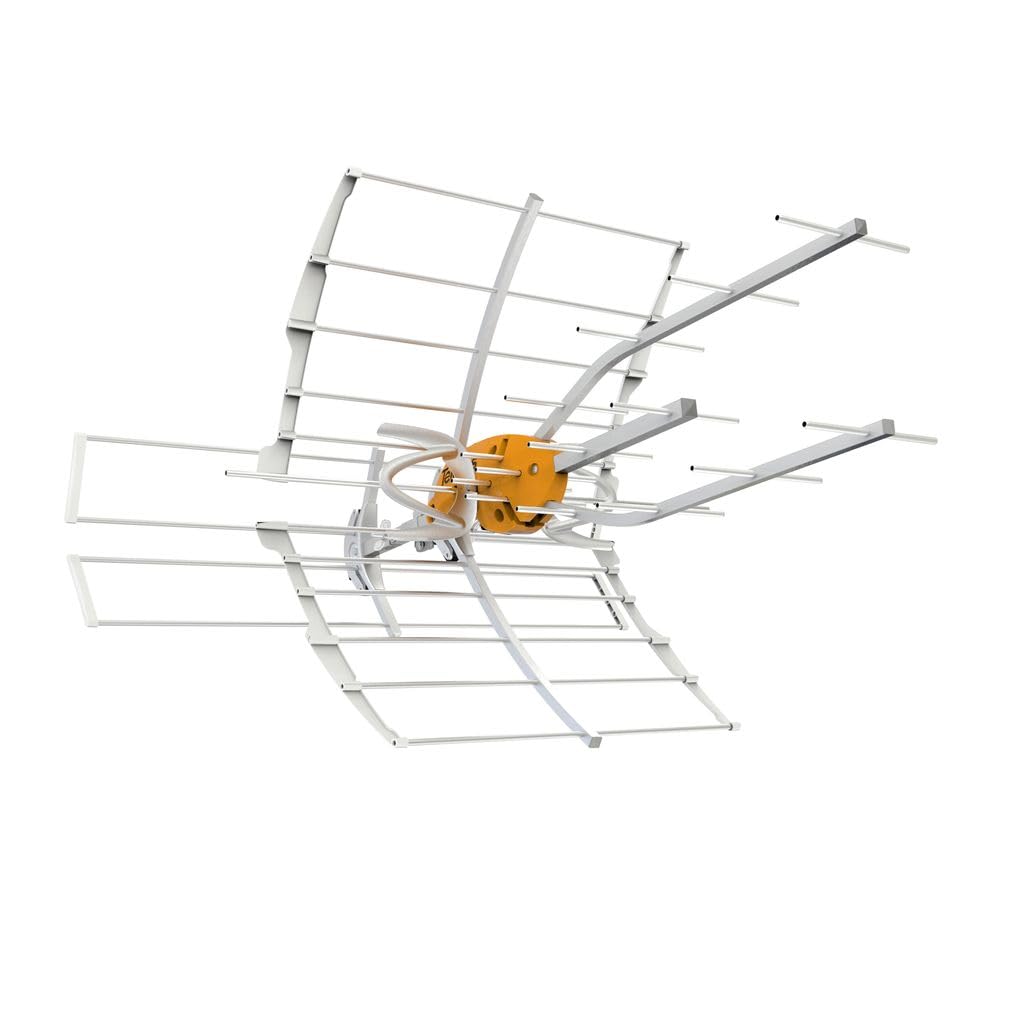
Homes with several TVs need strong signal and an amplifier to make up for splitter loss. The PBD Amplified antenna includes two TV outputs without a splitter, and Five Star's Yagi kit includes a 4 way splitter. Televes' Ellipse Mix, at around $180, includes a built in TForce preamp with automatic gain control and FM, LTE and 5G filtering, and is made in Spain.
Each split weakens the signal, so plan on a distribution amplifier for three or more TVs or long cable runs.
If your home already has coax running to several rooms from an old cable or satellite system, you can often connect the antenna at the central point where the cables meet. Remove any old satellite switches and use a proper splitter or distribution amplifier.
Key Features to Compare in the Best Outdoor HDTV Antenna
Range, directionality, VHF and UHF support, amplification and mounting matter most. Here is what to look for.
Range and Distance to Towers
Advertised ranges are best case numbers. Antennas Direct notes that distance to towers, trees and your home's building materials all affect reception. Use a free reception map from the FCC or a station locator to find tower distances and directions, then choose an antenna rated comfortably beyond your farthest tower.
As a rough guide, stations within 30 miles usually come in with most antennas, 30 to 60 miles calls for a good outdoor antenna mounted high and beyond 60 miles calls for a long range directional antenna, a preamp and a clear line of sight.
Directional vs Multi Directional
Directional antennas, like Yagis, focus on towers in one direction and reach farther. Multi directional antennas, like the ClearStream series, cover wider angles for towers in several directions. Omni directional antennas, like 1byone's, receive from all directions but with less range.
Antennas Direct lists a 43 degree horizontal reception pattern for the ClearStream 4V, and its 8 Element Bowtie narrows from about 24.5 degrees at the low end of UHF to 16.3 degrees at the high end. Narrower beams reach farther but must be aimed carefully.
VHF and UHF Reception
Most stations broadcast on UHF, but some major networks use Hi-VHF channels 7 to 13. Antennas Direct includes a Hi-VHF kit on the ClearStream 4V, and the Five Star models list VHF and UHF reception. Check your local channel list to see which bands you need.
Amplifiers and Filtering
Preamps boost weak signals and offset cable and splitter losses, like those in 1byone, PBD and Televes antennas. Too much amplification can overload tuners near strong towers, so amplifiers suit distant towers and long runs. LTE and 5G filters reduce interference from cell signals.
Place amplifiers as close to the antenna as possible for the best results; mast mounted preamps outperform amplifiers placed near the TV because they boost the signal before cable losses.
NEXTGEN TV (ATSC 3.0) Support
NEXTGEN TV brings 4K broadcasts and better sound in many markets. Antennas themselves are format neutral, but makers like Antennas Direct, PBD and GE list NEXTGEN TV readiness. You also need a compatible TV or tuner to watch ATSC 3.0.
Some NEXTGEN TV broadcasts are encrypted, so check that your TV or tuner supports the stations in your market before relying on ATSC 3.0 for your favorite channels.
Mounting and Installation Hardware
Check what is included. The ClearStream antennas include a 20 inch mast with pivoting base and all weather hardware, Five Star includes a J pole and 40 feet of coax and PBD includes 40 feet of RG6 cable. Attic mounting avoids weather and roof work but reduces signal slightly.
Use RG6 coaxial cable with weatherproof compression connectors for outdoor runs. Keep cable runs as short as practical, since every foot of cable loses a little signal.
Common Mistakes to Avoid When Buying Outdoor HDTV Antennas
The most common mistake is trusting advertised mileage instead of checking a reception map. Another is aiming the antenna at the wrong towers; use a compass app and the map's tower directions.
People also forget that splitters reduce signal and add too many TVs without an amplifier. Mounting too low, behind trees or under a metal roof cuts reception sharply. Finally, skipping grounding and lightning protection is a safety risk for roof installs.
How to Make Your Outdoor HDTV Antenna Last Longer
Use weatherproof coax connectors and seal them with tape or boots to keep water out. Secure the mast tightly with guy wires if it is tall. Inspect mounting hardware every year, especially after storms.
Run cable with drip loops so water drips away from connectors. Ground the mast and use a grounding block on the coax as codes require. Rescan your TV every few months to pick up new or moved channels.
After storms, check that the antenna has not shifted direction. Even a small turn can drop distant stations, so a quick rescan and adjustment keeps all your channels coming in.
Frequently Asked Questions
How many channels will I get?
It depends on your location, tower distances and terrain. Urban and suburban homes often receive dozens of channels, while rural homes may receive fewer. A reception map shows expected channels and signal strength for your address.
Do I need an amplifier?
You need an amplifier if towers are far away, you run long cables or you split the signal to several TVs. Homes close to strong towers usually do not need one, and too much amplification can cause problems.
Can I install an antenna in the attic?
Yes, many antennas, like the ClearStream series, GE and Five Star models, work in attics. Expect some signal loss through roofing materials, especially metal or foil backed insulation. Attic installs avoid weather and roof work.
How long do outdoor antennas last?
Quality outdoor antennas often last 10 years or more. Antennas Direct includes a lifetime antenna warranty on its ClearStream models. Connectors and cables may need replacing sooner due to weather.
Will an antenna work with any TV?
Any TV with a built in digital (ATSC) tuner and a coax input works with an antenna. Older analog TVs need a converter box, and NEXTGEN TV broadcasts need an ATSC 3.0 tuner.
Can I use an outdoor antenna with a DVR?
Yes, over the air DVRs and network tuners connect to an antenna and record shows or stream live TV to phones and streaming devices around the house. Connect the antenna to the DVR or tuner instead of directly to a TV.
Why do some channels break up at certain times?
Weather, leaves on trees, temperature changes and nearby traffic can affect signal strength, especially for distant stations. Raising or re aiming the antenna, adding a preamp or upgrading cable connectors often helps.
The Bottom Line
The best outdoor hdtv antenna matches your distance to towers and your setup. The Antennas Direct ClearStream 2V and 4V and GE Outdoor suit suburban homes, Five Star Yagi and the Antennas Direct 8 Element Bowtie suit rural homes, the Winegard Sensar IV suits RVs and amplified models like Televes, PBD and 1byone suit homes with several TVs or long runs. Check a reception map first and install safely.
For more TV guides, see the best indoor tv antenna, the best 55 inch smart tv, the best hdmi cable and the best streaming camera. Then compare current prices in the product table above.