Best Chef's Knives Made Simple: A Clear Buying Guide
Disclosure: We may earn a commission when you buy through links on this page, at no extra cost to you. As an Amazon Associate I earn from qualifying purchases. Learn more

A beginner guide to the best chef's knives: German vs Japanese steel, weight, forged vs stamped and how to care for your blade.
A good chef's knife does most of the work in a home kitchen: chopping onions, slicing chicken, mincing herbs and breaking down a butternut squash. Yet shopping for one can feel like learning a new language, with terms like HRC, full tang, gyuto and VG-10 everywhere. This beginner guide to the best chef's knives explains what those words mean in plain English, so your first serious knife fits your hand, your cooking and your patience for maintenance.
We cover the basics of chef's knives, translate the key specs, point out the rookie mistakes that dull or damage knives, and show you how to set up and care for a new knife. The product table above lists popular options from affordable workhorses like Victorinox and Mercer to premium German and Japanese blades from Wüsthof, Zwilling, Shun and Miyabi.


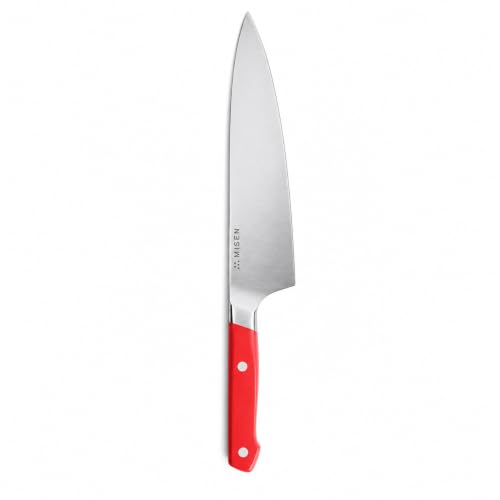
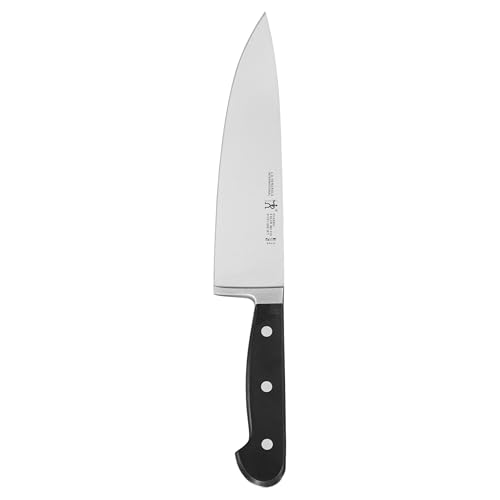


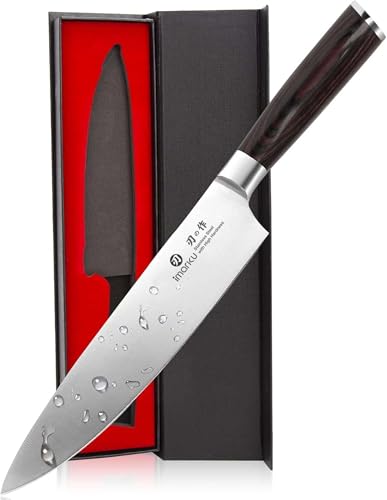
Chef's Knives 101: The Basics
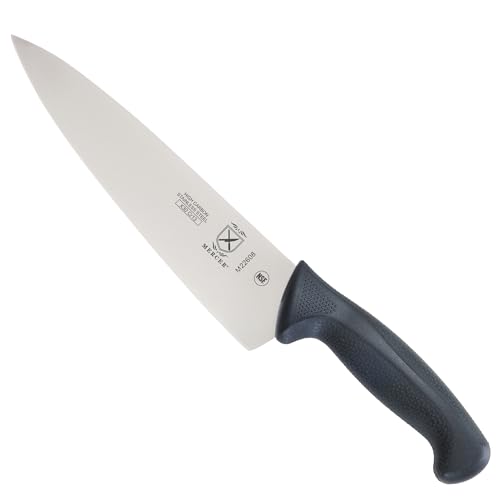
A chef's knife is an all purpose kitchen knife with a broad blade, usually 8 inches long, that curves toward the tip. The curve lets you rock the blade on the cutting board to mince herbs and garlic, while the wide heel handles hard vegetables and gives knuckle clearance when you chop.
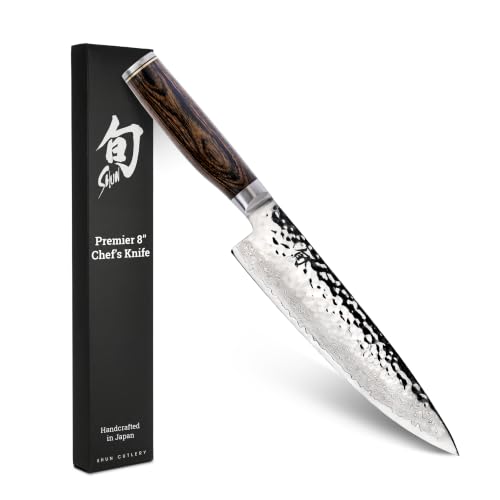
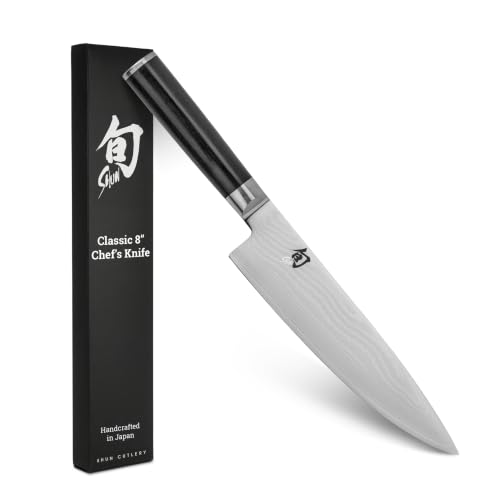
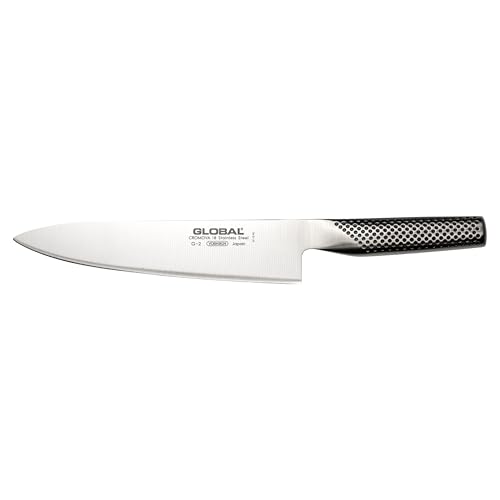
Two main styles dominate. German style chef's knives, from brands like Wüsthof, Zwilling and Henckels, have thicker, heavier blades with more curve, softer but tougher steel and a bolster where the blade meets the handle. Japanese style knives, often called gyuto, from brands like Shun, Miyabi and Global, are thinner and lighter with harder steel that holds a sharper edge but can chip if misused.
Blade length matters. An 8 inch blade suits most home cooks, 10 inches gives more reach for large cutting jobs and big hands, and 6 inch knives feel nimble in small kitchens. If you are unsure, start with 8 inches; it is the most versatile size.
Price ranges widely. Excellent stamped knives cost around $30 to $50, quality forged German knives around $80 to $170, and premium Japanese knives with layered or powdered steel can reach $200 to $400. Expensive does not automatically mean better for you; comfort and care matter more.
Who should choose which style? Cooks who chop a lot of hard vegetables, break down chickens or share knives with family members often prefer German knives, because they shrug off rough handling. Cooks who slice fish, vegetables and herbs with precision and enjoy caring for tools often prefer Japanese knives. Many home cooks eventually own one of each.
Handle materials also differ. Synthetic handles such as polypropylene or POM are durable, grippy when wet and dishwasher resistant, though you should still hand wash. Wood handles look beautiful and feel warm but need drying and occasional oiling. Metal handles, like those on Global knives, are hygienic and light but can feel slippery for some cooks.
Key Specs Explained in Plain English
Here is what the main specifications on chef's knife listings mean and how much they should influence your choice.
When shopping for the best chef's knives, it helps to rank these specs by how they affect your cooking. Steel and comfort come first, sharpening needs second and storage last, since storage is easy to fix later.
Blade Steel (German vs Japanese, Carbon vs Stainless)
Steel determines how sharp a knife gets, how long the edge lasts and how easy it is to care for. Hardness is measured on the Rockwell scale, shown as HRC. German knives typically sit around 56 to 58 HRC, which makes them tough and easy to sharpen but quicker to dull. Japanese knives often range from 60 to 63 HRC, holding a keener edge longer but needing gentler handling.
Stainless steel resists rust and suits most home cooks. High carbon steel takes an extremely sharp edge but can rust and discolor if not dried promptly. Many modern knives use high carbon stainless steel, which blends edge retention with corrosion resistance. Premium steels such as VG-10 and SG2 are popular in Japanese knives for their sharpness.
Layered or Damascus patterned blades look striking, and many combine a hard core steel with softer outer layers for toughness. The pattern itself does not make a knife sharper; the core steel and heat treatment do. Treat the pattern as a style choice rather than a performance feature.
Weight and Balance
Weight affects how a knife feels during long prep sessions. Heavier German knives power through tough vegetables and feel solid, while lighter Japanese knives feel nimble and precise. Neither is better; it depends on your preference and cutting style.
Balance describes where the weight sits. Many cooks like a knife that balances near the bolster or where the blade meets the handle, which gives control. Hold a knife at that point; if it tips sharply toward the blade or handle, it may feel awkward in use.
Hand size matters too. People with smaller hands often find shorter or lighter knives easier to control, while larger hands may prefer a longer handle and more weight. If possible, hold a few knives in a store before buying online, or choose a seller with an easy return policy.
Sharpening and Maintenance Needs
Every knife dulls with use. Honing with a honing rod realigns the edge between sharpenings and should become a habit every few uses for German knives. Sharpening actually removes metal to create a new edge and is needed every few months for regular cooks.
German knives are easier to sharpen at home with pull through sharpeners or stones. Harder Japanese knives benefit from whetstones or professional sharpening, since some pull through sharpeners can damage their thin edges. Consider how much maintenance you are willing to do before choosing a very hard Japanese blade.
Learning to use a whetstone is a rewarding skill. Start with a combination stone, such as 1000 and 6000 grit, soak it as directed and keep a consistent angle, usually around 15 degrees for Japanese knives and 20 degrees for German knives. Many kitchen stores also offer inexpensive professional sharpening.
Forged vs Stamped Blades
Forged blades are shaped from a single heated piece of steel, often with a bolster and full tang that runs through the handle. They feel heavier and more substantial and are common in premium German knives.
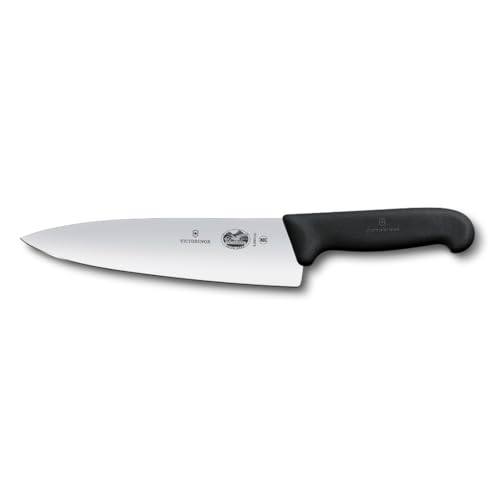
Stamped blades are cut from a sheet of steel, then heat treated and ground. They are lighter and cheaper but can perform extremely well; the Victorinox Fibrox Pro is a famous stamped knife loved by many professional kitchens. Do not dismiss stamped knives, especially for a first purchase.
Bolsters deserve a quick note. A full bolster adds weight and protects your fingers, but it makes sharpening the heel harder over time. Many modern knives use a half bolster or none at all, which lets you sharpen the full length of the edge.
Storage Block, Magnetic Strip, or Roll
How you store a knife affects how long its edge lasts. Knife blocks keep blades protected and organized on the counter. Magnetic strips save counter space and display knives, but place them away from busy areas. In drawer organizers keep blades separated and safe.
Knife rolls suit cooks who travel or take knives to classes. Never toss a chef's knife loose in a drawer, where it bangs against other utensils, dulls quickly and becomes a hazard. Blade guards are an inexpensive fix if you have no block or strip.
When using a magnetic strip, place the spine against the magnet first and roll the blade on, then lift it off the same way. Sliding the edge across the magnet can scratch or dull it over time.
Rookie Mistakes to Avoid
- Using a glass or stone cutting board. Hard surfaces dull and chip edges fast; use wood or plastic boards instead.
- Putting knives in the dishwasher. Heat, detergent and banging around damage edges and handles.
- Skipping honing. Regular honing keeps the edge aligned and makes cutting safer and easier.
- Twisting or prying with the blade. Using a thin Japanese knife to pry or cut bones can chip the edge.
- Buying a huge block set first. A good chef's knife, paring knife and bread knife cover most needs.
Leaving a knife soaking in the sink is another common error. It dulls the edge, damages wooden handles and is dangerous for anyone reaching into soapy water. Wash and dry knives right after use instead.
Getting Started: Setup and First Use
Wash the new knife by hand with warm soapy water and dry it immediately. Set up a stable cutting board on a damp towel so it does not slide, and keep a honing rod nearby.
Learn the pinch grip: hold the handle with your lower three fingers and pinch the blade just in front of the handle with your thumb and index finger. This grip gives far more control than holding only the handle. Curl the fingertips of your guiding hand into a claw, so your knuckles guide the blade and fingertips stay safe.
Practice basic cuts on onions, carrots and herbs: rocking for herbs, push cuts for vegetables and slicing motions for meat. Go slowly at first; speed comes naturally with practice. After each use, wash, dry and store the knife properly.
Cutting boards deserve as much thought as the knife. End grain wood boards are kind to edges and self heal from cuts, while edge grain wood and soft plastic boards are affordable and easy to clean. Replace plastic boards when deep grooves trap food, and oil wood boards occasionally to prevent cracking.
A few safety habits help from day one: always cut away from your body, keep the board clear of clutter, never try to catch a falling knife and carry knives with the tip pointed down at your side.
Chef's Knives: Your Questions Answered
Can knives go in the dishwasher?
No, good knives should not go in the dishwasher, even if the label says dishwasher safe. Heat, harsh detergent and contact with other items dull the edge, damage handles and can cause rust spots. Wash knives by hand with warm soapy water right after use, dry them immediately and store them safely.
Carbon steel knives need extra care: dry them immediately and wipe a thin coat of food safe oil on the blade if you will not use them for a while. A natural gray patina will form over time, which is normal and helps protect the steel.
What knives does a home cook really need?
Most home cooks need just three knives: an 8 inch chef's knife for most tasks, a paring knife for small, detailed work and a serrated bread knife for bread and tomatoes. Add a boning knife or santoku later if you cook specific dishes often. Quality beats quantity, so invest in a few good knives rather than a large set.
Kitchen shears and a honing rod round out a simple, capable kit for most households.
How often should I sharpen kitchen knives?
Hone your chef's knife every few uses and sharpen it every two to six months, depending on how often you cook and your cutting board. If the knife slides off tomato skin or crushes herbs, it needs sharpening. Japanese knives with harder steel can go longer between sharpenings but need careful technique.
A quick paper check helps: hold a sheet of printer paper and slice downward. A sharp knife glides through cleanly, while a dull one tears or catches. Hone first, and if it still tears, it is time to sharpen.
Are expensive knife sets worth it?
Expensive sets are often not worth it, because they include knives you rarely use. A single quality chef's knife, plus a paring and bread knife, delivers better value. If you like the feel of a particular brand and want matching knives with a block, a set can make sense, but check that each piece is useful.
Are Japanese knives better than German knives?
Neither is universally better. Japanese knives are thinner, lighter and sharper, excelling at precise slicing, but they need careful handling and sharpening. German knives are heavier, tougher and easier to maintain, handling rough tasks with less risk of chipping. Choose based on your cooking style, hand size and maintenance preferences.
What does full tang mean?
Full tang means the blade steel runs the entire length of the handle, usually visible as a metal strip between handle scales. It adds strength and balance and is common on forged knives. Partial tang knives can still be durable and comfortable, so full tang is a plus rather than a requirement for home cooking.
What is the best chef's knife length for small hands?
Many cooks with smaller hands prefer a 6 or 7 inch chef's knife, or a santoku, which is shorter and lighter. These sizes feel more controllable for everyday chopping while still handling most vegetables and proteins. Try the grip if you can; comfort and control matter more than following the standard 8 inch recommendation.
Wrapping Up
The best chef's knives for beginners balance comfort, steel quality and easy care. If you want a forgiving workhorse, start with a stamped knife like the Victorinox Fibrox Pro or a forged German knife from Wüsthof or Zwilling. If you love precision and will care for a harder blade, consider a Japanese knife from Shun, Miyabi or Global. Whatever you choose, use a wood or plastic board, hone regularly and wash by hand.
For more kitchen tools, see our guides to the best Japanese chef knife, the best kitchen knife sets, the best knife sharpeners, the best santoku knives and the best magnetic knife holders. Then compare current prices in the product table above.