Best Japanese Chef Knife: How to Choose the Right Gyuto
Disclosure: We may earn a commission when you buy through links on this page, at no extra cost to you. As an Amazon Associate I earn from qualifying purchases. Learn more

Picking your first Japanese chef knife can feel overwhelming once you realize how many steel types, bevel angles, and blade shapes are out there. Western supermarket knives rarely explain any of this, but Japanese blades are built around real engineering choices that change how the knife cuts, how often you sharpen it, and how much care it demands. Some cooks want a blade that holds a razor edge for weeks. Others want something forgiving that survives a busy weeknight kitchen without constant babying. This guide breaks down the differences behind steel composition, bevel style, blade hardness, and shape, so you can match a Japanese chef knife to how you actually cook.


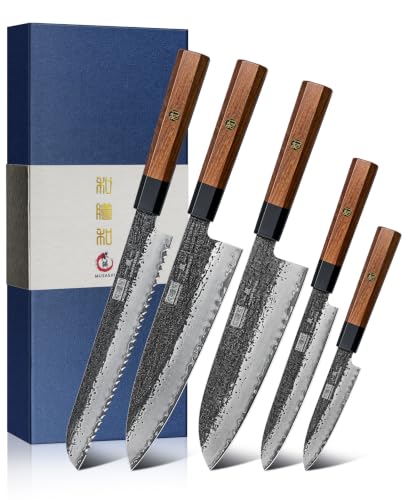
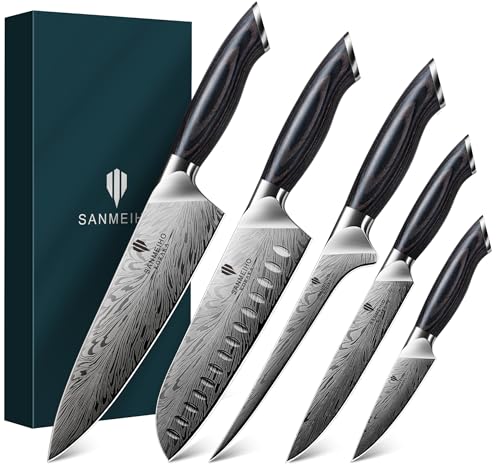
Carbon Steel or Stainless: Picking the Right Blade Material
Why Cooks Choose Carbon Steel
Carbon steel blades, made from steels like white steel or blue steel, take an extremely fine edge and are noticeably easier to sharpen by hand on a whetstone. Professional sushi chefs and many serious home cooks prefer carbon steel specifically because it responds so quickly to a few strokes on a stone, letting them touch up an edge between prep sessions instead of waiting for a full sharpening. The tradeoff is reactivity. Carbon steel rusts within minutes if left wet, and it develops a dark patina over time from contact with acidic foods. That patina is often desirable, since it actually helps protect the blade from deeper corrosion, but it means you cannot leave the knife sitting in a sink of soapy water and walk away.
Why Stainless Steel Wins for Daily Use
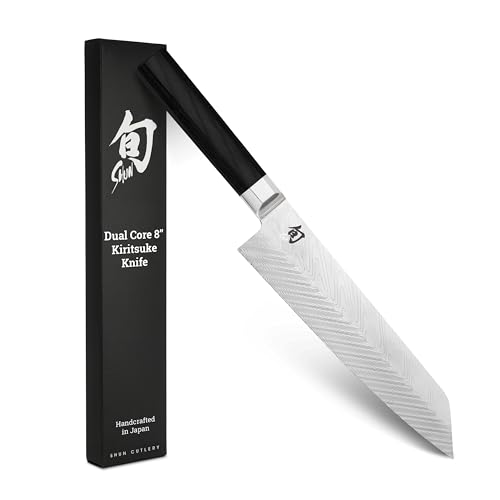
Stainless steel blades, built around alloys like VG-10 or a similar high-carbon stainless recipe, resist rust and staining without much thought from the user. For a household where the knife might sit on a cutting board for twenty minutes before someone gets back to washing it, stainless removes a lot of the risk. Modern high-carbon stainless steels have closed much of the performance gap with carbon steel. They hold a working edge for longer stretches between sharpenings, even if they take slightly more effort to bring back to full sharpness. For most home kitchens, stainless is simply the lower-maintenance, lower-risk choice.
Single Bevel vs Double Bevel: Which Edge Style Fits Your Kitchen
Most Japanese knives sold for general kitchen use, including nearly every gyuto, use a double bevel edge, ground evenly on both sides just like a Western chef's knife. That symmetry makes double bevel knives easy to pick up for anyone switching from a standard chef's knife, since the cutting technique barely changes and the knife works equally well in either hand.
Single bevel knives, ground on one side only, belong to a different category of traditional Japanese blades used for specific tasks like filleting fish or slicing sashimi. A single bevel edge can reach an extremely thin, precise cutting angle, but it also pulls the blade slightly to one side during a cut, and it demands real practice to sharpen correctly since each stone stroke only touches one face. Unless you already know you need that specialty category, a double bevel gyuto style blade is the more practical choice for chopping, slicing, and everyday prep. Save single bevel blades for later, once you already have a feel for how a Japanese edge behaves.
Blade Hardness and Why HRC Numbers Matter
Manufacturers list a hardness rating on the Rockwell C scale, usually shortened to HRC, and Japanese blades tend to run noticeably harder than their Western counterparts. Many Japanese chef knives sit somewhere between 60 and 63 HRC, compared with roughly 56 to 58 HRC for a typical German-style chef's knife.
Higher hardness lets a blacksmith grind a thinner edge that holds its sharpness through more cutting before it needs attention. That same hardness makes the steel less flexible, so a blade in this range can chip if it twists sideways against a bone or hits a hard surface like a ceramic plate. A softer blade bends slightly under stress instead of chipping, which is part of why Western knives tolerate rougher handling. None of this means a hard Japanese blade is fragile in normal use. It just means the knife rewards a lighter, more deliberate cutting style rather than heavy chopping through dense, bony cuts of meat.
Gyuto, Santoku, or Nakiri: Matching Blade Shape to How You Cook
Gyuto
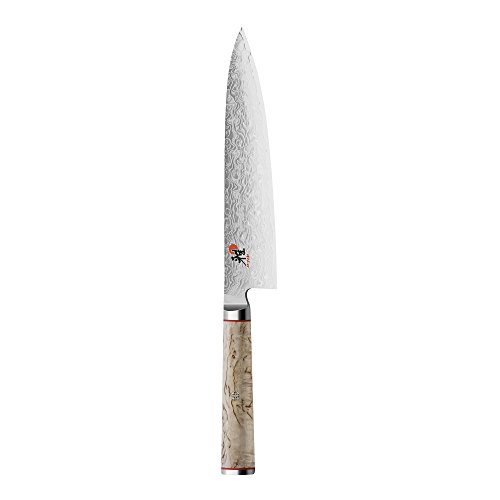
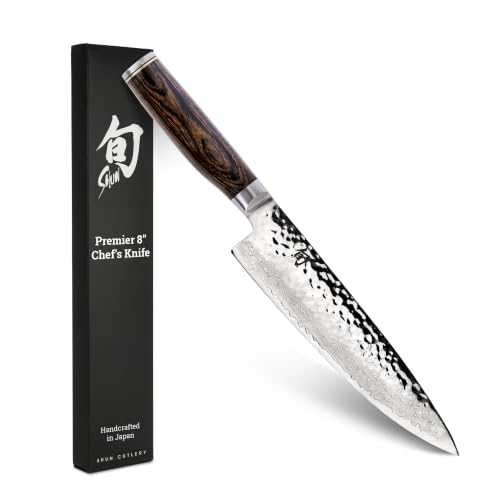
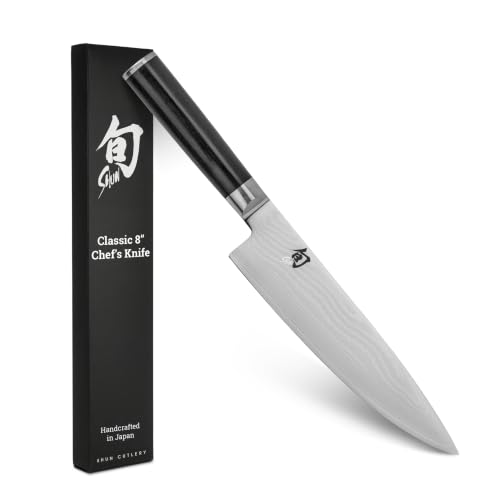
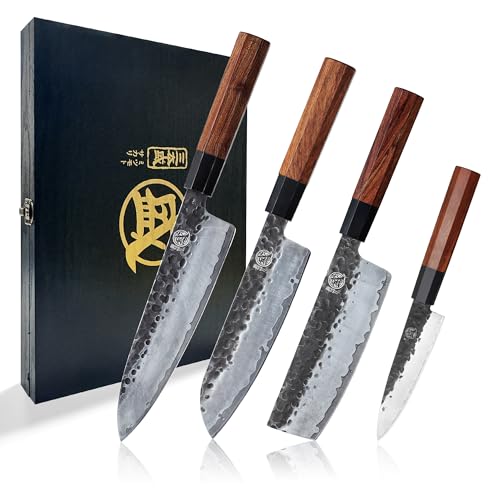
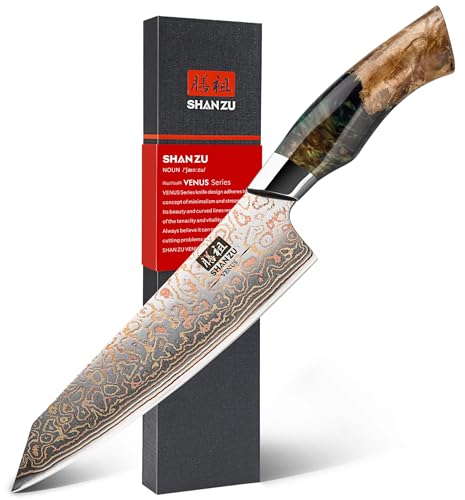
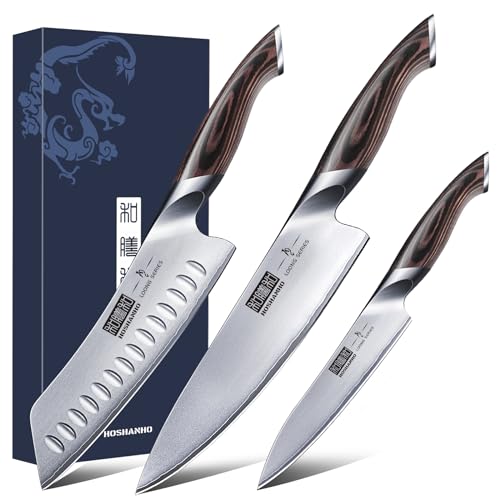
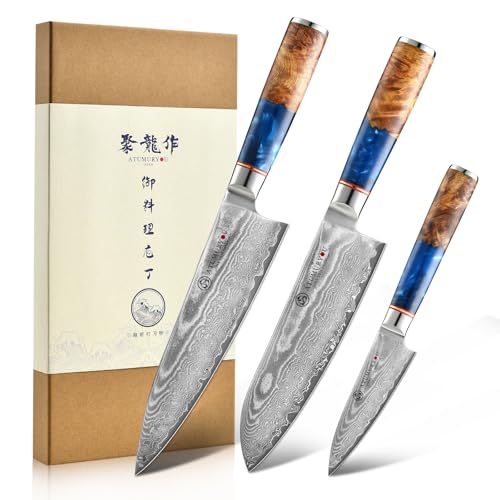
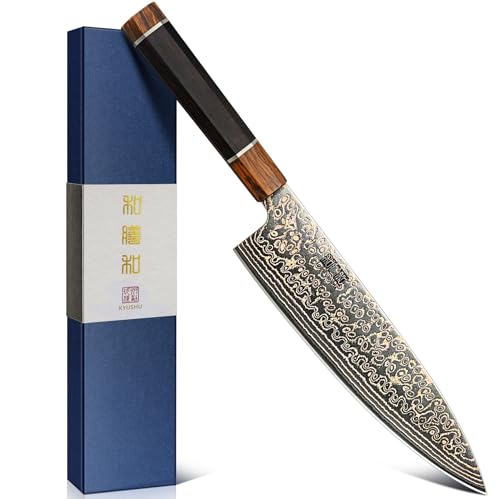
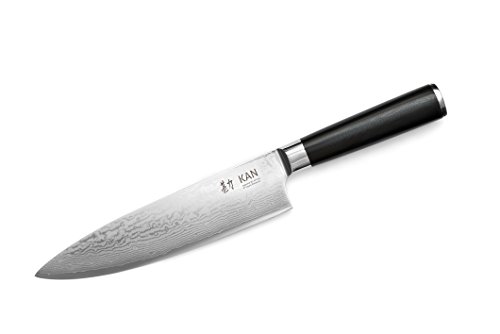
The gyuto is the direct equivalent of a Western chef's knife, typically running 210mm to 240mm long with a gently curved edge that supports rocking cuts. If you already cook with a traditional chef's knife and want a Japanese blade that fits the same habits, a gyuto is the natural first pick.
Santoku
A santoku runs shorter and flatter, with a blade profile built for a straight up-and-down chopping motion rather than rocking. It tends to feel lighter and more maneuverable in a smaller kitchen, which is part of why it gets recommended so often as a first Japanese knife for home cooks who mostly handle vegetables, boneless proteins, and everyday prep.
Nakiri
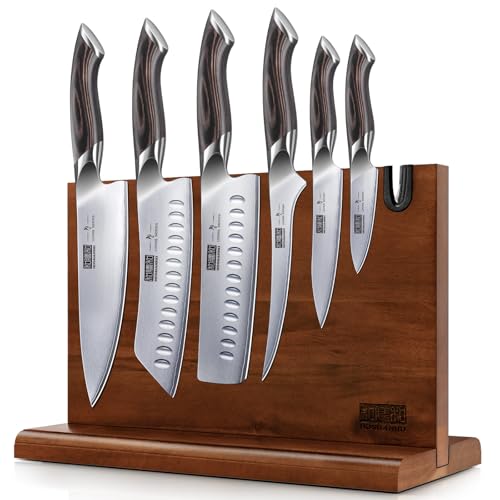
The nakiri trades the pointed tip for a tall, rectangular blade built almost entirely for vegetables. It pushes straight down through produce in a single motion instead of rocking or slicing, which home cooks who prep a lot of vegetables tend to appreciate. It rarely works as someone's only knife, since it struggles with meat, fish, and anything that needs a point, but it earns its place quickly as a second or third blade once you already own a gyuto or santoku and want to build out a fuller kitchen knife set.
Keeping a Japanese Blade Sharp Between Whetstone Sessions
Japanese blades are built around whetstone sharpening rather than pull-through or electric sharpeners, since the harder steel needs a stone to reach the fine 15 to 18 degree edge angle these knives are ground at. A fine grit stone, generally in the 3000 to 6000 range, brings the edge back without removing more steel than necessary, and most home cooks only need a full sharpening session every few weeks depending on how often the knife gets used. If you're picking up your first stone, a dedicated Japanese knife sharpener built for this edge angle makes the learning curve far less frustrating than a generic sharpening kit.
Between full sharpening sessions, a honing rod is not part of the routine the way it is with Western knives, since the harder steel does not roll or bend the same way. A few light strokes on a fine stone, or a leather strop, is usually enough to bring back a working edge. Storage matters just as much as sharpening. A hard Japanese edge chips easily against other metal blades in a drawer, so a blade guard or a proper magnetic knife holder protects the edge far better than tossing the knife into a utensil drawer with everything else. Always hand wash and dry the blade immediately, especially with carbon steel, rather than leaving it in a sink or running it through a dishwasher.
Frequently Asked Questions
Is a Japanese chef knife better than a Western chef knife?
Neither is strictly better. Japanese blades are typically harder, thinner, and sharper out of the box, while Western blades are tougher and more forgiving of rough handling, bone contact, and inconsistent maintenance.
What size Japanese chef knife should I buy?
A 210mm gyuto suits most home kitchens and cutting boards. Taller cooks or anyone regularly prepping large cuts of meat may prefer 240mm, while smaller kitchens often do fine with a shorter santoku instead.
Do Japanese chef knives need to be sharpened often?
Not as often as you'd expect. The harder steel holds an edge longer than most Western knives, so a home cook might only need a full whetstone sharpening every few weeks with regular use.
Can I put a Japanese chef knife in the dishwasher?
No. Heat, moisture, and contact with other utensils dull and chip the edge quickly, and carbon steel blades will rust almost immediately. Hand wash and dry the blade right after use.
Is carbon steel worth the extra maintenance?
It depends on how much you enjoy the ritual. Carbon steel sharpens faster and takes a keener edge, but it demands daily drying and occasional oiling. Stainless steel is the safer choice for a low-maintenance kitchen.
Why do Japanese knives feel lighter than Western knives?
Thinner blade geometry and harder steel let manufacturers grind less metal into the edge without sacrificing strength. That thinner profile, combined with lighter handle materials, is what gives most Japanese knives their nimble feel.
Making the Right Call
Choosing between steel types, bevel styles, and blade shapes comes down to matching the knife to your actual cooking habits rather than chasing the sharpest spec sheet. A stainless double bevel gyuto covers the widest range of everyday tasks with the least maintenance, which makes it the safest starting point for most kitchens. Once you know how the knife feels in your hand and how much sharpening upkeep you're willing to do, moving toward carbon steel or a specialized shape like a nakiri becomes an easier, more informed decision instead of a guess.