Best Magnetic Knife Holders: A Complete Buying Guide
Disclosure: We may earn a commission when you buy through links on this page, at no extra cost to you. As an Amazon Associate I earn from qualifying purchases. Learn more
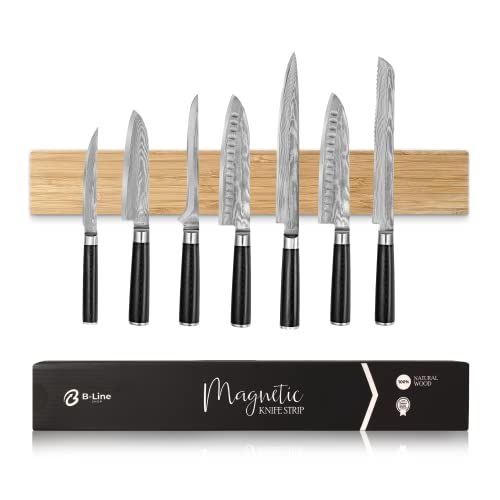
A knife block eats up counter space, and a drawer full of loose blades is an accident waiting to happen. That is usually what pushes people toward a wall-mounted strip in the first place. But not every strip on the market is built the same way, and a few features separate a magnetic knife holder that lasts for years from one that leaves blades wobbling or, worse, damages the edges you are trying to protect. This guide walks through the magnet quality, format, and mounting details that matter most, along with a couple of risks most buyers never see coming until it is too late.



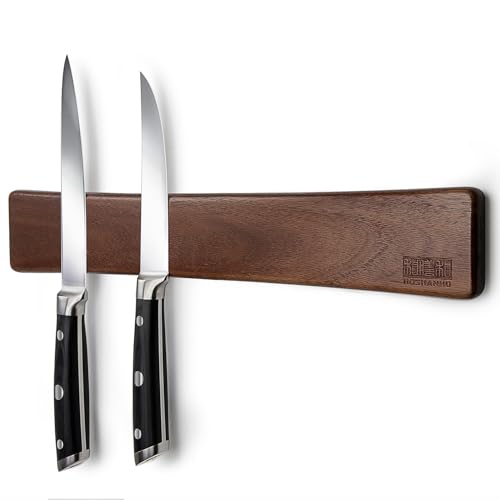

Magnet Strength, Coverage, and Strip Thickness That Actually Matter
Two strips can look nearly identical in a photo and perform completely differently on your wall. The difference usually comes down to three things: how evenly the magnets are spaced, how thick the bar is, and how much length you actually need.
Even Magnet Distribution Beats Raw Pull
A strip with a few powerful magnets bunched near the ends will leave gaps where a blade has nothing to grip, so knives end up sliding toward whichever spot has the strongest pull. What you want instead is consistent coverage across the entire length, so a chef's knife holds just as firmly in the middle of the bar as it does near an edge. Test this in the store or in early reviews by looking for language about "full-length" or "continuous" magnet strips rather than isolated magnet points.
Strip Thickness and Knuckle Clearance
Thin strips look sleek, but a bar under roughly three-quarters of an inch thick often does not leave enough room between the knife handle and the wall. That means your knuckles scrape the wall every time you lift a knife off the strip, which gets old fast. A slightly thicker profile costs you almost nothing in aesthetics and solves the problem permanently.
Length for Your Actual Knife Collection
Measure your knives before you shop rather than guessing. Leave close to an inch and a half of space between blades so you can grab one without brushing its neighbor. If your kitchen knife set runs to six or more pieces once you count shears and a honing steel, a short strip will fill up fast and you will want a longer bar or a second row instead.
Wall Strip, Countertop Block, or In-Drawer: Picking the Right Format
A magnetic knife holder is not limited to a single bar on the wall. The right format depends on how much space you have and how visible you want your knives to be.
Wall-Mounted Strips
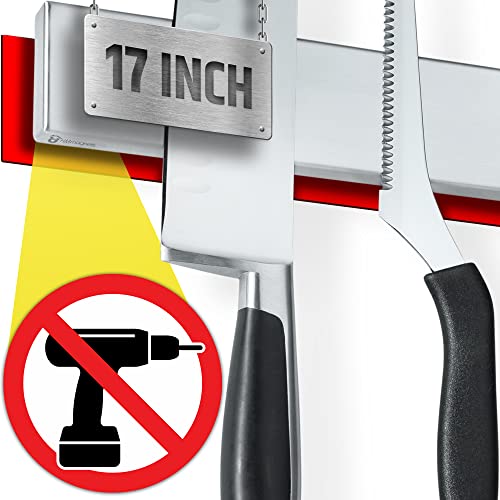
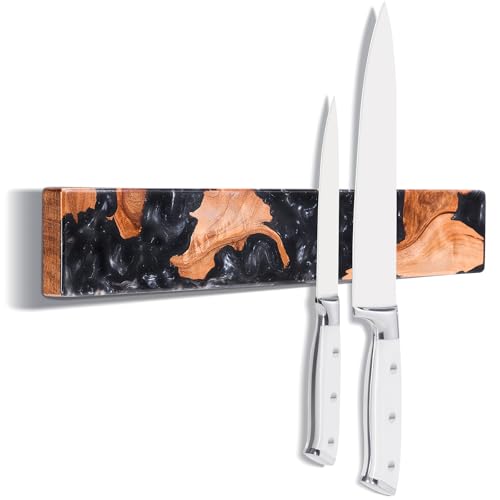
This is the format most people picture, and for good reason. A slim bar mounted horizontally keeps knives fully visible and off the counter, which makes it the most space-efficient option for small kitchens. The tradeoff is that blades sit within easy reach of anyone walking by, kids and curious pets included.
Countertop Magnetic Blocks
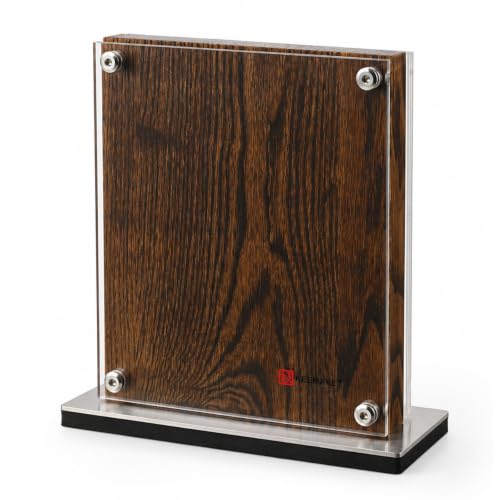
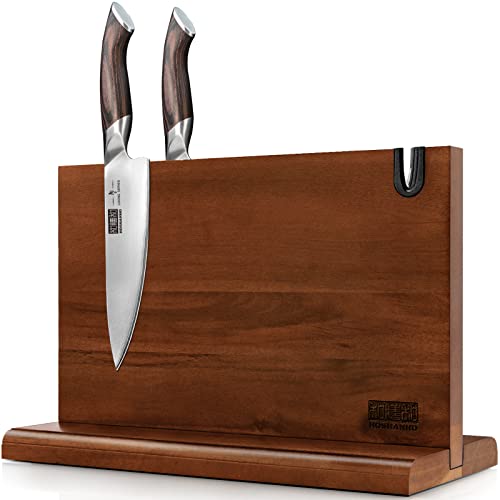
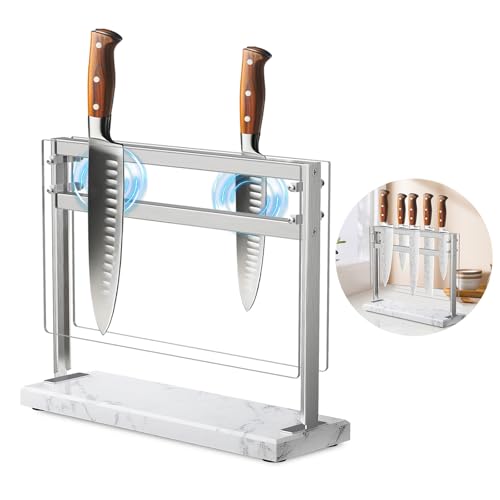
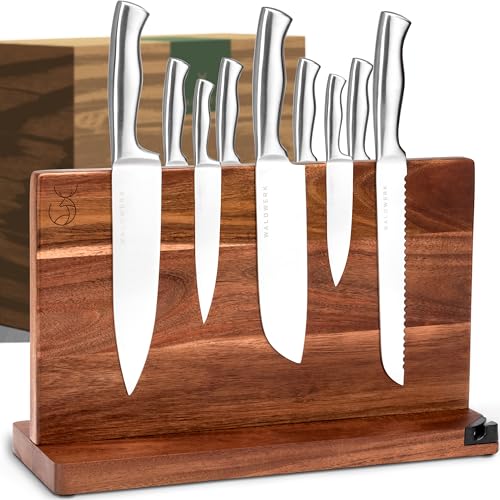
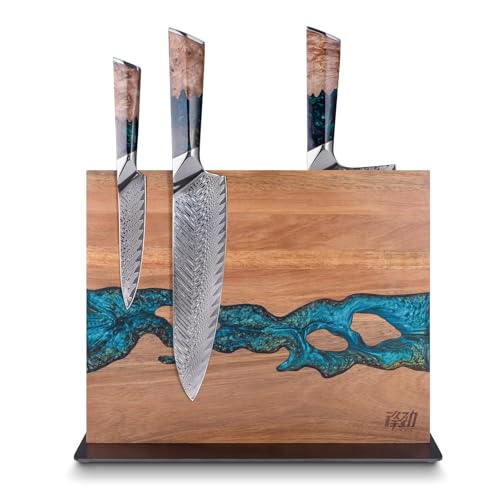
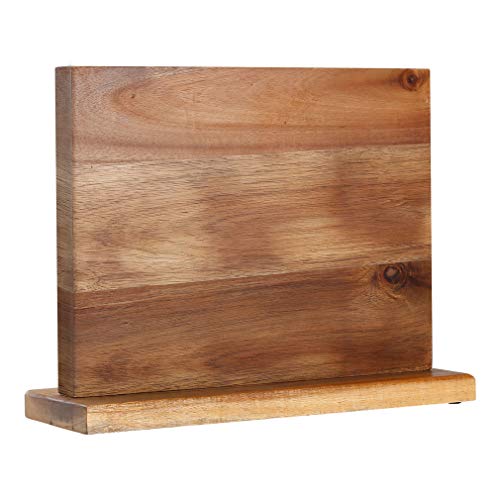
These stand upright like a traditional block but use magnetized panels instead of narrow slots, giving you the no-drill convenience of a freestanding unit. They take up counter real estate that a wall strip avoids, but they pair well with a tidy kitchen utensil set if you already keep your prep tools grouped together.
In-Drawer Strips
A newer option, these mount inside a drawer so blades stay hidden and secured, which many households with young kids prefer. You lose the at-a-glance visibility of a wall strip, and the drawer needs enough depth for your longest blade to lie flat.
Not Every Knife Belongs on a Magnetic Strip
Magnets only grip ferromagnetic metal, and pull strength that feels perfectly safe for one blade can be risky for another. A magnetic knife holder is not a one-size-fits-all solution, so it helps to know which blades need extra caution before you mount your whole collection.
Thin and Delicate Blades
A strip built for heavy Western-style knives can apply more force than a thin, hard blade can handle. Owners of a Japanese chef's knife or other thin-ground blade often report chipping near the tip when the knife gets set down carelessly or slides against a neighboring blade on a strong strip. If your collection leans toward thinner steel, look for medium-strength magnets and give each blade its own clear space.
Ceramic and Some Stainless Blades
Ceramic knives are not magnetic at all and will not stay put on any strip, no matter how strong. Some high-end stainless alloys are also weakly magnetic, so it is worth testing a blade against a refrigerator magnet before assuming it will hold securely on a wall-mounted bar.
The Rust Risk Most Buyers Don't Expect
This is the part most product listings skip entirely, and it explains a surprising number of complaints about spotted or discolored blades after switching to magnetic storage.
Magnetized Iron Particles and Blade Rust
A magnet does not just hold a knife in place, it can also pull tiny iron particles out of the air and concentrate them along the edge. Over time, those particles sit against the steel and can trigger localized rust spots, particularly on carbon steel or lower-grade stainless blades. Wiping the edge down periodically keeps this from building up unnoticed.
Never Hang a Wet Blade
Setting a damp knife on a magnetic strip traps moisture right where the blade meets the bar, and that moisture has nowhere to evaporate. Carbon steel can start discoloring in minutes under those conditions. Dry every blade fully before it goes on the strip, and the rust risk drops to nearly nothing.
Screw-In or Adhesive: What Holds Up Long Term
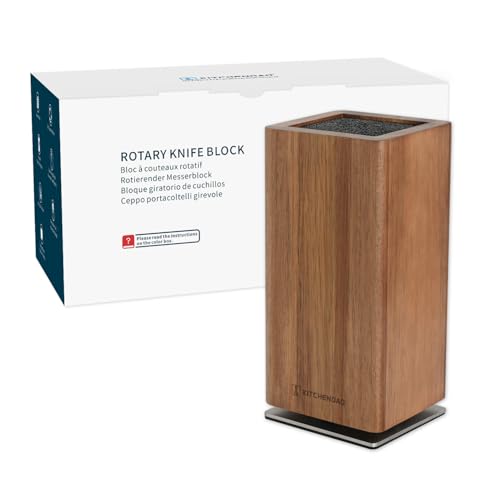
Screw mounting is the sturdiest choice and the right call if you plan to load the full width of the bar with your heaviest knives. It does mean drilling into tile or a backsplash, which is not always an option for renters. Heavy-duty adhesive backing solves that problem, but it depends entirely on a clean, dry, properly prepared surface, and it usually carries a lower weight rating than hardware. If you would rather skip the wall entirely, a knife block set keeps every blade tucked into its own slot with zero mounting involved. Whichever method you choose, always place the spine of the blade against the magnet first, then let the edge settle flat, rather than dragging the sharp side across the surface on the way up. Getting this step right matters more than which magnetic knife holder you ultimately buy.
Frequently Asked Questions
Do magnetic knife holders damage knives?
The magnetic pull itself does not dull or damage a blade. Most damage traces back to careless handling, like dragging the edge across the strip or letting a thin blade knock against its neighbor.
Are magnetic knife holders safe for homes with kids?
They can be, as long as the strip is mounted well out of reach and out of a child's direct line of sight. Households with young kids often lean toward a countertop block or in-drawer strip instead of a low wall mount.
How strong should the magnets be?
Strong enough to hold your heaviest knife without wobbling, but not so strong that removing a blade feels like a fight. Even coverage across the full strip matters more than sheer magnet power.
Can ceramic knives go on a magnetic strip?
No. Ceramic blades are not magnetic and will not stay secured, so they still need a block, sheath, or drawer for storage.
Why does my knife have rust spots after using a magnetic strip?
This usually comes from moisture trapped against the blade or from magnetized iron particles collecting along the edge over time. Drying knives fully before hanging them and wiping the edge periodically prevents most of this.
How do I install a magnetic knife holder without drilling?
Look for a strip with heavy-duty adhesive backing rated for your knife collection's weight. Clean and dry the wall thoroughly, then let the adhesive cure for the full recommended time before hanging anything.
How long should a magnetic knife holder be?
Most home kitchens do well with a bar between fifteen and twenty inches, which comfortably fits four to six knives with room to spare between blades. Larger collections benefit from a longer strip or a second bar mounted just below the first.
Making Your Decision
The best magnetic knife holder for your kitchen comes down to even magnet coverage, a thickness that clears your knuckles, and a mounting method that fits your walls. Once those boxes are checked, the format, whether it is a wall strip, a countertop block, or an in-drawer bar, is mostly a matter of how much you want your knives on display. Get the fundamentals right and you will have a setup that keeps blades sharp, dry, and easy to reach for years.