Best Kitchen Knife Sets: A Complete Buying Guide
Disclosure: We may earn a commission when you buy through links on this page, at no extra cost to you. As an Amazon Associate we earn from qualifying purchases. Learn more
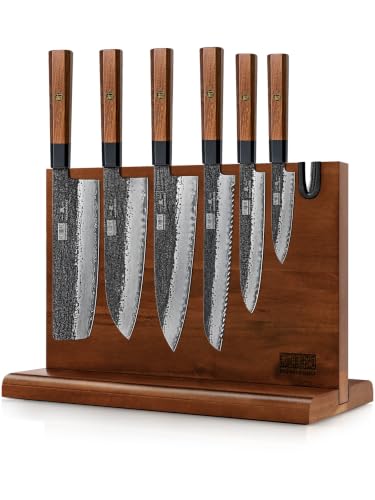
Picking one of the best kitchen knife sets for your home comes down to three things: the steel in the blades, how the blade is built into the handle, and whether you will actually reach for every knife in the box. A lot of boxed sets pad their piece count with steak knives and specialty blades that sit untouched for years, while the handful of knives you use daily deserve real scrutiny. Before you compare block sizes or handle colors, it helps to understand what separates a set that earns its shelf space from one that just looks good in a photo. This guide walks through the buying criteria that matter, how to store and care for your knives once you own them, and which type of set fits the way you actually cook.
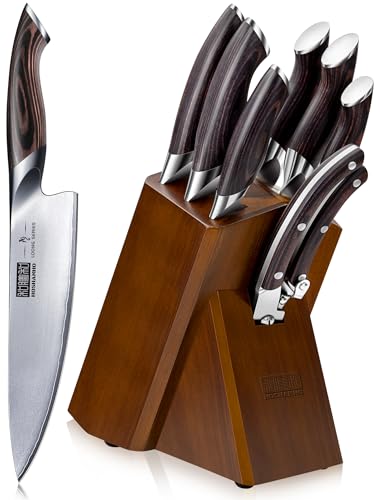

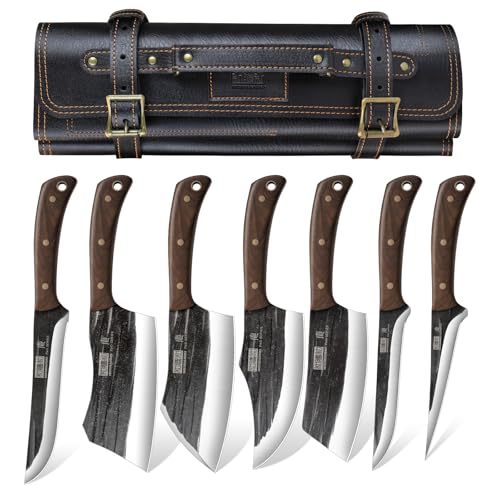
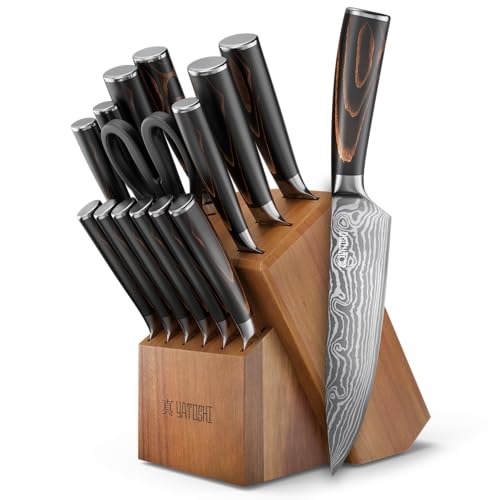
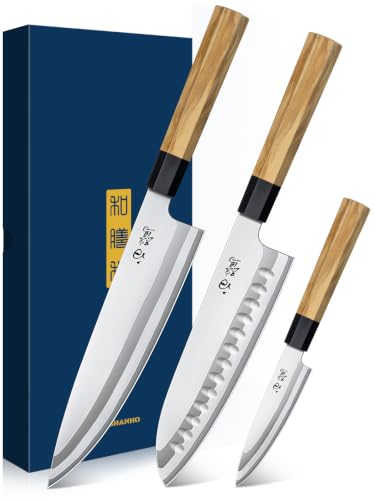
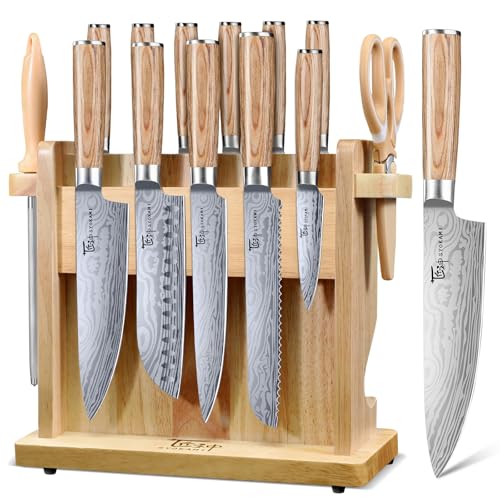
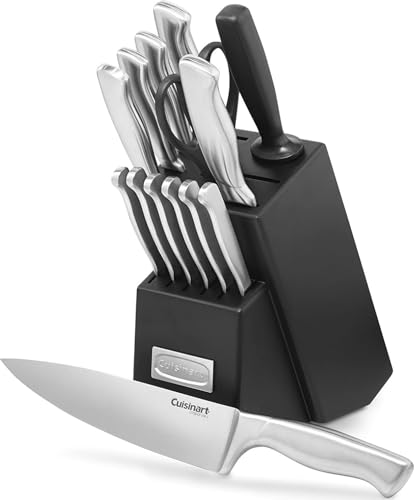
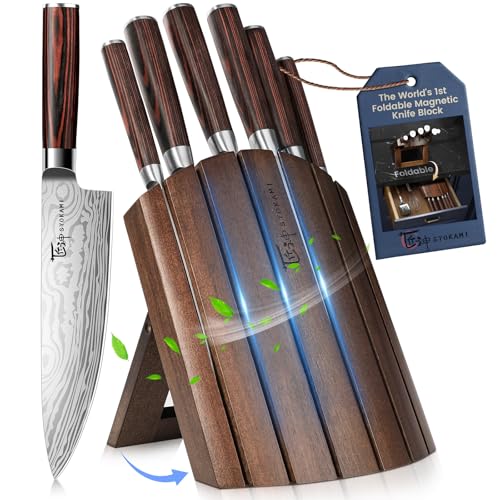
Blade Steel, Tang Construction, and Handle Fit
Most quality sets use high-carbon stainless steel, which resists rust better than plain carbon steel while holding an edge longer than basic stainless. Hardness is measured on the Rockwell scale, and a range of roughly 56 to 60 HRC gives you a good balance of edge retention and ease of sharpening. Steel that is too hard can chip under pressure, while steel that is too soft dulls after a few uses.
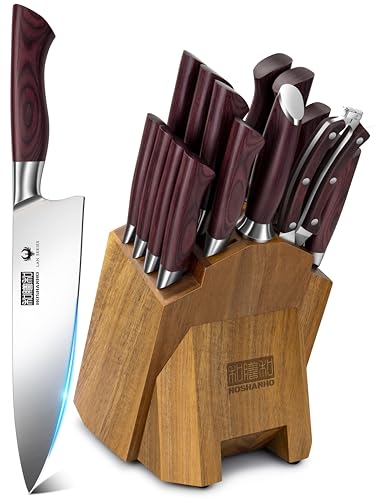
Tang refers to how far the blade metal extends into the handle. A full tang runs the entire length of the handle and is usually visible along the edges, giving the knife better balance and making it less likely to loosen over time. A partial tang can still perform fine on lighter knives like paring blades, but on a chef's knife it often means less control during heavy chopping. Handle material matters too. Look for a grip that stays comfortable through long prep sessions and does not get slippery when wet.
Why Three or Four Knives Often Beat a Fourteen-Piece Block
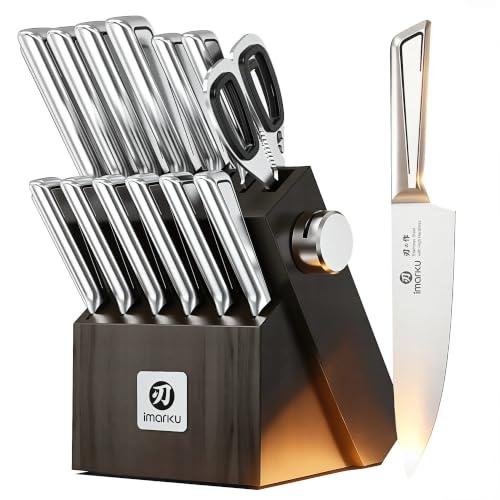
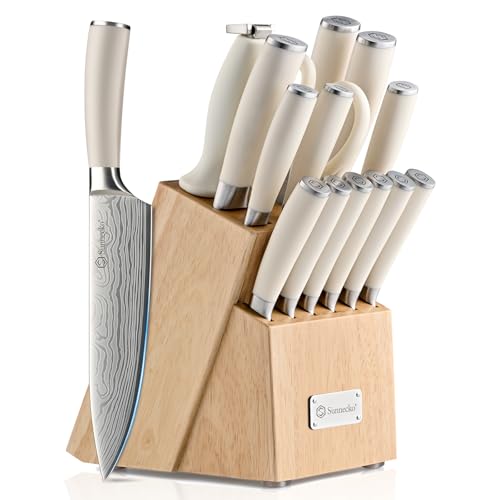
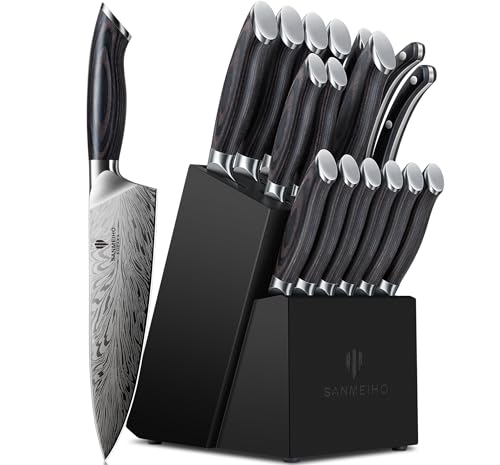
Many of the best kitchen knife sets on store shelves advertise counts of twelve, fourteen, or more pieces, but most home cooks reach for only three or four blades on a regular basis: a chef's knife for chopping and slicing, a paring knife for detail work, and a serrated knife for bread and tomatoes. Everything else in a large block, from steak knives to a boning knife you rarely use, often sits untouched for years.
Manufacturers pad piece counts because a bigger number looks like better value on a shelf, but spreading the same price across more pieces usually means thinner steel and less careful finishing on each individual knife. A tighter set of three to five well-made knives will typically outperform a sprawling fourteen-piece block where half the blades were never sharpened at the factory in the first place. If you already own a few solid knives, buying just the pieces you are missing is often smarter than replacing everything with one large set.
Wood Block, Magnetic Strip, or In-Drawer Tray: Picking Your Storage
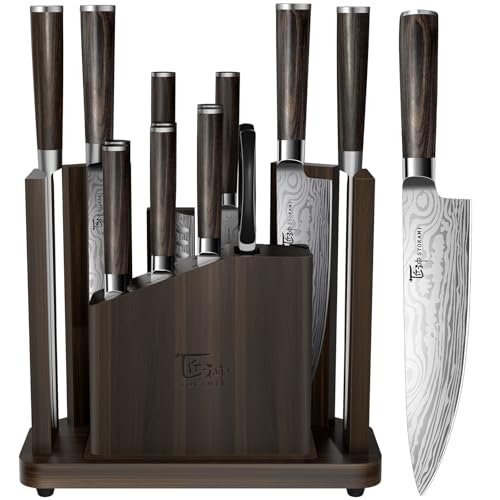
A wood block sits on the counter and keeps blades recessed and out of reach, which is a real advantage in a kitchen with kids. The tradeoff is that blocks take up several inches of counter space and can trap moisture in the slots if knives are put away slightly damp, which over time can encourage bacteria growth.
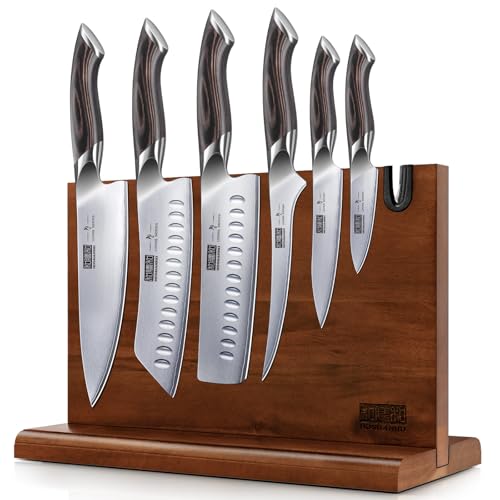
A magnetic strip mounts on the wall, freeing up your counter entirely and letting you see every knife at a glance. Because the blade lays flat against the magnet instead of sliding into a slot, there is less friction wearing down the edge with each use. If you are leaning toward this option, a dedicated magnetic knife holder guide covers mounting styles and strip lengths in more depth.
An in-drawer tray keeps knives hidden and safe from little hands while staying off the counter and off the wall. It works well in smaller kitchens, though you will want a tray with individual slots so the blades are not sliding around and dulling against each other.
Keeping the Set Sharp and Rust-Free for Years
Caring for the best kitchen knife sets properly is what actually makes them worth the investment, since even great steel dulls fast under careless handling. Hand washing is the safer choice for almost every knife, even ones labeled dishwasher safe. The heat, moisture, and jostling inside a dishwasher can dull edges, loosen handles, and cause pitting on the blade over time.
A honing steel is not the same as sharpening. Running the blade along a honing rod before or after each use simply realigns the edge that has bent slightly from cutting, and it should become a habit rather than an occasional task. Actual sharpening, which removes a small amount of metal to create a new edge, is usually needed every six to twelve months depending on how often you cook. A home knife sharpener guide walks through electric, manual, and whetstone options if you would rather handle this step yourself instead of sending blades out.
Matching a Set to How You Actually Cook
For everyday home cooking, a compact set built around a chef's knife, a paring knife, and a bread knife covers the vast majority of tasks, from dicing onions to slicing a loaf. Adding a utility knife for smaller cutting jobs rounds things out without cluttering your storage.
Cooks who spend more time in the kitchen, or who enjoy the craft side of cooking, often outgrow a boxed set faster and start mixing in individual knives chosen for a specific job, such as a santoku for vegetables or a longer slicer for roasts. There is nothing wrong with starting simple. Many serious home cooks began with a basic three-piece set and only added specialty blades once they noticed a specific gap in their routine, rather than buying every shape available up front.
Frequently Asked Questions
How many knives do I actually need in a kitchen knife set?
Most home cooks only need three to five knives in regular rotation: a chef's knife, a paring knife, a serrated bread knife, and sometimes a utility knife. Extra pieces beyond that are rarely used day to day.
What is the difference between full tang and partial tang?
A full tang extends the blade metal through the entire handle, improving balance and durability. A partial tang stops partway, which can work fine on lighter knives but offers less control on knives used for heavy chopping.
Is stainless steel or carbon steel better for a knife set?
High-carbon stainless steel offers the best of both worlds for most kitchens, combining rust resistance with a longer-lasting edge. Plain carbon steel can take a sharper edge but requires more careful drying to avoid rust.
Should I put my knife set in the dishwasher?
Hand washing is safer even for knives labeled dishwasher safe. Heat, moisture, and contact with other items in the dishwasher can dull edges and damage handles over time.
How often should I sharpen my knives?
Honing before or after each use keeps the edge aligned, while actual sharpening is typically needed every six to twelve months depending on how frequently you cook. Heavy daily use may call for sharpening closer to every few months.
Is a large piece-count set actually a better value?
Not usually. Spreading the same price across more pieces often means thinner steel and less finishing work on each blade, so a smaller set of well-made knives tends to perform better and last longer.
Building a Set That Actually Fits Your Kitchen
The right set is not the one with the most pieces, but the one whose blades you will genuinely use week after week. Start with steel quality and tang construction, choose storage that matches your space and household, and build outward from there as your cooking habits become clearer.