Best Santoku Knives in 2026: Top Picks for Every Home Cook
Disclosure: We may earn a commission when you buy through links on this page, at no extra cost to you. As an Amazon Associate I earn from qualifying purchases. Learn more

The santoku knife has quietly become one of the most beloved kitchen knives in American homes. Originally developed in Japan in the mid-20th century, the santoku, whose name translates to "three virtues" or "three uses," refers to its mastery of three essential kitchen tasks: slicing, dicing, and mincing meat, fish, and vegetables. What began as the defining blade of Japanese home cooking has now found its place on kitchen counters across the United States, and for good reason.
The best santoku knives combine a thinner, flatter blade profile than a traditional chef's knife with a straighter cutting edge that makes it ideal for the precise up-and-down chopping motion preferred by Japanese cooking techniques. The result is a knife that feels lighter, more agile, and more precise for detailed prep work, particularly with vegetables, fish, and delicate proteins.

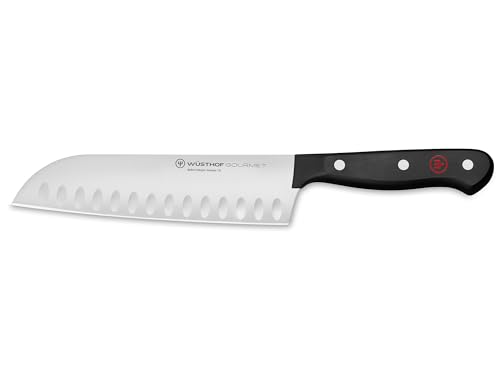

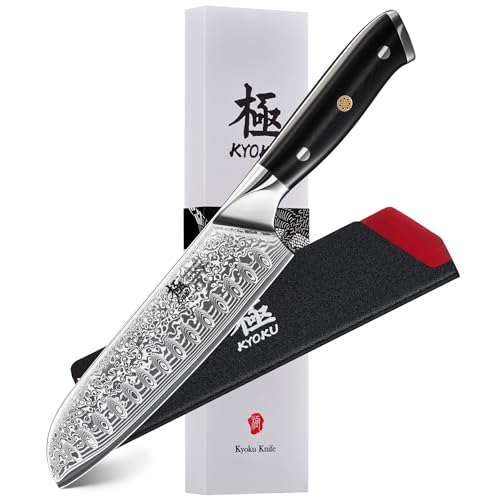
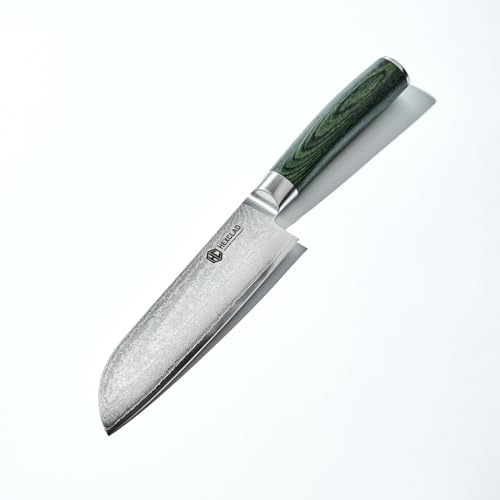
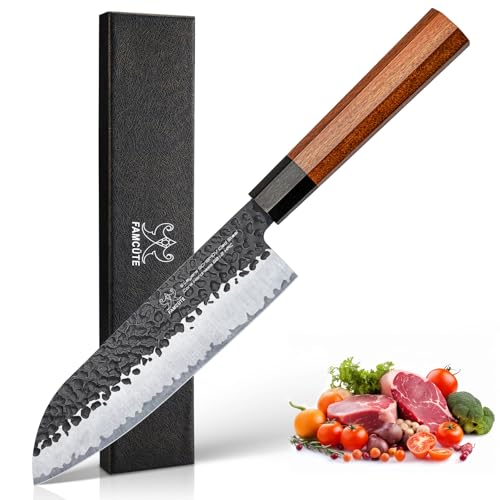
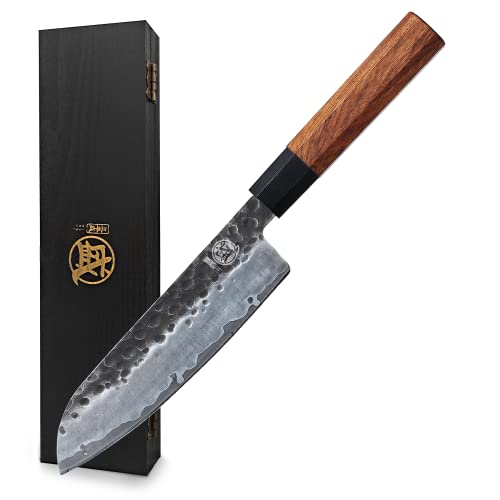
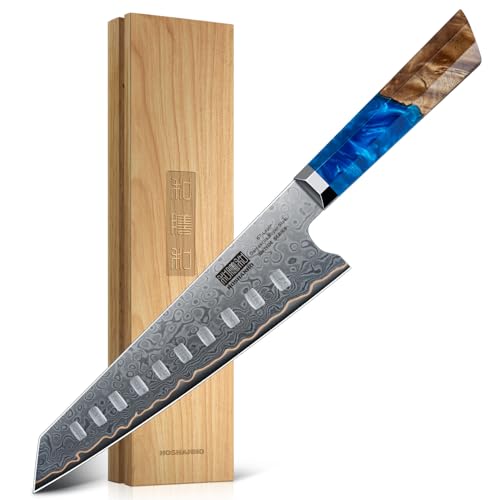

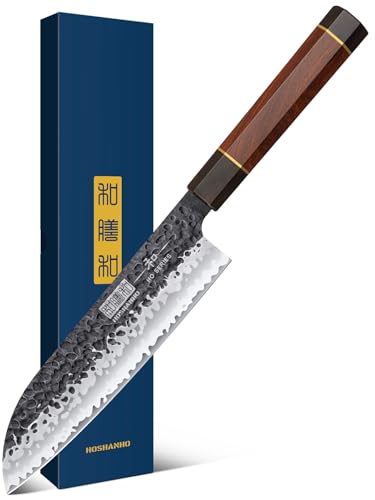
In 2026, the top-rated santoku knives span the full range from trusted German engineering to authentic Japanese hand-forging, with options for every budget and every style of home cook. This guide reviews three standout picks and gives you everything you need to choose the right santoku chef knife for your kitchen.
What Makes a Santoku Knife Different from a Chef's Knife?
Before buying a santoku knife, understanding how it differs from the more familiar Western chef's knife helps you use it to its full potential.
Blade Shape and Profile
A santoku knife features a flatter cutting edge with less curve than a Western chef's knife. Where a French or German chef's knife has a pronounced curve that encourages a rocking motion, the santoku's straighter edge is designed for a clean up-and-down chopping stroke that keeps the entire blade in contact with the cutting board at once. This produces more precise, controlled cuts, particularly for vegetables, herbs, and fish.
The santoku blade also features a distinctive sheepsfoot tip (also called a "ruto" tip), a gently rounded point where the spine curves downward to meet the edge. This design reduces the risk of accidental tip-piercing, making the santoku feel safer and more maneuverable in close quarters.
Blade Length and Weight
Santoku knives typically range from 5 to 7 inches in blade length, compared to the 8 to 10-inch range common in Western chef's knives. The shorter, lighter blade makes the santoku significantly easier to maneuver for extended prep sessions, particularly for cooks who experience fatigue with longer, heavier German-style knives.
The Hollow Edge (Granton Edge)
Many of the best santoku knives feature a hollow edge (also known as a Granton edge) a series of evenly spaced oval or vertical indentations ground into the side of the blade. These indentations create small air pockets between the blade and the food as you slice, preventing thin cuts from sticking to the blade surface. Sliced potatoes, cucumbers, and fish fillets fall cleanly away rather than clinging to the blade. This feature is especially appreciated during high-volume vegetable prep.
Cutting Technique
The santoku knife is optimized for an up-and-down chopping motion rather than the forward rocking motion of a Western chef's knife. Experienced cooks describe the technique as a quick, clean push-cut that produces paper-thin slices with minimal effort. Using a pinch grip where your index finger and thumb pinch the blade just ahead of the bolster provides the maximum control and precision that makes the santoku such an effective daily tool.
Best Santoku Knife Comparison Table
| Model | Blade Length | Steel | Hardness | Edge Angle | Handle | Made In | Warranty | Price Range |
|---|---|---|---|---|---|---|---|---|
| Wüsthof Gourmet 4188-7 | 7 inches | High-carbon stainless (X50 CrMoV 15) | 58 HRC | 10° | Triple-riveted POM | Germany | Lifetime | Mid-range |
| MAC MSK-65 | 6.5 inches | Sub-zero tempered molybdenum vanadium | 61 HRC | 15° | Triple-riveted Pakkawood | Japan (Seki) | 25 years | Mid-range |
| KAWAHIRO VG10 7" | 7 inches | VG10 (3-layer composite) | 60 to 62 HRC | 15° | Exotic octagonal wood | Japan (hand forged) | Standard | Mid-range |
What to Look for in the Best Santoku Knife
Choosing the right Japanese santoku knife (or German-made alternative) requires evaluating several key features.
Steel Type and Hardness
German Stainless Steel (High-Carbon)
German steel is softer than Japanese steel (typically Rockwell 56 to 58 HRC), which means it dulls more gradually, is easier to resharpen, and is more resistant to chipping. German stainless steel santoku knives are ideal for everyday use, handling a variety of tasks, including harder vegetables and heavier proteins. The Wüsthof Gourmet series exemplifies this approach.
Japanese Steel (VG10, Sub-Zero Tempered)
Japanese steel is significantly harder (typically Rockwell 60 to 62 HRC), holding a much sharper, longer-lasting edge at a finer 15-degree angle. The trade-off is increased brittleness. Japanese santoku knives require more careful handling and should not be used on bones or frozen foods. Both the MAC MSK-65 and KAWAHIRO feature premium Japanese steel in this hardness range.
Blade Angle
German-style santoku knives are typically sharpened to a 10 to 15-degree cutting edge. Japanese knives use a finer 15-degree bevel, producing a sharper initial edge that excels at precision slicing. For everyday durability, the German angle is more forgiving. For precision work with vegetables and fish, Japanese steel at 15 degrees is noticeably sharper.
Handle Construction and Balance
A great santoku knife handle should feel secure and comfortable during extended use. Look for full-tang construction (where the blade steel extends through the entire handle length) for better balance and durability. Triple-riveted handles provide a mechanical bond between the blade and handle material that resists loosening over time. Ergonomic shapes, including the octagonal handle found on traditional Japanese knives, reduce hand fatigue during long prep sessions.
Warranty
Warranties are a meaningful signal of manufacturer confidence. The best santoku knife brands back their products with warranties ranging from 1 year to lifetime guarantees. MAC Knife offers a 25-year warranty. Wüsthof offers a lifetime warranty. KAWAHIRO includes a 30-day return policy and a satisfaction guarantee with each knife.
Best Santoku Knives in 2026: Our Top 3 Reviews
#1 — Wüsthof Gourmet 7-Inch Hollow Edge Santoku Knife — Best Overall for Everyday Precision
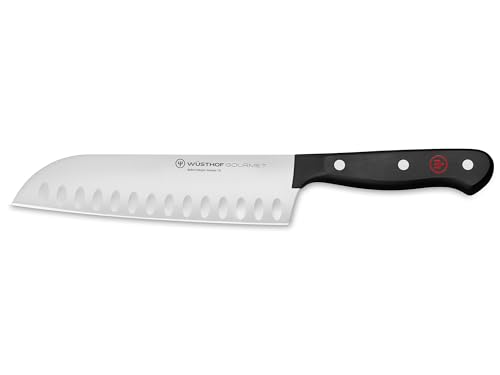
The Wüsthof Gourmet 7-Inch Hollow Edge Santoku Knife is the ideal entry point into the world of premium santoku knives, combining over 200 years of Solingen, Germany, craftsmanship with practical everyday features that make it one of the most versatile and accessible quality knives in the American market. Whether you're a home cook building your first serious knife collection or an experienced chef looking for a reliable daily workhorse, the Wüsthof Gourmet Santoku delivers exceptional performance at a competitive price.
What Makes It Stand Out
The Wüsthof Gourmet series represents a specific engineering philosophy: precision laser-stamped construction from a single piece of high-carbon stainless steel using state-of-the-art technology, delivering a blade that is sharp, corrosion-resistant, and easy to maintain. Each blade is laser-tested to ensure a precise, uniform cutting angle from tip to heel, a quality control step that consistently produces cutting performance above what its price point might suggest.
The hollow edge is the signature feature for santoku use. Evenly spaced vertical indentations along the blade length create small air pockets between the blade and food, so thin slices of potato, cucumber, and fish glide cleanly off the blade rather than sticking. For vegetable-focused cooks and anyone who regularly prepares paper-thin slices, this feature alone is transformative.
The 10-degree cutting edge is thinner than a standard Western chef's knife, enabling finer, more precise cuts without requiring the additional force that a thicker blade demands. The blade gradually curves upward at the very tip, providing a straighter cutting edge that naturally guides the knife toward the up-and-down chopping motion the santoku is designed for.
The Polyoxymethylene (POM) synthetic handle is triple-riveted to the full tang of the blade, creating a bond that resists loosening over years of daily use. POM has a tighter molecular structure than standard plastic, providing superior resistance to fading, discoloration, heat, and impact. The contoured shape fits naturally in multiple grip styles, and its smooth surface makes it easy to clean thoroughly after use.
Wüsthof's Precision Edge Technology (PEtec) uses a computer-controlled process to create a blade that is 20% sharper than previous manufacturing methods, with twice the edge retention of earlier Gourmet series knives. Independent reviews consistently cite the Gourmet santoku's out-of-box sharpness as exceptional for its price tier, with the edge holding up well over months of regular use.
The knife is backed by a Wüsthof lifetime warranty, one of the strongest guarantees in the cutlery industry, and is made in Solingen, Germany, the city that has been producing the world's finest cutlery for over 600 years.
Specs at a Glance
| Feature | Detail |
|---|---|
| Blade Length | 7 inches |
| Steel | High-carbon stainless steel (X50 CrMoV 15) |
| Edge Angle | 10 degrees |
| Construction | Laser-stamped (single piece) |
| Handle | Triple-riveted POM synthetic |
| Tang | Full tang |
| Hollow Edge | Yes (vertical indentations) |
| Made In | Solingen, Germany |
| Warranty | Lifetime |
| Rockwell Hardness | 58 HRC |
Pros and Cons
Pros: 200-plus years of Wüsthof German craftsmanship, PEtec technology delivers 20% sharper edge with 2x retention, hollow edge prevents thin food slices from sticking, full-tang triple-riveted POM handle for durability and balance, laser-tested precision cutting angle, lifetime warranty, accessible price for Wüsthof quality.
Cons: Laser-stamped rather than forged (Wüsthof's Classic series is forged at a higher price point); POM handle is functional but less premium than wood or pakkawood alternatives; 10-degree edge, while sharp, does not match the 15-degree precision of Japanese-made alternatives.
Best for: Home cooks who want a reliable, everyday German-crafted santoku knife with a hollow edge, proven brand heritage, lifetime warranty, and outstanding sharpness at an accessible price the best all-around starting point for building a quality knife collection.
#2 — MAC Knife Professional Series MSK-65 6.5-Inch Hollow Edge Santoku — Best Japanese Santoku for Precision and Edge Retention
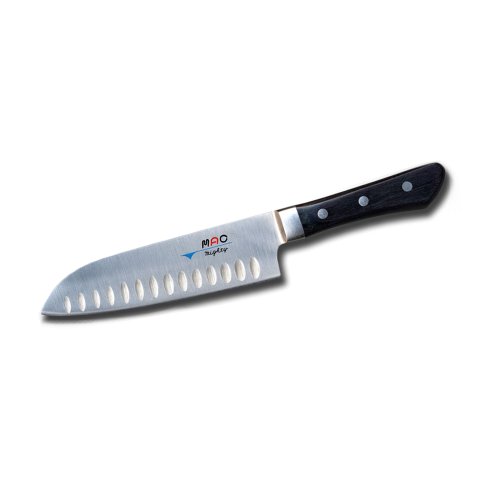
The MAC Knife Professional Series MSK-65 is one of the most consistently recommended Japanese santoku knives in the American market, and with good reason. MAC Knife has been handcrafting knives in Seki, Japan, since 1964, and the MSK-65 represents exactly what made the brand's Professional Series reputation: a thin, precise blade from exceptional steel, priced to be genuinely accessible to serious home cooks.
What Makes It Stand Out
The defining feature of the MAC MSK-65 is its proprietary sub-zero tempered, high-carbon molybdenum vanadium alloy steel. This alloy is engineered to solve the tension that most stainless steels face: hard enough to hold a very sharp, fine edge over extended use, while tough enough to resist chipping under normal kitchen conditions. Hardened to 61 Rockwell (HRC), three points harder than the Wüsthof Gourmet, the MAC MSK-65 holds its razor edge significantly longer between sharpenings, which translates to fewer interruptions during meal prep and a consistently superior cutting experience day after day.
The blade geometry is lean and low-resistance. At just 2mm thick at the heel, it passes through food with minimal wedging, meaning less resistance on each cut and a cleaner slice with less tearing or bruising of delicate ingredients. Multiple experienced knife reviewers describe the first cut through a tomato or onion as feeling almost effortless, and long-term owners consistently cite edge retention as the knife's most impressive characteristic.
The hollow (dimpled) edge functions identically to a granton edge, preventing thin food slices from adhering to the blade, but with a visual character that reviewers describe as clean and purposeful rather than decorative. For high-speed vegetable prep, the dimples make a genuine practical difference.
Balance and weight are carefully considered in the MSK-65 design. The stainless steel bolster combined with the blade weight distributes the knife's center of gravity precisely at the middle of the cook's palm, making the knife feel stable and controlled during the up-and-down santoku chopping motion. At 6.1 oz (176g), it is light enough for extended prep sessions without causing hand fatigue.
The triple-riveted black Pakkawood handle is a premium touch for a knife at this price. Pakkawood is a resin-impregnated hardwood composite that is significantly more moisture-resistant and dimensionally stable than natural wood. It won't expand, crack, or absorb odors over time, even with daily kitchen use. The handle shape is ergonomically designed around the pinch grip position, where the index finger and thumb hold the blade just ahead of the bolster.
MAC backs the MSK-65 with an extraordinary 25-year warranty, one of the most generous guarantees on any kitchen knife at this price level, reflecting the company's confidence in its craftsmanship and materials.
Specs at a Glance
| Feature | Detail |
|---|---|
| Blade Length | 6.5 inches |
| Steel | Sub-zero tempered high-carbon molybdenum vanadium alloy |
| Edge Angle | 15 degrees (double bevel) |
| Construction | Roll forged |
| Handle | Triple-riveted black Pakkawood with stainless steel bolster |
| Tang | Full tang |
| Hollow Edge | Yes (dimpled) |
| Blade Thickness | 2mm at heel |
| Made In | Seki, Japan |
| Rockwell Hardness | 61 HRC |
| Warranty | 25 years |
| Weight | 6.1 oz |
Pros and Cons
Pros: Proprietary sub-zero tempered steel at 61 HRC for exceptional edge retention, 2mm lean blade geometry for minimal cutting resistance, dimpled hollow edge prevents food sticking, perfectly balanced with stainless steel bolster, triple-riveted Pakkawood handle is moisture-resistant and premium, handcrafted in Seki, Japan since 1964, extraordinary 25-year warranty.
Cons: 6.5-inch blade is slightly shorter than the 7-inch Wüsthof and KAWAHIRO models; harder steel (61 HRC) requires more careful use to avoid chipping on hard or frozen foods; hand washing required (dishwasher will damage edge and handle).
Best for: Dedicated home cooks and culinary enthusiasts who want a precision Japanese santoku knife with exceptional edge retention, authentic Japanese craftsmanship from Seki, and a 25-year warranty that backs every cut with real manufacturer confidence.
#3 — KAWAHIRO 7-Inch Hand Forged VG10 Santoku Knife with Exotic Wood Handle — Best for Craftsmanship and Premium Gift Presentation
The KAWAHIRO 7-Inch Hand Forged VG10 Santoku Knife is the most visually striking and artisanally crafted Japanese santoku knife in this review, a blade that combines premium VG10 steel performance with traditional hand-forging techniques and the kind of exotic wood handle and gift presentation that makes it as compelling as a gift as it is as a daily kitchen tool.
What Makes It Stand Out
The foundation of the KAWAHIRO's performance is its VG10 stainless steel core, one of the most respected knife steels in Japanese cutlery, hardened to 60 to 62 Rockwell (HRC). VG10 is a fine-grained, high-carbon stainless alloy enhanced with cobalt, which provides superior edge retention, corrosion resistance, and the ability to take and hold a very fine, precise sharpening angle. At the 15-degree blade angle of the KAWAHIRO, this steel produces a razor-sharp cutting experience that professional chefs associate with high-end Japanese cutlery brands.
What distinguishes the KAWAHIRO from mass-produced alternatives is its hand-forging process. Master craftsmen forge and shape each blade individually using traditional Japanese techniques, then apply a three-layer composite construction (VG10 core clad between outer layers) that enhances structural rigidity and delivers a distinctive aesthetic character.
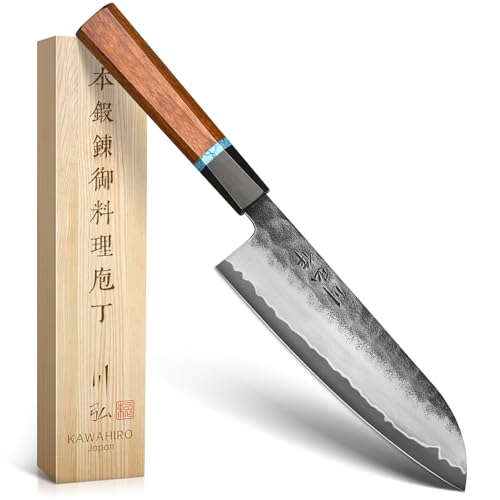
The black forged finish on the blade spine and sides is not merely decorative; it adds a hardened oxidation layer that provides light rust resistance and gives the knife a bold, dramatic visual profile that stands apart from polished or mirror-finished alternatives.
Each knife is hand-sharpened using traditional water grinding techniques before leaving the workshop, producing an out-of-the-box sharpness that reviewers consistently describe as exceptional. One reviewer describes the first experience as feeling like cutting with a razor, while another notes that the knife "slices cleanly through tomatoes, onions, and chicken with zero resistance." The sharpened blade is optimized for the push-cut and up-and-down chopping motions central to the santoku technique.
The ergonomic octagonal handle is crafted from a combination of exotic woods, including ebony, turquoise, and padauk (ruby wood), depending on the variant, each selected for both visual beauty and functional properties. The octagonal cross-section is a traditional Japanese handle design that naturally orients the hand in the correct pinch grip position, reducing fatigue during extended prep sessions. At 180g (6.4 oz), the knife balances precisely at the junction of blade and handle, the optimal balance point for a pinch grip.
The KAWAHIRO is presented in a premium wooden gift box, a detail that elevates it well beyond standard retail packaging and makes it one of the most compelling culinary gift options in its price range. For birthdays, housewarmings, Father's Day, Mother's Day, or any occasion where the recipient appreciates quality kitchen tools, the KAWAHIRO's presentation is in a class of its own.
Specs at a Glance
| Feature | Detail |
|---|---|
| Blade Length | 7 inches (180mm) |
| Steel | VG10 high-carbon stainless steel (3-layer composite) |
| Edge Angle | 15 degrees |
| Construction | Hand forged by master craftsmen |
| Handle | Exotic octagonal wood (ebony, turquoise, padauk) |
| Blade Finish | Black forged |
| Rockwell Hardness | 60 to 62 HRC |
| Weight | ~180g (6.4 oz) |
| Sharpening | Traditional water-ground, hand-finished |
| Gift Packaging | Premium wooden gift box |
Pros and Cons
Pros: VG10 steel at 60 to 62 HRC for premium edge retention, hand-forged by master craftsmen using traditional Japanese techniques, 3-layer composite construction for rigidity and aesthetics, black forged blade finish for visual character and light rust resistance, ergonomic octagonal handle in exotic wood reduces hand fatigue, exceptional out-of-the-box sharpness via water grinding, and premium wooden gift box packaging.
Cons: No formal multi-decade warranty like the MAC or Wüsthof; VG10 steel at this hardness is susceptible to chipping on bones and hard foods; hand washing required; octagonal handle shape may need a brief adjustment period for cooks accustomed to Western round or D-shaped handles.
Best for: Home cooks, culinary enthusiasts, and gift-givers who want the most artisan-crafted Japanese santoku knife available, hand-forged VG10 steel, exotic wood handle, water-ground razor sharpness, and a premium wooden gift box presentation that makes it equally impressive to use and to give.
How to Use and Care for Your Santoku Knife
Proper Cutting Technique
The santoku knife performs best with a straight up-and-down chopping motion rather than the rocking motion used with a Western chef's knife. For precision slicing, the push-cut drawing the blade slightly forward as you press down, produces cleaner, thinner slices. Always use a pinch grip (index finger and thumb pinching the blade just ahead of the bolster) for maximum control and minimal hand fatigue.
Always Use a Wooden or Plastic Cutting Board
Never cut on glass, stone, ceramic, or metal surfaces; these materials will dull your santoku knife edge immediately. A wooden cutting board is the ideal surface: it cushions the blade edge on impact, extends edge life significantly, and is gentler on the knife than even high-quality plastic alternatives.
Hand Wash Only
All three knives in this review require hand washing. Dishwashers subject knife blades to extreme heat, harsh detergents, and repeated impacts from other utensils that damage even the best steel. Wash your Japanese santoku knife by hand with mild dish soap, dry it immediately with a clean cloth, and store it in a knife block or magnetic strip rather than loose in a drawer.
Hone Regularly, Sharpen Periodically
Honing, or running the blade along a honing steel or ceramic rod, realigns the microscopic teeth of the edge without removing metal. Hone your santoku before each use or every few sessions to maintain peak sharpness. Sharpening on a whetstone removes metal to restore a dulled edge and should be done every 2 to 3 months for frequent home cooks. For Japanese knives with VG10 or sub-zero tempered steel, use a ceramic or diamond honing rod; avoid standard steel honing rods that may not be hard enough to effectively maintain the edge.
Store Properly
Loose knives in a drawer create the greatest risk of edge damage and personal injury. Store your santoku knife in a wooden knife block, on a magnetic knife strip, or in an individual blade guard or sheath. Proper storage protects the edge, extends the knife's lifespan, and keeps your kitchen safer.
Frequently Asked Questions About Santoku Knives
Is a santoku knife better than a chef's knife? Neither is universally better; they excel at different tasks. A santoku knife is superior for precise up-and-down chopping of vegetables, herbs, and fish, and its lighter weight makes it less fatiguing for extended prep. A Western chef's knife's rocking motion and longer blade handle larger cuts, butchering tasks, and techniques that require continuous blade contact with the cutting board. Many professional and home cooks use both.
What is the ideal santoku knife size? 7 inches is the sweet spot for most home cooks, long enough for efficient prep of medium and large vegetables, short enough to feel agile and precise. Compact 5 to 6.5-inch models (like the MAC MSK-65) excel for smaller hands or tasks requiring extra precision.
How do I sharpen a Japanese santoku knife? Use a whetstone with a grit sequence appropriate to the current edge condition, typically 1000 grit for regular maintenance, 3000 to 6000 grit for polishing. Maintain the 15-degree angle that both the MAC and KAWAHIRO are factory-set to. For German-style knives like the Wüsthof Gourmet, a 10 to 15-degree angle is appropriate. Avoid pull-through sharpeners, which remove excessive metal and do not produce a fine enough edge for quality knives.
Can I use a santoku knife for meat? Yes — the santoku's "three virtues" include meat alongside fish and vegetables. It handles boneless proteins excellently. Avoid cutting through bones, joints, or frozen foods with any Japanese santoku knife, as the harder steel is more prone to chipping under these conditions than a thicker Western blade.
What does hollow edge mean on a santoku knife? A hollow edge (also known as a Granton edge) refers to a series of indentations on the blade face that create small air pockets between the blade and the food as you slice. This prevents thin cuts from sticking to the blade, particularly useful when slicing potatoes, cucumbers, soft cheeses, and delicate proteins.
Final Verdict: Which Santoku Knife Should You Buy in 2026?
Each of the three best santoku knives reviewed here excels for a different type of cook and use case:
The Wüsthof Gourmet 7-Inch Hollow Edge Santoku Knife is the best overall choice for home cooks who want proven German engineering, PEtec blade sharpness, a hollow edge for clean slicing, and a lifetime warranty from one of the world's most trusted cutlery brands. It is the most practical everyday santoku knife in this review and the most forgiving for cooks of all experience levels.
The MAC Knife Professional MSK-65 is the best choice for serious home cooks who want a precision Japanese santoku knife with exceptional edge retention, authentic Seki craftsmanship, and a 25-year warranty. Its sub-zero tempered steel, lean 2mm blade geometry, and perfectly balanced Pakkawood handle make every cut feel effortless, and its long-term performance justifies every dollar.
The KAWAHIRO VG10 7-Inch Santoku Knife is the best choice for those who want a hand-forged Japanese santoku knife with VG10 steel, an exotic octagonal wood handle, and a premium wooden gift box presentation. It is the most artisan-crafted option on this list and the most impressive, both in performance and as a gift for any culinary enthusiast.
No matter which you choose, upgrading to one of the best santoku knives in 2026 immediately transforms your kitchen experience, with sharper cuts, less effort, and a newfound appreciation for what a truly excellent blade can do.