Best Attic TV Antenna for Multiple TVs in 2026: Which Type Is Right for You?
Disclosure: We may earn a commission when you buy through links on this page, at no extra cost to you. As an Amazon Associate I earn from qualifying purchases. Learn more

Choose an attic TV antenna for multiple TVs by comparing bay, yagi, and compact types, then plan splitters and amplifiers to keep every screen sharp.
One antenna feeding every TV in the house sounds simple until you face the choices: three antenna shapes, splitters that quietly eat signal, and an attic that blocks more signal than the brochures admit. Picking the best attic tv antenna for multiple tvs is really about matching antenna type and distribution hardware to your distance from the broadcast towers and the number of sets you plan to feed.
This guide compares the antenna types side by side in plain language, then covers the splitting and amplification decisions that matter just as much as the antenna itself. A strong antenna with a careless splitter setup will disappoint you, while a modest antenna with clean distribution often surprises people. Use the product table below for a first look at the available antennas, then read on for the details behind each one.


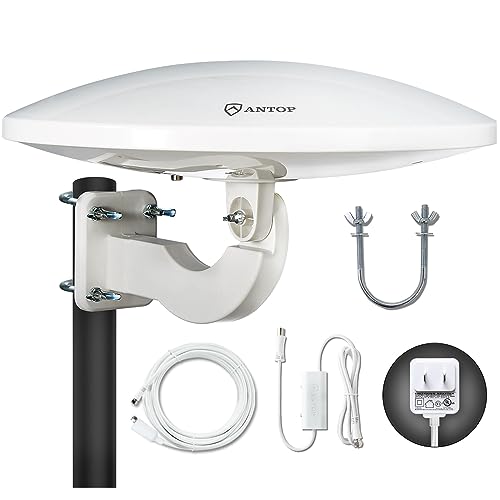
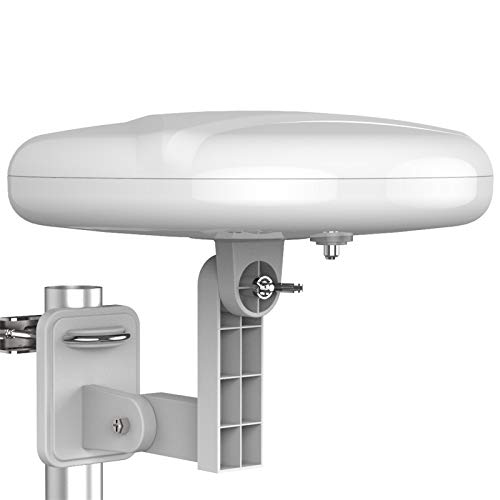
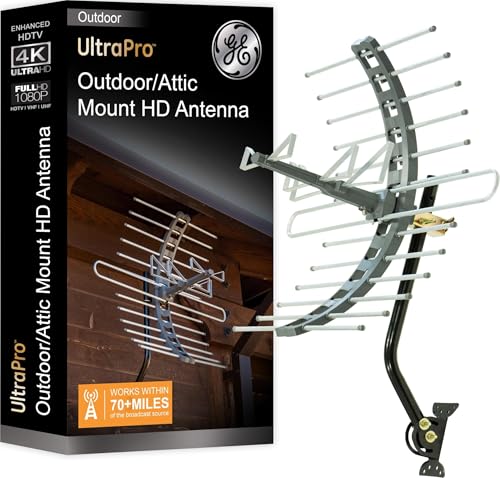
Types of Attic TV Antennas Compared
Attic antennas fall into three families. In general terms, multi directional bay antennas cost about $40 to $90 and suit suburbs with towers in several directions; directional long range antennas cost about $50 to $120 and suit homes far from towers in one direction; compact low profile antennas cost about $30 to $70 and suit strong signal areas close to the city. Here is how each family behaves in a real attic.
Multi Directional Bay Antennas
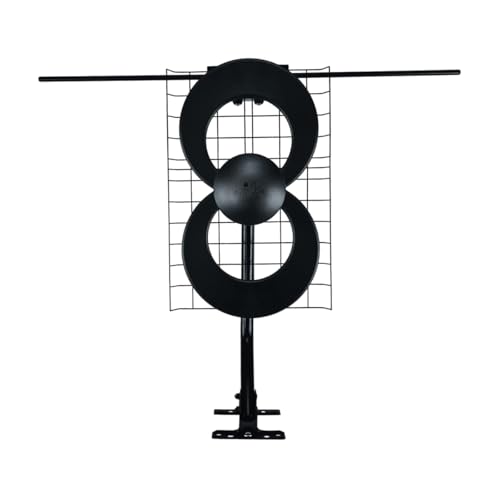
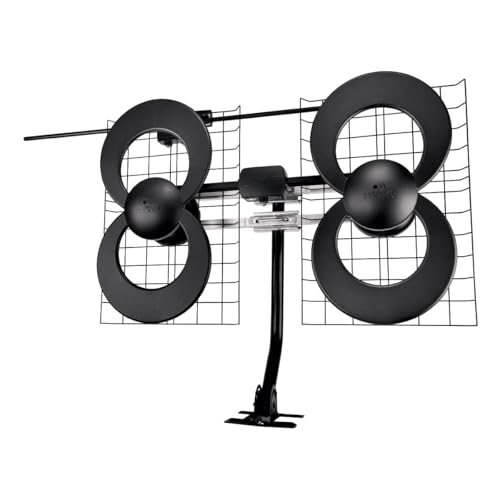
Bay antennas use several bowtie shaped elements on a flat frame, and they receive signals across a wide arc without precise aiming. That makes them the forgiving choice when your local stations broadcast from two or three different compass points. In an attic they mount flat against a rafter or hang from a small bracket, which keeps installation simple. Their weakness is raw reach: beyond about 40 to 50 miles, or with heavy obstructions, the wide pattern gathers less signal than a focused design. For most suburban multi TV homes, this is the family to beat.
Directional Long Range Antennas
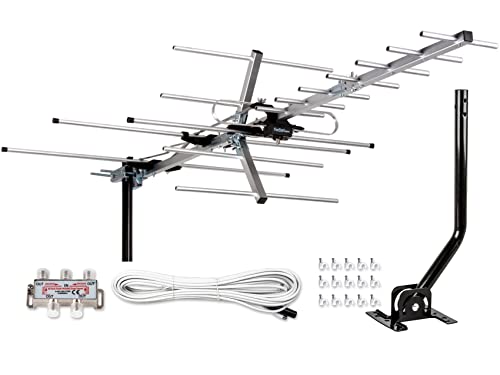
Directional antennas, often built in a yagi style with a long boom and many elements, concentrate their reception in one narrow direction and reject signals from the sides. That focus delivers the strongest pull on distant towers, sometimes reaching 60 miles or more in good conditions. The trade off is aim: a few degrees off target can cost you channels, and stations in other directions may vanish entirely. Choose this type when your towers cluster in one direction and distance, not convenience, is your main problem.
Compact Low Profile Antennas
Compact panel and loop designs trade reach for discretion and easy mounting, which suits small attics, townhomes, and homes within about 25 miles of the towers. They are light, simple to hang, and often include a small amplifier in the package. Their limit is physics: a small antenna in a weak signal area cannot feed several TVs reliably, no matter what the box claims about range. If you are comparing mounting locations as well as types, our guide to the best outdoor tv antenna for multiple tvs shows what moving the same idea outside the roof would gain you.
Multi Directional vs Directional Antennas: Which Should You Choose?
Judge the two main families on five points. For signal reach, directional wins clearly. For stations spread across different compass points, multi directional wins just as clearly. For aiming effort, the bay design forgives sloppy placement while the directional design rewards a compass and patience. For attic fit, bay antennas mount flat and compact, while long booms need swing room to rotate during aiming. For feeding multiple TVs, both work, but the stronger starting signal of a well aimed directional antenna tolerates splitter losses better. Our guide to the best antenna for multiple tvs covers the distribution side of this same decision in more depth.
How to Choose the Right Attic TV Antenna
The antenna is only half the system. These five checkpoints decide whether every TV in the house gets a stable picture or just the one closest to the attic.
Features That Matter for Multiple TVs
Feeding several TVs divides your signal, so the features that matter are the ones that protect signal strength from antenna to the farthest set. When you compare the best attic tv antenna for multiple tvs, prioritize honest gain figures, a wide enough reception pattern for your tower locations, and construction that survives attic heat for years. Equally important is headroom: start with more signal than one TV needs, because every split, connector, and long cable run spends some of it before the picture appears.
Splitters, Amplifiers, and Signal Loss
Each split costs signal, roughly 3.5 dB for a two way split and about 7 dB for a four way split, so a four TV home can lose half its signal in the splitter alone. A distribution amplifier placed near the antenna replaces that loss for every run at once, and it is usually the right tool for three or more TVs. A small preamplifier at the antenna helps when cable runs are long. Avoid stacking amplifiers, which can overload strong channels and make reception worse.
Attic Placement and Building Materials
Height and aim matter, but materials matter more. Radiant barrier foil, metal roofing, and foil backed insulation block signals aggressively, and a wet roof weakens reception further. Mount the antenna as high in the attic as practical, on the side facing your towers, and keep it away from metal ducts and wiring runs. Test before you commit: hold the antenna in a few candidate spots with a temporary cable to one TV and scan channels in each position. If attic results stay poor, our guide to the best indoor tv antenna for multiple tvs covers the fallback options room by room.
Cable Runs and Connectors
Use RG6 coaxial cable for attic distribution; it loses less signal over distance than older RG59 and handles digital broadcasts cleanly. Keep runs as short and straight as the house allows, and use quality compression fittings instead of loose crimp connectors that corrode and loosen. Label each run at the splitter with the room it feeds. When one TV later misbehaves, that label turns a whole house mystery into a five minute check of a single cable.
Channel Bands and Tower Distance
Most stations now broadcast on UHF, but some markets keep key channels on VHF, and antennas differ in how well they cover each band. Check a tower locator for your address before buying: note the distance, direction, and band of every station you care about. Homes under about 30 miles with towers in one cluster have easy choices. Fringe homes past 50 miles should favor directional designs and may honestly do better with a roof mount, a comparison our guide to the best hdtv antenna for multiple tvs explores for difficult locations.
How to Make Your Attic TV Antenna Last Longer
Attic antennas live an easy life compared with roof gear, but heat and neglect still take a toll. Inspect the connections once a year for corrosion or looseness, since the splitter is the most common failure point in the whole system. Keep the antenna clear of stored boxes that slowly push it out of alignment. After major storms or roof work, rescan channels on one TV; if counts drop, recheck aim before assuming the antenna failed. Finally, work safely up there: watch for exposed nails and electrical wiring, bring a light, and avoid the attic on very hot days, when temperatures can become dangerous quickly.
FAQs
What features matter most in attic tv antennas for multiple tvs?
Honest gain, the right reception pattern for your tower directions, and enough signal headroom to survive splitting matter most. One factor buyers overlook: the quality of the included or recommended splitter and amplifier often decides real world results more than the antenna brand. Buy the distribution hardware with the same care as the antenna itself, and keep one spare connector and a short test cable in the house for troubleshooting.
Can one attic antenna really feed four TVs?
Yes, in a strong to moderate signal area, one antenna feeding four TVs is routine with a distribution amplifier. The amplifier compensates for splitter loss so each set receives a healthy signal. Problems appear in fringe areas, where the starting signal is too weak to divide four ways. In that case, feed fewer TVs from the attic antenna, or move the antenna to the roof where it starts with a stronger signal.
Do I need an amplifier with an attic antenna?
You need one when you split the signal three or more ways or run long cables, which describes most multi TV homes. A single short run to one TV rarely needs help. Place a distribution amplifier at the splitter, not at the TV, so it lifts the signal before the runs divide it. Remember that an amplifier cannot create signal that the antenna never captured; it only protects what is already there.
How long do attic antennas last?
An attic antenna commonly lasts ten years or more, because it is sheltered from wind, rain, and ultraviolet damage. The parts that fail first are outdoor rated connectors used indoors anyway, cheap splitters, and amplifier power supplies. Expect to replace small hardware once during the antenna life rather than the antenna itself. If reception fades gradually over years, suspect a corroding connection before you suspect the antenna.
Will a metal roof or radiant barrier block my attic antenna?
Yes, both can block a large share of the signal, and foil backed radiant barrier is one of the worst attic obstacles. Test reception with the antenna near a gable end, where the signal path may pass through wood and siding instead of the roof surface. If tests stay weak in every attic position, the honest fix is an outdoor mount. No amplifier can recover signal that never reaches the antenna elements.
How do I aim an attic antenna correctly?
Start with a tower locator reading for your address, then point the antenna toward the main cluster of towers using a compass app, remembering that attic framing can shift readings slightly. Scan for channels, note the count and signal quality, then rotate the antenna about ten degrees at a time and rescan. Small moves matter. When the count peaks, lock the mount down firmly so storage trips and vibrations cannot drift it later.
Wrapping Up
Pick the antenna family by tower geography, protect the signal with the right splitter or distribution amplifier, and test attic positions before you mount anything permanently. Compare your finalists in the product table above, and you will have the best attic tv antenna for multiple tvs setup your house can support, with every screen in the home pulling its weight.