
Best Attic Antenna for Multiple TVs 2026: Whole Home Reception Guide
Disclosure: We may earn a commission when you buy through links on this page, at no extra cost to you. As an Amazon Associate I earn from qualifying purchases. Learn more
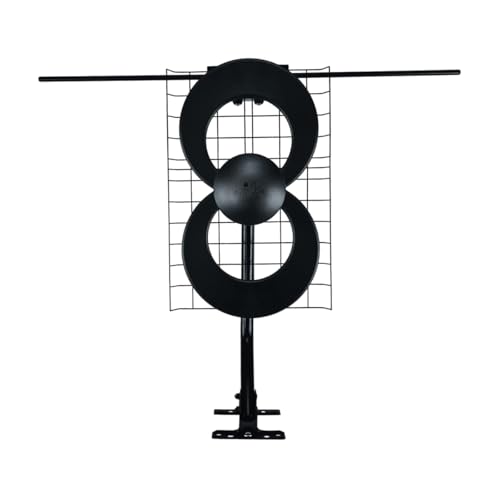
Best attic antenna for multiple TVs: gain, range and splitting tips so every set gets local channels, with attic mount models to compare.
One antenna can feed every TV in the house, but splitting a weak signal makes every picture worse. The best attic antenna for multiple TVs has enough gain to serve several sets, sits in a clear spot above your living space and is paired with a distribution amplifier.
The product table lists attic friendly outdoor and indoor outdoor antennas from Antennas Direct, Five Star, Televes, GE and others. Read the sections below to plan your cabling.
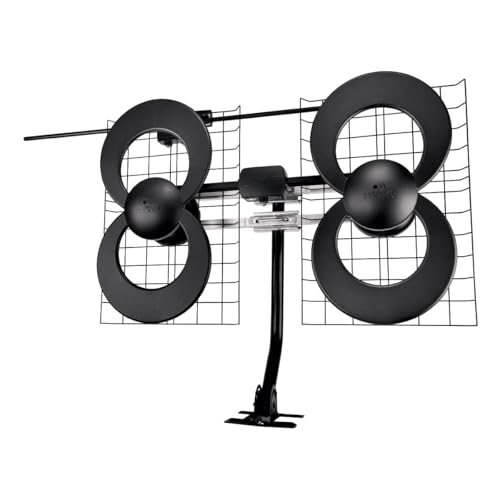

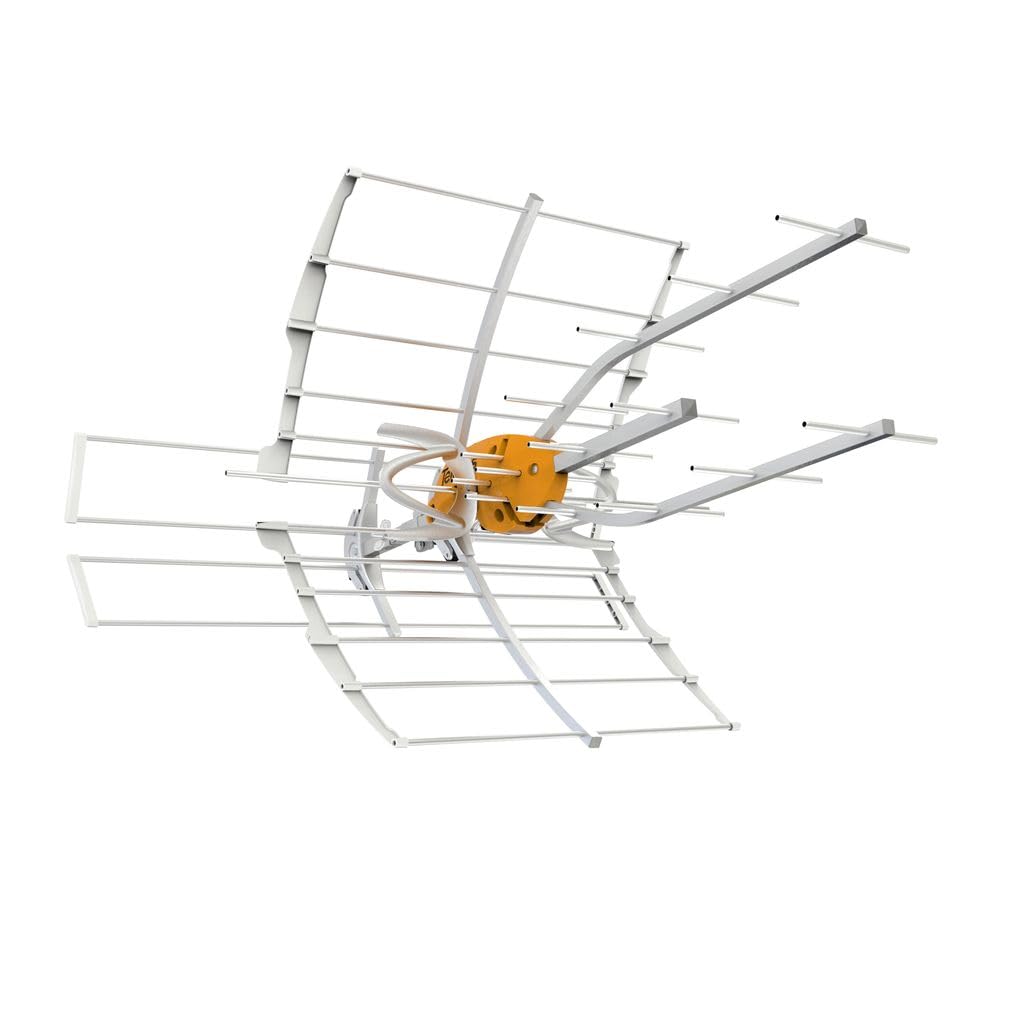
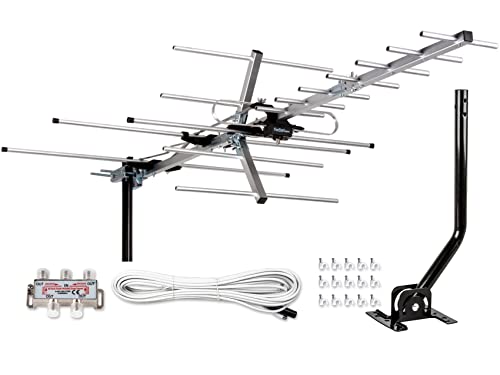


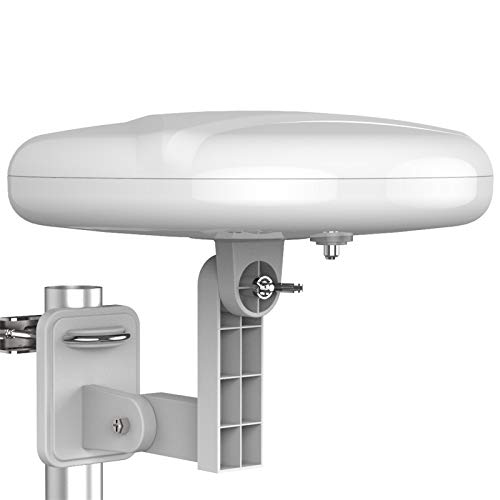
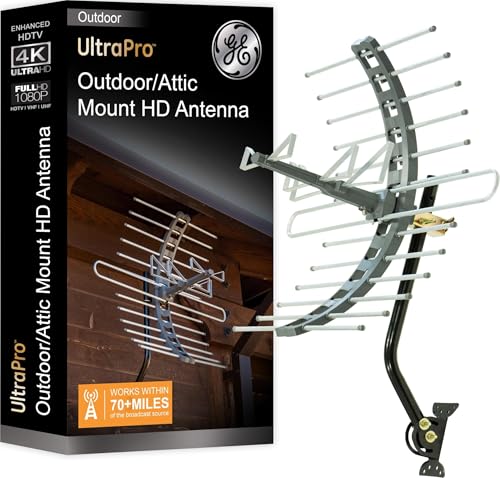
Who Should Buy the Best Attic Antenna for Multiple TVs
Homeowners who want local channels on several TVs without cable fit this setup. It works best if you have attic access, no metal roof and a clear line toward the broadcast towers.
Signal Range and Direction
Find your local towers with an online signal map. Directional antennas like Yagi and multi element designs have the strongest gain toward one direction. Multi directional or omnidirectional models handle towers in different directions but have lower gain. Choose a range rating that exceeds your distance to the towers, since attic placement loses some signal.
Splitting Without Losing Signal
Every split divides the signal. A two way splitter loses about 3.5 dB and a four way loses about 7 dB. For three or more TVs use an amplified distribution amplifier close to the antenna, and use quality coax and fittings. An amplifier cannot fix a weak antenna signal, so aim to get a clean one first.
Attic Placement and Obstacles
Mount the antenna as high as possible in the attic, away from metal ducting, wiring and insulation with foil backing. Roof materials and radiant barriers can weaken the signal. Try different positions with a channel scan before you fasten the mount.
VHF and UHF Coverage
Most channels use UHF, but some stations broadcast on VHF. Make sure the antenna supports both, and check which channels your stations use.
Cable Runs and Connectors
Use RG6 coax with compression connectors and keep runs as short as you can. Ground the cable as local code requires, and have a pro run cable if you are unsure.
Weather and Safety in the Attic
Attics can be hot, tight and have exposed wiring. Wear protection, step only on joists and follow the manufacturer's instructions. Hire a pro if you are not comfortable working in the attic.
Typical Specs of Attic Antennas
| Type | Typical gain | Range rating | Direction |
|---|---|---|---|
| Compact multi element (ClearStream 2V) | Moderate | Up to about 60 miles | Multi directional |
| Large multi element (ClearStream 4V, bowtie) | High | Up to about 70 miles | Directional or wide |
| Yagi style | High | Up to about 150 miles claimed | Strongly directional |
| Amplified outdoor omni | Moderate | Up to about 100 miles claimed | 360 degrees |
Range ratings on the box are best case, in open outdoor conditions. In an attic, expect to lose some of the signal to roofing and walls, so use real tower distance as the guide. Channels in the UHF band, 14 to 36 on the dial, carry most stations today.
Reading a signal map
Enter your address in an online coverage map and note the distance, compass direction and channel band of the stations you want. If all towers are in one direction, a directional antenna helps. If they are scattered, choose a multi directional model or a small rotator.
Splitting Signal for Multiple TVs
| Splitter | Approximate loss per output |
|---|---|
| 2 way | About 3.5 dB |
| 3 way | About 6 dB |
| 4 way | About 7 dB |
| 8 way | About 11 dB |
A distribution amplifier with a gain of 8 to 15 dB can offset those losses when installed close to the antenna, followed by a splitter for each TV. Use it only when the signal is strong enough, since amplifying a weak, noisy signal just makes it louder.
Installation Steps
- Find the towers and choose the antenna.
- Mount it on a rafter or mast in the attic, as high and as near the roof peak as you can.
- Connect RG6 coaxial cable and run it to the distribution amplifier or splitter.
- Run RG6 cable to each TV, using compression fittings.
- Scan for channels on each TV and adjust the antenna direction for the best signal.
When an Attic Is Not Enough
Metal roofs, foil insulation and long cable runs can block signals. If scans find few stations, try moving the antenna toward the roof edge facing the towers, or switch to a rooftop or outdoor mount.
Cable and Connector Tips
Use quad shield RG6 coax with compression F connectors, which hold better than twist on types. Keep runs under about 100 feet when possible, since longer runs lose signal. Avoid sharp bends, tape or staples that crush the cable, and seal outdoor connections against moisture. Label each cable at the splitter so you can trace it later.
Related Choices Worth Comparing
Read best antenna for multiple tvs, best outdoor tv antenna for multiple tvs, best indoor tv antenna for multiple tvs and best hdtv antenna for multiple tvs.
Mistakes to Avoid
- Using a cheap splitter without an amplifier.
- Placing the antenna behind metal or foil.
- Choosing a range that barely reaches your towers.
- Using long runs of thin cable.
FAQ
Can one antenna feed many TVs?
Yes, with a distribution amplifier or splitters, provided the signal is strong.
Do I need an amplifier?
For three or more TVs, a distribution amplifier usually helps. For one or two, a splitter may be enough.
Will the attic reduce the signal?
Roofing and insulation can weaken it, so choose a higher gain antenna than you would for outdoors.
Do all TVs need tuners?
Modern TVs have built in tuners. Older sets may need a converter box.
Does the antenna need power?
Passive antennas do not. Amplified models and distribution amplifiers need a power injector or adapter.
How many TVs can one antenna feed?
Often four to eight with a distribution amplifier and a strong signal. Weak signals support fewer.
Final Thoughts
Plan the antenna, placement and splitting together. Compare the product table, and the best attic antenna for multiple TVs will deliver clear pictures on every screen.


