Best 48 Inch Gas Ranges (2026): Types Compared and Buying Guide
Disclosure: We may earn a commission when you buy through links on this page, at no extra cost to you. As an Amazon Associate I earn from qualifying purchases. Learn more
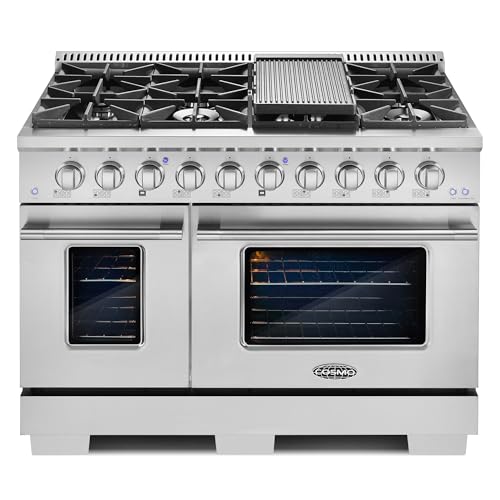
A practical guide to the best 48 inch gas range: all gas, dual fuel, and griddle layouts, plus gas supply, ventilation, and budget.
Picture a holiday dinner at your house. A turkey roasts in one oven, rolls bake in the second, and three pans share the cooktop while a fourth sauce simmers at the back. That is the promise of the best 48 inch gas range for a home that cooks for a crowd, and it is a very different purchase from a standard range.
This guide focuses on fit rather than flash: how the size suits your kitchen and household, which layouts earn their counter space, and what owning one costs. Start with the comparison table below, then use the checklist to match a layout to your space and budget. If you are still weighing sizes, our guide to the best gas range covers every width.
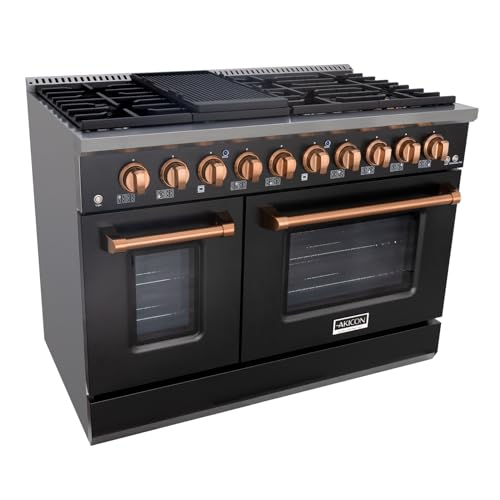
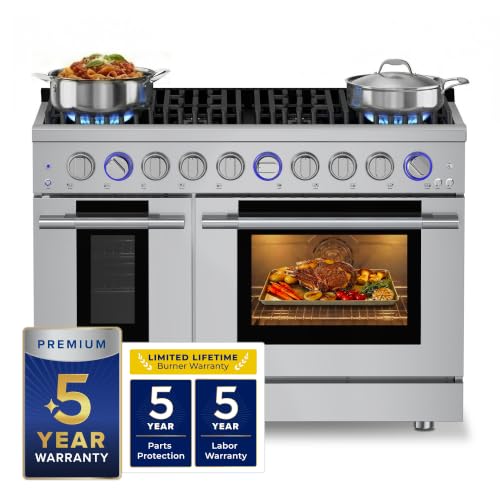


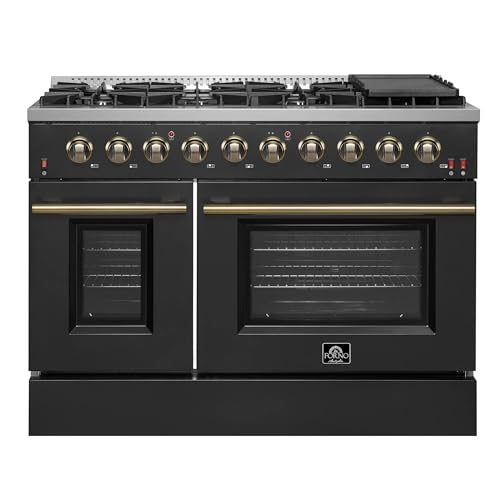
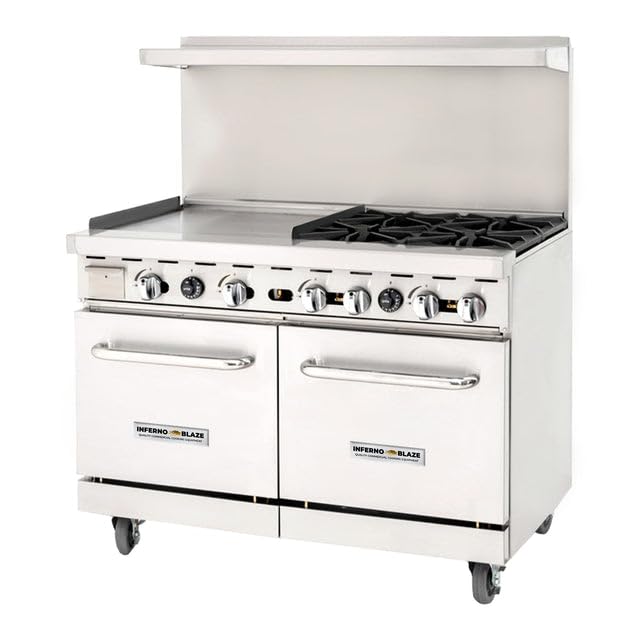
Quick Answer: Three Layouts Worth Considering
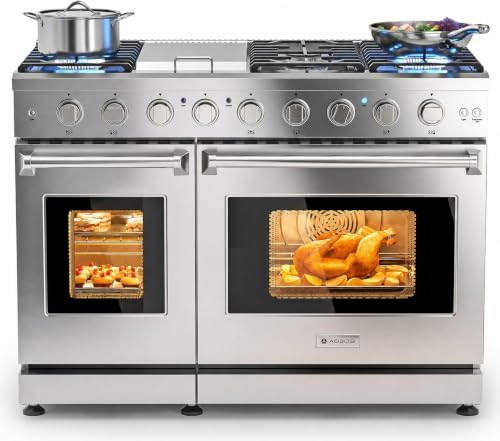
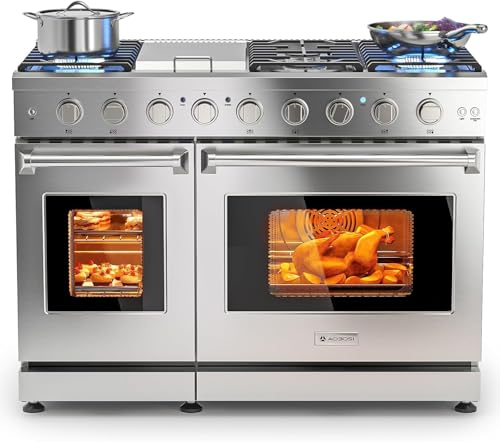
Nearly every 48 inch model falls into one of three layouts. The first is all gas, with six burners and two gas ovens, for cooks who want one fuel and simple controls. The second is dual fuel, with a gas cooktop over electric ovens, for bakers who want steadier oven heat. The third swaps two burners for a wide griddle, giving a flat cooking surface for big breakfasts and batch cooking. Your choice turns on how you split time between the cooktop and the ovens.
Before You Buy: A Quick Checklist for Choosing a Gas Range
Size: Match It to Your Space
Ranges come in 20, 24, 30, 36, and 48 inch widths, and each step up changes far more than the cooktop. A 30 inch range is the standard fit in most kitchens, while a 36 inch model adds a wider oven and a fifth or sixth burner. At 48 inches you gain a second oven and elbow room for several large pans at once. Measure your cutout and the path through doorways and halls before you fall for the largest size, because these units are heavy and hard to return. If your cutout is smaller, our guide to the best 36 inch gas range shows how much capacity that width still gives a busy household.
Which Type Fits Your Routine
Most 48 inch models are freestanding units with finished sides, and they slide into a gap between counters. True slide in designs at this width are rare. From there, the real split is fuel and oven style. All gas models keep everything on one fuel, dual fuel pairs a gas cooktop with electric ovens, and professional style models add heavier grates, larger burners, and fewer electronic features. Propane homes need a model rated for conversion with the correct kit, so confirm that before ordering.
Features Worth It (and Ones to Skip)
A center griddle earns its space if you cook pancakes, burgers, or grilled sandwiches for a group, because it heats evenly and holds many portions at once. A high output wok burner matters if you stir fry often, since a round bottom wok needs intense, focused heat. Convection in at least the main oven helps roasts brown evenly. You can safely skip some extras: WiFi apps that only mirror the timer add little, and a warming drawer matters less when a small second oven already holds food at serving temperature.
Measurements and Compatibility With Your Setup
Confirm the basics before any model makes your shortlist. Your gas supply must match the total burner output, and many 48 inch models call for a larger supply line than a standard range uses, plus a shutoff valve within reach of the unit. All gas models need only a standard outlet for the igniters and clock, while dual fuel models need a heavy duty electric circuit for the ovens. Ventilation is the step buyers most often underestimate: high output burners put far more heat and grease into the air than a standard cooktop, so plan on a strong hood that covers the full width of the range, and check local rules on make up air.
Certifications That Matter
Look for a listing mark from a recognized testing body such as CSA or ETL on the rating plate, which shows the range was built and tested to the North American safety standard for household gas cooking appliances. That standard covers gas leaks, surface temperatures, and stability, and inspectors often look for the mark during a remodel. Skip any unit sold without a North American listing, because it can create problems with permits, insurance, and resale.
DIY vs Pro Installation Cost
Swapping a like for like gas range can be a modest job, but a first time 48 inch install usually is not. Running a larger gas line, adding a dual fuel circuit, and fitting a full width hood can each cost more than the delivery itself. Our breakdown of gas range installation cost walks through what each trade charges. A licensed installer will also pressure test the line, check for leaks, and level the range so oven doors seal well, which makes professional installation the safer default.
Realistic Budget Ranges
Forget the price tiers of standard ranges, because a 48 inch footprint starts far higher. Entry level models run about $3,000 to $5,000 and give you six burners, two ovens, and basic convection. The middle band, about $5,000 to $8,000, adds stronger burners, better grates, a griddle, and nicer finishes. Above that, premium models add dual fuel ovens and heavier construction. Hold back part of the budget for the hood, gas line work, and delivery.
Three Range Layouts Compared
All Gas With a Double Oven
This is the classic layout at this width: six burners up top, a large main oven, and a smaller oven beside it, all running on gas. It suits households that cook big meals often and want to roast in one oven while baking in the other, and the single fuel keeps installation simpler than dual fuel. If two ovens at two temperatures is your main reason for going wide, our guide to the best double oven gas range explains the split sizes to look for.
Dual Fuel With Electric Ovens
Dual fuel models keep the instant flame control of gas on the cooktop and switch the ovens to electric elements. Electric heat cycles less than a gas flame, so cakes and pastries bake with fewer hot spots and steadier results. The trade off is installation: those ovens need a heavy duty circuit that many kitchens lack. If you are torn between the two fuels, the comparison of dual fuel vs gas range lays out the cooking and cost differences.
Griddle Focused Layouts
These models trade two burners for a wide, flat griddle in the center of the cooktop. For a family that cooks weekend breakfasts, smash burgers, or large batches of grilled vegetables, the griddle often sees more use than a fifth and sixth burner would. The cost is flexibility: you give up two burner positions, so a night with five pots at once is off the table. Choose this layout only if flat top cooking is a weekly habit.
Our Selection Process for the Best 48 Inch Gas Ranges
We judge layouts and features for the best 48 inch gas range category on five points: installation and compatibility, build quality and finish, the usefulness of the feature set, safety certification, and warranty coverage. Our sources are manufacturer specification sheets and manuals, the safety standards the models are listed to, and patterns across verified buyer reviews. We do not claim hands on testing we have not done.
Is a 48 Inch Gas Range the Right Size for You?
Be honest about your biggest cooking day. If you regularly cook for eight or more people or host holidays, the second oven and the wide cooktop will earn their keep every week. A household of two or three that cooks simple weeknight meals will likely find the extra oven sitting cold while the cleaning load stays large. Also weigh the alternatives: a 36 inch range plus a countertop oven can cover most of the same meals for far less money, and if your kitchen lacks a gas supply entirely, our comparison of gas vs induction range explains what switching fuels involves.
Common Buying Mistakes to Avoid
- Measuring only the width, then finding the range cannot turn through a hallway or doorway on delivery day.
- Ordering before checking the gas line size, which leaves the range sitting in the garage while a plumber schedules the upgrade.
- Paying for a griddle or a wok burner you will use twice a year, while skimping on the convection oven you would use weekly.
- Forgetting the hood, so the first big sear fills the kitchen with smoke and sets off alarms.
Cost of Ownership and Care
Running costs stay modest for the fuel itself, since gas for cooking is a small share of most household bills, but ownership adds up elsewhere. Budget for replacement igniters, burner caps, and knobs over the years, and for a service call if a burner starts clicking or lighting unevenly. Two habits extend the life of the unit: keep the oven door gasket clean so the door seals well, and clean the hood filters regularly, because a clogged filter lets grease settle on cabinets and walls. If you ever smell gas with all burners off, leave the house and call your gas utility first, rather than hunting for the leak yourself.
Your Questions, Answered
What is the most reliable gas range brand?
No single brand wins for every home, because reliability at this size depends heavily on the service network near you. A range you can get repaired within days, with parts in regional stock, will serve you better than a famous name with one technician in your state. Ask local dealers which brands they can service quickly.
How do you clean a gas range?
Wait until the cooktop is fully cool, then lift off the grates and burner caps and soak them in warm soapy water while you wipe the surface. A paste of baking soda and water loosens baked on spots on enamel without scratching, and a soft cloth protects stainless finishes better than scouring pads. Dry every burner cap fully before replacing it, since trapped moisture can cause weak flames at the next lighting.
Is a gas range worth it?
It is worth it if you value instant heat changes and already have a gas line in place, because flame responds the moment you turn a knob, and the cooktop keeps working during a power outage. It is harder to justify if adding gas service costs thousands, or if you prefer a flat surface that wipes clean in seconds. Your cooking style should make this call.
How long does a gas range last?
A well kept gas range commonly serves about 15 years, and heavy professional style models can run longer because their burners and grates are built for repair rather than replacement. Igniters are the part most likely to need swapping along the way, and that is a routine service item rather than a sign the whole range is failing.
What size gas range do I need?
Count the dishes that must cook at the same moment on your busiest day, not the size of your family on a normal Tuesday. If two ovens and five pans run together at holidays, 48 inches fits. If your peak is one oven and three burners, a 30 or 36 inch range covers it and leaves money for better ventilation. Lay your largest sheet pans and roasters side by side and measure the span to check.
What is the best 48 inch gas range?
The best 48 inch gas range for your home is the layout you will use fully: all gas for simple, single fuel cooking, dual fuel for serious baking, or a griddle layout for big flat top meals. Start from your oven habits rather than the cooktop, because the oven split is the one choice you cannot change later. Match that layout to your gas line, ventilation, and budget, and the right model becomes obvious.
Final Thoughts
A 48 inch range is a commitment of space, money, and installation work, but for the right household it turns big meals from a juggling act into a routine. Use the product table above to compare layouts side by side, and confirm your gas line and hood before you order. Chosen that way, the best 48 inch gas range for your home will serve your family well for many years.