Best 36 Inch Range Hoods (2026): Types Compared and Buying Guide
Disclosure: We may earn a commission when you buy through links on this page, at no extra cost to you. As an Amazon Associate I earn from qualifying purchases. Learn more
A practical guide to the best 36 inch range hood: under cabinet, chimney, and convertible types, plus airflow, filters, and ducting.
A family kitchen tells the truth fast. One pan of onions, one pot of pasta steam, and a weak hood leaves the smell in the curtains and a fine film on the cabinets. Choosing the best 36 inch range hood for your home comes down to your space, how many people you cook for, and what you can spend and maintain.
Use the comparison table below to line up the main types side by side, then work through the checklist before you order anything.


Quick Answer: Three Types That Fit Real Homes
Most homes land on one of three setups. An under cabinet hood suits a 36 inch range set under wall cabinets. A wall mount chimney hood suits a range against an open wall with no cabinet above it. An insert hood suits custom cabinetry where you want the vent hidden inside a wood surround. Match the type to your kitchen first, then compare airflow, noise, and filters.
Before You Buy: A Quick Checklist for Choosing a Range Hood
Size: Match It to Your Space
Hoods come in widths such as 24 inch, 30 inch, 36 inch, 42 inch, and 48 inch, and the right one starts with the cooking surface below it. A 36 inch hood should cover the full width of a 36 inch range or cooktop so steam rising at the front burners still lands inside the capture area. Measure the range itself, not the gap between counters, and write that number down before you shop.
Which Type Fits Your Routine
Under cabinet models mount beneath a wall cabinet and suit most daily cooking. Wall mount chimney models need open wall space above the range. Island models hang from the ceiling and need stronger capture because air moves around them on all sides. Insert models drop into custom cabinetry. If your layout leaves you torn between the two most common layouts, our guide to the best under cabinet range hood covers that cabinet mounted option in depth.
Features Worth Paying For, and Ones to Skip
Pay for LED lights, because bright light over the front burners helps you judge color and doneness while you cook. Pay for baffle filters if you fry often, since their angled channels trap grease well and most go in the dishwasher. Mesh filters cost less and suit lighter cooking. A heat sensor that raises fan speed on its own helps during a forgotten boil over. Skip a remote control if you can reach the controls, and skip decorative glass if grease cleanup already feels like a chore.
Measurements and Compatibility With Your Setup
Check three numbers before you buy. First, the mounting height the maker lists, often about 24 to 30 inches above an electric cooktop and a bit more above gas. Second, the duct size the hood expects, often 6 inch round, and whether your home already has that path in place. Third, the depth of the hood, since a shallow hood can miss the front burners. The choice covered in ducted vs ductless range hood also depends on whether a duct path exists at all.
Certifications and Safety Marks
Look for a listing mark from UL or ETL on the label and in the manual, which shows the unit was checked against electrical safety standards in North America. Some models also carry ratings from the Home Ventilating Institute, a fair way to compare airflow and sound figures between brands. Skip any hood with no listing mark and no clear manual.
DIY vs Pro Installation Cost
Swapping a hood for one with the same mounting style and duct path is a job many handy owners finish in an afternoon. Adding new ductwork, moving an outlet, or cutting custom cabinetry calls for a pro. Before you decide, read our breakdown of range hood installation cost so labor and duct parts sit inside your total budget. If you do tackle a simple swap, the steps in how to install a range hood show the order of work from power off to final test.
Realistic Budget Ranges
At under $100 you get basic under cabinet models with mesh filters and modest airflow, fine for light cooking in a rental. About $100 to $300 brings stronger fans, better lights, and stainless finishes. About $300 to $500 adds baffle filters, quieter motors, and convertible venting. About $500 to $1000 buys island and insert models with higher airflow and heavier build. Above that you mostly pay for custom looks and very high airflow a home range rarely needs.
Three Types Worth Your Money
Rather than naming specific models, this section compares the three types most 36 inch shoppers choose between, using the checklist factors above.
Best for Most Homes: Under Cabinet Type
This type fits the layout most homes already have, a 36 inch range under a wall cabinet with a short duct path through that cabinet. It keeps costs in the middle range and puts controls at hand height. Choose a version with baffle or good mesh filters and at least two fan speeds you can tell apart by sound. The main limit is capture depth, so cooks who sear on the front burners daily may want the deeper canopy of a chimney style instead.
Best Value: Ductless Convertible Type
A convertible hood can vent outside if a duct exists or recirculate air through charcoal filters if none does, and that flexibility is its value. Renters and owners of older homes with no duct path get odor and grease control now, with the option to duct the same unit later during a remodel. Our guide to the best ductless range hood explains that recirculating route in full. Budget for charcoal filter changes a few times a year, since a spent filter stops trapping odors even though the fan still sounds fine.
Best Long Term Investment: Wall Mount Chimney Type
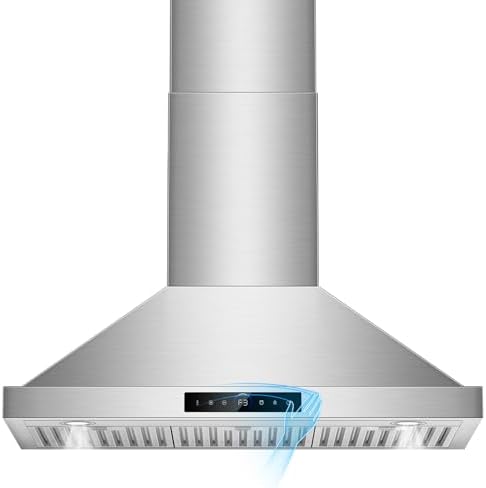
A chimney hood in stainless steel, with baffle filters and a ducted path outside, is the setup owners tend to keep through a full kitchen life. The deep canopy captures steam from front burners better than shallow designs, and the metal surfaces wipe clean without special cleaners. It costs more up front and needs open wall space and ceiling height that fits the chimney section. Choose it if you cook daily for a family and plan to stay in the home.
Our Selection Process for the Best 36 Inch Range Hoods
We weighed installation and compatibility first, because a hood that does not fit your cabinets or duct path helps no one. Next came build quality and finish, then features that change daily use, then certifications, and then warranty and parts support. The figures here come from maker manuals, published ratings, and patterns in verified buyer reports about noise and grease capture. We did not run lab tests.
Is a 36 Inch Range Hood the Right Size for You?
It is, if your range or cooktop measures 36 inches across, the common size for six burner and five burner home models and many pro style ranges. A hood the same width as the cooktop gives full coverage without eating wall space you do not have. If your cooktop is 30 inches, a 36 inch hood can still help, since the extra width catches steam that drifts sideways, but only if your cabinets allow the wider mount.
Go larger, to 42 inch, only when the cooktop itself is wider or when an island layout lets air escape on every side. Go smaller and you leave the outer burners partly uncovered, which shows up as grease on nearby cabinet faces. When you compare sizes against the wider field, our overview of the best range hood options puts this width in context.
Common Buying Mistakes to Avoid
- Buying by width alone and ignoring depth, so the front burners sit outside the capture area and grease lands on nearby cabinets.
- Choosing airflow far beyond your cooking, then never using top speed because the noise drives everyone out of the kitchen.
- Forgetting the duct size your home already has, which can force costly adapters or a full duct rebuild during install.
- Picking a ductless model and never budgeting for charcoal filters, so odors return within months even though the fan still runs.
- Mounting the hood higher than the maker lists to clear a tall pot, which lets steam spill into the room before the fan can catch it.
Cost of Ownership and Care
Running costs stay small. The fan and lights draw modest power, and an hour of daily use adds little to a power bill. The real ongoing cost is filters. Baffle and mesh filters need washing about once a month for regular cooks, in hot soapy water or a dishwasher cycle, and they last for years when handled gently. Charcoal filters cannot be washed and need replacing a few times a year in ductless use.
Wipe the outer surfaces weekly with a soft cloth and mild cleaner so grease never bakes on. Clean around the fan opening every few months, and check that the damper at the duct exit opens freely, since a stuck damper cuts airflow and raises noise. Keep the manual where you can find the filter part number without guessing.
Your Questions, Answered
How do you clean the inside of a 36 inch range hood?
Turn the power off, remove the filters, and wash them first. Then wipe the inner canopy and fan housing rim with a cloth dampened in hot water with a small amount of dish soap, working from the back toward the front so drips fall on the cooktop cover you laid down. A paste of baking soda helps on baked grease spots. Dry every surface before you refit the filters.
How long does a 36 inch range hood last?
Most home hoods serve about 10 to 15 years before the motor, the switches, or the light sockets start to fail. You can stretch that span by keeping filters clean, since a clogged filter forces the motor to work harder on every speed. A clear sign the end is near is a fan that hums but barely moves air with clean filters fitted. At that point compare repair cost against replacement, because motor swaps on older units often cost close to a new mid range hood.
What size range hood do I need for a 36 inch gas range?
Choose a 36 inch hood at minimum, and favor depth and airflow over extra width. Gas burners push heat and combustion byproducts upward in a strong column, so a deeper canopy mounted at the height the maker lists captures more of it. One point the checklist only touches is duct direction. A short, straight duct run keeps the rated airflow honest, while several bends can cut real capture even when the fan spec looks strong on paper.
Is a 36 inch range hood worth it for a small household?
Yes, if you cook at home most days, even for one or two people. Steam and fine grease do not scale down just because the meal is small, and cabinets in a compact kitchen sit close to the range, so they collect film fast. A smaller household can choose a lower airflow model and run it on a quiet speed, which keeps cost and noise down. What changes with household size is filter washing frequency, not whether venting helps in the first place.
What makes one 36 inch range hood brand more reliable than another?
Look past the name to the support behind it. Brands that publish full manuals, sell replacement motors and filters for years after a model launches, and offer a clear warranty tend to keep hoods running longer in real homes. Check that the filter type is still sold before you buy an older stock unit. A hood you can get parts for in five years beats a slightly stronger fan that becomes scrap when one switch fails and no part exists.
Final Thoughts
Start with fit, then venting, then filters, and let budget settle the finish. For most families the under cabinet type earns its place, ductless convertible models rescue kitchens with no duct path, and a ducted chimney type rewards daily cooks who plan to stay put. Whichever route you take, the product table above pulls the main options together so you can confirm size, style, and price before you order the best 36 inch range hood for your home.