Best Slow Cooker: A Complete Buying Guide for Every Kitchen
Disclosure: We may earn a commission when you buy through links on this page, at no extra cost to you. As an Amazon Associate I earn from qualifying purchases. Learn more






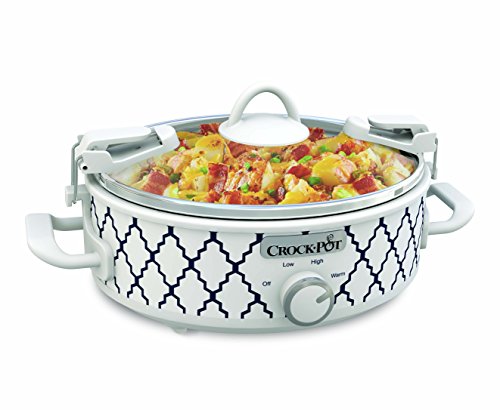
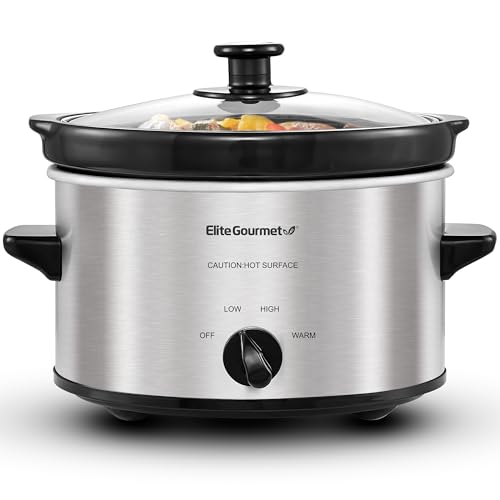
Matching Capacity to Your Household
Size is the single biggest factor that determines whether a slow cooker earns a permanent spot on the counter or ends up in a cabinet after two uses. A cooker that is too small forces awkward batch cooking, while one that is too large struggles to hold moisture around a small portion of food and can leave meat drying out at the edges.
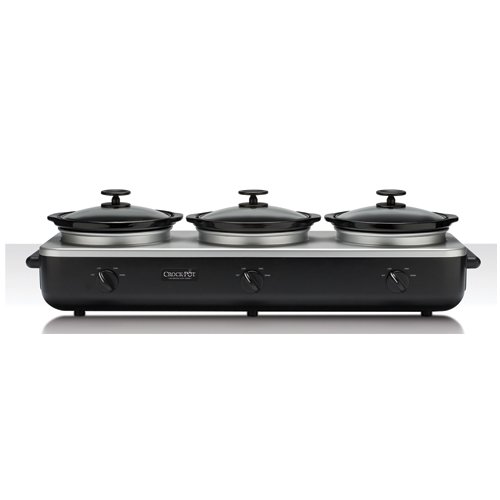
A rough rule that holds up well in real kitchens is to plan for about one quart of capacity per person, then round up slightly. Someone cooking for one or two people is usually happiest with a 2 to 3 quart model that fits neatly in a small kitchen and heats up quickly for soups or dips. A household of three or four does better with a 5 to 6 quart insert, which is also the size most published recipes are written around.
- 1 to 2 people: 2 to 3 quarts for everyday meals and side dishes
- 3 to 4 people: 5 to 6 quarts for full dinners with leftovers
- 5 or more people, or regular entertaining: 7 quarts and above
For best results, food should fill the insert somewhere between half and two-thirds full. An insert that sits mostly empty cooks unevenly, and one that is packed to the rim risks overflow once liquid heats and expands.
Programmable Features and How Much Automation You Actually Need
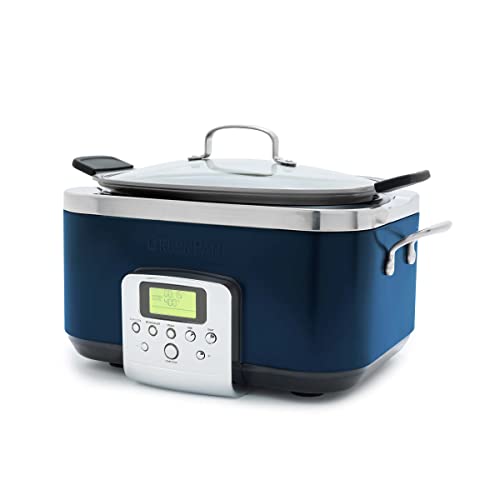
Control style ranges from a simple three-position dial to a fully connected, programmable slow cooker that can be started from a phone across town. The right point on that spectrum depends less on budget and more on how predictable your schedule is on a given day.
A basic dial with low, high, and warm settings is reliable and has fewer parts that can fail, which suits anyone who is usually home to switch the setting manually. A digital timer adds real convenience by letting the unit count down a set number of hours and drop automatically to a keep warm mode, so dinner does not overcook while you are stuck in traffic.
At the top of the range sit app-connected models that report cooking status remotely and let you adjust the countdown after leaving the house. These are genuinely useful for long commutes or unpredictable days, though the app itself adds another thing to set up and occasionally troubleshoot. Anyone shopping with a tighter budget in mind can still get most of the practical benefit from a mid-range digital timer; our budget-friendly buying guide breaks down which features hold up at an entry-level price point.
Build Quality: Insert, Lid, and Base
The removable insert does most of the work and deserves the closest look before buying. Thick, glazed ceramic holds heat evenly and resists scratching from metal spoons, while thinner stoneware can develop hairline cracks after repeated temperature swings.
Cracking is almost always caused by thermal shock rather than normal wear. Pouring cold broth into a hot insert, or moving a hot insert straight into the refrigerator, can be enough to fracture ceramic that would otherwise last for years. Letting the insert cool to room temperature before it hits cold water or a cold fridge shelf avoids most of this damage entirely.
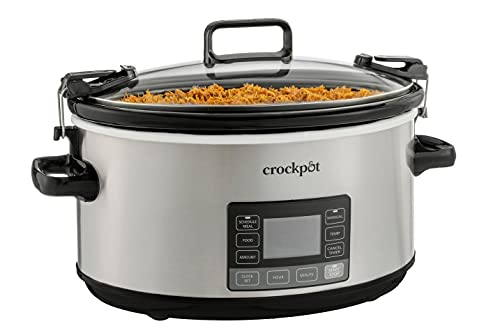
Lids matter more than shoppers usually expect. A heavy glass lid that seals snugly traps steam and keeps cooking temperature stable, while a loose or warped lid lets heat escape and stretches cook times. If a slow cooker will ever travel to a potluck or a family gathering, a locking lid that clips down over a gasket is worth prioritizing, since it keeps the meal contained even if the dish gets tipped in the car.
What Steady, Even Cooking Actually Looks Like
Not every unit heats the way its dial suggests, and this is where reviews and specs sheets fall short of hands-on use. A well-built slow cooker should bring liquid to a gentle, steady simmer on the low setting and hold it there for hours without major swings, since large temperature spikes are what dry out meat and scorch sauces on the bottom.
Heating coils that wrap around the sides of the base, rather than sitting only underneath, tend to produce more even results because heat reaches the food from multiple directions instead of just the bottom. This matters most for thick stews and dense cuts of meat that need consistent contact with heat to break down properly over several hours.
A keep warm setting that holds food safely above the danger zone, without continuing to actively cook it, is worth testing in early use. Some budget heating elements barely distinguish between low and warm, which can leave vegetables overcooked by the time a meal is finally served.
Slow Cooking or Pressure Cooking: Picking the Right Tool
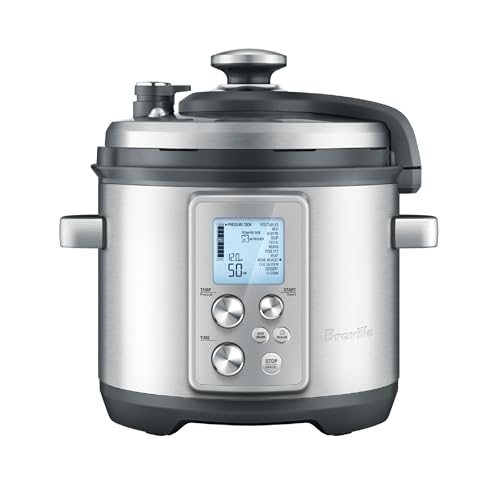
It helps to be clear about what a slow cooker is not built to do. Where a pressure cooker forces liquid to a high temperature under sealed pressure to tenderize tough cuts in under an hour, a slow cooker relies on gentle, extended heat over four to twelve hours to reach that same tenderness. Neither approach is universally better; they solve different scheduling problems.
Choose slow cooking when the plan is to load ingredients in the morning and walk away for the day, letting flavors develop slowly with almost no attention required. Choose a pressure cooker on nights when dinner needs to be ready in under an hour, or when dried beans and stock need to cook without hours of advance planning. Shoppers who want speed and flexibility on the same appliance can compare features in our stainless steel pressure cooker guide.
Cast iron also enters this conversation for anyone who cooks braises and stews regularly. A slow cooker wins on hands-off convenience, but a well-seasoned pot that can move from stovetop searing to oven braising, covered in our Dutch oven buying guide, gives more control over browning and reduction along the way.
Frequently Asked Questions
Is it safe to leave a slow cooker running all day while at work?
Yes, when the unit is in good condition and set to low. These appliances are specifically designed for long, unattended cooking, and the low setting keeps temperatures well within a safe range for several hours.
Why did my slow cooker insert crack?
Cracks almost always come from sudden temperature changes, such as adding cold liquid to a hot insert or placing a hot insert directly into the refrigerator. Letting it cool gradually first prevents most cracking.
What size do I actually need for a family of four?
Most families of four do well with a 5 to 6 quart model, which matches the capacity most recipes are written for and leaves room for modest leftovers without overfilling the insert.
Can I use a slow cooker to cook rice or steam vegetables?
Many modern models include sauté, steam, or rice functions alongside standard slow cooking, though results vary by brand and are generally better suited to soups, stews, and braises.
Does a programmable timer really make a difference?
It does for anyone with an unpredictable schedule. A timer that automatically switches to keep warm prevents overcooking if you arrive home later than planned, which a manual dial cannot do on its own.
How full should the insert be during cooking?
Aim for roughly half to two-thirds full. Too little food cooks unevenly, and liquid that expands in an overfilled insert can bubble over the rim.
Is a locking lid necessary?
Only if the cooker will travel. A locking, gasketed lid keeps a finished dish contained during transport, but it adds little benefit for a unit that stays on one counter.
Choosing With Confidence
The right slow cooker comes down to matching capacity to how many people actually eat dinner on a normal night, choosing a control style that fits a real schedule rather than an ideal one, and paying attention to build quality in the insert and lid. None of that requires the most expensive model on the shelf, just an honest look at how the appliance will actually be used week to week.
Think through household size first, then automation, then the small build details like lid seal and heating pattern. Getting those three right leads to a cooker that gets used often instead of one that ends up back in a cabinet after the first few tries.