
Best Compact Zoom Binoculars: A Practical Buying Guide for 2026
Disclosure: We may earn a commission when you buy through links on this page, at no extra cost to you. As an Amazon Associate I earn from qualifying purchases. Learn more

Shop smarter for the best compact zoom binoculars with clear guidance on zoom range, lens size, weight, coatings, and eye relief for travel and events.
Compact zoom binoculars promise a lot in a small package. One pair rides in a jacket pocket, then adjusts from a wide scan of a ball field to a closer look at a player, a stage, or a bird on a far branch. The catch is that zoom models trade some brightness and sharpness for that flexibility, and the spec sheets rarely explain where the trade shows up. This guide walks through the numbers that matter so you can choose best compact zoom binoculars for the way you actually watch.
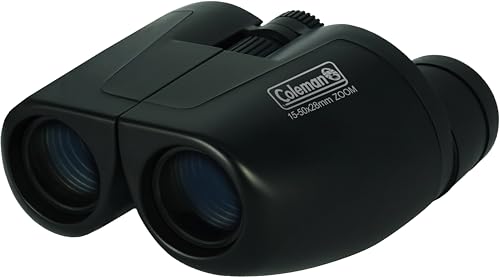
Below, you will find who benefits most from a zoom design, the features that separate a clear pair from a dim one, and the handling checks worth doing before you commit. The comparison table below gathers current models in one place, so scan it first and then use the sections that follow to judge each entry on zoom range, lens size, and comfort.



Who Should Buy Compact Zoom Binoculars?
A zoom pair suits viewers whose distance to the subject keeps changing. Instead of swapping between two fixed pairs, you turn a lever and the magnification follows. Some shoppers still prefer a single fixed magnification for maximum brightness, and if that sounds like you, see our guide to the best rated compact binoculars for the simpler designs. The groups below gain the most from the adjustable approach.
Travelers Who Pack Light
Sightseeing puts you at every distance in a single day. You scan a harbor at low power in the morning, zoom toward a lighthouse detail at noon, then watch street performers from a plaza bench in the evening. A compact zoom pair covers all three moments without extra gear in your daypack. For route planning and packing tips built around small optics, see our guide to the best compact binoculars for travel.
Sports and Concert Fans in the Stands
From the upper rows, the action is far away but the whole field still matters. Start at low magnification to follow play across the field, then push the zoom lever when the ball settles in one area or a performer steps to the front of the stage. Look for a smooth lever you can nudge with one finger while your eyes stay on the action.
Casual Wildlife and Backyard Watchers
Feeders, garden birds, and deer at the tree line all sit at different ranges, and a zoom pair adapts as animals move closer or drift away. The wide low setting makes it easy to find a moving bird, and a gentle increase in power fills the view once you have it centered. Serious birders who chase fine feather detail at dawn often choose fixed wide field models instead, and our guide to the best compact binoculars for birding explains that route. For relaxed watching from a porch or campsite chair, zoom flexibility is hard to beat.
Key Features to Compare
Five factors decide whether the best compact zoom binoculars feel bright and easy in your hands or dim and frustrating. Work through each one against the product table above before you settle on a model.
Zoom Range and Magnification
The first numbers in the spec describe the magnification range, so a pair marked 10 to 30x25 zooms from 10 times closer up to 30 times closer. That optical zoom range is the headline feature, yet the top end is the hardest to use because every hand movement grows with the power. Most handheld viewing stays comfortable between 8x and 16x, and anything past about 20x usually needs braced elbows or a railing. A modest range with clean glass beats an extreme range you cannot hold steady. If pocket size matters less than reach, see our guide to the best zoom binoculars for larger models with bigger lenses.
Objective Lens Size and Brightness
The second number in the spec is the objective lens diameter in millimeters, and it controls how much light the binoculars gather. Compact zoom models commonly use lenses of 21 to 30 mm, which keeps the body small but limits brightness in shade or at dusk. Brightness also depends on the exit pupil, found by dividing the lens size by the current magnification. A 30 mm lens at 10x gives a 3 mm exit pupil, but zooming to 30x shrinks it to 1 mm, so the image grows noticeably dimmer. Plan to do most viewing at the lower half of the range.
Field of View Across the Range
Field of view tells you how wide an area you can see at once, usually listed in feet at 1000 yards. Zoom binoculars show their widest field at the lowest magnification, and the view narrows steadily as you zoom in. A generous field at low power makes subjects far easier to find and follow, which matters for birds in flight and fast plays on a field. Check the figure quoted for the low setting rather than the headline number, because that is the view you will search with.
Prism Design and Lens Coatings
Most compact zoom models use roof prisms, which keep the barrels straight and slim enough for a pocket. Some use Porro prisms in a wider body that can deliver a slightly richer sense of depth for the money. Glass quality and coatings matter as much as the prism shape. Fully coated lenses, where every air to glass surface carries an antireflective layer, pass more light and cut glare from water, snow, and stadium lights. Better coatings are the main reason two pairs with identical numbers can look so different, so weigh coating language in the listing more than extra zoom reach.
Eye Relief, Focus, and Close Focus
Eye relief is the distance your eye can sit behind the eyepiece while still seeing the full picture, and glasses wearers should look for about 14 mm or more. The center focus wheel should turn smoothly with one finger and land on a sharp image without hunting back and forth. Close focus distance tells you the nearest subject that stays sharp, often around 10 to 15 feet on compact zoom models. A shorter close focus opens up butterflies, flowers, and museum details, while a long one limits you to distant viewing only.
Size, Handling, and Build Quality
Shoot for a body you can hold steady for a full minute without your arms tiring, because shake ruins high magnification faster than modest glass does. Weights around 7 to 12 ounces suit most adults for handheld use, and a body that folds at a center hinge slips into smaller pockets. Try the zoom lever with one hand before a trip if you can, since stiff or jerky levers make you lose the subject mid adjustment. Eyecups that twist up or fold down should click or rest firmly in place rather than collapsing while you watch.
Weather sealing deserves a look if you watch outdoors often. A weatherproof or water resistant body with sealed joints shrugs off drizzle and boat spray, and nitrogen filled barrels resist internal fogging when you step from cool air into warm air. Rubber armor adds grip with gloves and cushions small bumps against railings and rocks. None of this makes a compact pair indestructible, so keep the strap on and the caps handy. The build details listed beside each model in the product table above will show which pairs take outdoor use seriously.
Common Mistakes to Avoid
- Chasing the highest zoom number on the box, because extreme magnification shakes so much that fine detail disappears.
- Picking the smallest 21 mm lenses for evening games, because the dim image at dusk makes faces and numbers hard to read.
- Skipping the diopter adjustment on one barrel, because the view then stays slightly soft no matter how carefully you focus.
- Zooming all the way in before searching, because the narrow field makes a moving subject nearly impossible to locate.
- Ignoring eye relief while wearing glasses, because a short relief cuts the edges of the view into black crescents.
- Storing the pair loose in a glove box, because heat and rattling bumps knock the optics out of alignment over time.
Care and Maintenance for Compact Zoom Binoculars
Clean lenses only when they need it, and start by blowing grit away with a squeeze blower so nothing drags across the coating. Follow with a clean microfiber cloth in gentle circles from the center outward, using a drop of lens fluid on the cloth rather than on the glass. Avoid shirt tails, paper towels, and household sprays, which can scratch coatings or leave residue. Between outings, cap both ends and store the pair in its padded case in a cool, dry spot, with a small silica gel pack if your home runs humid.
Check the moving parts a few times a year. Work the focus wheel and zoom lever through their full travel and note any gritty spots, which usually clear after careful cleaning around the seals. If both eyes suddenly show doubled images after a drop, the barrels are out of alignment and need professional service rather than home adjustment. Handled this way, a decent compact zoom pair should stay clear and smooth for many seasons of travel and game days.
Frequently Asked Questions
What do the numbers on compact zoom binoculars mean?
The numbers describe magnification range and lens size, so 10 to 30x25 means the view zooms from 10x to 30x through a 25 mm objective lens. The first figure tells you how close subjects appear, and the second tells you how much light the front lens gathers. One extra check helps on product pages: some brands quote the field of view only at the lowest setting, so look for both figures before comparing two models side by side.
Are compact zoom binoculars bright enough for low light viewing?
Compact zoom binoculars work well in daylight and under stadium lights, but they grow dim at dawn and dusk as you raise the magnification. Keep the zoom near its lowest setting in fading light, since that keeps the exit pupil at its widest and the image at its brightest. Resting your elbows on your knees or a fence rail also steadies the view enough to read detail longer. For regular twilight watching, a larger fixed pair will always gather more light than a pocket zoom model.
Can compact zoom binoculars replace a smartphone for distant subjects?
Compact zoom binoculars give a far clearer and steadier live view than a phone screen, but they capture nothing you can share later. Phones crop and enlarge a small sensor image, so distant detail turns soft and noisy, while binoculars show the scene directly through glass. If saving the moment matters more than watching it, see our guide to the best compact cameras with zoom for pocketable photo options. Some viewers also hold a phone against an eyepiece with an adapter for casual photos, though results vary.
How much should a first pair of compact zoom binoculars cost?
A sensible first pair of compact zoom binoculars usually costs about $40 to $120. Models under that range often cut corners on coatings and lever smoothness, which shows up as dim edges and jerky zooming. Spending toward the top of the range typically buys better glass, firmer eyecups, and real weather sealing rather than more magnification. Check the current figure in the product table above before you decide.
Do compact zoom binoculars work well for people who wear glasses?
Yes, compact zoom binoculars can work well with glasses when the eye relief is long enough and the eyecups fold or twist down. Keep your glasses on while viewing, set the eyecups to their lowest position, and hold the eyepieces close enough that the full round view appears without black edges. One useful test at home is to check the view with sunglasses as well, since thicker frames push your eyes farther back. If the edges still clip, a model with 16 mm or more of relief will suit you better.
Final Thoughts
The right choice comes down to three checks. Match the zoom range to handheld reality, favor lens size and coatings over headline magnification, and confirm the eye relief and weight suit your face and your bag. Revisit the product table above with those filters in mind and the shortlist narrows fast. Chosen with care, the best compact zoom binoculars turn distant stages, shorelines, and treetops into close, memorable views from a pair that goes anywhere in a pocket.


