
Best Compact Binoculars under 50: Matching the Right Model to Your Routine for 2026
Disclosure: We may earn a commission when you buy through links on this page, at no extra cost to you. As an Amazon Associate I earn from qualifying purchases. Learn more
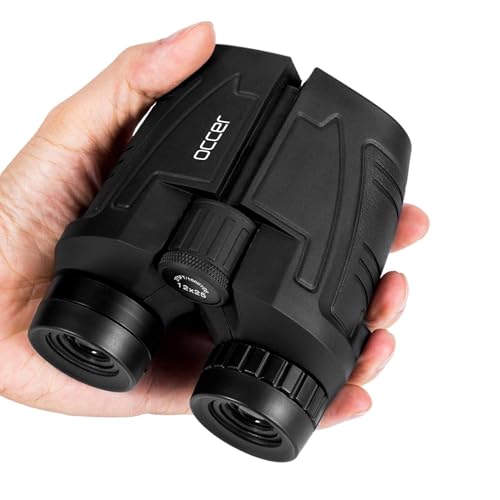
Match the best compact binoculars under 50 to your trips, hikes and game days by magnification, lens size and weight.
There is no single pair that suits every outing, because a traveler packing light, a hiker watching birds, and a fan following a ball game all ask different things from the same small tool. When you shop for best compact binoculars under 50, the smart move is to start with your routine and let it point you toward the right magnification, lens size, and build. Price alone tells you very little at this level.
This guide walks through the specs that actually change what you see, the trade offs that a modest budget forces, and the small checks that separate a pleasant pair from a frustrating one. Use the comparison table below to line up your shortlist once you know which features matter most for the way you spend your time outdoors and away from home.
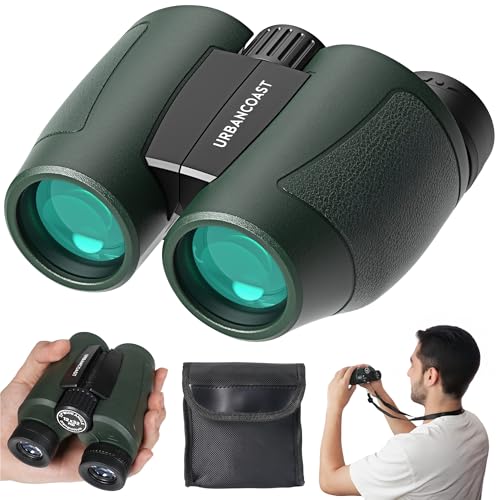
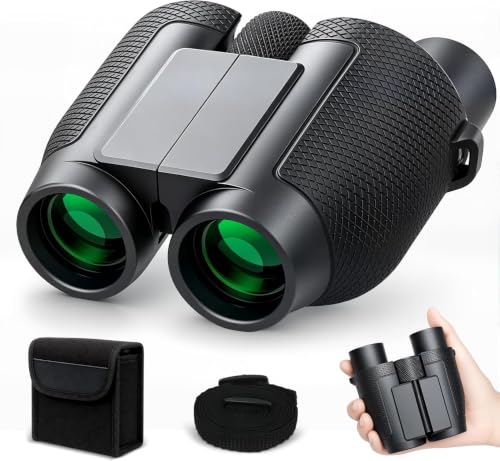


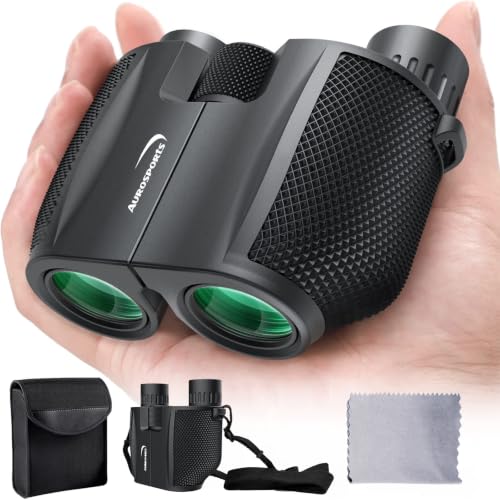


Who Should Buy Which Compact Binoculars?
Your routine decides which compromises you will notice and which ones you will never think about. A pair that rides in a jacket pocket all week needs different strengths than one that lives in a daypack. Match yourself to one of the groups below first, and the feature sections that follow will make much more sense.
Travelers and Sightseers
You want a pair that disappears into a day bag and comes out fast when a landmark, a harbor, or a street performance catches your eye. Prioritize low weight, a folding design, and a neck strap or wrist loop so the pair stays secure in a crowd. A magnification of 8x is usually the sweet spot for sightseeing because it gives a wide, steady view. If your trips lean heavily on compact gear in general, see our guide to the best compact binoculars for travel for ideas shaped around packing and moving light.
Hikers and Birdwatchers
On the trail you scan often and sometimes for long stretches, so comfort and brightness matter more than the absolute smallest size. Look for a close focus distance that lets you view butterflies and nearby birds, plus rubber armor that shrugs off bumps against rocks and pack straps. Water resistance earns its keep when weather turns mid hike. Trail users who can stretch the budget a little will find more rugged options in our guide to the best compact binoculars for hiking under $100, where larger lenses and tougher housings become common.
Sports Fans and Concert Goers
From the upper seats, your subject moves fast and the light is often mixed, so a wide field of view helps you follow the action without constant searching. Choose 8x or 10x magnification with a smooth center focus wheel you can adjust with one finger while the play develops. Compact size matters here too, since many venues limit bag size. Avoid very narrow compacts meant for opera glasses style viewing, because they make tracking a moving player feel like looking through a straw.
Key Features to Compare
Spec sheets at this price look similar at a glance, yet a few numbers and materials decide whether the view is bright and easy or dim and tiring. Work through the factors below in order, and you will be able to read any listing in the product table above with a clear sense of what each line means for your own outings. These are the exact checks that separate the best compact binoculars under 50 from pairs that disappoint within a month.
Magnification and Objective Lens Size
The two numbers in a name like 8x21 or 10x25 do most of the talking. The first number is magnification, how many times closer a subject appears. The second is the objective lens diameter in millimeters, the front glass that gathers light. Bigger front lenses collect more light and usually give a brighter image, but they also add size and weight. Higher magnification narrows your field of view and magnifies hand shake, so 8x often feels calmer and brighter in a compact body, while 10x suits open spaces where subjects sit far away and you can brace your elbows.
Size, Weight, and How the Pair Folds
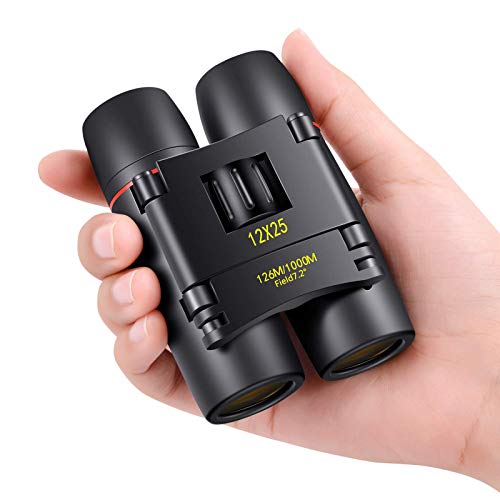
Compact models earn the name in two main ways. Some use a double hinge that folds the barrels inward until the pair fits a coat pocket, and others use a fixed bridge that stays slimmer but longer. Weight usually lands between about 150 and 350 grams in this class, a range your neck will feel after a full day of sightseeing. Check the folded dimensions against the pocket or pouch you actually plan to use, and confirm the pair ships with a case and strap. A pair you leave behind because it feels bulky has no optical quality at all.
What You Can Realistically Get at This Price
Honest expectations make shopping at this level far less frustrating. For under $50 you can expect clear daytime views, simple coatings, and a housing that handles careful everyday use. What you give up compared with pricier glass is usually edge sharpness, brightness at dawn and dusk, and refined touches like fully multi coated lenses on every surface. Spend your attention on the basics done right rather than long feature lists. If your outings demand more, our guide to the best compact binoculars under $100 shows what the next step up typically adds.
Lens Coatings and Glass Quality
Coatings are thin layers on the glass that cut reflections and let more light reach your eyes. Listings use a ladder of terms. Coated means some surfaces are treated, fully coated means all air to glass surfaces carry a single layer, and multi coated or fully multi coated means multiple layers that pass more light and improve contrast. At this budget, fully coated is a reasonable floor and multi coated is a genuine bonus. Prism glass matters too. BK7 is the common budget choice, while BaK4 prisms tend to deliver a rounder, brighter exit pupil and slightly better clarity for a modest premium.
Durability, Water Resistance, and Fog Resistance
Outdoor gear earns scratches and the occasional soaking, so construction deserves a close look. Rubber armor absorbs knocks and improves grip with cold or wet hands. Water resistant models shrug off splashes and light rain, while fully waterproof models are sealed so brief immersion and heavy rain are not a threat. Fogproof pairs are filled with nitrogen and sealed with rings so the inner lenses stay clear when you move from a warm car into cold morning air. At this price, sealed and nitrogen filled models exist but are less common, so read the wording carefully rather than assuming every rugged looking pair is sealed.
Focus Wheel, Eye Relief, and Comfort
A center focus wheel should turn smoothly with steady resistance, never gritty and never so loose that the view drifts. Eye relief is the distance your eye can sit from the eyepiece while still seeing the full picture, and glasses wearers generally need about 14 mm or more. Twist up or fold down eyecups help you set that distance. Also check the minimum distance between the barrels, called interpupillary distance, if the pair is for a child or an adult with a narrow face. Small comfort details like these decide whether you reach for the pair gladly or leave it in a drawer.
How to Check Fit and Focus When Your Pair Arrives
A short check on day one catches most problems while returns are still easy. Start by setting the barrel spacing so the two round views merge into one clean circle with no dark edges. Then cover the right lens, focus on a sign or rooftop with the center wheel, and switch to the right side to set the diopter ring, which compensates for differences between your eyes. Once both steps are done, everyday focusing needs only the center wheel.
Next, scan a detailed scene such as tree branches against the sky. The center should look crisp, and softness should grow only gently toward the edges. Check that both barrels show the same brightness and that colors look natural. Work the focus wheel from near to far and listen for grinding. If the image doubles, the wheel feels gritty, or one side stays dim, exchange the pair rather than hoping it improves, because alignment faults do not fix themselves.
Common Mistakes to Avoid When Buying Compact Binoculars
- Chasing the highest magnification in a tiny body, which gives you a narrow, shaky, and dim view that is tiring to use.
- Judging by price alone and skipping the spec sheet, so you miss weak points like very short eye relief that shuts out glasses wearers.
- Ignoring folded size and weight, then leaving the pair at home because it never quite fits the bag you carry daily.
- Trusting zoom claims on budget listings, since variable zoom compacts usually lose brightness and sharpness across the range.
- Skipping the warranty and return terms, which leaves you stuck if the focus wheel or alignment is off on arrival.
Care and Maintenance for Compact Binoculars
Good habits keep a modest pair clear for years. Blow loose grit off the lenses first or brush it away with a soft brush, then wipe gently with a clean microfiber lens cloth in small circles. Never use a shirt hem or a paper tissue, because trapped grit and rough fibers scratch coatings. Breathe lightly on a stubborn smudge or use a drop of lens cleaning fluid on the cloth, never directly on the glass.
Store the pair in its padded case in a dry spot away from direct sun and car heat, with the lens caps on when provided. If the pair gets wet, let it air dry fully before casing it so moisture does not linger around the seals. Check the strap and hinge screws now and then, and keep the focus wheel free of sand after beach or trail days.
Frequently Asked Questions
Can you get a good pair of compact binoculars for under $50?
Yes, you can get a genuinely useful pair of compact binoculars for under $50, as long as your expectations match the price. Daytime views of scenery, birds at moderate range, and stadium action can look clear and pleasing. Where the budget shows is at the edges of the image and in dim light, when pricier glass pulls ahead. Treat the pair as a strong starter or a travel spare, and it earns its place.
Can a smartphone camera replace compact binoculars at a game or on a trail?
A smartphone camera cannot fully replace compact binoculars for live viewing, because phone zoom is mostly digital cropping that softens detail. Binoculars use real glass to magnify, give your eyes a natural two eyed view, and need no battery or screen brightness in strong sun. Phones win for sharing photos afterward. Many people carry both, using the binoculars to find and watch a subject, then the phone only when a keepsake photo matters.
What specs matter most for a first pair of compact binoculars?
For a first pair of compact binoculars, magnification, objective lens size, and field of view matter most. A configuration of 8x21 or 8x25 keeps the view wide and steady while staying pocket friendly. Add fully coated lenses and a focus wheel that turns smoothly to that short list. One point buyers often miss is weight distribution. A slightly heavier pair that sits balanced in your hands can feel steadier than the lightest model, so do not chase grams alone.
How much should you spend on your first compact binoculars?
Spending around $30 to $50 on your first compact binoculars is a sensible start for casual travel, hiking, and stadium use. Below that band, focus wheels and alignment quality become a gamble. Above it, each step buys brightness and build rather than a different kind of tool. If you later want a serious upgrade path, our guide to the best compact binoculars under $200 maps out what premium compact glass adds for dedicated birders and frequent travelers.
Which compact binoculars work better in low light, 8x21 or 8x25?
Compact binoculars with 8x25 lenses work better in low light than 8x21 models, because the larger front lenses gather more light at the same magnification. The result is a brighter image at dawn, dusk, and in shaded woods. The trade is a slightly larger body that may not fold quite as flat. For evening concerts where light is dim but the stage is lit, either size performs well, so choose based on how small you need the pair to pack.
What do the numbers 8x21 and 10x25 mean on compact binoculars?
On compact binoculars, the first number is magnification and the second is the objective lens diameter in millimeters. A rating of 8x21 makes subjects appear eight times closer through 21 mm front lenses, while 10x25 brings subjects ten times closer through wider 25 mm lenses. The same system appears on full size binoculars with larger second numbers like 42. Bigger front glass gathers more light but grows the body, which is why compacts settle at 21 to 32 mm for portability.
Final Thoughts
Buying well at this level comes down to three things. Match magnification and lens size to your routine, insist on the comfort basics of decent eye relief and a smooth focus wheel, and keep your expectations honest about dawn and dusk brightness. Go back over the product table above with those filters in mind and the right shortlist usually becomes obvious. Chosen that way, the best compact binoculars under 50 for your life will be the pair you actually carry, and a pair that gets carried is the one that shows you more of every trip, trail, and game.

