
Best Compact Binoculars under $100 of 2026: Complete Buying Guide
Disclosure: We may earn a commission when you buy through links on this page, at no extra cost to you. As an Amazon Associate I earn from qualifying purchases. Learn more
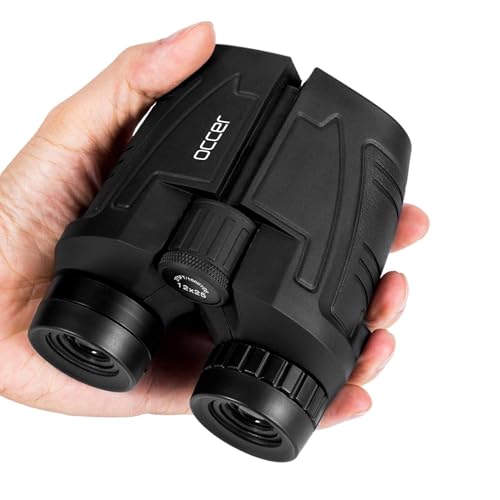
Compare the best compact binoculars under $100 by magnification, lens size, weight, and weather sealing, with clear guidance for travel and outdoor use.
A good pair of compact binoculars disappears into a jacket pocket or daypack until you spot a hawk circling above the trail or want a closer look at the stage. The best compact binoculars under $100 balance a bright enough view with a body small enough that you actually carry them, and this guide covers the specs that separate a satisfying pair from a disappointing one.
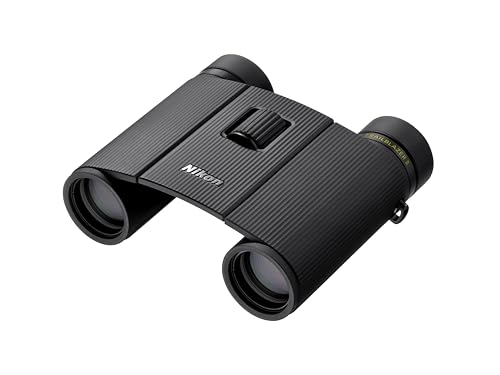
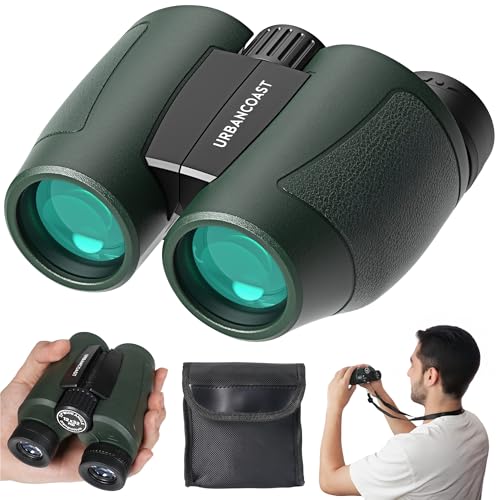
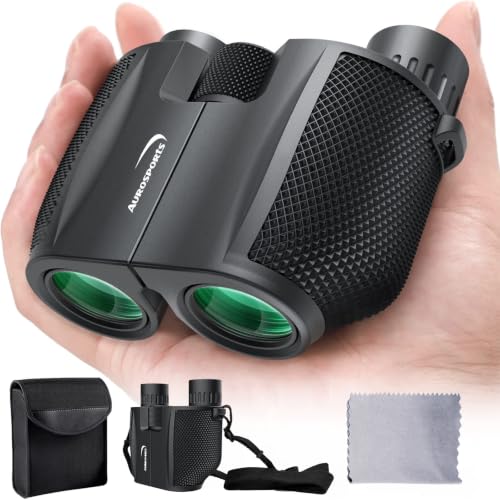
The comparison table below gathers the key numbers side by side, including magnification, lens size, weight, and field of view. Read the sections that follow before you order, because two pairs with identical headline specs can feel very different in your hands.



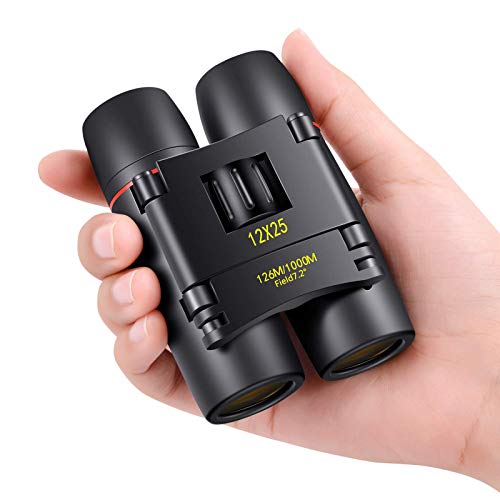

Who Should Buy Compact Binoculars in This Price Range
Compact binoculars suit people who value portability over maximum brightness. A smaller pair that travels with you will show you far more than a large pair left at home, even if its lenses gather a little less light at dawn and dusk.
Travelers and Hikers Who Pack Light
You want binoculars that ride in a hip belt pocket or the top lid of a pack without adding noticeable weight on a long climb. Look for a body under about 12 ounces and a folding or slim bridge design. If most of your viewing happens on the trail, see our guide to the best compact binoculars for hiking under $100 for trail focused advice on grip, straps, and weather protection.
Casual Birdwatchers and Backyard Watchers
You watch feeders, scan the tree line on weekend walks, and want to identify what you see without fussing with settings. An 8x pair is usually your friend, since the wider field of view makes it easier to find a moving bird and keep it in frame. Prioritize a smooth center focus wheel and a close focus distance of about 6 to 10 feet, which lets you enjoy butterflies and feeder visitors as well as distant birds.
Sports Fans and Concert Goers
You sit far from the action and want faces, jersey numbers, and stage details to feel closer without renting gear at the venue. A 10x pair brings distant subjects nearer, but it also magnifies hand shake, so brace your elbows on your knees or a railing when you watch. A compact pair slips into a coat pocket and passes most venue bag rules, and a bright, coated lens helps under artificial lights at night games and evening shows.
How to Choose the Best Compact Binoculars under $100
The product table above lists the headline numbers, but the sections below explain what those numbers mean in practice and where this budget forces honest trade offs.
What You Can Realistically Get for Under $100
At this price you can expect coated optics, a sturdy housing, and a clear view in daylight, which covers most travel and sports viewing. What you usually give up is the finest glass and the brightest coatings found on pricier pairs, so edges may look a little softer. Do not cut corners on the focus mechanism or the hinge, because a wobbly bridge makes both barrels drift out of alignment and causes eye strain. If your budget is truly tight, see our guide to the best compact binoculars under 50 to learn which features survive at that lower price.
Magnification and Objective Lens Size
The two numbers in a spec like 8x25 or 10x25 describe magnification and the diameter of the front lenses in millimeters. An 8x pair gives you a wider, steadier view, while a 10x pair reaches further but narrows the scene and amplifies every tremor in your hands. Larger front lenses gather more light, yet on compact models they stay around 21 to 32 mm to keep the body small. For most buyers, 8x25 is the forgiving all around choice, and 10x25 or 10x32 suits viewers who watch distant, still subjects in good light.
Size, Weight, and Portability
Compact binoculars earn their name by folding down small, often around 4 to 5 inches long, and weighing roughly 8 to 14 ounces. That small size comes with smaller eyecups and a narrower grip that some larger hands find fiddly. Compare the folded dimensions against your actual pocket, glove box, or bag compartment rather than trusting the word compact on the box. Also check the strap and case, because a pair that is annoying to carry safely tends to stay home.
Low Light Performance and Exit Pupil
Divide the lens diameter by the magnification and you get the exit pupil, the width of the light beam reaching your eye. An 8x25 pair gives about 3.1 mm, which feels fine in daylight but dim at dusk, when your own pupil widens. Hunters watching wildlife at first or last light push against the limits of small lenses sooner than most, so see our guide to the best hunting binoculars under $100 if dawn and dusk viewing is your main goal.
Glass, Coatings, and Prism Type
Most compact pairs use roof prisms, which keep the body straight and slim, and the better ones use BaK 4 glass that produces a rounder, brighter image than cheaper BK 7 glass. Lens coatings range from a single coated surface to fully multi coated optics, where every surface carries layers that reduce glare and improve contrast. In this price range, fully multi coated lenses paired with BaK 4 prisms is the combination worth paying for, because it lifts the whole image rather than one spec.
Durability and Weather Sealing
A waterproof rating with sealed rings keeps rain out, while nitrogen filled barrels resist internal fogging when you step from a cold trail into a warm car. Rubber armor absorbs knocks and improves grip with gloves or wet hands. Weather sealing is worth real money in this budget because moisture inside the barrel is almost impossible to fix at home. Still, waterproof does not mean you can submerge the binoculars, so dry them off after use and store them somewhere ventilated.
Focus Wheel, Eye Relief, and Everyday Comfort
The center focus wheel should turn smoothly with one finger and hold its setting, and a diopter adjustment on one eyepiece lets you balance the binoculars for your two eyes. Eye relief, the distance your eye can sit from the eyepiece while still seeing the full view, matters most if you wear glasses; look for about 14 mm or more and eyecups that twist or fold down. Without enough eye relief, glasses wearers lose the edges of the scene and see a narrowed circle.
Compact Binoculars vs Other Options
Small binoculars are one way to see further, not the only way. The comparison below, using the product table above as your reference point, shows when a different tool serves you better.
Full Size Binoculars
Full size models with 42 mm front lenses gather far more light and feel steadier during long sessions of scanning. The cost is bulk, since they weigh roughly twice as much and need a harness or a roomy bag. If your viewing happens from a porch, a boat, or a car window rather than a trail, that trade favors the bigger glass, and you can see our guide to the best 10x42 binoculars under $100 for that size class.
A Monocular
A monocular is a single small tube that weighs even less than compact binoculars and slips into a pocket. It works well for a quick look at a trail sign or a distant peak, but viewing with one eye tires most people quickly, and depth feels flatter, which matters when you follow birds through layered branches. Choose a monocular only when every ounce counts and your looks are brief.
A Smartphone Camera
Your phone zooms by cropping and processing, which is fine for a souvenir photo but less detailed for live viewing. Binoculars show you a steady, bright, real time view with no battery drain and no screen glare in sunshine. Many watchers use both together, finding the subject with binoculars and then snapping a record shot with the phone. For general shopping context beyond the compact class, see our guide to the best binoculars under $100, which covers larger sizes as well.
Common Mistakes to Avoid
- Choosing 12x or higher magnification in a compact body, which leaves you with a shaky, dim image that is hard to hold on target.
- Judging a pair only by magnification and ignoring field of view, so finding and following moving subjects becomes a constant struggle.
- Buying zoom binoculars at this price, since the moving parts usually sacrifice sharpness and alignment for a feature you rarely need.
- Ignoring eye relief while wearing glasses, which cuts the visible scene down to a small circle in the middle.
- Skipping weather sealing to save a few dollars, then losing the pair to internal fog after one wet outing.
- Testing sharpness only at the center of the view, because weak pairs hide their soft edges until you look for them.
How to Make Your Compact Binoculars Last Longer
Compact binoculars have no electronics to maintain, so their lifespan depends on how you handle the glass, the seals, and the moving parts.
- Clean lenses with a soft microfiber cloth or lens pen, never your shirt, because grit dragged across a coating leaves fine scratches.
- Blow loose dust off the lenses before wiping, since a single grain of sand under a cloth can do real damage.
- Keep the lens caps on and carry the pair in a padded case, which protects barrel alignment when your bag gets tossed around.
- Store the binoculars in a dry place at room temperature, not a hot car trunk, because heat and moisture age seals and invite internal fog.
- Wipe salt spray off the body with a lightly dampened cloth after coastal trips, because dried salt corrodes metal fittings and stiffens rubber armor over time.
Frequently Asked Questions
Can you get good compact binoculars for under $100?
Yes, you can get a genuinely good pair of compact binoculars for under $100 if your expectations match the format. Daylight views from coated BaK 4 optics are sharp and pleasant, and build quality at the top of this budget survives years of travel. Where you will notice the ceiling is at dusk and at the edges of the image. Check a pair on an overcast day, because weak coatings show themselves fastest when the light is flat.
What specs matter most for a first pair of compact binoculars?
Magnification, lens coating, and eye relief matter most for a first pair of compact binoculars, ahead of extras like bundled phone adapters. Choose 8x for a forgiving view, fully multi coated lenses for contrast, and enough eye relief for your glasses if you wear them. One check many buyers miss is the minimum interpupillary distance, since smaller faces need barrels that close narrower than many adult sized pairs allow.
What do the numbers 8x25 and 10x25 mean on compact binoculars?
The first number is magnification and the second is the front lens diameter in millimeters, so 10x25 magnifies more through the same small lenses. That means the 10x version passes a narrower beam of light and looks dimmer in shade or at dusk. Think about distance when you decide: the 8x25 suits subjects within a few hundred yards, while the 10x25 earns its keep on open water and in stadiums where subjects sit much farther away.
Is a smartphone enough instead of compact binoculars for travel?
A smartphone is enough for occasional snapshots, but it is a poor substitute for compact binoculars when you want to watch something for a while. Phone zoom past a modest level is mostly digital cropping, so detail falls apart exactly when you need it, and holding a phone up drains the battery you rely on for maps and photos. Binoculars work instantly, with no unlocking and no screen glare.
How much should you spend on your first compact binoculars?
Spending about $75 on a first pair lands you where optics and build quality stop feeling like toys. A pair costing about $40 can be fine for a child or a glove box spare, but focus wheels at that level often loosen within a season or two. One cost people forget is a decent strap at about $15, which prevents the drop that ruins more binoculars than rain ever does.
Which compact binoculars are better in low light, 8x25 or 10x25?
The 8x25 is better in low light because its larger exit pupil delivers a brighter image to your eye from the same 25 mm lenses. The difference is small at noon and obvious at dusk, when the 10x25 view can look dull by comparison. If most of your watching happens near sunrise or sunset, lean toward the lower magnification.
Final Thoughts
Choosing well comes down to three things: a magnification your hands can hold steady, coatings and glass that keep the image bright, and a sealed body small enough to come along every time. Use the product table above to compare those points, and favor the pair whose trade offs match where and when you actually watch. Pick the best compact binoculars under $100 for your own habits, and they will quietly become the gear you reach for most.

