Best Co2 Detectors: Our 2026 Checklist and Top 3 Picks
Disclosure: We may earn a commission when you buy through links on this page, at no extra cost to you. As an Amazon Associate I earn from qualifying purchases. Learn more

The best CO2 detectors checklist: NDIR sensors, displays and alarms, with Aranet4, INKBIRD and handheld meter picks.
Carbon dioxide builds up indoors whenever people breathe in rooms without enough fresh air, which is why a stuffy bedroom, a packed classroom or a closed home office can leave you feeling tired and unfocused. A CO2 detector, often called a CO2 monitor, measures that buildup in parts per million so you know when to open a window or run ventilation. This guide to the best co2 detectors walks through the checklist we use, then shares three picks that pass it.
We explain how we evaluate CO2 detectors, share our picks, then cover a quick buyer checklist, red flags, tips and answers to common questions. Every product in the table above is sold new on Amazon US. Important: a CO2 detector is not a carbon monoxide (CO) alarm. Carbon monoxide is a deadly gas from fuel burning appliances, and every home with gas appliances, a fireplace or an attached garage needs certified CO alarms in addition to any CO2 monitor.




How We Evaluate the Best CO2 Detectors
We judge CO2 detectors on intended use, sensor type and accuracy, build and display, size and placement, safety and certification, value and maintenance. We relied on maker specifications and the overall pattern in owner feedback, not our own use. Here is what each criterion means.
Outdoor air usually sits around 400 to 450 ppm of CO2. Indoor levels climb as people breathe in closed rooms, and readings well above outdoor levels are a sign that a space needs more fresh air.
Intended Use and Who It's For
Home and office users want a simple display that shows CO2 levels at a glance. Parents use monitors in nurseries and bedrooms, teachers in classrooms and growers in greenhouses and grow rooms. Some people want an all in one air quality monitor that also tracks particles, VOCs and radon, like the Airthings Wave Plus.
Renters and homeowners in newer, tightly sealed homes often find CO2 monitors especially useful, since modern windows and insulation can trap stale air.
Key Performance Specs
Sensor type matters most. NDIR (nondispersive infrared) sensors measure CO2 directly and are the most reliable; Aranet says its Aranet4 uses NDIR technology, INKBIRD lists an NDIR sensor and the handheld CO2 meter lists an NDIR sensor with a 0 to 9,999 ppm range. Cheaper sensors may estimate CO2 from other gases, which is less accurate. Also check whether the monitor shows temperature and humidity.
Response time and accuracy statements, usually listed as plus or minus a number of ppm, help compare models. Readings should settle within a few minutes after you move a monitor.
Display and Build Quality
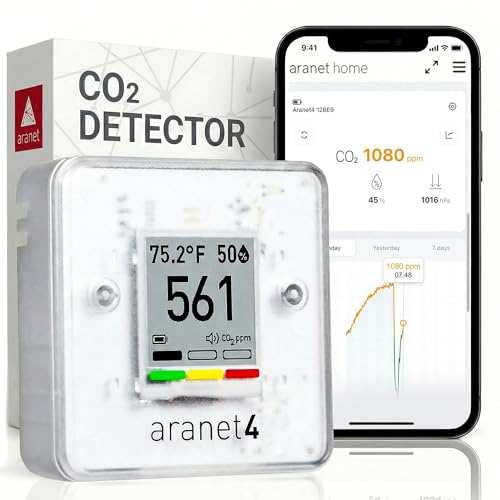
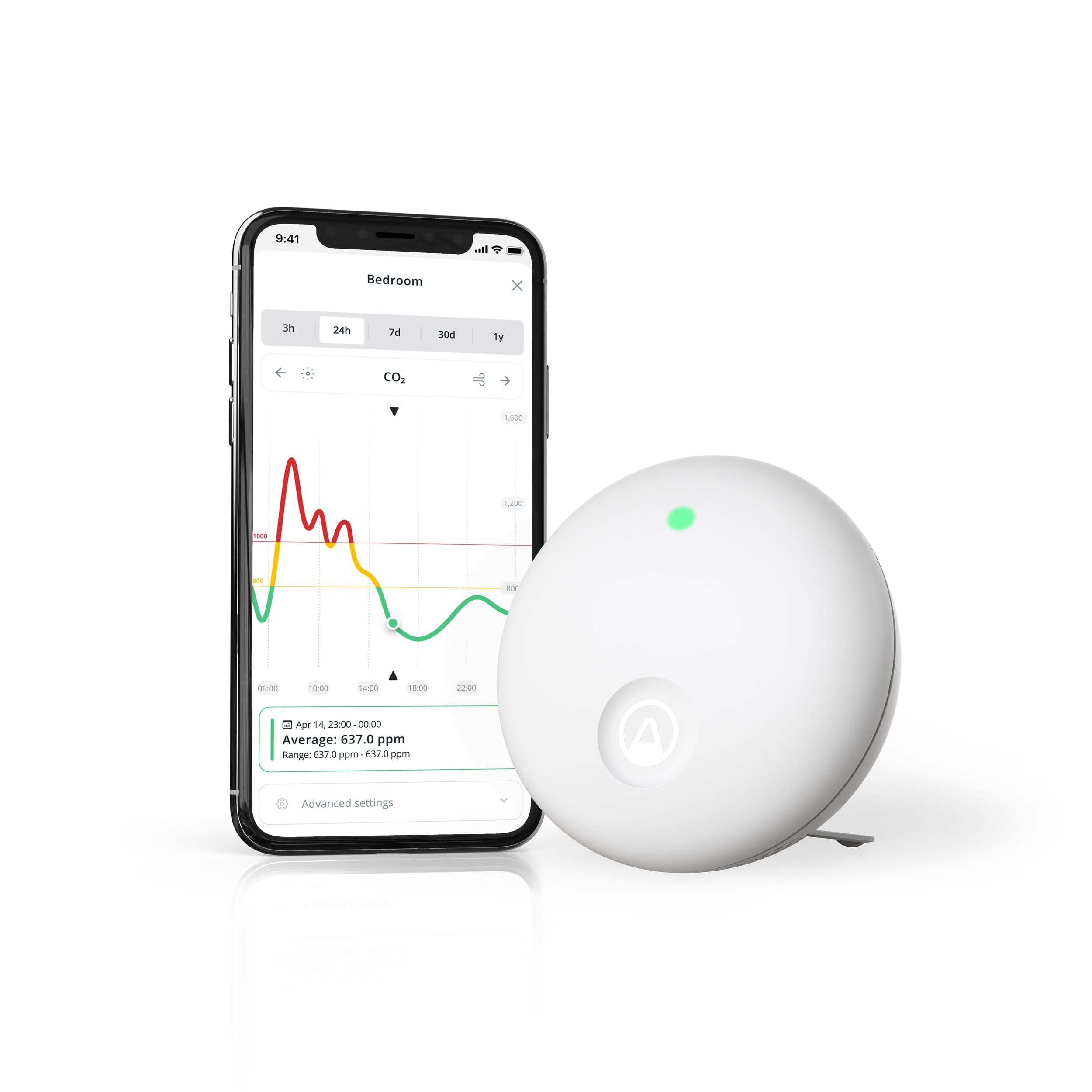
Clear displays with color coding make readings easy to understand. Aranet4 uses a power efficient e ink display with color coding and an optional buzzer. Some monitors add apps for history; Aranet's app shows up to 90 days of data.
Large digits and simple green, yellow and red indicators help kids and older relatives understand readings without an app.
E ink screens stay readable in bright light and use little power.
Size, Power and Placement
Battery powered monitors, like Aranet4 with up to 4 years of battery life and the Airthings Wave Plus, can sit anywhere. Plug in monitors suit desks and nightstands. Handheld meters suit checking several rooms. Place monitors at breathing height, away from windows, vents and people's direct breath.
Avoid placing monitors near kitchens, gas stoves or humidifiers, which can affect readings or the sensor.
Safety and Certifications
CO2 monitors are information tools, not life safety alarms. For carbon monoxide, use UL listed CO alarms. Look for reputable brands and clear accuracy statements; Aranet says the Aranet4 is made in the European Union.
If anyone feels dizzy, short of breath or unwell indoors, leave the area, get fresh air and seek medical help; do not rely on a CO2 monitor to diagnose the problem.
Price vs Value
Basic CO2 monitors, like the Temtop CO2 Monitor at around $30, cost little. NDIR monitors like INKBIRD's cost around $55, premium monitors like Aranet4 around $189 and multi sensor monitors like Airthings and IQAir around $130 to $330.
Multi sensor monitors make sense if you also want to track particles from cooking or wildfire smoke, VOCs from cleaning products or radon in basements.
Choose based on the rooms you need to monitor.
Maintenance and Long Term Costs
Most monitors need little upkeep beyond batteries or power. Some NDIR sensors self calibrate in fresh air over time, and some allow manual calibration outdoors. Battery life ranges from months to years.
Rechargeable models need periodic charging, while battery models need fresh batteries; keep spares on hand.
3 Picks That Pass Our Checklist
Our picks are the Aranet4 Indoor Air Quality Monitor as the best overall, the INKBIRD NDIR CO2 Detector as the best value and the Portable Handheld NDIR CO2 Meter as the best for heavy use across many rooms.
Best Overall: Aranet4 Indoor Air Quality Monitor
The Aranet4 suits homes, offices and classrooms that want accurate, cable free monitoring, at around $189. Aranet lists real time CO2, temperature, humidity and pressure readings, an NDIR sensor, an e ink display with color coding, an optional buzzer, up to 4 years of battery life and an app with up to 90 days of history.
Two strengths stand out: long battery life that lets you place it anywhere and a clear color coded display that shows when to ventilate.
The limitation is price. Skip it if you only want an occasional check.
Best for: home offices, bedrooms, classrooms and anyone who wants to move the monitor from room to room.

Best Value: INKBIRD Indoor Air Quality Monitor NDIR CO2 Detector
The INKBIRD monitor is for budget shoppers who still want an NDIR sensor, at around $55. INKBIRD describes it as an indoor air quality monitor with an NDIR CO2 detector for homes and rooms.
Its strengths are an affordable price with a more reliable sensor type than basic monitors.
The trade off is fewer extras than premium models. INKBIRD also sells a Bluetooth app version at around $53.
Best for: first time buyers who want reliable readings in a single room without spending much.

Best for Heavy Use: Portable Handheld NDIR CO2 Meter
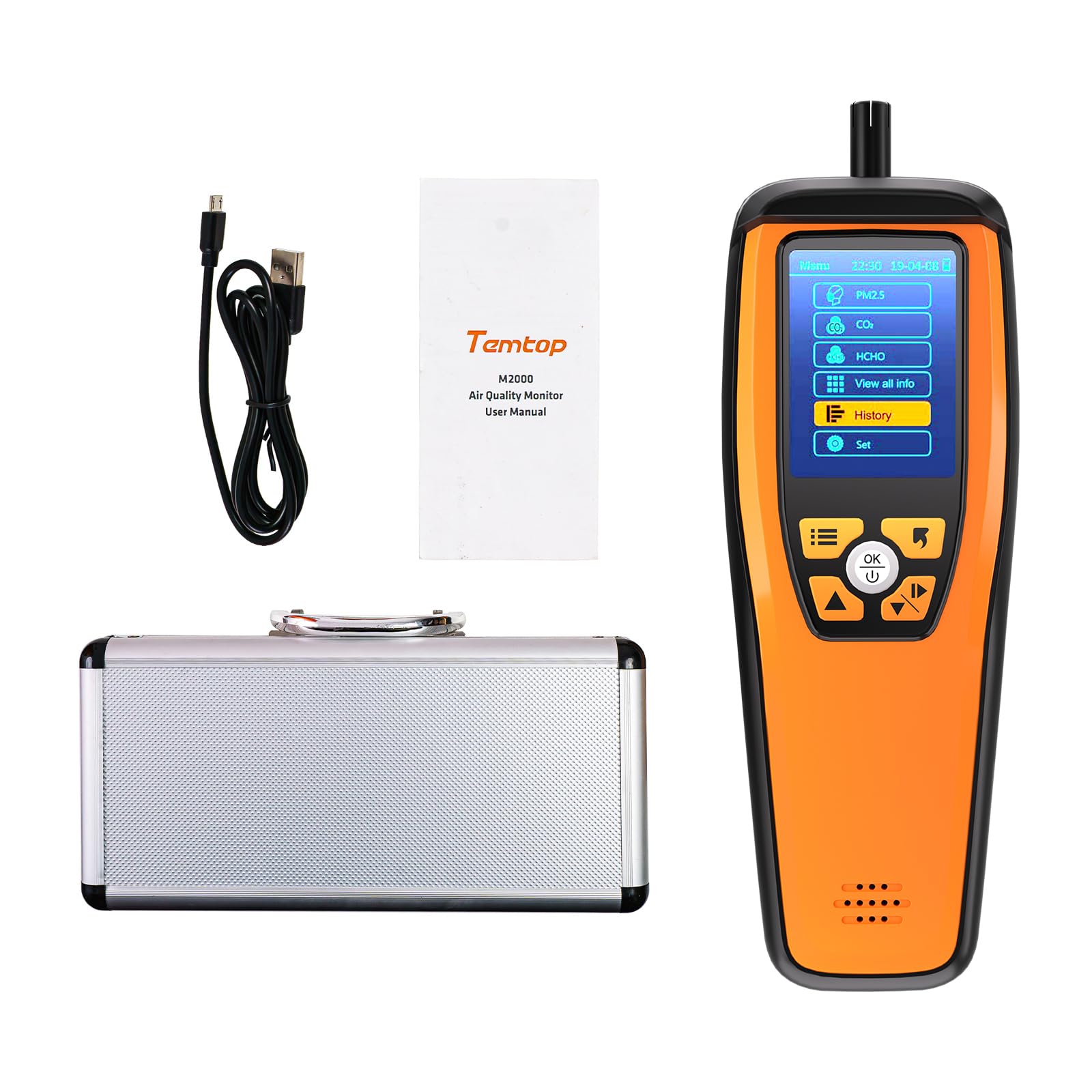
The handheld CO2 meter suits facility managers, growers and anyone checking many rooms, at around $135. The maker lists a 0 to 9,999 ppm range, an alarm function, temperature and humidity readings and an NDIR sensor.
The appeal is portability and a wide measurement range for greenhouses and workspaces.
The limitation is a more technical design than simple desk monitors.
Best for: greenhouses, workshops, schools and property managers who check many spaces.

Quick Buyer Checklist
Before you buy, run through this checklist. Does it use an NDIR sensor? Is the display easy to read? Does it alarm at high CO2?
Is it battery powered or plug in? Does it track temperature and humidity? Do you need an app or history? Remember to buy separate CO alarms for safety.
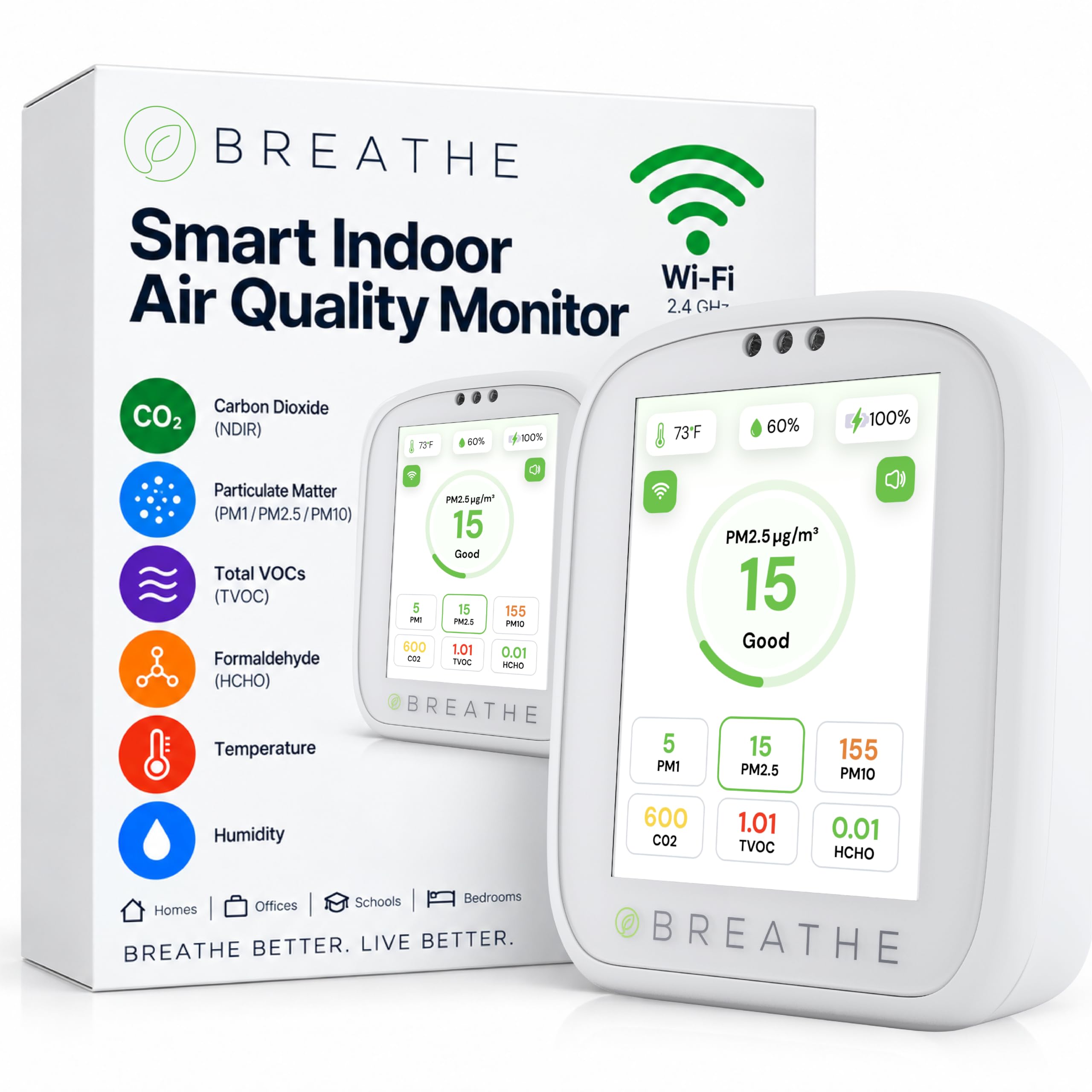
The best co2 detectors for most homes use NDIR sensors, show readings clearly and alert you when levels climb. If you want more than CO2, look at multi sensor monitors from Airthings, IQAir or BREATHE.
Red Flags to Watch For
Watch for very cheap monitors that do not state the sensor type, since many estimate CO2 rather than measuring it. Be wary of claims that a CO2 monitor protects against carbon monoxide. Avoid monitors with no way to calibrate or no stated accuracy. Readings that jump wildly may signal a poor sensor.
Also watch for monitors that only report a vague air quality score without showing the actual CO2 number in ppm.
Tips to Get the Most From Your CO2 Detector
Place the monitor at head height in the room you use most. Open windows or run ventilation when readings climb, often above about 1,000 ppm. Check readings at night in bedrooms. Let NDIR monitors see fresh air occasionally to help calibration.
Use readings to build habits, like opening a window during meetings or running a bathroom fan longer after showers.
CO2 Detectors: Your Questions Answered
How do I maintain a CO2 detector?
Keep it clean and dust free, replace or recharge batteries and calibrate in fresh outdoor air if the maker recommends it.
Avoid exposing it to water, cleaning sprays and extreme heat.
How much should I spend on a CO2 detector?
Expect around $30 for basic monitors, around $55 for budget NDIR models and around $130 to $330 for premium and multi sensor monitors.
NDIR sensors are worth the small premium.
How long does a CO2 detector last?
Quality NDIR monitors often last many years. Battery life varies, from months to Aranet's up to 4 years.
Sensors can drift over years, so occasional calibration keeps readings trustworthy.
What features matter most when buying CO2 detectors?
An NDIR sensor, a clear display, alarms and good battery life matter most. Apps and extra sensors add convenience.
Portability matters if you plan to check several rooms.
Are expensive CO2 detectors worth it?
Premium monitors are worth it for accuracy, long battery life and data history. Budget NDIR monitors work well for basic ventilation checks.
Classrooms and offices with many people benefit most from reliable monitors.
Final Thoughts
The best co2 detectors help you know when to ventilate. Aranet4 is our best overall pick, INKBIRD offers NDIR value and the handheld NDIR meter suits checking many spaces. Pair any CO2 monitor with certified CO alarms.
Start with one monitor in the room you use most, then add more if readings show problems elsewhere.
For more air quality guides, see the best portable air cooler, the best electric heater, the best diffuser oils and the best odor eliminators. Then compare current prices in the product table above.