Best Cherry Mx Red Keyboards: Buying Guide for 2026
Disclosure: We may earn a commission when you buy through links on this page, at no extra cost to you. As an Amazon Associate I earn from qualifying purchases. Learn more

Compare the best cherry mx red keyboards by switch feel, board size, connection, and price to find a smooth, quiet linear board that suits your desk.
Cherry MX Red switches are loved for their smooth, quiet, straight down press, but boards built around them vary enormously in case quality, layout, and price. Choosing well means looking past the switch name to the board around it. This guide to the best cherry mx red keyboards explains the sizes, connections, and build details that decide whether a board feels fast and solid or light and hollow.
You will find a simple framework below: the profiles worth shopping for, the buying criteria in order of importance, and answers to the questions Red switch buyers ask most. Start with the comparison table below, then use the guide to narrow your shortlist with confidence.
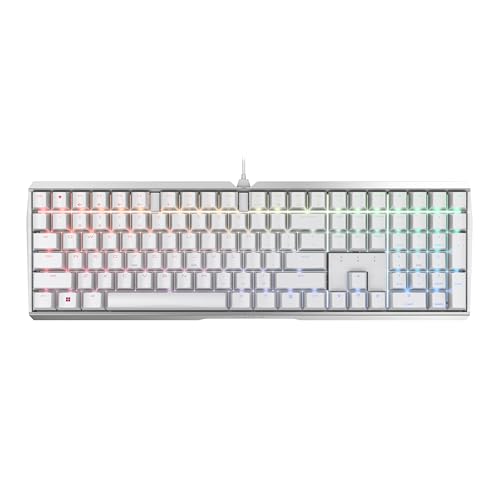
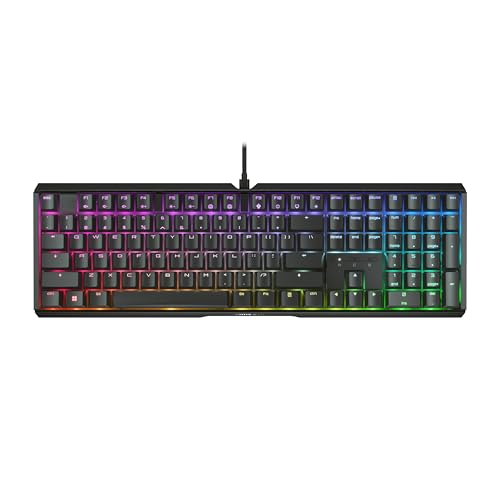


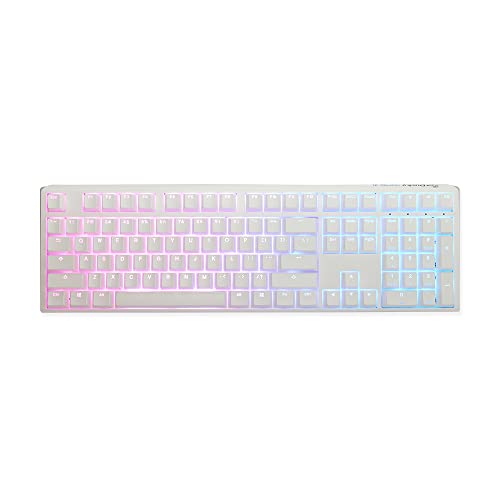
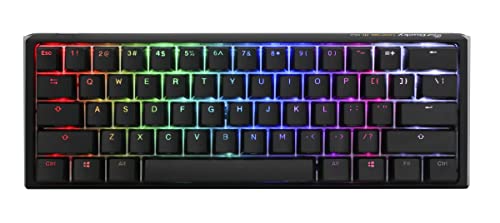


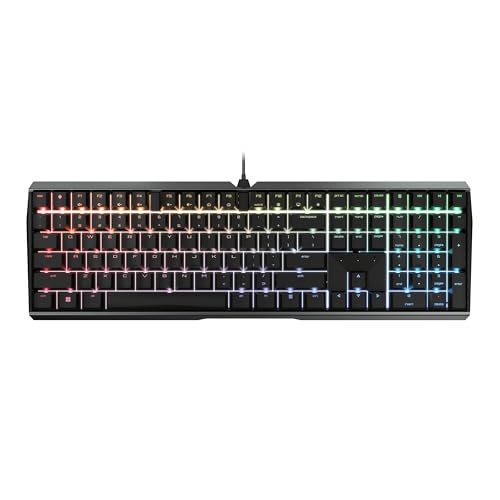

Board Profiles Worth Looking For
Instead of a ranked list, think in profiles. Each profile below describes a pattern of specs that serves a type of user well, along with the compromise built into it.
Well Rounded Profile
The overall profile combines genuine Cherry MX Red switches with a tenkeyless or full size layout, PBT keycaps, and a detachable USB C cable. Expect to pay around $110 to $160. This pattern suits someone who games in the evening and types all day on the same desk. Its strength is balance: nothing about it is extreme, and nothing is cheap. The limitation is size, since this profile rarely comes in the smallest layouts.
Value Profile
The value profile keeps the genuine Red switches and a sturdy plastic case while dropping wireless, metal parts, and extras, landing around $60 to $90. For many buyers this is the smartest money in the category, because the switch feel, which is the whole point of a Red board, stays identical. You give up desk tidiness and some depth in the sound profile. If your budget is firm, shop this profile first and spend the savings on a good wrist rest.
Beginner Profile
The beginner profile adds forgiving features: a standard layout so replacement keycaps are easy to find, a clear manual, and software that is optional rather than required. Prices sit around $70 to $110. It suits a first mechanical keyboard buyer who wants the Red experience without a learning curve. The compromise is customization depth; beginner boards usually offer fewer layers and macros, which most new owners never miss.
How to Choose the Best Cherry Mx Red Keyboards: Buying Guide
Wired vs Wireless Connections
Red switches are popular with gamers, and connection choice decides whether that speed reaches the game. Wired boards report at 1000 Hz with no battery to manage. A 2.4GHz wireless board is nearly as fast and frees the desk. Bluetooth is fine for typing and casual play but adds noticeable delay in fast games. If you compete, go wired or 2.4GHz and keep Bluetooth as a bonus mode for your tablet.
Ergonomics, Size, and Layout
Layout is a comfort decision. Full size boards keep the number pad for data work but push your mouse far to the right. Tenkeyless boards center your hands and free mouse room, which reduces shoulder strain over long sessions. Compact 75 percent and 65 percent boards save the most space but layer arrows and function keys behind combinations. Whichever size you pick, add a wrist rest if your desk is high, and keep the board flat rather than angled up on its feet to protect your wrists.
Customization and Software
Useful customization includes remapping keys, recording simple macros, and storing profiles in onboard memory so settings travel with the board. RGB lighting is personal taste; per key lighting helps you find keys in a dark room, while a plain white backlight costs less and distracts less. Check whether the software is required for basic functions. A well designed board lets you change lighting and simple settings with keyboard shortcuts alone.
Durability and Warranty
Genuine Cherry MX Red switches are rated for a very long service life, so the switch is rarely the part that fails first. Cables, stabilizers, and case joints wear sooner. Prefer a detachable cable, look for a warranty of at least two years, and favor hot swappable sockets if you can, since swapping one worn switch takes minutes. A board you can repair is a board you keep for a decade.
Switch Feel and Performance
Red switches use a light spring with no tactile bump, so the press is smooth from top to bottom. That lightness rewards a soft touch and fast repeated taps, but it also means resting fingers can trigger accidental keys while you learn the board. Give yourself a week to adjust before judging. For the wider switch family context, see our guide to the best cherry mx keyboards, which compares Red with Brown and Blue in depth.
Battery Life and Charging
On wireless Red boards, backlighting decides battery life more than typing does. With lights off, expect weeks of use; with bright RGB, expect a few days. USB C charging is the current standard and lets you use the board while it charges. A practical know how point: if a wireless board starts missing keystrokes, charge it before you troubleshoot anything else, because low batteries often imitate connection faults.
Weight and Build Quality
A heavier case with a metal plate sounds deeper and moves less during intense play, which many Red users prefer because the switches themselves are quiet. PBT keycaps keep their texture for years and resist the shine that makes ABS caps feel greasy. Press each corner of a board in store if you can; twist and creak predict a hollow sound at home. Weight is a preference, but loose construction is a flaw at any price.
Types of Cherry Mx Red Keyboards
Gaming Models
Gaming models emphasize 1000 Hz polling, N key rollover, and often a compact layout for mouse space. They suit competitive players who value response above all. The trade off is that gaming styling and software extras can raise the price without improving daily typing.
Ergonomic Models
Ergonomic models pair Red switches with split layouts, tented cases, or sculpted keycap profiles that keep wrists neutral. They suit long hour typists managing strain. The trade off is an adjustment period, since split layouts change where your fingers expect certain keys to be.
Wireless Models
Wireless models trade a cable for freedom and multi device switching, which suits clean desks and couch setups. Modern 2.4GHz links are fast enough for nearly all gaming. The trade off is charging discipline and a modest price premium over the same board in wired form.
Wired Models
Wired models remain the value and reliability leaders: no batteries, no interference, and the lowest prices for genuine switches. They suit fixed desks and competitive players. The trade off is a cable across the desk and no easy hop to a second device. Shoppers set on a cable may also compare the related options in our guide to the best cherry red keyboards.
Tips to Get the Most From Your Cherry Mx Red Keyboard
- Clean under the keycaps every few months with compressed air, because dust makes light switches feel scratchy.
- Update firmware through the maker app when a fix appears, and note your settings first in case a reset occurs.
- Use a wide desk mat so the board stays put during fast mouse and keyboard play.
- Keep a spare USB C cable in the drawer; a failed cable is the most common false alarm for a dead board.
- Rest your palms lightly rather than hovering, since Red switches need only a light press and hovering tires your forearms.
- If bottom out noise bothers housemates, type with a lighter touch for a week; Red switches reward it.
FAQs
Do Cherry Mx Red keyboards work with Mac and console?
Most work with Mac computers right away for typing, and better models add a Mac mode with matching modifier legends. Console play is limited to games that allow keyboard input and usually requires a cable. Among the best mx red keyboards, the ones with onboard memory are easiest to move between machines, because your settings live on the board itself.
What polling rate do I need for gaming?
You need 1000 Hz, which reports a keystroke every millisecond and is standard on wired boards. That speed is far beyond what your reactions can use, so anything above it is marketing rather than advantage. What matters more is the connection: wired and 2.4GHz deliver the full rate, while Bluetooth reports more slowly and can feel soft in fast games.
Wired or wireless: which is better for gaming?
Wired is better if you want zero variables: no battery, no interference, full polling at all times. A quality 2.4GHz wireless board is close enough that most players, even serious ones, cannot feel the gap. Choose wireless for a clean desk and wired for tournaments or a fixed setup. Typists who prefer a tactile bump instead can look at the best keyboards with cherry mx brown for a middle ground.
Are mechanical keyboards worth it?
Yes, if you type or game daily and value a specific feel, because a mechanical board lasts for years and can be repaired one switch at a time. A Red board in particular suits people who find membrane keys mushy and slow. They are less worth it for a rarely used spare computer. For a clicky contrast, our guide to the best cherry mx blue keyboards shows the opposite end of the feel spectrum.
The Bottom Line
Choose your layout first, your connection second, and insist on genuine switches with PBT keycaps and a two year warranty. Do that, and the best cherry mx red keyboards narrow to a handful of boards that will feel fast and quiet for years. Compare them in the product table above, and if you want to explore clicky alternatives later, the best keyboards with cherry mx blue switches make a useful contrast read.