
Best Carbon Hardtail Mountain Bike: What the Frame, Geometry and Parts Really Change 2026
Disclosure: We may earn a commission when you buy through links on this page, at no extra cost to you. As an Amazon Associate I earn from qualifying purchases. Learn more

A carbon hardtail mountain bike guide covering frame feel, geometry, wheel size and parts, so trail riders can choose with confidence, plus care tips.
A carbon hardtail gives you a light frame, a simple rear end and quick acceleration, which is why it is a favorite for cross country riding and long climbs. The best carbon hardtail mountain bike for you depends on your trails, your size and how much you want to spend on parts, not on the lowest weight on a spec sheet.
The product table lists complete carbon hardtail bikes. This guide explains what to compare first, so the list turns into a short list you can trust.

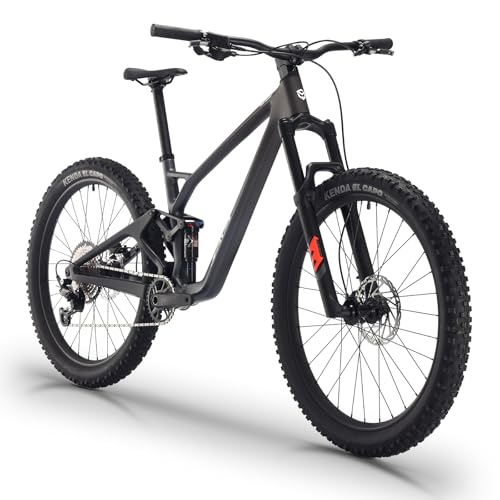
What a Carbon Hardtail Mountain Bike Does Well
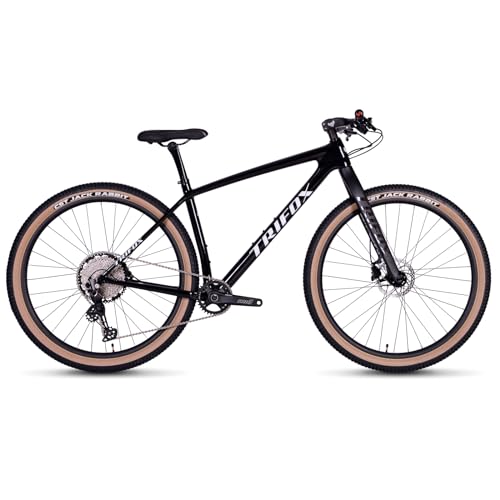
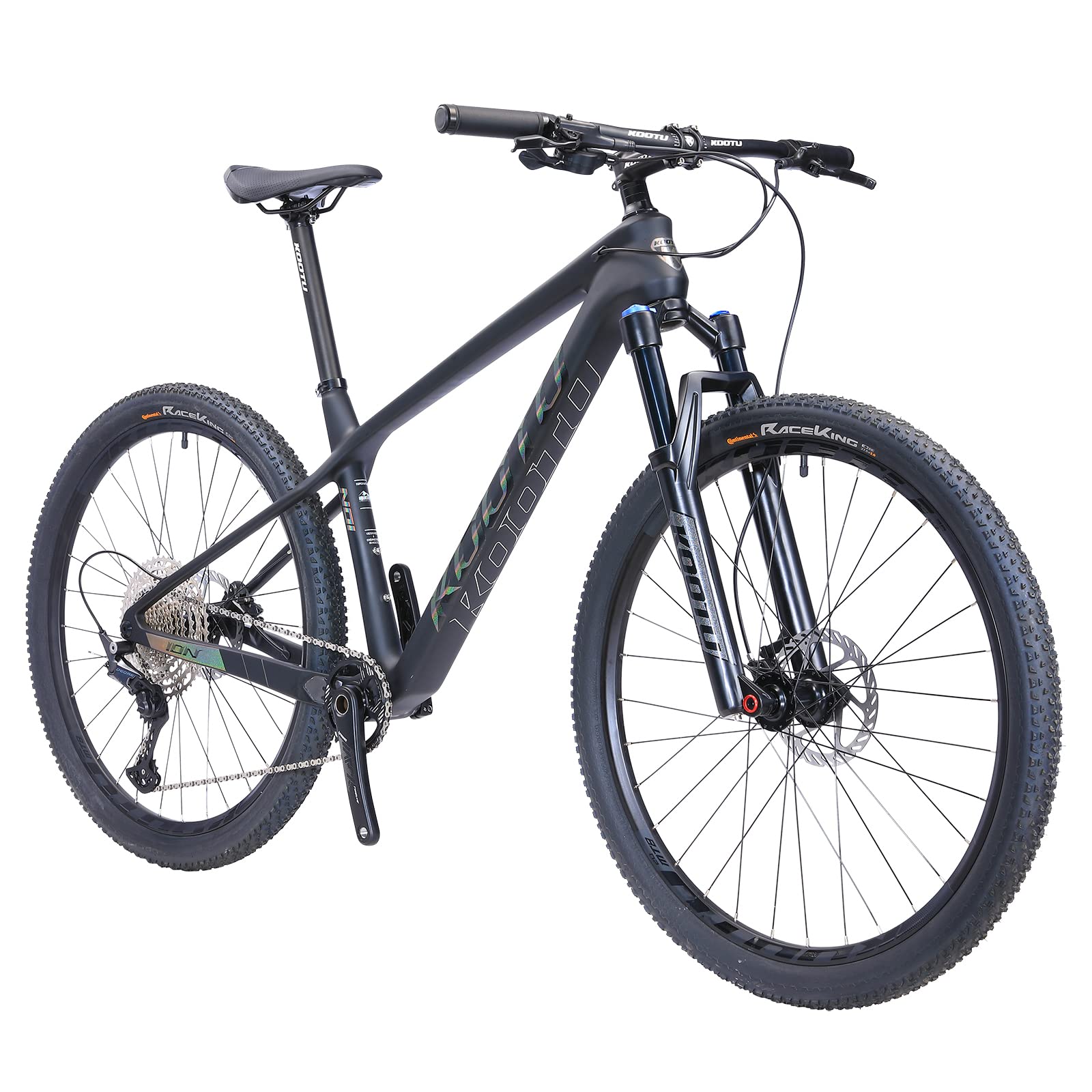
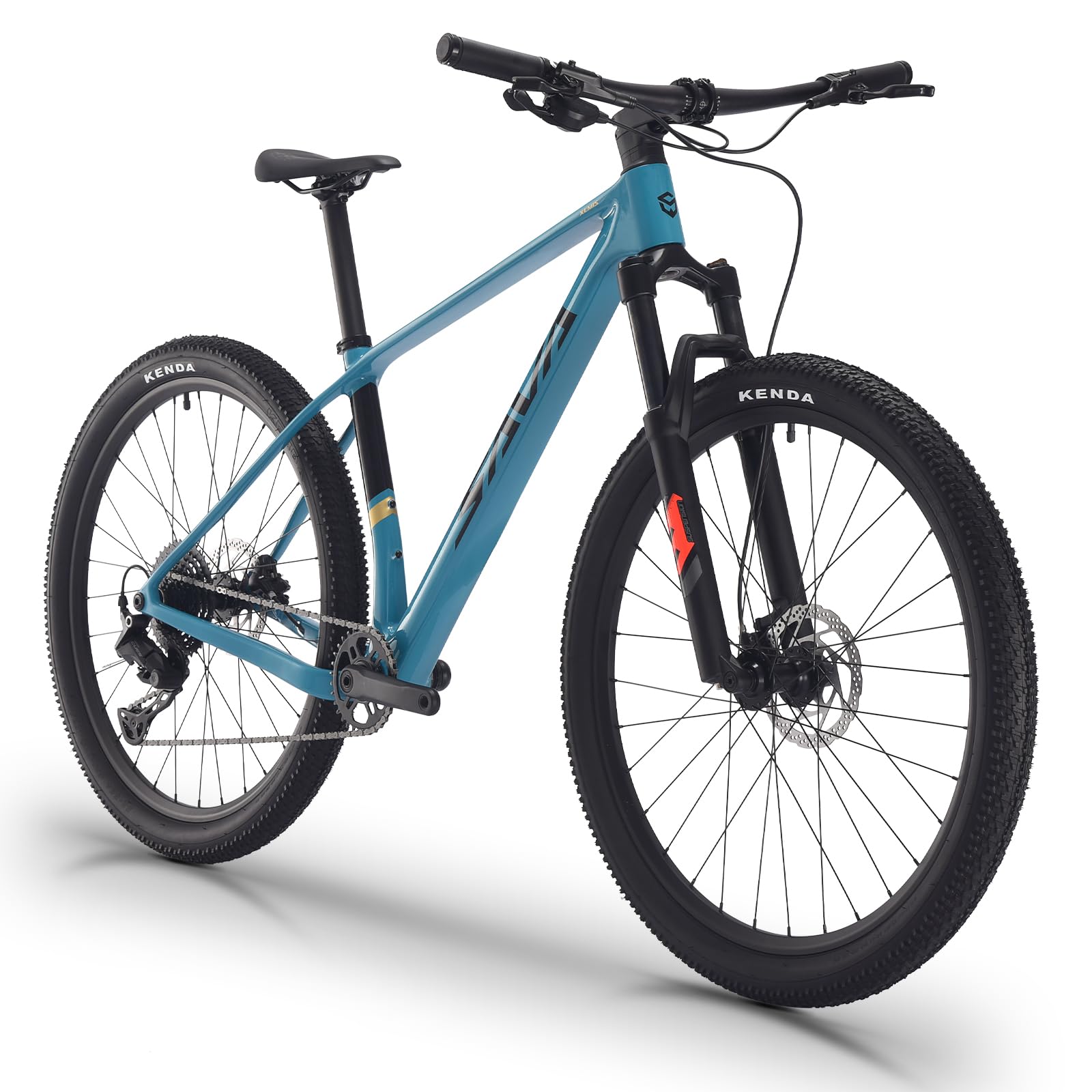
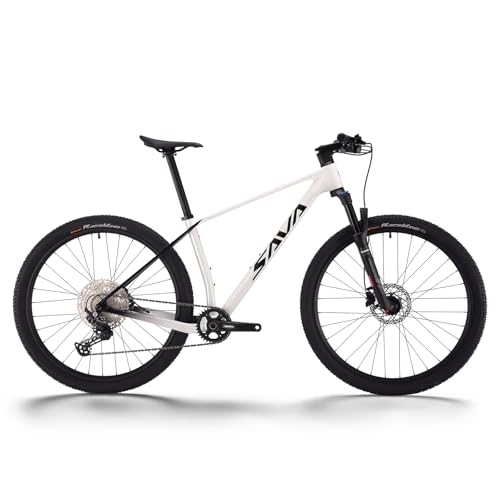
A hardtail has a suspension fork at the front and a rigid rear triangle. With no rear shock, linkage or pivots, there is less to service and less weight to carry uphill. Carbon adds a frame that can be tuned for stiffness at the pedals and a little give over small bumps, so the bike feels lively on climbs and smooth singletrack.
The trade-off is comfort and traction on rough descents, where a hardtail passes more impact to your legs and hands. Riders on rocky, root-filled trails often prefer a full suspension bike, while riders on smoother loops, gravel paths and race courses rarely miss the rear shock. If you are unsure, our guide to the best mountain bike hardtails compares hardtails across all frame materials.
Which Type of Carbon Hardtail Fits Your Riding
Cross Country
Cross country hardtails use steeper angles, lighter parts and a fork with about 100 mm of travel. They suit racers and fitness riders who care about climbing speed and efficiency over long days.
Trail and Downcountry
Trail and downcountry hardtails use a slacker front end, a wider bar and a fork with about 120 to 140 mm of travel. They feel calmer on steep sections and suit riders who mix climbing with fun descents.
Youth and Smaller Riders
Some carbon hardtails come with 27.5 inch wheels and smaller frame sizes, which fit shorter riders better than a large 29 inch frame. Check the size chart carefully, because a frame that is too long can feel stretched even when the standover height looks fine.
Key Features to Compare
- Frame fit and geometry: Compare reach, seat angle and head angle, not just the size label. Reach decides how roomy the bike feels, and a steeper seat angle helps you climb comfortably.
- Fork travel and quality: An air fork with a lockout is easy to tune to your weight. Check that the fork travel matches how rough your trails are.
- Drivetrain: A 1x setup with a wide range cassette is simple and shifts cleanly. Check that the easiest gear is low enough for your steepest local climb.
- Brakes: Hydraulic disc brakes give stronger, more even stopping than mechanical discs and are the sensible minimum for a carbon bike.
- Wheels and tires: 29 inch wheels roll over roots and rocks with less effort, while 27.5 inch wheels turn quickly and suit smaller riders. Tubeless-ready wheels let you run lower pressure for grip.
- Axle standards: Thru axles are stiffer and safer than quick release skewers and make wheel upgrades easier later. See our guide to the best carbon mountain bike wheels when you are ready to upgrade.
Budget and Value
Complete carbon hardtails range from about $800 for direct-to-consumer brands to well over $3,000 for established names with premium parts. At the lower end you often get a good frame with basic components that you can improve over time. At the higher end you pay for lighter wheels, better suspension and a stronger warranty and shop support.
Spend first on fit and brakes, then on the fork and wheels. Replacing a cockpit or tires later is cheap, but a frame that does not fit cannot be fixed with parts. Handlebars are an easy upgrade, and our guide to the best carbon mountain bike bars explains width and rise.
Carbon Frame Care
Carbon is strong along its fibers but dislikes crushing and sharp impacts. Use a torque wrench on the stem, bars and seatpost, and clamp a repair stand on the seatpost, never on the tubes. Wash the frame with mild soap and water, and add protective film on the down tube if your trails throw up rocks.
After any crash, check the frame for cracks, deep chips or a crunchy feel when you press the tubes, and stop riding if you suspect damage. Clean and lube the chain every 100 to 200 miles, and book a professional tune up once a year.
Common Mistakes When Buying a Carbon Hardtail
- Choosing on frame weight alone and ending up with a nervous bike that does not fit your trails.
- Ordering between sizes without checking reach and standover against your height and inseam.
- Ignoring warranty terms, which differ widely between brands and cover crash damage only sometimes.
- Buying a bike with weak brakes or no thru axles because the frame looked like a bargain.
If you are comparing carbon with other materials, our guide to the best carbon mountain bike covers carbon bikes in general, and the guide to the best carbon fiber hardtail mountain bike looks at frame construction in more detail.
Frequently Asked Questions About Carbon Hardtail Mountain Bikes
Is a carbon hardtail better than an aluminum hardtail?
Carbon is usually lighter and absorbs more vibration, so it feels more refined on long rides. Aluminum is cheaper and tougher against dents and rock strikes, and a good aluminum bike with better parts can beat a cheap carbon bike. Choose carbon when you ride often enough to feel the weight and comfort difference.
How much fork travel do I need on a hardtail?
About 100 mm suits cross country and smooth trails, and 120 to 140 mm suits trail riding with rougher descents. More travel adds comfort on rough ground but raises the front of the bike and adds weight.
What wheel size should I choose?
29 inch wheels suit most adults because they roll over obstacles with less effort. Riders under about 5 foot 4 often prefer 27.5 inch wheels for easier handling and better fit.
Can a carbon hardtail handle rough trails?
Yes, if you choose a trail-oriented geometry and a fork with enough travel, and if you accept that the rear end will feel rigid. Many riders enjoy the direct feel, but anyone riding steep, rocky descents every week should look at a full suspension bike.
How do I check carbon frame damage?
Look for cracks, deep paint chips and soft spots, and press along the tubes listening for a crunchy sound. Have a qualified shop inspect any frame you are unsure about, because some damage sits below the surface.
Final Thoughts
Start with the fit and the type of trails you ride, then check brakes, fork and drivetrain before price. Compare the bikes in the product table against those points, and the best carbon hardtail mountain bike for you will be the one that fits well, rides the way your trails demand and comes with a warranty you are comfortable with.


