Best Cameras for Photo and Video: Reviews and Buying Guide for 2026
Disclosure: We may earn a commission when you buy through links on this page, at no extra cost to you. As an Amazon Associate I earn from qualifying purchases. Learn more

The best cameras for photo and video from Canon, DJI and Nikon, plus a guide to sensors, 4K video and camera types.
Smartphones take good pictures, but a dedicated camera still gives you larger sensors, better autofocus, interchangeable lenses or rock steady stabilization that phones cannot match. The hard part is that cameras built for photos and cameras built for video have different strengths, and the specs sheet rarely explains which matters for you. This guide to the best cameras for photo and video explains the features to compare, the common camera types and our top picks so you can buy with confidence.
We start with three short picks, then cover sensors, video features, size, ease of use, durability, camera types, care and common questions. Mount action cameras securely before riding or skiing, never operate a camera while driving and follow depth limits before taking any camera underwater.


Our Top 3 Picks at a Glance
Our picks are the Canon EOS R50 as the best overall, the DJI Osmo Pocket 3 as the best value and the Nikon Z50 II with two lenses as the best premium pick.
We compared sensor size, resolution, video modes, autofocus, stabilization, screens, connectivity, battery life, size and price, along with the overall pattern in owner feedback. We did not shoot with these cameras ourselves; the notes reflect maker specifications.
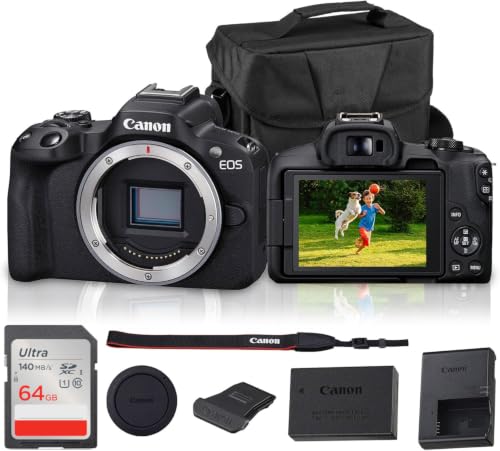
Best Overall: Canon EOS R50
The Canon EOS R50 suits beginners and content creators who want one camera that handles both stills and video well, at around $745 for this bundle with an 18 to 45 mm lens, shoulder bag and 64 GB card. Canon lists a 24.2 MP APS C sensor, 4K 30p video oversampled from 6K, Full HD at 120p for slow motion, Dual Pixel CMOS AF II that tracks people, pets and vehicles, 15 fps burst with the electronic shutter, a fully articulating vari angle touchscreen, built in stereo mics, a guided interface and Wi Fi and Bluetooth for phone transfer.
Two strengths stand out: reliable subject tracking autofocus and a flip screen that makes vlogging easy.
The limitation is 4K capped at 30p, so creators who want 4K 60p slow motion need to look higher.
Best Value: DJI Osmo Pocket 3
The DJI Osmo Pocket 3 suits vloggers, travelers and families who mainly shoot video and want stable footage from a pocket sized device, at around $395. DJI lists a 1 inch CMOS sensor, 4K video at up to 120 fps, 3 axis mechanical stabilization, a 2 inch touchscreen that rotates for horizontal and vertical shooting, ActiveTrack 6.0 subject tracking, D Log M with 10 bit color and stereo audio recording.
Its strengths are gimbal smooth video without extra gear and a large sensor for its size that handles sunsets and night scenes well.
The trade off is a fixed lens, so it is less flexible for photos, zoom and portraits than an interchangeable lens camera.

Best Premium Pick: Nikon Z50 II with Two Lenses
The Nikon Z50 II two lens kit suits enthusiasts who want a stronger video spec and a telephoto lens in one package, at around $1,397. Nikon lists a 20.9 MP DX format (APS C) sensor, 4K UHD at 60p, in camera 120p slow motion in Full HD, electronic VR, a product review mode, automatic detection and tracking of nine subjects including people, dogs, cats, birds and vehicles, 31 built in Picture Control presets, a built in flash and SnapBridge for wireless sharing. The kit includes the NIKKOR Z DX 16 to 50 mm f/3.5 to 6.3 VR lens and a second NIKKOR telephoto zoom.
The appeal is 4K 60p, broad subject detection and a two lens kit that covers wide shots to wildlife.
The limitation is a higher price and a larger bag than pocket video cameras need.

How to Choose the Best Cameras for Photo and Video: Buying Guide
Choose by what you shoot most, then match sensor size, video specs and size to that use. A camera that you enjoy carrying will get used more than a bigger one with better specs.
Features That Matter for Photo and Video
Shooting both photos and video means you need a camera that does both without compromise. Look for at least 20 MP for photos, 4K video, reliable autofocus that tracks faces and eyes, image stabilization and a flip screen. A microphone input or Bluetooth audio helps video sound. The Canon EOS R50, Nikon Z50 II and Sony a6400 cover these basics well.
Among the best cameras for photo and video, mirrorless APS C models balance stills quality with strong video, while pocket gimbals and action cameras focus more on video.
Sensor Size and Image Quality
Bigger sensors capture more light, which means cleaner low light images and more background blur. Common sizes from small to large are 1/1.9 inch (GoPro HERO13), 1/1.3 inch (DJI Osmo Action 4), 1 inch (DJI Osmo Pocket 3), APS C (Canon EOS R50, Nikon Z50 II, Sony a6400) and full frame. Megapixels are not everything: 20 to 24 MP is plenty for most people, and sensor size matters more in dim light.
Size, Weight, and Ergonomics
Smaller cameras go with you more often. The Insta360 GO Ultra weighs 53 grams and clips to a cap, while the DJI Osmo Pocket 3 fits in a pocket. Mirrorless cameras like the Canon EOS R50 are compact for interchangeable lens cameras but still need a small bag. Check grip size and button layout if you will hold the camera for long periods.
Ease of Use for Your Skill Level
Beginners benefit from auto modes, guided menus and easy phone transfer. Canon lists a guided interface and advanced auto modes on the R50, and the Canon EOS R100 is a simpler entry model with Dual Pixel CMOS AF. Nikon's Picture Control presets and SnapBridge app make sharing quick. Advanced shooters will want manual controls and log profiles.
Video Capabilities
Video features vary widely. Canon EOS R50 records 4K 30p, Nikon Z50 II records 4K 60p, DJI Osmo Pocket 3 and Osmo Action 4 record 4K at 120 fps and GoPro HERO13 records 5.3K at 60 fps. Log profiles like D Log M and GP Log keep more detail for color grading. Flip screens help vlogging, and stabilization keeps footage smooth.
Durability and Weather Sealing
Action cameras are built for rough use. GoPro HERO13 is waterproof to 33 feet without a housing, and DJI Osmo Action 4 is waterproof to 18 meters and works down to minus 4°F. Mirrorless cameras and pocket gimbals are not waterproof, so protect them from rain and sand with a cover or bag.
Types of Cameras
Here are the main camera types for photo and video and who each suits.
Vlogging Cameras
Vlogging cameras, like the DJI Osmo Pocket 3 and the Sony ZV-E10 II, are designed for filming yourself. They feature flip screens, face tracking and good built in mics. They are easy to carry and great for creators, though fixed lens models offer less zoom and photo flexibility.
Point and Shoot Compacts
Point and shoot compacts have fixed zoom lenses and small bodies, making them easy to carry for travel and everyday snapshots. Premium compacts use 1 inch sensors. They are simpler than mirrorless cameras but offer less low light performance and no lens changes.
Action Cameras
Action cameras, like the GoPro HERO13, DJI Osmo Action 4 and Insta360 GO Ultra, are small, tough and waterproof. They offer ultra wide views and strong stabilization for sports, travel and point of view footage. Small sensors limit low light quality and background blur.
Mirrorless Cameras
Mirrorless cameras, like the Canon EOS R50, Canon EOS R100, Nikon Z50 II and Sony a6400, use large sensors and interchangeable lenses. They deliver the best photo quality and flexible video, and suit hobbyists who want room to grow. They cost more and are bulkier than compacts.
Best Cameras for Specific Needs
Here is a pick for buyers on a tighter budget.
Best Affordable Cameras for Photos and Videos
The best affordable cameras for photos and videos give you a big sensor, 4K video and easy sharing for under around $600. The Canon EOS R100 kit, around $570, pairs a 24.2 MP APS C sensor with 4K 24p video (cropped), Full HD 60p, Dual Pixel CMOS AF and an OLED viewfinder. For video first buyers, the DJI Osmo Action 4 costs around $191.
Care and Maintenance Tips
Use a lens cloth, not your shirt. Microfiber cloths and a blower remove dust without scratching coatings.
Carry a spare battery. Video drains batteries quickly; GoPro lists up to 1.5 hours of 5.3K recording from its Enduro battery.
Store in a dry, padded bag. Moisture and bumps cause most damage; add silica gel packs in humid climates.
Update firmware. Makers often improve autofocus and add features; DJI added Pre Rec to Osmo Action 4 through updates.
Use fast memory cards. 4K and high frame rate video need fast cards to avoid dropped frames.
Rinse action cameras after salt water. Fresh water rinsing protects seals and buttons.
Frequently Asked Questions
What features matter most in cameras for photo and video?
Sensor size, autofocus, video resolution and stabilization matter most. An APS C sensor, subject tracking AF, 4K video and a flip screen cover most needs. The Canon EOS R50 and Nikon Z50 II deliver all of these.
What specs matter most for beginners?
Beginners should focus on easy auto modes, reliable autofocus, a flip screen and phone transfer. Around 24 MP and 4K video are plenty. The Canon EOS R50 and R100 include guided modes and Wi Fi sharing.
Which is better for low light?
Larger sensors are better for low light. APS C cameras like the Nikon Z50 II and Canon EOS R50 beat 1 inch and smaller sensors. Among compact video cameras, the 1 inch DJI Osmo Pocket 3 does well at night.
Is a smartphone enough instead?
A smartphone is enough for casual snapshots and social posts. A dedicated camera adds larger sensors, optical zoom through lenses, better autofocus and longer recording. Nikon notes the Z50 II sensor is several times larger than a typical phone sensor.
How much should I spend on my first one?
Most first time buyers should spend around $400 to $800. Around $400 buys a pocket gimbal like the DJI Osmo Pocket 3, while around $570 to $745 buys an entry mirrorless kit like the Canon EOS R100 or R50.
What does 4K 60p mean?
4K 60p means video recorded at 3840 x 2160 resolution and 60 frames per second. Higher frame rates make motion smoother and allow slow motion playback. The Nikon Z50 II records 4K 60p, while the Canon EOS R50 records 4K 30p.
The Bottom Line
The best cameras for photo and video balance sensor size, autofocus and video features with a size you will actually carry. The Canon EOS R50 is the best overall for beginners and creators, the DJI Osmo Pocket 3 is the best value for smooth video and the Nikon Z50 II two lens kit is the premium pick for 4K 60p and flexible zoom.
For more camera guides, see the best cameras for starter photography, the best compact cameras for travel, the best Sony cameras and the best digital SLR cameras. Then compare current prices in the product table above.