
The Best Cameras for Starter Photography: Buying Guide and Top Picks
Disclosure: We may earn a commission when you buy through links on this page, at no extra cost to you. As an Amazon Associate I earn from qualifying purchases. Learn more

The best cameras for starter photography: what beginners need in sensor, autofocus and lenses, plus three picks.
Your phone takes great snapshots, but at some point you may want more: blurry backgrounds, sharp action shots, zoom that does not turn to mush and the creative control that comes with a dedicated camera. Choosing your first real camera can feel overwhelming, with sensor sizes, lens mounts and video specs to compare. This guide to the best cameras for starter photography explains which features matter for beginners and which can wait, so your first camera is one you will keep using.
We start with three picks, then cover beginner friendly features, sensor size, video, lenses and low light, the main camera types, care tips and answers to common questions. Every camera in the table above is sold new on Amazon US.



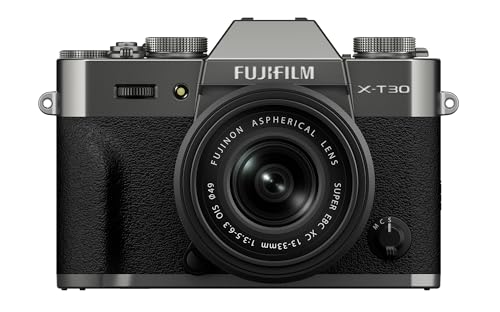


Our Top 3 Picks at a Glance
Our picks are the Canon EOS R50 for most beginners, the Canon EOS R100 for tight budgets and the Nikon Z50 II two lens kit as a premium choice for beginners who want room to grow. All three are mirrorless cameras with APS-C sized sensors and interchangeable lenses.
We compared sensor, autofocus, video specs, screen and viewfinder, included lenses, size and price, along with the overall pattern in owner feedback. We did not shoot with these cameras ourselves; the notes reflect maker specifications.
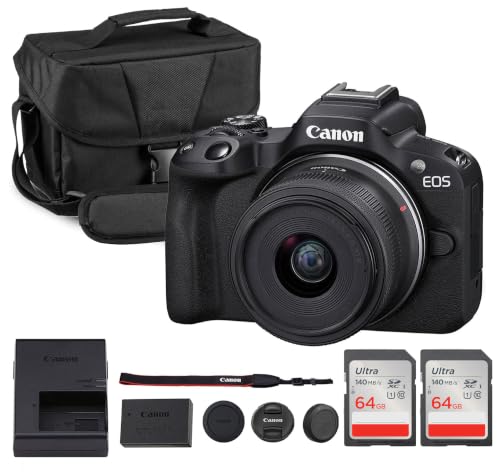
Best Overall: Canon EOS R50 Mirrorless Camera Kit
The Canon EOS R50 suits beginners who want one camera for photos, travel and video, at around $850 for this kit with the RF-S 18 to 45mm lens, a shoulder bag and two 64GB cards. It has a 24.2 megapixel APS-C sensor, oversampled 4K video and Dual Pixel autofocus with face and eye detection.
Two strengths stand out: Creative Assist, which helps beginners adjust the look of photos without menus full of jargon, and a vari angle touchscreen that flips forward for vlogging and supports vertical video for social platforms. The kit lens covers wide to standard focal lengths for portraits, street and travel. The limitation is lens reach, since the 18 to 45mm lens does not zoom far. Skip it if you mainly shoot distant wildlife or sports and want a longer zoom included.
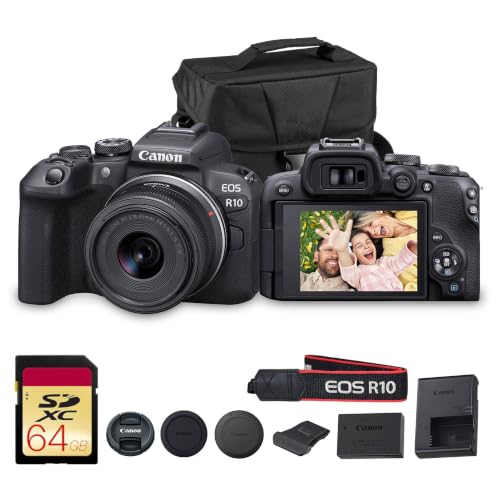
Best Value: Canon EOS R100 Mirrorless Camera
The Canon EOS R100 is for first time buyers who want a real camera at a lower price, at around $570 with the RF-S 18 to 45mm IS STM lens. It pairs a 24.1 megapixel APS-C sensor with the DIGIC 8 processor, Dual Pixel CMOS autofocus with 143 AF zones and a 2.36 million dot OLED electronic viewfinder.
Its strengths are image quality for the money and a compact body that still has a viewfinder, which helps in bright sun. Wi-Fi and Bluetooth make it easy to send photos to your phone. The trade offs are a fixed 3 inch screen and limited video, with 4K at 24p cropped and Full HD at 60p. Skip it if you plan to vlog or shoot a lot of video.

Best Premium Pick: Nikon Z50 II with Two Lenses
The Nikon Z50 II two lens kit suits beginners who want a camera they will not outgrow quickly, at around $1,397. It uses a 20.9 megapixel DX format (APS-C) sensor and includes the NIKKOR Z DX 16 to 50mm VR lens plus a telephoto zoom, so you can shoot wide scenes and distant subjects from day one.
The appeal is smart autofocus and creative tools: it detects and tracks nine subject types, including people, dogs, cats, birds and vehicles, and offers 31 built in Picture Control presets. Video reaches 4K UHD at 60p with 120p slow motion in Full HD, and it has a built in flash. The limitation is price, since this kit costs well over the Canon options. Skip it if you are not sure photography will become a long term hobby.

How to Choose the Best Cameras for Starter Photography: Buying Guide
The best cameras for starter photography combine a large sensor, reliable autofocus, simple controls and a lens that covers everyday shots. Here is what to compare.
Beginner Friendly Features That Matter
Look for guided modes, clear menus, a touchscreen and helpful auto modes that you can grow beyond. Canon's Creative Assist and Nikon's Picture Control presets let you change the look of photos without technical settings. Smartphone apps, such as Nikon SnapBridge, transfer photos to your phone for quick sharing.
A comfortable grip, light weight and a battery that lasts a full day of casual shooting matter more than specs you will not use.
In camera guides and help text also matter. Many beginner cameras explain each setting on screen, which shortens the learning curve. Look for a mode dial with automatic, scene, aperture priority, shutter priority and manual positions so you can move from auto to creative control at your own pace.
Features That Matter for Photography
For photography, an interchangeable lens camera with an APS-C sensor offers the best balance of quality, size and price. Aim for 20 to 26 megapixels, fast autofocus with subject detection and a burst rate of at least 6 frames per second for moving subjects.
A viewfinder helps in bright light and steadies the camera against your face. Manual controls such as aperture priority and shutter priority let you learn exposure step by step.
Sensor Size and Image Quality
Sensor size matters more than megapixels. Larger sensors collect more light, producing cleaner images in dim conditions and softer, blurrier backgrounds. Common sizes are 1 inch in premium compacts, APS-C in most beginner interchangeable lens cameras and full frame in more expensive models.
APS-C cameras like the Canon R50, R100 and Nikon Z50 II offer a large step up from phones and compacts. A 24 megapixel APS-C image is plenty for prints, social media and cropping.
Image quality also depends on the processor and lenses. A sharp lens on a 20 megapixel sensor often beats a soft lens on a higher resolution sensor, so it is worth upgrading lenses before upgrading bodies once you know what you like to shoot.
Video Capabilities
If you plan to shoot video, look for 4K recording without a heavy crop, reliable video autofocus and a flip out screen. A microphone input makes a big difference in audio quality. The Canon R50 offers oversampled 4K and a vari angle screen, while the Nikon Z50 II adds 4K at 60p.
If video is a minor priority, Full HD at 60p, like the R100, is fine for family clips.
Check recording limits and heat too. Some compact cameras stop recording after a set time or when they get warm, which matters for long interviews or events.
Lens and Zoom Range
Kit lenses usually cover around 18 to 45mm or 16 to 50mm, which suits everyday scenes. Telephoto zooms, such as 55 to 210mm or 50 to 250mm, bring distant subjects closer for sports, wildlife and events. Two lens kits often cost less than buying lenses separately.
A fast prime lens, like a 50mm f/1.8, is an affordable upgrade for portraits with blurry backgrounds and better low light performance. Lower f numbers mean wider apertures and more light.
Think about the lens system as well as the body. Each brand uses its own lens mount, so the camera you choose decides which lenses you can buy later. Canon RF and RF-S, Nikon Z, Sony E and Fujifilm X mounts all offer affordable beginner lenses and a path to more advanced glass.
Low Light Performance
Low light performance depends on sensor size, lens aperture and image stabilization. APS-C cameras handle indoor and evening scenes far better than phones in low light, especially with a fast prime lens. ISO controls sensor sensitivity; higher ISO brightens images but adds grain.
Look for usable results at ISO 3200 to 6400 and stabilized lenses, such as Canon's IS STM and Nikon's VR lenses, to reduce blur at slower shutter speeds.
Types of Cameras
Beginner cameras fall into four main types. Here is who each suits.
Vlogging Cameras
Vlogging cameras, such as the Sony ZV-E10 II, focus on video with flip screens, good microphones and fast autofocus for faces. They suit content creators. Some lack viewfinders, which makes stills shooting in bright light harder.
DSLR Cameras
DSLRs, like the Canon EOS Rebel T7, use mirrors and optical viewfinders. They offer long battery life and affordable used lenses. They are bulkier, and new DSLR models are rare as brands focus on mirrorless.
Point and Shoot Compacts
Compacts, like the Kodak PIXPRO FZ55 with 5x optical zoom, are small, simple and inexpensive. They suit casual shooters and kids. Small sensors limit low light quality and background blur.
Mirrorless Cameras
Mirrorless cameras, like the Canon R50, Sony a6400, Fujifilm X-T30 III and Nikon Z50 II, are compact, with electronic viewfinders, fast autofocus and strong video. They suit most beginners who want to grow. Batteries drain faster than DSLRs.
Care and Maintenance Tips
- Use a lens cloth, not your shirt. Microfiber cloths and blowers remove dust without scratches.
- Carry a spare battery. Mirrorless cameras use more power, especially with video and the EVF.
- Store in a dry, padded bag. Protect against bumps and humidity; add silica gel packs.
- Update firmware for AF improvements. Makers often improve autofocus and fix bugs.
- Use a lens cap and hood. They protect the front element from scratches and glare.
Learn a few basics in your first month: hold the camera with both hands and tuck your elbows in for steadier shots, try aperture priority to control background blur and practice in good light before tackling dim interiors. Shooting regularly, even around your home, builds skills faster than reading manuals.
Cameras: Your Questions Answered
What makes cameras for beginners different?
Beginner cameras focus on ease of use, with guided modes, simple menus, touchscreens and helpful auto settings, while still offering manual controls to learn with. They are lighter and more affordable than advanced models, but often share similar sensors, so image quality remains excellent.
What features matter most in cameras for photography?
Sensor size, autofocus and lenses matter most. An APS-C sensor, autofocus with subject detection and a versatile kit lens give the biggest improvement over a phone. A viewfinder, good ergonomics and manual exposure modes help you learn and grow.
How much should I spend on my first one?
Most beginners spend around $550 to $900 on a first interchangeable lens camera with a kit lens, such as the Canon R100 or R50. Spending more makes sense if you want a two lens kit or advanced video. Budget compacts start around $100 for casual use.
Set aside around $50 to $100 for a memory card, spare battery and padded bag, which most beginners need soon after buying.
Which is better for low light?
Cameras with larger sensors and lenses with wide apertures are better for low light. An APS-C mirrorless camera paired with a fast prime lens, like a 50mm f/1.8, outperforms compacts and phones indoors. Stabilized lenses also help at slower shutter speeds.
Should a beginner buy mirrorless or DSLR?
Most beginners should choose mirrorless. Mirrorless cameras are smaller, have better video and autofocus with subject detection and get new lenses and updates. DSLRs like the Canon Rebel T7 remain good value with long battery life, but brands now focus on mirrorless systems.
The Bottom Line
The best cameras for starter photography pair an APS-C sensor with reliable autofocus, simple controls and a versatile lens. The Canon EOS R50 is our best overall pick, the Canon EOS R100 is great value and the Nikon Z50 II two lens kit offers premium room to grow. Focus on sensor size, autofocus and lenses, then learn your camera step by step.
For more camera guides, see the best cameras for point and shoot, the best starter cameras, the best cameras for photography and the best starter digital cameras. Then compare current prices in the product table above.


