Best Cake Pans With Removable Bottom (2026): Types and Care
Disclosure: We may earn a commission when you buy through links on this page, at no extra cost to you. As an Amazon Associate I earn from qualifying purchases. Learn more

Loose bottom or springform? Compare size and seam fit to find the best cake pan with removable bottom.
Picture a cheesecake that baked perfectly, cooled on the counter, and now has to leave the pan without cracking. With a fixed base, you slide a knife around the edge and hope the bottom lets go. Choosing the best cake pan with removable bottom removes that tense moment, since the sides lift away and the cake stays resting on its own flat base.
This guide focuses on real homes rather than bakery output. It looks at storage space, household size, how often you bake, and what the pan costs to own over time. Use the product table above to compare styles, then read on for sizing, materials, and care. If you are still weighing pan styles in general, our guide to the best cake pan gives useful background.




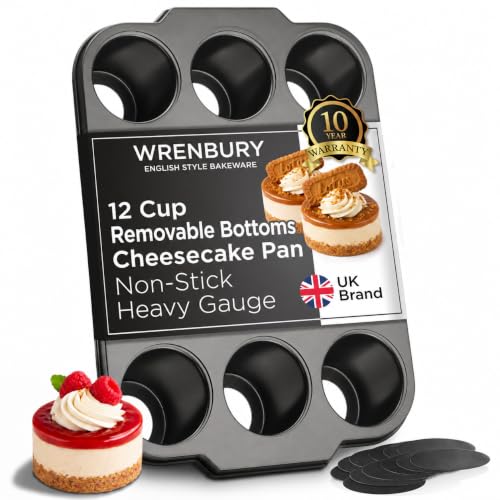
Quick Answer: What a Removable Bottom Actually Changes
A removable bottom pan has two parts. The ring forms the sides, and a flat disc forms the base. Once the cake has cooled and set, you set the pan on a sturdy can or jar, press the ring gently downward, and the cake rises clear while still supported by the disc. You can then serve from the disc or slide the cake onto a plate.
That design solves three everyday problems. Delicate cakes keep their edges intact, chilled desserts release without turning the pan upside down, and you never have to pry at a fragile crumb with a spatula. The trade off is a seam where the two parts meet, and that seam shapes several of the buying choices below when you shop for the best cake pan with removable bottom for your kitchen.
Do You Really Need a Cake Pan With a Removable Bottom?
You will get the most value from this design if you bake cheesecakes, tortes, mousse cakes, icebox cakes, or any dessert that sets in the pan and cannot be flipped. A standard cake that firms up as it cools can usually be turned out of a regular pan with parchment on the base, so a removable bottom is a convenience there rather than a necessity.
Household size matters too. A smaller pan lets a couple bake a modest cheesecake instead of a large one that sits in the fridge for a week, while a larger pan suits families baking for birthdays and school events. If you mostly bake sheet cakes and sturdy snack cakes, a fixed pan may suit you better, since it will never leak at a seam.
Before You Buy: A Quick Checklist for Choosing a Cake Pan
Size: Match It to Your Space and Household
Diameter drives both servings and storage. A 6 inch pan suits couples and small kitchens and fits easily in a crowded cabinet, while an 8 inch pan is a flexible middle choice for most home recipes. A 9 inch pan matches the size many recipes assume, and a 10 inch pan serves a crowd but needs more shelf room and a larger cooling rack. Measure your oven and cabinet shelf before ordering. Readers comparing the middle sizes can see our guide to the best 8 inch cake pan for smaller bakes and our guide to the best 9 inch cake pan for the standard recipe size.
Which Type Fits Your Routine
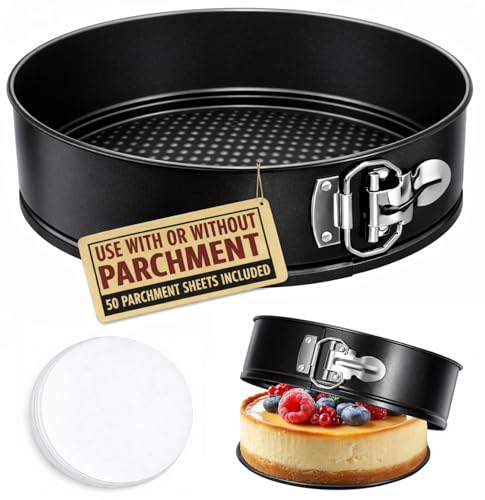
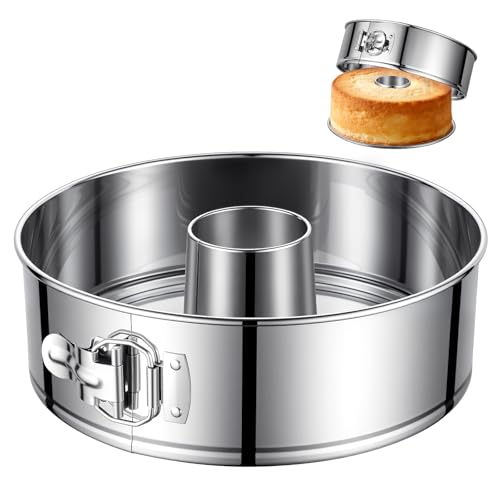
Loose bottom pans, often called push pans, have a smooth ring and a disc that you push upward from below. They have no latch to clean and give clean, straight sides, which suits layer cakes and tortes. Springform pans add a hinged ring with a clasp on the side. Opening the clasp releases the ring outward, which helps with very soft chilled desserts that you do not want to push at all. Round pans cover most recipes, while square versions help with bars you plan to cut into neat portions.
Base Fit, Sides, and Features Worth Paying For
The fit between disc and ring matters more than extra accessories. The disc should sit flat, stay level under batter weight, and meet the ring with a snug seam that slows leaks without pinching. Straight sides give layer cakes even edges that stack neatly and frost smoothly. Tall sides, around 3 inches, help cheesecakes and deep tortes contain batter without spilling over the rim. Rolled rims add strength and give you a safer grip with oven mitts. Skip lids and bundled extras, and put your money toward a thicker pan with a base that fits well.
Light vs Dark Finish and Browning
Finish changes how the crust bakes. Light colored aluminum reflects some heat and tends to produce paler, more even crusts, which many bakers prefer for vanilla and sponge cakes. Dark finishes absorb more heat and brown the edges and bottom faster. That can suit a firm cheesecake crust, but it can also dry out a lean sponge or darken it before the center finishes. If you choose a dark pan, lower the oven temperature slightly and check the cake a few minutes early.
Oven Safe Temperature and Coating Choices
Check the rated oven temperature before you buy, especially if you bake crusts at high heat. Plain aluminum and anodized aluminum generally tolerate higher heat than many coated pans, and they will not flake over time. Nonstick coatings release delicate cakes with less greasing, but the coating sets the heat limit and wears with metal tools and years of washing. An uncoated pan paired with parchment is a durable long term route. Our guide on how to grease a cake pan explains prep in detail, and readers avoiding coatings can see our guide to the best non toxic cake pan.
Realistic Budget Ranges
Basic loose bottom pans often cost under $15. At that level you get thin metal and a simple disc that works well for occasional baking if you handle it gently. The middle range, about $15 to $25, usually buys thicker aluminum, straighter sides, and a base that sits flatter, which improves both baking and release. Spending about $25 to $50 can bring heavier gauge metal, an anodized finish, or a matched set of two sizes. That premium makes sense if you bake weekly, while occasional bakers rarely need the top tier.
Three Pan Styles Compared for Daily Home Baking
Loose Bottom Round Pans for Layer Cakes and Tortes
This is the most versatile style for a typical home. With no hinge or clasp, the ring cleans quickly, stores flat when nested with other pans, and leaves smooth sides on the cake. You release the bake by setting the pan on a can and easing the ring down, a motion that feels natural after one or two tries. The style suits layer cakes, tortes, and cheesecakes with a firm crust that can support a gentle lift from below.
Springform Pans for Soft Chilled Desserts
A springform pan opens outward, so nothing pushes against a fragile filling. That makes it a kind choice for mousse cakes, no bake cheesecakes, and ice cream cakes that set in the freezer. The clasp and hinge add bulk, need careful drying so moisture does not linger, and create more seams where thin batter can escape. Choose this style when your menu leans toward chilled desserts, and wrap the outside with foil during a water bath to keep water away from the seam.
Our Selection Process for Cake Pans With Removable Bottoms
This guide compares styles and criteria. The comparisons draw on manufacturer specifications for size, material, and heat ratings, along with patterns in verified buyer feedback about leaks, warping, coating wear, and how bases fit after repeated washing. Heat distribution, food release, warp resistance, material safety, and ease of cleaning were the five criteria used throughout. Cost of ownership counted as well, because a pan that needs replacing every couple of years is not a bargain at any starting price.
Common Buying Mistakes to Avoid
- Buying a 10 inch pan for a small oven or a two person household, so the pan crowds the oven walls and the cakes are always too large to finish.
- Pouring a thin, runny batter straight into an unlined pan, which leads to leaks at the seam and a smoky oven floor.
- Choosing a dark coated pan for pale sponge cakes without adjusting the temperature, so the edges overbrown while the center stays soft.
- Paying for novelty shapes and bundled tools instead of a thick, flat base, so the pan you use weekly performs worst.
- Storing the disc under heavy cookware, which bends the thin base and weakens the seal for every future bake.
Cost of Ownership and Care
Ownership costs stay modest with this style of pan. Your main extras are parchment rounds, foil for water baths, and the occasional replacement if a coating wears out or a disc bends. An uncoated aluminum pan can serve for many years with basic care, which makes its cost per bake very low even at a middle range price. A coated pan may need replacing sooner, so factor that shorter life into the price you are willing to pay.
Wash the ring and disc soon after baking, since sugary residue hardens once it sits. Warm water, a soft sponge, and mild soap protect both coated and uncoated finishes, and you should dry the hinge and clasp area fully on springform pans so rust does not start in the folds. Our full guide on how to clean a cake pan covers stuck on residue in detail. Store the disc flat inside the ring, and if it ever rocks on the counter, the base has warped and the seam will leak more than it should.
FAQ
Is a cake pan with a removable bottom worth it for occasional bakers?
Yes, if the few cakes you bake each year include cheesecake or another dessert that cannot be flipped. One middle range pan covers those occasions and stores easily inside a larger pan or a cabinet corner. If you only bake sturdy snack cakes and sheet cakes, a regular pan is enough, and you can spend the money on good parchment instead. The deciding question is the style of dessert, not how often you bake.
How do you stop batter leaking from a loose bottom cake pan?
Start with a simple barrier. Line the base with a parchment round, set the pan on a rimmed baking sheet, and pour thicker batters directly in with confidence. For thin batters, wrap the outside of the seam with a layer of foil before filling. Baking on a sheet also protects your oven if a small amount escapes, and it gives you a stable way to move a full pan safely.
What is the best way to lift a cake off the base without breaking it?
Chilling is your friend here. A cold cheesecake or torte is firm enough to move, while a warm one will slump. Slide a long, thin knife flat between the cake and the disc, work it around slowly to free the whole bottom, then ease the cake sideways onto a plate while supporting the far edge. If the cake resists, chill it longer rather than forcing the move.
How long does a cake pan with a removable bottom usually last?
An uncoated aluminum pan can last for decades if the disc stays flat and the ring keeps its shape. Coated pans have a shorter working life because the surface wears with use and washing, often becoming less effective after a few years of regular baking. The usual end point is gradual. Release gets worse, the seam leaks more, or the base warps, and those small frustrations are your signal to replace it.
Final Thoughts
For most homes, a round loose bottom pan in the 8 inch or 9 inch size, made from sturdy aluminum with straight sides and a flat, snug disc, covers the widest range of baking with the least storage fuss. Compare the styles in the product table above against your oven space, your household size, and the desserts you actually make.
When you find the best cake pan with removable bottom for your kitchen, every cheesecake and torte leaves the pan calmly, and that one calm moment at the end of baking is what this style of pan is really selling.