Best AC Portable: What Actually Matters Before You Buy
Disclosure: We may earn a commission when you buy through links on this page, at no extra cost to you. As an Amazon Associate I earn from qualifying purchases. Learn more

How to choose the best ac portable: SACC BTU sizing, noise, venting and safety, plus three picks that pass our six point checklist.
A portable air conditioner can rescue a hot bedroom, a home office over the garage or a rental where window units are not allowed. Yet the category is full of confusing BTU numbers, noisy compressors and hoses that leak heat back into the room. To find the best ac portable for your space, we built a simple checklist and scored current models against it.
Below you will find each criterion with clear good and bad thresholds, three picks that pass, a quick yes or no checklist for your own shopping, and the red flags that separate solid units from disappointing ones. Use it whether you buy one of our picks or another model from the table.






How We Evaluate AC Portables
Every unit in the table above was judged on the six criteria below, using the maker's published specifications, the product listings and the patterns in buyer feedback. We did not run our own trials; instead we compared verified ratings such as SACC BTU, CEER and decibel figures, which are measured under standard conditions and let you compare brands fairly.
Our goal was to pin down the best ac portable choices by measurable traits rather than marketing language. Think of the criteria as a scorecard. A model that passes all six will cool the room it is sized for, stay tolerable at night and keep running costs reasonable. A model that fails one of them, especially size or noise, tends to end up in a closet by August.
Measuring for Size and Portability
Measure the floor spot first. Most portable units need a footprint of roughly 15 by 15 inches to 20 by 17 inches, plus about 20 inches of clearance behind the unit for the exhaust hose and airflow. Then measure your window: the included slider kits usually fit openings from about 20 to 50 inches.
Also think about where the unit will live day to day. A portable AC parked by a sliding door needs a different kit than one in a casement window, and some buildings ban anything that sticks out of a window frame, so check your lease or HOA rules first.
Weight is the hidden trade off. Compact 8,000 BTU class units are the lightest, while 14,000 BTU dual hose models are considerably heavier, so check the listed weight before you buy. Casters and side handles help on smooth floors, but carrying one upstairs is a two person job. Good: casters, handles and a window kit that fits your opening. Poor: no wheels or a kit that needs cutting.
Room Size and Coverage
Ignore the big ASHRAE BTU figure on the box and look for the SACC rating, the Department of Energy number that accounts for heat leaking through the hose and housing. A unit sold as 14,000 BTU ASHRAE may be 10,000 BTU SACC, which is the honest number to compare.
As a rough guide, 6,000 to 8,000 BTU SACC suits a bedroom up to about 300 square feet, 10,000 BTU SACC handles 400 to 500 square feet, and 12,000 BTU SACC or more works for larger living spaces. Add capacity for sunny rooms, kitchens and top floors. Good: SACC rating clearly listed and matched to your room. Poor: only an ASHRAE figure and a vague "cools up to" claim.
Ceiling height matters too. Rooms with vaulted ceilings hold more air than the floor area suggests, so treat a 250 square foot room with a 12 foot ceiling like a 375 square foot room when sizing.
Noise Level (dB) and Sleep Mode
Noise is the biggest complaint about portable air conditioners, because the compressor sits inside the room with you. Most single speed units run around 50 to 56 dB on cooling, similar to a busy office. Inverter models ramp the compressor up and down, so they often settle in the mid 40s once the room reaches temperature.
For a bedroom, look for a listed noise figure under about 50 dB, a sleep mode that gradually raises the set point overnight, and a display you can dim. Good: inverter compressor, published dB figure, sleep mode. Poor: no noise figure at all, which usually means it is loud.
Fan noise and compressor noise feel different. A steady fan hum is easy to sleep through, while a single speed compressor switching on and off every few minutes is what wakes people up. That is why inverter units earn extra credit in our scoring even when their peak decibel figure looks similar.
Performance Ratings (CADR, BTU, Pints/Day, CFM)
For air conditioners, three numbers matter most. BTU (SACC) measures cooling capacity. CEER, the combined energy efficiency ratio, tells you how much cooling you get per watt; higher is better, and current efficient models list a CEER above 10. Pints per day describes dehumidifying capacity in dry mode, useful in humid climates.
CADR belongs to air purifiers, not air conditioners, and CFM airflow figures are rarely published consistently, so do not let them sway you. Good: SACC BTU and CEER both listed. Poor: only peak wattage or marketing terms like "ultra cooling" with no rating behind them.
Safety Features
Every portable AC should carry ETL or UL certification, which shows it meets North American electrical safety standards. Check that the plug includes a built in LCDI or GFCI style safety device, which cuts power if the cord is damaged, and that the unit runs on a standard 115 volt outlet without an extension cord.
Other useful protections include automatic shutoff when the internal water tank is full, compressor delay after power loss, and refrigerant information on the label. Newer models use R32 or R290 refrigerants. Good: ETL or UL mark, safety plug, full tank shutoff. Poor: no listed certification or instructions that suggest using an extension cord.
Filter Type and Replacement Cost
Portable air conditioners use washable mesh filters to keep dust off the coils, not HEPA filters, so ongoing cost is low. Rinse the filter every two weeks during heavy use. Some models add a carbon or fine mesh layer for odors, which is a nice extra rather than a reason to choose one unit over another.
The real maintenance item is water. Self evaporating units exhaust most condensate through the hose, while others need draining in humid weather. Good: washable filter that slides out easily and an auto evaporation system or continuous drain port. Poor: a filter hidden behind screws or a small tank that fills quickly.
3 Picks That Pass Our Checklist
These three models clear all six criteria for the room sizes we list. Each is sold new on Amazon US and backed by a maker with replacement parts and support in the United States.
Best Overall: Whynter ARC-1230WN
The Whynter ARC-1230WN suits a living room, studio or large bedroom where you want strong cooling with lower noise, and it costs around $680. Whynter lists 14,000 BTU ASHRAE and 12,000 BTU SACC, a CEER of 12.3 and coverage up to about 600 square feet.
Two features stand out. Its inverter compressor saves energy and reaches the set temperature faster, and the hose in hose dual design pulls outside air for cooling the condenser, so less hot air leaks back into the room. Wi Fi and voice control are included through the maker's app. The limitation is size: at 32.5 inches tall with a 19.5 by 16.75 inch footprint, it is a big, heavy unit that is not easy to move. Skip it if you need to carry the unit between floors often.

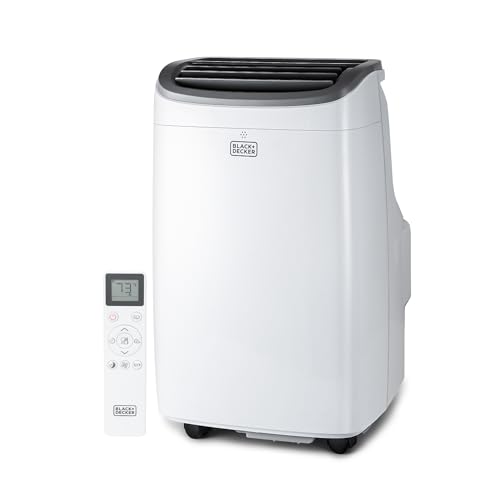
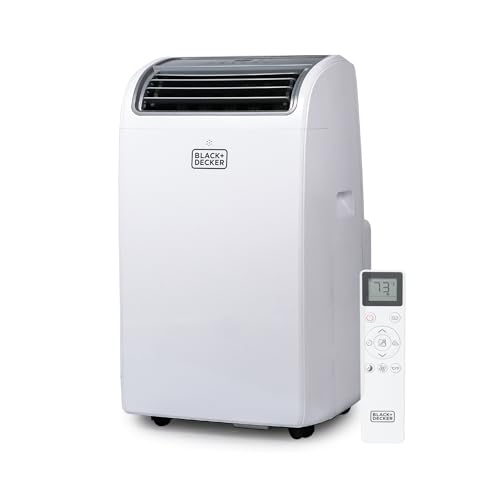
Best Value: BLACK+DECKER BPACT10WT
The BLACK+DECKER BPACT10WT is for bedrooms and offices on a budget, at around $300. Its listing gives 10,000 BTU ASHRAE and 5,550 BTU DOE, suitable for smaller rooms despite the box's 450 square foot claim, and it doubles as a dehumidifier and fan.
Its strengths are simplicity and portability: casters, side handles, a compact 24.8 inch tall body and a Follow Me remote that senses the temperature where you sit. The trade off is a single hose design and modest SACC capacity, so it struggles in sunny rooms over about 250 square feet. Skip it if you need to cool a living room or if you sleep lightly, since single speed compressors cycle audibly.

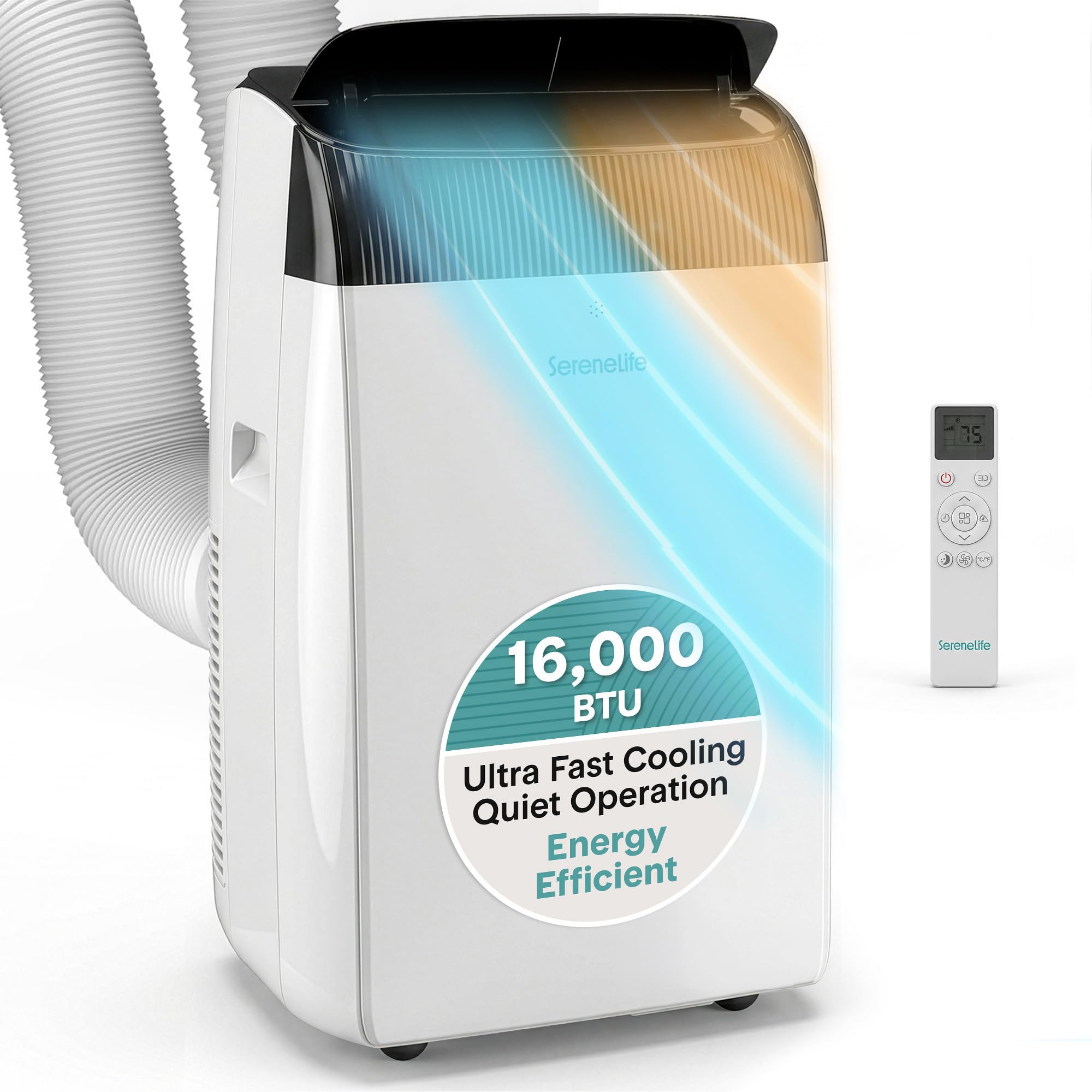
Best for Heavy Use: SereneLife 16,000 BTU Dual Hose Inverter
The SereneLife 16,000 BTU dual hose inverter model fits large rooms, open plan spaces and homes that need year round help, since it adds a heat mode alongside cooling, dehumidifying and fan settings. Expect to pay around $570.
The dual hose layout and inverter compressor suit long daily runtimes, and the heat function lets one unit work across seasons in garages, workshops or chilly basements. The limitation is bulk: high capacity dual hose units are heavy and need a window kit for two hoses. Skip it if your room is under 400 square feet, where a smaller unit will run more efficiently and quietly.

Quick Buyer Checklist
- Does the SACC BTU rating match your room size, with extra capacity for sun or a kitchen?
- Will the window kit fit your window type and width without cutting?
- Is there an outlet within reach so you never need an extension cord?
- Is the listed noise level under about 50 dB if the unit will run in a bedroom?
- Does it have a self evaporating system or a drain port you can actually use?
- Is the unit ETL or UL certified, with a safety plug on the cord?
- Can you lift or roll it to where it needs to go?
- Is the warranty at least one year, with US based support?
Red Flags to Watch For
Some portable air conditioners look great on the product page and disappoint at home. Watch for these warning signs before you buy.
- Only ASHRAE BTU listed. Hiding the SACC number usually means real cooling capacity is far lower than the headline.
- Wild coverage claims. A small unit that claims to cool 700 square feet is overselling; compare the SACC rating instead.
- No certification mark. Missing ETL or UL listing is a safety concern for a high power appliance.
- Suspicious review patterns. A flood of short five star reviews posted in the same week, or reviews for a different product, deserves caution.
- Short or vague warranty. Compressors are expensive to repair; less than a year of coverage or no clear support contact is a bad sign.
Tips to Get the Most From Your AC Portable
A few habits make any portable unit cool better and last longer. Clean or replace the filter on schedule, roughly every two weeks in summer. Keep doors and windows closed while the unit runs, and draw blinds on sunny windows to cut heat gain.
Leave clearance around the intake and exhaust, keep the hose as short and straight as possible, and wrap it with an insulating sleeve if it feels hot to the touch. Start cooling before the room gets hot, since portable units hold a temperature better than they pull it down.
At the end of the season, drain any remaining water, run the unit in fan mode for a few hours to dry the inside, and store it upright in its box or under a cover. This prevents musty smells and mold when you bring it back out next summer.
FAQs
Where is the best place to put it?
Place the portable air conditioner close to a window, on a level floor, with about 20 inches of clear space behind and around it. Keep the exhaust hose short and free of kinks. Avoid corners behind furniture and spots in direct sun. In bedrooms, angle the airflow so it does not blow straight onto the bed while you sleep.
Do ac portables really work?
Yes, portable air conditioners work well when sized correctly and vented properly. They are less efficient than window units because the hose and housing release some heat inside, so choose capacity by SACC BTU rather than ASHRAE. Dual hose and inverter models narrow the gap, cooling faster and holding temperature with less noise and lower power use.
How often should I replace the filter?
Most portable air conditioners use a washable filter that you clean rather than replace. Rinse it every two weeks during heavy use, let it dry fully and slide it back in. Replace the filter only if it tears or warps. Models with an extra carbon layer may need that insert changed every few months, according to the maker's manual.
Is it expensive to run 24/7?
Running a portable air conditioner all day costs more than a fan but is manageable. A unit drawing about 1,000 watts while the compressor runs might use 8 to 12 kWh per day in hot weather, roughly $1.20 to $2 at typical US rates. Inverter models and a sensible set point of around 76 to 78 degrees reduce the cost noticeably.
What size do I need for my room?
Use the SACC BTU rating. Around 6,000 to 8,000 BTU SACC suits rooms up to 300 square feet, about 10,000 BTU SACC fits 400 to 500 square feet, and 12,000 BTU SACC or more covers larger rooms. Add about 10 percent for sunny rooms or top floors, and more for kitchens. When in doubt between two sizes, choose the larger one.
The Bottom Line
Choosing the best ac portable comes down to three checks: a SACC BTU rating sized to your real room, a noise level you can live with, and a design that vents heat efficiently, ideally dual hose with an inverter. The Whynter ARC-1230WN is our best overall choice for larger rooms, the BLACK+DECKER BPACT10WT is the value pick for small bedrooms, and the SereneLife 16,000 BTU model suits heavy, year round use.
If a portable unit is not the right fit, compare our guides to the best window air conditioners, the best small portable air conditioners and the best portable air cooler options, plus our best quiet fans for bedrooms list and the best portable ac unit lowes roundup. Then check the product table above for current prices.