Best Above Ground Pool Vacuum Cleaners for 2026: Every Type Explained Side by Side
Disclosure: We may earn a commission when you buy through links on this page, at no extra cost to you. As an Amazon Associate I earn from qualifying purchases. Learn more

Compare the best above ground pool vacuum cleaners by type, from manual suction heads to small robots, with liner safety, pump fit, and honest price bands.
The confusing part of shopping for best above ground pool vacuum cleaners is that four very different machines share one name. A manual suction head, a suction side cleaner, a battery handheld vacuum, and a small robotic cleaner all promise a clean pool floor, but they work in different ways, lean on different parts of your equipment, and suit different pools. The comparison table below lays the four types side by side so you can match a type to your pool before you look at a single listing.
Above ground pools also change the rules. The walls are soft, the floor is a vinyl liner that can scuff or tear, and the pump that came with the pool is usually modest. A cleaner built for hard in ground surfaces can damage a liner, and a suction cleaner that works beautifully on a large pump may barely move on a small one. Keep those two facts in mind through every section that follows.


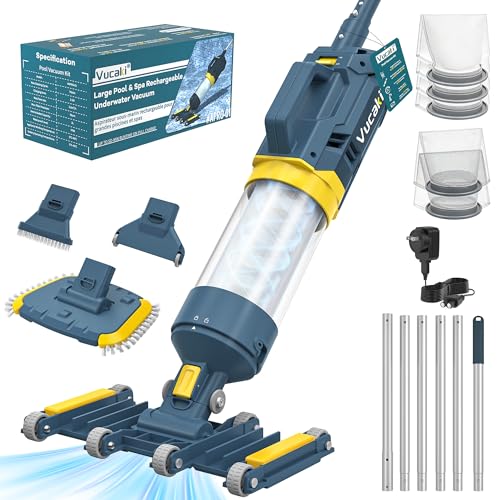


Types of Above Ground Pool Vacuum Cleaners Compared
Start with the type, not the brand. Each type below trades money, effort, and cleaning power in a different way, and the right trade depends on your liner, your pump, and how much of the work you want to do yourself. Shoppers who want a broad shortlist of the wider category often begin with guides to best pool vacuums for above ground pools and then come back to this type comparison to pick a lane.
| Type | Best For | Pros | Cons | Typical Price |
|---|---|---|---|---|
| Manual suction vacuum head | Small pools and spot cleaning | Lowest cost, no extra motor, full control of where it goes | You supply the labor and the pole work | About $25 to $60 |
| Suction side cleaner | Regular whole floor cleaning on a healthy pump | Runs on your existing pump, no charging, handles steady debris | Needs enough pump suction and a long hose run | About $80 to $200 |
| Battery handheld vacuum | Steps, corners, and quick touch ups | Cordless, no hose, ready in seconds | Small debris chamber and limited run time per charge | About $60 to $250 |
| Robotic cleaner for above ground pools | Hands off routine cleaning of flat floors | Its own motor and filter, no pump load, scheduled runs | Highest price, battery or cord care, floor only on most models | About $150 to $450 |
Manual Suction Vacuums Through the Skimmer
A manual vacuum head clips to a telescopic pole and connects by hose to your skimmer, so the pool pump supplies the suction while you steer. It is the cheapest way to clean an above ground pool and the most precise, because you decide exactly where it passes and how long it lingers on a dirty patch.
The cost is your time. A full pass over a mid size pool takes real effort, and the head only works as well as your pump pulls, so a weak pump makes for slow, frustrating cleaning. This type suits small pools, light debris, and owners who clean little and often rather than in long sessions.
Suction Side Cleaners That Run on Your Pool Pump
A suction side cleaner wanders the floor on its own, driven by the suction of your pump through a long hose, and sends debris into the pump basket and filter. There is nothing to charge and nothing to lift out and rinse beyond the baskets you already maintain, which makes it the lowest effort option at a modest price.
The catch is pump strength. These cleaners need a pump with enough flow to move them, and small cartridge pumps fitted to many above ground pools fall short, leaving the cleaner parked in a corner. Leaves can also jam the throat of some designs. Check the maker minimum pump size before you buy, not after.
Battery Powered Handheld Vacuums
A battery handheld vacuum carries its own motor and debris chamber, so it works with no hose, no cord, and no help from the pump. You charge it, walk it along the floor on a pole or by hand in shallow water, and empty the chamber when it fills. For steps, ladder areas, and the ring of dirt that gathers along the seam, nothing else is as quick.
The trade offs are run time and capacity. Most handhelds run for under an hour per charge and hold far less debris than a pump driven cleaner, so a leaf heavy pool overwhelms them. Treat this type as a spot cleaning tool or the main cleaner for a small, lightly used pool, not as a whole pool workhorse.
Robotic Cleaners Sized for Above Ground Pools
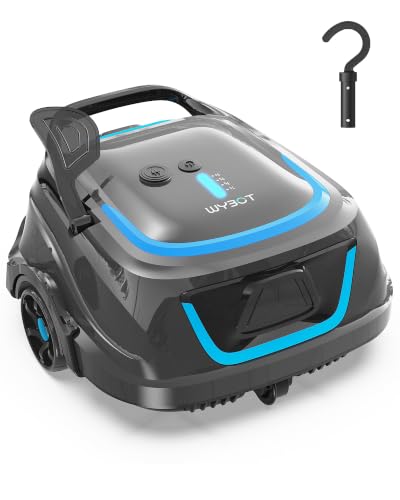
Robotic cleaners built for above ground pools carry their own motor and filter basket, run on a battery or a low voltage cord, and follow a programmed pattern across flat floors. They ask nothing of your pump and clean on a schedule, which is why they anchor most lists of the best rated above ground pool cleaners. For a closer look at this type, see the guide to robotic above ground pool cleaners.
Two limits matter. First, nearly all of them clean floors only, because soft above ground walls give their tracks nothing firm to climb. Second, the brushes and wheels are made gentle for vinyl, so confirm the model is stated for above ground liners before buying. Within those limits, a robot is the closest thing to set and forget cleaning this category offers.
Suction Side Cleaners vs Cordless Pool Vacuums: Which Should You Choose?
These two types cover most above ground budgets, and they split on five practical points. On cost, a suction side cleaner usually wins, since it borrows your pump instead of carrying a battery and motor. On effort, the suction cleaner also wins across a whole floor, while the cordless handheld wins for five minute touch ups where dragging out a hose makes no sense.
On debris, the suction cleaner sends leaves and dirt to your filter, which handles volume well but loads the filter faster. The handheld traps debris in its own small chamber, which keeps your filter clean but fills quickly under trees. On dependence, the suction cleaner is only as strong as your pump, while the handheld works the same on any pool. On storage, the handheld lives on a shelf, while the suction cleaner means a long hose to coil and store.
Choose the suction side cleaner if your pump meets the maker minimum and you want routine whole floor cleaning at the lowest running cost. Choose the cordless vacuum if your pump is small, your pool is modest, or your real problem is steps and corners rather than the whole floor. Many owners end up with the suction cleaner as the main tool and add a handheld later, and guides to the best automatic pool cleaners for above ground pools can help you compare the automatic options once you know which lane fits.
Pool Safety Comes Before Any Cleaning
No cleaner is worth an injury, so settle these rules before the first run. Never run a cleaner, and never leave a cleaner, hose, or cord in the water, while anyone is swimming. Take the equipment out before swimmers get in, every time, because hoses tangle, cords trip, and a moving cleaner under a swimmer is a hazard.
Children are never unsupervised around a pool, cleaning day or not, and the few minutes while you set up equipment are exactly when attention drifts. Keep transformers and power supplies dry on the deck at the distance the maker states, and never let a plug sit in a puddle. Remove the cleaner before you shock the water, since strong shock doses can damage seals, brushes, and battery housings. Finally, remember what a cleaner cannot do: it removes debris only. It never sanitizes the water and never replaces balanced chemistry and proper sanitation, which stay your job on their own schedule. Follow the manufacturer's instructions for every product.
How to Choose the Right Above Ground Pool Vacuum Cleaner
Start With Your Pool Size and Liner
Measure your pool and note the liner first, because both limit the field. Small pools under about 15 feet across rarely justify a robot, while large oval pools make manual cleaning a long chore. Every cleaner you consider should be stated by its maker as safe for vinyl liners, with soft wheels or brushes rather than stiff bristles made for plaster or tile.
Match the Cleaner to Your Pump
If you lean toward any suction type, the pump decides. Find your pump rating in gallons per hour and compare it with the minimum flow the cleaner maker states. A cleaner starved of flow creeps, stalls on seams, and leaves the far side dirty. Pressure side cleaners exist too, but most need a booster pump that above ground setups rarely have, so treat that class as the exception rather than the rule.
Filtration: Leaves Versus Fine Dirt
Think about what actually lands in your pool. Big leaves and twigs need a wide intake and a large basket or chamber, while fine dust, sand, and pollen need finer filtration, often stated as a micron rating where lower numbers catch smaller particles. Suction types hand the job to your pool filter, so a cartridge filter will need rinsing more often. Robots and handhelds trap debris on board, which keeps the filter cleaner but asks you to empty a smaller space more often.
Walls and the Waterline: Set Honest Expectations
On a soft sided pool, expect floor cleaning only. The walls flex, there is no firm surface for a cleaner to grip, and the waterline ring of sunscreen and dust is a job for a brush and a few minutes of your time. Even on steel wall pools with vinyl liners, most above ground cleaners are floor only designs. If a listing promises vigorous wall climbing, read it as a claim about hard surface pools, not yours.
Cleaning Cycle, Coverage, and Scheduling
Cycle length and coverage pattern decide how clean the far corners get. Basic robots and suction cleaners wander at random and need longer runs to cover a big floor, while higher priced robots map the floor and finish faster. Scheduling features on robots let the cleaner run while you are out, which keeps up with daily leaf fall. Match the run time and battery life to your pool size, and remember that the comparison table near the top shows how cycle style tracks with price across the types.
Tips to Get the Most From Your Above Ground Pool Vacuum Cleaner
- Prime a suction hose fully underwater before connecting it, because air in the hose kills suction and can strain the pump.
- Empty the filter basket or debris chamber after each cycle, since a packed basket chokes flow and leaves dirt behind.
- Store robotic and battery cleaners out of direct sun, which ages batteries, seals, and plastic housings.
- Walk the liner with your eyes after the first few runs and look for scuffs or pulled seams, so you catch a rough brush or wheel early.
- Keep water chemistry balanced, because gritty scale and algae films make every cleaner work harder and wear faster.
- Owners comparing fully automatic options can also review the best automatic above ground pool vacuums once their type and pump fit are settled.
Above Ground Pool Vacuum Cleaners: Your Questions Answered
Are robotic pool cleaners worth it for an above ground pool?
They are worth it when your time is the scarce resource and your pool floor is flat. A robot cleans on a schedule without loading your pump, and that convenience is what the higher price buys. The value drops on small pools where a manual pass takes ten minutes, and it drops if your floor has deep wrinkles or a dished center the robot cannot reach. For a mid size or large pool cleaned several times a week, most owners find the trade fair.
Can I leave a pool vacuum in the water between cleanings?
Leaving a cleaner in the water full time is a bad habit for every type. Constant soaking ages seals, fades housings, and can leave marks or algae shadows on a vinyl liner where the cleaner sits. Suction hoses also stiffen and hold a curl that hurts coverage. The larger reason is safety: equipment and hoses must come out before anyone swims anyway, so store the cleaner dry and shaded and put it in only for a run.
How long should an above ground pool cleaner run?
Most above ground pools get clean in about one to two hours of run time per session. Small pools with light debris finish faster, while big pools with random pattern cleaners need the longer end so the cleaner eventually reaches every area. Running far longer than needed mostly wastes pump hours or battery cycles. A better rhythm is shorter, more frequent runs during heavy leaf fall, which keeps debris from settling into the liner seams.
Which pool vacuum handles leaves best?
A suction side cleaner or a manual suction head handles leaves best, because both send debris to your pump basket and filter, which hold far more than an onboard chamber. Wide throats matter more than raw suction here, since a narrow intake plugs on the first big leaf. Battery handhelds and small robots fill their chambers quickly under trees and need mid session emptying. If leaves are your main problem, skim the surface first so the vacuum only handles what sank.
Will an in ground pool cleaner damage an above ground liner?
Yes, it can. Cleaners built for in ground pools assume plaster, tile, or fiberglass, and their stiff brushes, hard wheels, and stronger drive can scuff, stretch, or tear a soft vinyl liner. They are also heavier, which stresses a floor that sits on sand. Guides to the best in ground pool vacuum cleaners describe that harder surface category, and it is best treated as a different shelf. Always choose a cleaner the maker states is safe for above ground vinyl liners.
Wrapping Up
Three checks decide this purchase: the cleaner type fits how much work you want to do, the pump or battery fits your pool size, and every moving part is gentle enough for a vinyl liner. Get those right and the best above ground pool vacuum cleaners for your pool stop being a guess. Match your shortlist against the product table, keep the safety rules in front of the cleaning schedule, and your pool stays clear without the liner paying for it.