Best Above Ground Pool Pumps for 2026: What Actually Matters Before You Buy
Disclosure: We may earn a commission when you buy through links on this page, at no extra cost to you. As an Amazon Associate I earn from qualifying purchases. Learn more

Compare the best above ground pool pumps by flow rate, turnover time, filter match and safe setup, with price bands and a checklist for every pool.
A pool pump has one job, and it does that job for hours every day all season. Choosing well is less about brand badges and more about a short checklist: flow matched to your pool volume, a filter that works as one system with the pump, and a safe electrical setup. This guide walks through the best above ground pool pumps by those criteria, so you can size once and swim all summer. The product table sets the current classes side by side.
Two boundary notes before the details. Heating is a separate purchase with a separate job, since the best above ground pool heat pumps warm the water but move and filter nothing on their own. Cleaning tools are separate again, and they appear later in this guide where they belong.


Key Features to Compare
Read these factors in order. The first decides whether the water stays clear at all, the second keeps the setup safe, and the rest decide cost, noise and workload for the whole season.
Flow Rate and Turnover Come First
A pump is sized to the volume of the pool it serves. Turning the full volume over through the filter is the job, usually once or twice a day in home use, and the flow figure in gallons per hour is how you check a class against that job. Divide your pool volume by the hours you plan to run and you have the flow you need at working resistance.
An undersized class runs all day and still lags, so the water clouds while the motor never rests. Write the volume and your target run hours down before shopping, because those two numbers settle most listings in seconds.
Electrical Safety and Placement
Pumps and pool water sit together, so the electrical rules are part of the purchase, not an afterthought. The pump must run from a ground fault protected outlet, cords stay out of the water and off wet paths, and the unit sits on a level pad with air moving around the motor. Any fixed wiring, new circuit or hardwired connection belongs to a licensed electrician, full stop. Follow the maker grounding instructions and your local code before the first swim, not after the first fault.
Filter Match: Sand, Cartridge and DE Classes
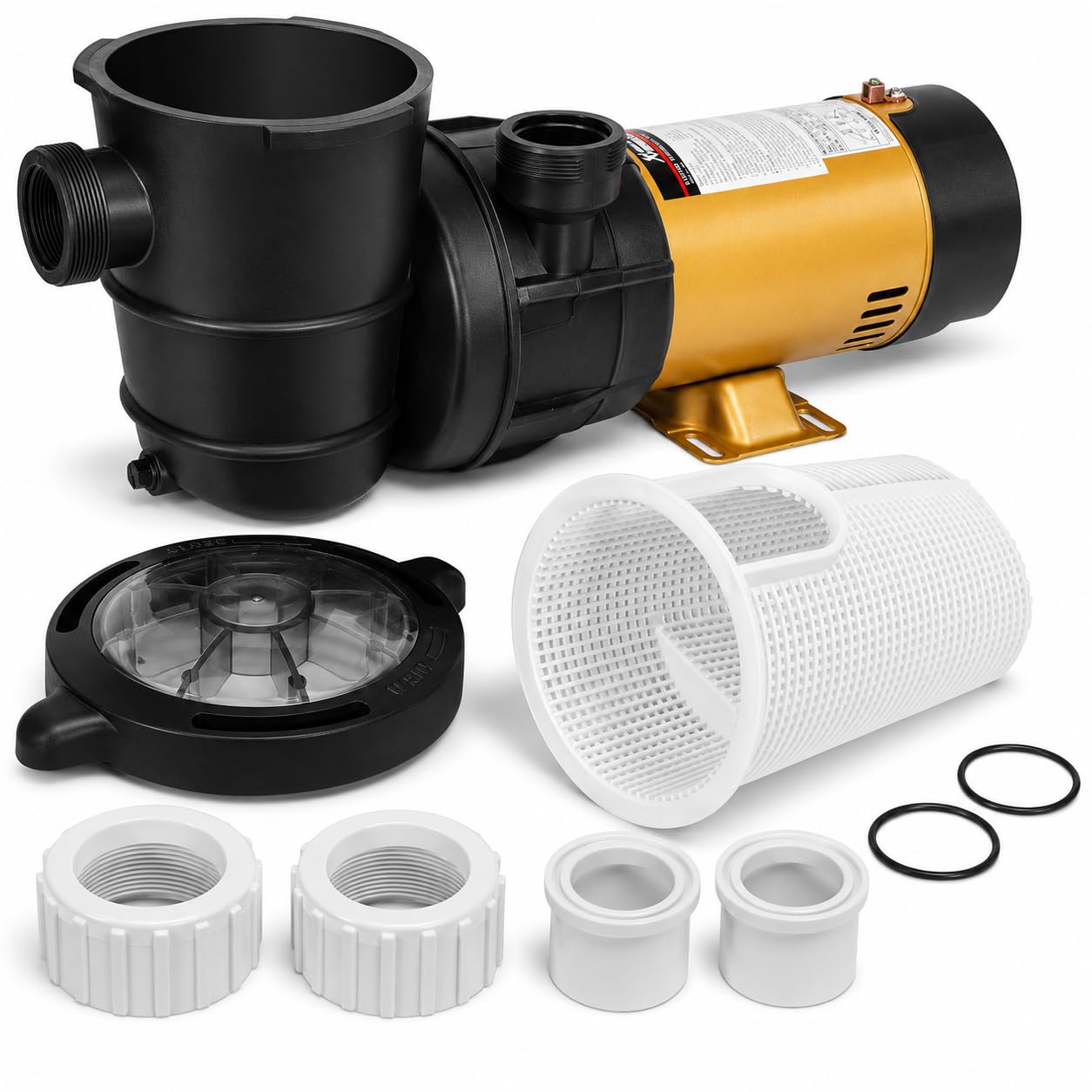
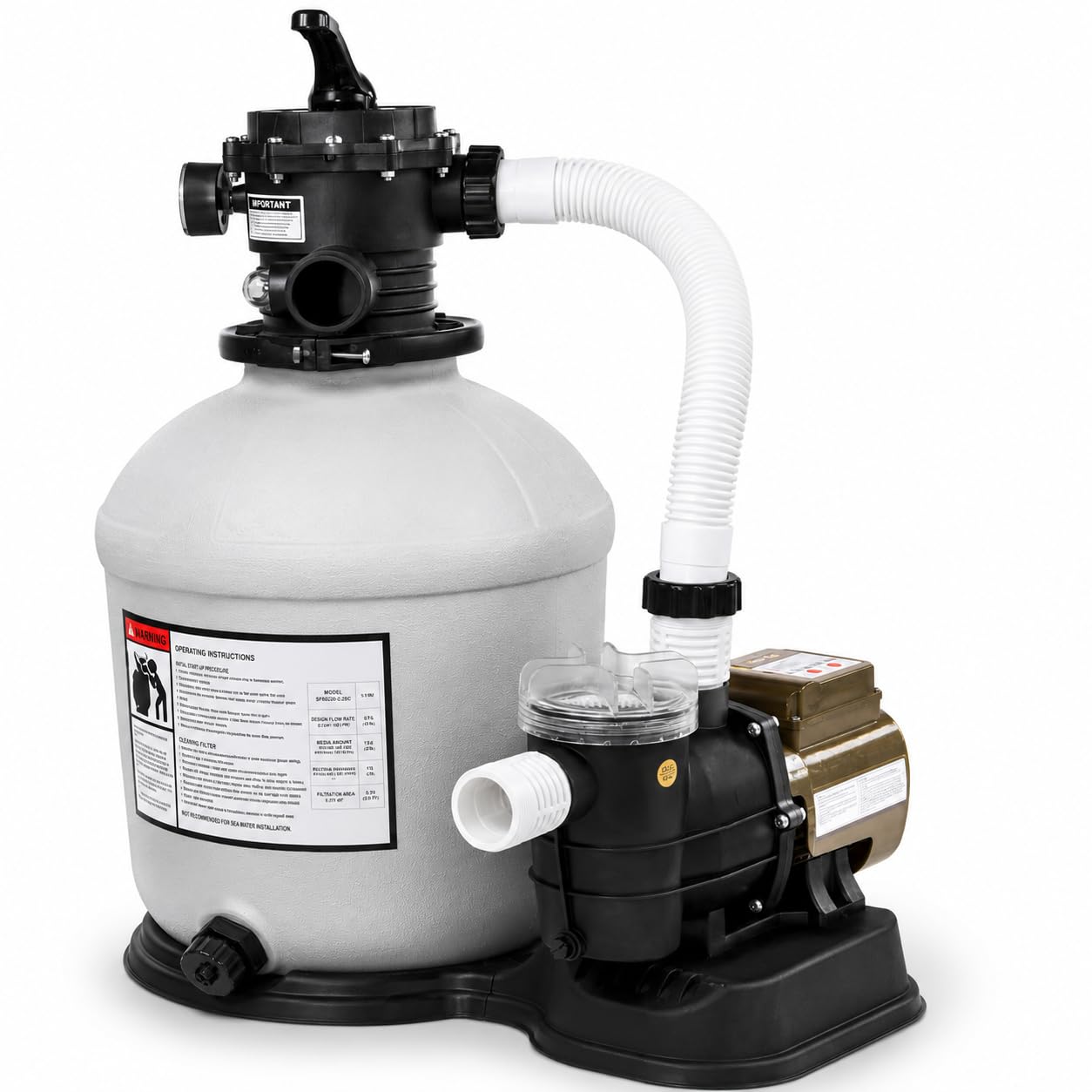
The pump and the filter are one system. The pump only moves water; the filter class decides the cleaning work that water gets. Sand filters catch the everyday load and clean by backwashing, cartridge filters catch finer material and clean by rinsing or swapping the element, and DE filters catch the finest material and need fresh powder after each backwash.
The filter flow rating caps the pump size, because an oversized pump pushes water through faster than the filter can clean it. The sand class built for this pairing appears in our guide to the best sand pumps for above ground pools.
Pump Types and Speed Classes
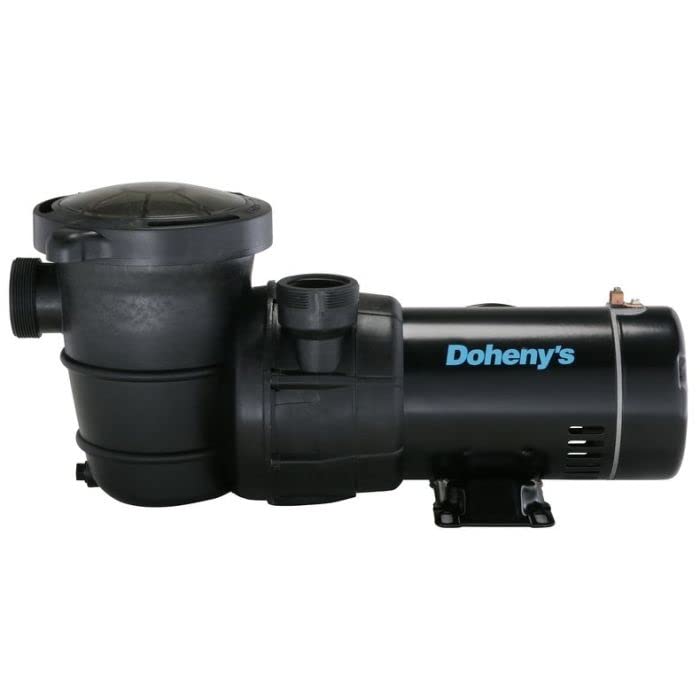
Single speed pumps run at one full rate and cost the least to buy. Dual speed pumps add a low rate for daily circulation, and variable speed pumps let you set the flow to the day, which usually cuts energy use because slow steady running moves water cheaply. Many above ground pools start with a combined filter pump unit, and our guide to the best filter pumps for above ground pools covers that starter class. Separate pumps cost more but let you replace or upgrade each half on its own schedule.
Hoses, Fittings and the Skimmer Connection
Most above ground setups connect with flexible hoses in two common diameter classes, and the pump ports, skimmer and return fitting must all match the class you own. A reducer packed with tape is a leak waiting for a hot afternoon. Long hose runs and tight bends cut real flow below the box figure, so place the pump close to the skimmer and keep runs short and smooth. Check that clamps, gaskets and a spare hose sit in your budget, because the pump price is not the whole setup price.
Noise, Heat and Everyday Running
A pump runs for hours within earshot of the patio, so noise class matters more than buyers expect. Variable speed classes running low are usually the quietest, while a straining undersized unit is often the loudest thing in the yard. Motors shed heat as they work, so shade helps comfort but the vents must stay open. A pump that overheats shuts down on its protector, and repeated shutdowns shorten its life.
What Each Price Band Changes
Bands in this category map to speed classes and build weight, and the best above ground pool pumps for a small pool are rarely the strongest ones on the shelf. Match the band to your volume first.
Under About $150: Bundled and Basic Single Speed Classes
This band covers the small combined units bundled with soft sided pools and basic single speed pumps for small volumes. They do the daily turnover job on small water honestly. Expect shorter warranties and lighter fittings, and plan on the hoses and clamps as extra cost.
About $150 to $350: Stronger Single Speed and Dual Speed Classes
This band buys heavier motors, better baskets and seals, and dual speed running for mid size pools. It is the sensible middle for most family pools, where the pump runs daily for months. Parts such as baskets and lid gaskets are easier to find in this band.
About $350 to $700: Variable Speed and Large Pool Classes
This band buys variable speed control, quiet low rate circulation and the flow headroom large pools need. Energy savings over a long season can repay part of the step up. It is poor value for a small pool, where the cheaper bands already turn the water over with hours to spare.
Quick Buyer Checklist
Settled debris is a different problem from cloudy water: a pump filters what reaches it, while leaves on the floor still need the best pool vacuums for above ground pools to lift them out. Run through these questions before you order.
- Do I know my pool volume in gallons, not just its diameter?
- Does the flow class turn that volume over in the hours I plan to run?
- Does my filter flow rating equal or exceed the pump flow class?
- Are my hose and fitting diameters the same class as the pump ports?
- Do I have a ground fault protected outlet within proper reach of the pad?
- Is there a level, drained spot beside the skimmer for the unit?
- Have I budgeted for hoses, clamps and gaskets on top of the pump price?
Red Flags to Watch For
Ratings need the same care as specs: lists of the best rated above ground pool cleaners reflect cleaner owners and their pools, not the sizing facts your pump choice turns on. Watch for these warning signs in any listing.
- A flow figure quoted with no resistance basis, because flow at zero resistance says nothing about flow through your filter.
- No electrical certification mark or grounding instructions, because safety paperwork is not optional near water.
- A bundled pump far below the flow class your volume needs, because the kit price hides an upgrade you will buy by July.
- A warranty measured in weeks rather than seasons, because one summer is the minimum honest measure of a pump.
- Horsepower shouted louder than flow, because a strong sounding motor on a small impeller still moves little water.
Care and Maintenance Tips
Empty the pump basket on a regular rhythm, because a packed basket starves the motor of flow and strains the seal. Backwash a sand filter when the pressure gauge climbs, rinse cartridge elements before they cake, and keep water chemistry balanced so seals and gaskets age slowly.
At season end, drain the pump fully, pull the drain plugs, and store the unit dry under cover. A dry stored pump starts the next season; a frozen one often does not. Inspect the hoses each spring for cracks near the clamps, because sun and flexing age the ends first.
Best Above Ground Pool Pumps: Your Questions Answered
How many hours a day should an above ground pool pump run?
Run it long enough to turn the full pool volume over at least once a day. For many home pools that means about six to ten hours, split across the day if your timer allows, since two shorter runs stir the water more evenly than one long block. Hot weather and heavy use push toward the longer end. Cloudy water after a full turnover points at the filter or chemistry, not at more hours.
What size pump does a 15 foot pool need?
Start from volume, not diameter. A round 15 foot pool of typical depth holds roughly 4,000 to 5,000 gallons, so a class that delivers that volume in your planned run hours is enough. The common error is oversizing, because flow beyond the filter rating wastes energy and can drive debris through the filter media. Match the pump class to the filter first, then check the turnover math.
Are the best reviewed above ground pool pumps always the right buy?
No. The phrase best reviewed above ground pool pumps describes other owners reports, and those reports come from pools of different sizes, filters and climates than yours. A pump praised on a small pool may lag badly on a large one. Use owner reports to spot repeated faults such as leaking lids or noisy bearings, then make the final call on your own volume and filter numbers.
Can a pump be too strong for its filter?
Yes, and it is a common cause of cloudy water. Excess flow raises pressure, forces fine debris through sand or cartridge media, and can channel a sand bed so water slips through unfiltered paths. The filter flow rating is a ceiling, not a suggestion. If your pump outruns the filter, the honest fixes are a larger filter or a lower speed setting, not longer running hours.
How long does an above ground pool pump last?
A typical pump lasts about three to six seasons, with bearings, seals and the capacitor as the usual wear points. Dry winter storage and a clear basket stretch that span, while running dry or frozen storage ends it early. Replacement baskets, gaskets and lids are cheap and widely stocked for mid band classes. When a motor hums but will not start, a capacitor swap is often the fix before full replacement.
The Bottom Line
Size by volume, respect the filter ceiling, and treat the electrical setup as part of the purchase. Those three checks remove most of the risk in this category, and the product table above lets you compare the classes against them at a glance. Chosen that way, the best above ground pool pumps are simply the ones whose flow, filter match and running cost fit your pool, and they will prove it quietly every day of the season.