Best Above Ground Pool Cleaners Reviews in 2026: A Guide
Disclosure: We may earn a commission when you buy through links on this page, at no extra cost to you. As an Amazon Associate I earn from qualifying purchases. Learn more
Compare the best above ground pool cleaners by type, filtration, cord length and liner safety, with a clear buying checklist for your pool size.
Leaves, sand and fine dust settle fast in an above ground pool, and a cleaner that suits a hard wall inground pool can be too heavy or too rough for a vinyl liner. Reading best above ground pool cleaners reviews helps only if you match the cleaner to your pool size, pump and debris first. Use the comparison table below to check type, coverage and filtration side by side.
Start with what falls into your water most often and how much work you want to do yourself. A small pool under a tree needs a large basket and simple retrieval, while a large open pool needs longer reach and a longer run time.


Who Should Buy Which Above Ground Pool Cleaners?
Choose by your pool walls, your debris and the time you will give the job each week.
Owners of Small Vinyl Liner Pools
You need light weight, soft brushes and a cleaner that turns well in a tight circle. A compact robotic model or a gentle suction side model suits pools up to about 18 feet across. Avoid heavy units made for concrete, since their wheels can stress seams and wrinkle the liner.
Owners With Trees and Heavy Leaf Fall
Your main problem is volume, not fine dust. Look for a wide intake, a large basket or bag and a pressure side or robotic cleaner that does not rely only on your pool filter. Choose a lid you can open and rinse in seconds without tools.
Busy Owners Who Want the Least Daily Effort
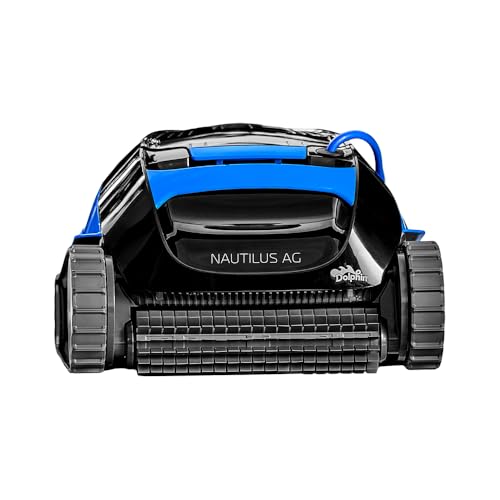
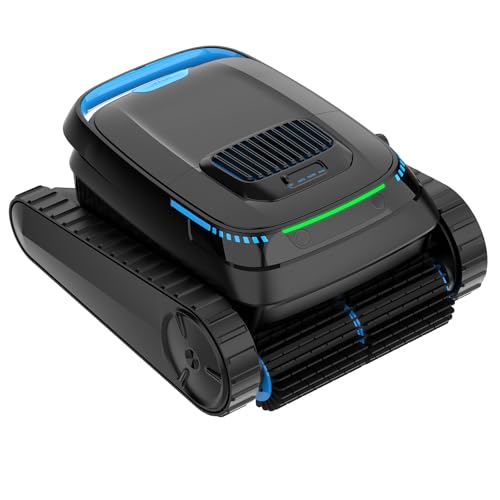
You want to place the cleaner, press start and lift it out when the cycle ends. A cordless robotic model fits this routine best, since it needs no hose and no pump running. If that routine sounds right, see our guide to the best automatic pool cleaners for above ground pools for more options built around automatic cycles.
Key Features to Compare
Work through these factors in order. Many best above ground pool cleaners reviews stress fine filtration, but a cleaner that fails on liner safety or reach will disappoint no matter how fine its filter sounds.
Cleaner Type and Power Source
Robotic cleaners carry their own motor and filter, suction side cleaners use your pump to pull debris into the pool filter, and pressure side cleaners use returning water to push debris into a bag. Robotic models clean apart from your filter system, so they add cost but spare filter wear. Suction side models cost less, yet they only work as well as your pump and filter allow.
Floor Coverage and Gentle Wall Climbing
Most above ground cleaners are made for the floor, and only some climb part way up the wall to the waterline. Flexible walls move under load, so full wall climbing matters less here than steady floor coverage and a smooth turn at the base. Choose floor only coverage for soft sided pools, and choose gentle climbing only if the maker lists your wall type as suitable.
Filtration Fineness and Basket Capacity
Filter ratings are given in micron terms, and a lower number traps finer dust and pollen. Fine filtration helps clear cloudy water, but a tiny basket fills fast under leaf fall. Look for a basket large enough for one full cycle in your pool, plus a finer insert if sand and silt are your usual problem.
Weight, Retrieval and Storage
A cleaner feels heavier when you lift it full of water over a pool wall. Many robotic models weigh about 10 to 20 pounds dry and gain more as they drain. Check for a top handle, a quick drain and a retrieval hook you can use from the deck.
Cord Length, Cordless Runtime and Hose Reach
Match reach to your pool before you buy. A cord or hose should cover the farthest point from the power outlet or skimmer, with a few feet to spare for turning. Cordless robotic models often run about 60 to 90 minutes per charge, which suits small and mid size pools. A swivel on a corded model helps limit tangles during longer cycles.
Liner Safety, Pool Size and Warranty
Check that brushes, wheels and tracks are listed as safe for vinyl and that the cleaner suits your pool diameter and depth. Note the warranty length, often about 1 to 3 years, and whether brushes, baskets and batteries are sold as spare parts. Strong pump flow matters for suction models, so see our guide to the best above ground pool pumps if your current pump struggles.
Types of Above Ground Pool Cleaners Compared
Each type trades cost, effort and cleaning power in a different way.
Robotic Pool Cleaners
Robotic pool cleaners scrub and filter on their own power and collect debris inside the unit. They suit owners who want strong floor cleaning with no hose to set up. Prices are higher, often about $150 to $600, and you must lift and rinse the unit after each use.
Suction Side Cleaners
Suction side cleaners connect at the skimmer and move as your pump runs, sending debris to the pool filter. They cost about $80 to $250 and have few parts to store. Their limit is your pump: weak flow gives slow, patchy movement, and fine debris loads your main filter faster.
Pressure Side Cleaners
Pressure side cleaners use water returning to the pool to drive the unit and push leaves into their own bag. That separate bag is a plus under trees, since large debris stays out of your filter. Some pools need a booster pump for enough pressure, which adds cost and noise.
Manual Pool Vacuums
A manual vacuum head on a pole lets you target steps, corners and one dirty patch at once. For a closer look at hand guided options, see our guide to the best above ground pool vacuum cleaners and our guide to the best pool vacuums for above ground pools. Manual tools cost the least, often under $60 plus a hose, but your time is the motor.
Choosing Above Ground Pool Cleaners for Your Situation
Best Made Above Ground Pool Cleaners
If you shop for the best made above ground pool cleaners, judge build by sealed motors, sturdy latches and brushes you can replace rather than by weight alone. A well made unit opens for rinsing without loose screws and keeps its cord connection firm after many cycles.
Best Manual Above Ground Pool Cleaners
The best manual above ground pool cleaners share a soft brush head that will not tear a liner, a swivel hose cuff that resists kinks and a pole socket that locks firmly. Choose a wider head for open floors and a narrow head for steps and corners. Manual cleaning suits small pools and owners who clean little and often.
Best Rated Above Ground Pool Cleaners for Low Effort Days
High ratings usually go to cleaners that finish a full floor cycle without getting stuck at the wall base or ladder. Weight ratings from owners with the same liner and pool size more heavily than general praise. A cleaner praised for concrete pools may still be a poor match for flexible walls.
Common Mistakes to Avoid
- Buying an inground cleaner for a vinyl liner pool can scuff the liner and leave folds near the wall.
- Choosing a cord or hose that is too short leaves a dirty ring the cleaner can never reach.
- Ignoring basket size means leaf fall stops the cycle early and leaves debris on the floor.
- Running a suction side cleaner with a weak pump gives slow movement and patchy cleaning.
- Leaving a robotic cleaner in the sun between cycles shortens battery and plastic life.
- Skipping the liner safety check risks torn seams from hard wheels or harsh brushes.
How to Make Your Above Ground Pool Cleaner Last Longer
Empty and rinse the basket or bag after each cycle, since packed debris cuts flow and strains the motor or pump. Rinse a robotic unit with plain water, let it drain fully and store it in shade. Keep pool chemistry balanced, since harsh water can fade plastic and weaken seals over a season.
Untangle cords and hoses before storage and coil them loosely without sharp bends. Check brushes, wheels and intake openings each month for trapped hair and small stones, and replace worn brushes before they expose hard parts to the liner.
FAQ
Which above ground pool cleaner is best for leaves?
A pressure side or robotic cleaner with a large basket or bag is best for leaves. Leaf volume fills small baskets quickly, so capacity matters more than fine filtration here. Skim the largest pile first after a storm, since even a large basket can clog in one pass.
Are robotic above ground pool cleaners worth the cost?
Yes, robotic above ground pool cleaners are worth the cost if you clean often and value your time. Lists labeled above ground pool cleaners best rated often place robotic models first for ease, since they filter inside the unit and spare your pool filter. They make less sense for a tiny pool you can vacuum by hand in ten minutes.
Can you leave a robotic above ground pool cleaner in the pool?
You can leave a robotic cleaner in the pool for a short stretch, but taking it out after each cycle is better. Constant soaking and chemicals age seals, cords and batteries, and a stored unit is easier to rinse and inspect. If you leave it in during a busy weekend, lift it out at least to empty the basket.
How long should an above ground pool cleaner run each day?
An above ground pool cleaner should run for about 1 to 3 hours per cleaning day for most pools. Small pools with light debris often finish in one short cycle, while larger pools may need a second cycle after windy days. Two or three days a week often keeps the floor clear in light use periods.
Final Thoughts
Put liner safety, reach and basket size ahead of extra modes, and choose the simplest type that fits your pump, pool size and debris. Use the product table above to confirm coverage, weight and filtration before you order.
When you read best above ground pool cleaners reviews with those checks in mind, the right cleaner for your pool becomes much easier to spot.