
Best 8 Inch Midbass Speakers: Buying Guide for 2026
Disclosure: We may earn a commission when you buy through links on this page, at no extra cost to you. As an Amazon Associate I earn from qualifying purchases. Learn more

Learn how to choose the best 8 inch midbass speakers, with guidance on fit, power, crossover, materials and care.
Midbass is the warm punch of kick drums, bass guitar and male voices, and a good driver makes it tight rather than boomy. The best 8 inch midbass speakers pair a stiff cone and a strong motor with the right enclosure and crossover, so the bass notes stay distinct even at higher volume. This guide explains how to choose one without paying for features you will never use.
Use the product table below for a quick side by side view, then work through the sections on fit, power, types and care. Comfort and durability matter, but with drivers the deciding factors are mounting space, amplifier match and where the driver will live.


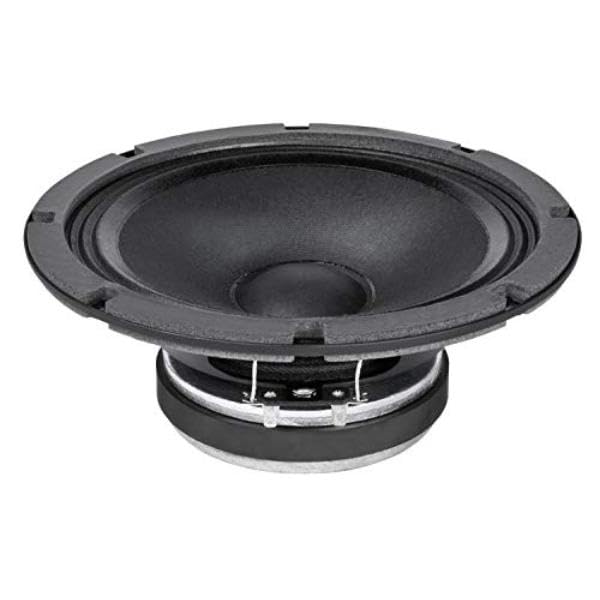


Who Should Buy an 8 Inch Midbass Speaker?
Car Audio Builders
If you want fuller bass in the front stage without installing a large subwoofer, an 8 inch midbass in the door or a custom pod is a classic answer. You will need a crossover or processor, an amplifier channel and a sealed mounting surface.
Home Speaker Builders
Hobbyists designing a two way or three way speaker use 8 inch midbass drivers to cover the range between the subwoofer and the tweeter. These builders care about enclosure volume, driver parameters and crossover design.
Boat and Outdoor Installers
Marine and outdoor builds need midbass drivers with corrosion resistant parts and sealed motors, because spray and humidity wear ordinary baskets quickly.
Key Features to Compare
Midbass Range and Crossover
A midbass driver usually plays from about 60 to 500 Hz. A crossover that hands over smoothly to a subwoofer below and a midrange or tweeter above prevents gaps and boomy peaks in that region.
Cone Stiffness and Control
A stiff, light cone starts and stops quickly, which keeps bass notes distinct instead of blurred. Paper, polypropylene and treated composite cones all work; check the surround too, because rubber surrounds last longer in damp places.
Power Handling and Sensitivity
Match the RMS power rating to your amplifier channel, and look for sensitivity near 92 dB or higher if you have limited power. Too little power leaves midbass thin, while too much with a poor gain setting risks distortion.
Impedance
Most 8 inch midbass drivers are 4 ohm or 8 ohm. Confirm the impedance against your amplifier, because an 8 ohm driver on a 4 ohm design plays quieter than expected.
Mounting and Enclosure
Midbass speakers need a solid baffle and a sealed or well damped cavity behind them. A flexing door panel wastes energy and makes midbass sound loose, even with a good driver. Check cutout size and mounting depth before ordering.
Types of 8 Inch Midbass Speakers Compared
Car Door Midbass Speakers
These work in a door cavity with protection against moisture and vibration. They suit system builders who want strong midbass without a separate enclosure.
Home Midbass Drivers
Used in bookshelf and floor standing builds, where enclosure volume can be tuned. They suit hobbyists who enjoy designing crossovers and cabinets.
Marine Midbass Speakers
These add corrosion resistant parts and sealed motors for wet environments, which suits boats and outdoor installations.
What Your Money Gets You
Basic 8 inch midbass drivers cost about $25 to $70 each and suit simple car builds. Mid priced drivers at about $70 to $170 add stiffer cones, better surrounds and more power handling. Neodymium motors and carbon fiber cones push prices above $200, mainly for builders chasing weight savings and the last bit of control.
Setting Up an 8 Inch Midbass Driver
Start with a solid mounting surface. In a car door, fit a rigid adapter ring, seal the gaps between ring and panel, and add a layer of sound deadening behind the driver so the metal does not ring. In a home build, brace the baffle and use gaskets so air cannot leak around the frame.
Set the high pass filter first, usually between 60 and 80 Hz when a subwoofer handles the lows, then set the low pass filter where the midbass hands over to the next driver, often between 250 and 500 Hz. Play familiar music at moderate volume and adjust in small steps, because a few hertz can change how tight the bass sounds.
Check polarity on every driver. A reversed wire makes bass thin and hollow, and it is the most common setup fault in multi driver systems. Match levels so the midbass blends with the other drivers instead of standing out.
Sealed or Ported: Which Enclosure Suits the Best 8 Inch Midbass Speakers?
A sealed enclosure gives tight, controlled bass and forgives small design errors, which is why it suits car doors and most first builds. A ported enclosure adds output near the tuning frequency and can sound fuller, but it needs careful sizing and takes more space. For a midbass driver that must stay clean and quick, sealed is usually the safer choice.
Common Mistakes to Avoid
- Buying a midbass driver without checking cutout size and mounting depth against your door or cabinet.
- Skipping the crossover and wiring the driver straight to an amplifier, which lets deep bass and harsh highs reach it.
- Mounting on a weak or leaky baffle that vibrates and colors the sound.
- Choosing on wattage alone, without checking sensitivity and impedance.
Care and Longevity
Seal mounting surfaces, protect the cone from direct water spray where possible, and check crossover connections for corrosion. Tighten the mounting screws now and then, since vibration loosens them. A clean signal path keeps midbass tight and prevents one driver from working harder than the rest.
A Final Check Before You Order
Revisit the main use for your 8 inch midbass speaker and rank the features that matter most for it. Confirm cutout size, depth, impedance, power handling and crossover plan against your build. Keep the packaging until you have used the driver for a few days, because fit problems often appear only after real use.
Related guides cover nearby 8 inch speaker types if you are still deciding: best 8 inch speakers, best 8 inch midrange speakers, best 8 inch marine speakers, best 8 inch ceiling speakers and best 8 inch powered speakers.
Frequently Asked Questions
What is the difference between midbass and midrange?
Midbass covers the lower part of the voice range and upper bass, roughly 60 to 500 Hz, while midrange covers voices and instruments higher up. A three way system often uses an 8 inch midbass with a smaller midrange and a tweeter. In a simple two way system the midbass also plays the midrange.
Do I need a subwoofer with an 8 inch midbass?
Often yes, if you want deep bass. An 8 inch midbass driver gives punch and body, but it does not reach the lowest notes. A subwoofer crossed over cleanly lets the midbass concentrate on what it does best.
Do I need a crossover?
Yes, in almost every multi driver system. A crossover sends the driver only the frequencies it handles well and protects it from energy outside its range. Active crossovers or a processor make tuning easier than passive ones.
What power should I plan for?
Match the amplifier channel to the driver RMS rating and set the gain conservatively. A little headroom is better than running at the limit, because clipping heats the voice coil and shortens driver life.
Can I use an 8 inch midbass in a door?
Yes, if the door has the depth and cutout. Many cars need adapter rings or a shallow basket, plus door sealing and sound deadening. Measure the space at the lowest window position before you buy.
Final Thoughts
Choosing the best 8 inch midbass speakers comes down to fit, power match and the crossover plan rather than headline claims. Use the product table above to compare options, check size and compatibility before you order, and pick the driver that matches how you will use it.


