Best 8 Gallon Air Compressors (2026): How to Choose
Disclosure: We may earn a commission when you buy through links on this page, at no extra cost to you. As an Amazon Associate I earn from qualifying purchases. Learn more

Choosing the best 8 gallon air compressor? An 8 gallon tank runs nailers, tires and impact wrenches in a home garage.
An 8 gallon tank sits in a useful middle ground. It holds enough air to run a nail gun, inflate tires, and power short bursts with an impact wrench, yet it still fits in a garage corner or a truck bed. Choosing the best 8 gallon air compressor comes down to airflow, pressure, noise, and how easily you can move and store the unit. The comparison table below groups the main types so you can see those trade offs at a glance.
Sizes smaller than this refill often and sizes larger than this take up far more room. If you are still weighing the full size range, our guide to the best air compressor covers the broader picture.


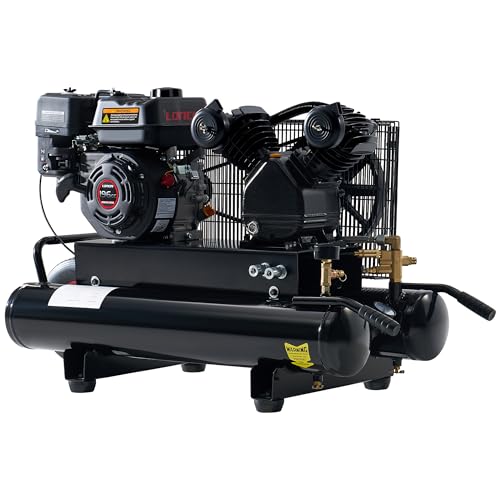
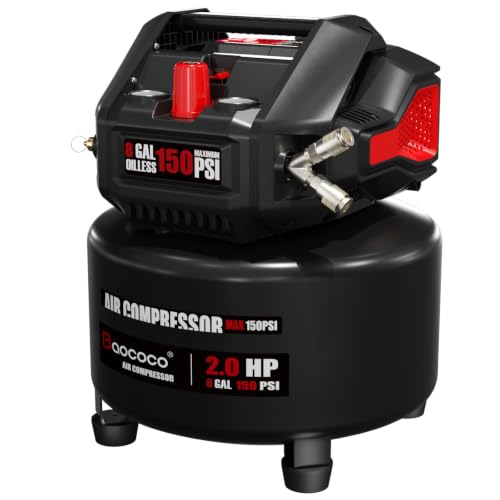

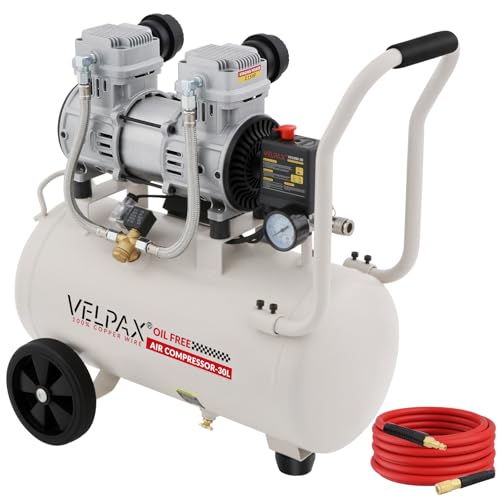
Types of 8 Gallon Air Compressors Compared
Most 8 gallon models fall into three broad types. The tank size is the same, so the differences come from pump design, noise level, and the jobs each type handles best.
Standard shop models
Standard shop models pair an 8 gallon tank with a motor built for steady garage work. They usually deliver enough airflow for framing and roofing nailers, small ratchets, and blow guns used for cleaning. Wheels and a pull handle are common because the tank and pump together are heavy to carry. These models suit a fixed work area where you move the hose rather than the compressor itself.
Quiet models
Quiet models use a larger, slower turning pump to cut noise, often landing near the level of normal conversation. That matters if you work in a shared garage, a basement shop, or a home where others are sleeping or working nearby. The trade off is usually a slightly lower airflow rating and a higher price for the same tank size. For trim work, hobby tasks, and indoor projects, the lower noise is often worth more than extra output.
Compact portable models
Compact portable models keep the 8 gallon tank but trim weight with an aluminum tank or a lighter frame. They are easier to load into a vehicle for finish work at another site. Tank shape also plays a role here, and our comparison of pancake vs hot dog compressor designs explains how footprint and stability change how a unit stores and travels. A compact model still needs two hands or a wheeled frame for safe lifting.
Key Features to Compare
Airflow and pressure ratings
Airflow is listed as CFM, and it decides which tools a compressor can keep up with. Nail guns need brief bursts at modest airflow, while grinders, sanders, and paint sprayers draw air continuously and can empty an 8 gallon tank fast. Check the CFM rating at 90 PSI, since that is the pressure most tools list in their manuals. Maximum pressure, often 120 to 150 PSI, matters less than airflow for most jobs, but a higher ceiling helps with tires that call for firm fills and with tools that lose pressure through a long hose.
Pump type and maintenance load
Pumps are either oil free or oil lubricated, and the choice shapes upkeep, noise, and service life. Oil free pumps need no oil changes and tolerate being tipped during transport, which suits portable use. Oil lubricated pumps tend to run cooler and quieter and can last longer with regular oil care. Our detailed look at oil vs oil free compressor designs walks through those trade offs so you can match the pump to how often you plan to run the unit each week.
Noise level and placement
Noise is rated in decibels, and small differences feel large in an enclosed space. A model rated near 60 decibels can run in a garage while someone talks nearby, while one near 80 decibels will push you toward hearing protection and closed doors. Rubber feet, an intake filter that acts as a muffler, and a pump that turns at lower speed all reduce sound. Think about where the compressor will sit most days, because a unit that annoys the household tends to get used less and stored badly.
Weight, wheels, and storage footprint
An 8 gallon steel tank unit can weigh enough to make stairs and tailgates a real chore. Wheels, a balanced handle, and a low center of gravity matter more than a few pounds on a spec sheet. Measure your storage spot before buying, including the height of the motor and any cage or shroud on top. A vertical layout saves floor space but tips more easily when you pull the hose, while a horizontal layout stays planted and fits under many workbenches.
How to Choose the Right Air Compressor
Start with the hungriest tool you own or plan to buy, then work backward to the compressor. The buying steps below keep the decision grounded in your tools rather than in tank size alone. For a wider framework that spans every tank size, the air compressor buying guide lays out the same process in more depth.
Match the compressor to your tools
List each tool and note the CFM and PSI it requires at the tool inlet. Add a small margin for hose losses, then compare that total with the compressor rating at 90 PSI. An 8 gallon tank helps tools that cycle on and off, because the stored air covers each burst while the pump catches up. It cannot rescue a tool that draws more air continuously than the pump produces, so a die grinder or a large spray gun may still call for a bigger stationary unit.
Power source and motor
Nearly all 8 gallon models plug into a standard household outlet and run on corded electric power, since cordless tools top out at much smaller tank sizes. Check the amp draw before buying, because a compressor that starts under load can trip a breaker shared with lights or another tool. A dedicated circuit or a short, heavy gauge extension cord keeps starts reliable and protects the motor.
Features worth paying for
A regulator that is easy to read and adjust, two couplers for running a pair of nail guns, and a tank drain that you can reach without tipping the unit all earn their cost in daily use. A roll cage or sturdy shroud protects gauges and fittings when the unit rides in a truck. Skip bundles packed with low value accessories you already own, and put that money toward a longer, flexible hose instead, since hose quality shapes how pleasant every job feels.
How much should you spend?
Basic 8 gallon models cost about $100 to $200 and cover inflation, cleaning, and light nailing. Models at about $200 to $400 usually add lower noise, stronger airflow, or lighter tanks. Spending beyond that range makes sense mainly for quiet pumps and build quality aimed at daily trade use. Warranty length varies by maker, so read what it covers for the pump and motor, and keep your receipt and the manual with the unit for future claims.
Is an 8 Gallon Air Compressor the Right Size for You?
For many households, the best 8 gallon air compressor is exactly this size. Homeowners who rotate and inflate tires, run a brad nailer for trim, and blow dust from a bench will find the tank generous without being bulky. Our guide to the best air compressor for home garage use shows how this size fits a typical two car space alongside a bench and storage shelves.
Contractors who frame all day may value this size as a second unit for punch list work, while a large crew gun running nonstop points to a bigger tank. Hobbyists who spray paint in long sessions should check their gun airflow first, because tank size alone will not fix a shortfall in pump output. If your list is only tires and sports gear, a smaller unit will do the same job.
Common Mistakes to Avoid
- Buying on tank size alone, which leaves you short on airflow for tools that draw air without pause.
- Ignoring the breaker rating in your garage, so the motor trips the circuit each time it restarts under pressure.
- Using a long, thin extension cord, which starves the motor of voltage and shortens its life.
- Skipping the drain after humid work days, so water collects in the tank and rust starts inside.
- Setting tool pressure from the tank gauge instead of the regulator gauge, which can overdrive a nail and split the wood.
- Storing the unit with the tank under full pressure for weeks, which keeps seals loaded and moisture trapped.
How to Make Your Air Compressor Last Longer
Drain the tank after each work session by opening the drain valve and tilting the unit slightly so the water runs out. Moisture from compressed air is the main cause of internal tank rust, and this one habit does more for tank life than any other step. Leave the valve open during storage so the inside can dry fully.
Keep the intake filter clean and replace it when it looks clogged, because a starved pump works harder and runs hotter. If your pump uses oil, check the level on the sight glass before long sessions and change the oil on the schedule in the manual. Store the unit indoors where freezing water in the lines cannot crack fittings. If you are new to the routine, our walkthrough on how to use an air compressor covers safe start up and shut down in order.
FAQ
Can an 8 gallon air compressor run a paint sprayer?
It depends on the sprayer. Small touch up guns and many HVLP guns list airflow needs that an 8 gallon unit can meet in short passes, with pauses while the pump refills the tank. Larger guns made for whole car panels draw far more air and will leave you waiting or produce an uneven finish. Always compare the gun rating at its stated pressure with the compressor rating at the same pressure before you buy paint.
How long does an 8 gallon air compressor take to fill?
Fill time from an empty tank to full pressure is often a few minutes, and it varies with pump size, motor strength, and the maximum pressure setting. Recovery time matters more in daily use, meaning how fast the unit climbs back after a tool pulls the pressure down to the cut in point. A model that recovers quickly keeps nail depth consistent. Check the listed recovery or fill figures from the maker rather than guessing from tank size alone.
Can an 8 gallon air compressor power an impact wrench for lug nuts?
Yes, for typical passenger car lug nuts, as long as the wrench airflow need sits within the compressor rating. Lug nuts call for short, strong bursts, and the stored air in an 8 gallon tank suits that pattern well. Stubborn or rusted hardware may need several bursts with a short pause between them. Use the shortest practical hose and set the regulator to the pressure the wrench maker lists for best results.
Does an 8 gallon air compressor need a break in period?
Some oil lubricated models ask for a short break in, where you run the pump with the drain or a valve open for a set period before the first real use. Oil free models often need no such step. The manual for your unit is the authority here, because the procedure and timing differ by pump design. Skipping a required break in can seat the rings poorly and shorten pump life, so read that page before the first job.
What size air compressor do I need for a framing nailer?
A framing nailer is one of the best fits for this tank size. Framing guns fire in bursts as you move along a plate or stud, so the tank has time to recover between shots. One gun working at a steady pace is comfortable, and two guns can share a unit if both users pause naturally between runs. The deciding number is still pump airflow, so confirm the rating covers the gun maker figure with a little room to spare.
Final Thoughts
The right choice balances airflow, noise, and weight against the tools you actually own. Pick the type that fits your space, confirm the CFM rating at 90 PSI covers your hungriest tool, and plan on draining the tank as a habit. Chosen that way, the best 8 gallon air compressor for your shop will earn its corner for years. Use the product table above to compare the types side by side before you order.