
Best 12 Inch Midrange Speakers at Every Price for 2026: What Your Money Really Gets You
Disclosure: We may earn a commission when you buy through links on this page, at no extra cost to you. As an Amazon Associate I earn from qualifying purchases. Learn more

Compare the best 12 inch midrange speakers at every price point. Learn what you get at budget, midrange, and premium levels and where spending more pays off.
A 12 inch midrange driver covers the heart of the music: voices, guitars, snare drums, and most of what makes a system sound clear rather than merely loud. Prices for a single driver range from under $40 to well over $400, and the listings all promise clarity and power, which makes the gap hard to judge. Spending more does buy real things, but only in certain places.
This guide explains the best 12 inch midrange speakers in price terms: what each tier typically delivers, where the money stops helping, and which features are worth paying for in a car door, a home cabinet, or a pro audio build. Use the product table for current models, then match a tier to your amplifier and your enclosure before you spend anything.

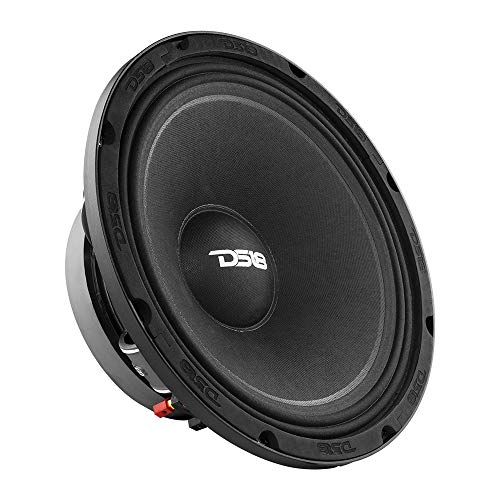


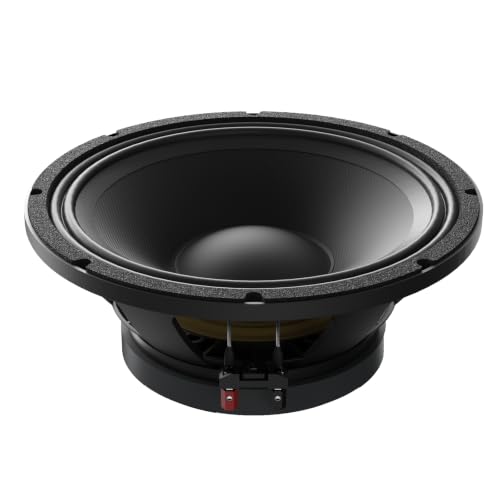


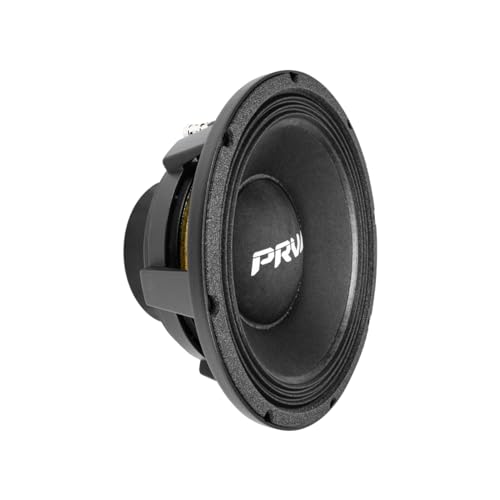
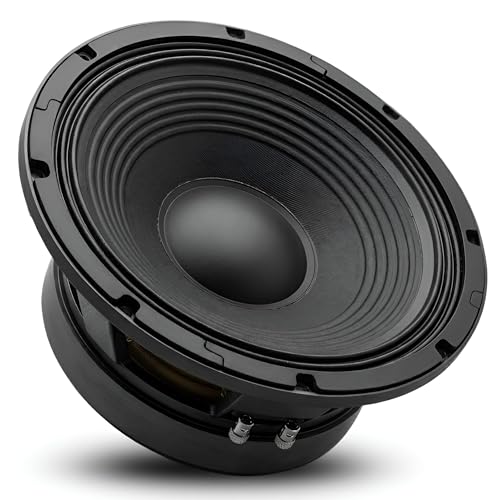
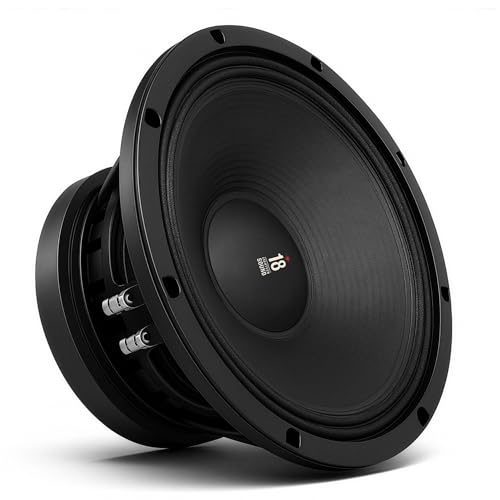
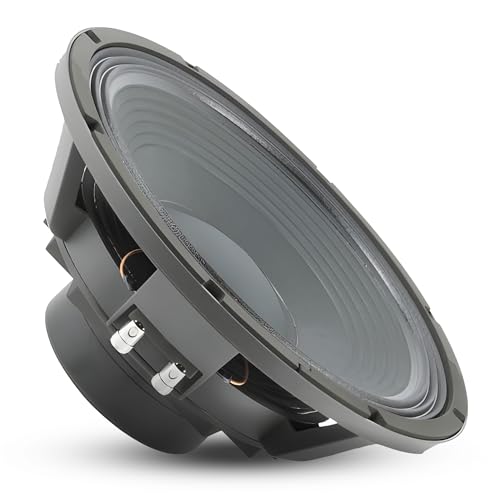
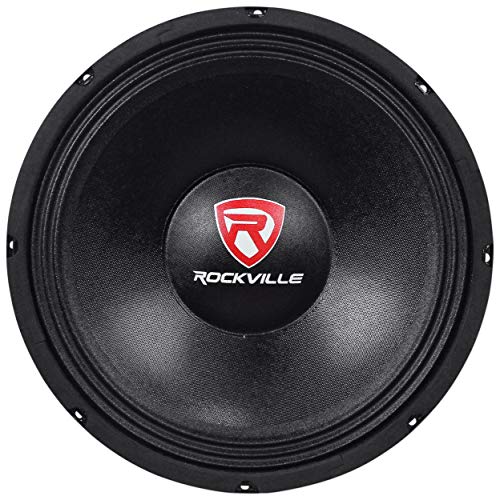
Best 12 Inch Midrange Speakers by Budget Tier
The Budget Tier Buyer
Budget drivers, around $30 to $70 each, suit a first build, a replacement for a blown factory speaker, or a loud outdoor project where fine detail is not the goal. You typically get a pressed steel basket, a paper or treated paper cone, and a foam or cloth surround.
Sensitivity is often high, which helps weak amplifiers play loud, but quality control varies, so buy from sellers with easy returns. The limit shows up as harshness at high volume and a narrower usable range.
The Midrange Tier Buyer
Midrange drivers, around $70 to $180 each, are the sweet spot for most builds. Cast or heavy stamped baskets, better voice coil cooling, and more consistent cone materials keep distortion down when the volume rises. Frequency response is smoother, so vocals sit forward without sounding sharp, and published specs are usually honest enough to design a crossover around. If you are upgrading a system you plan to keep for years, this is the tier that rewards you every time you listen.
The Premium Tier Buyer
Premium drivers, around $180 to $450 each, serve demanding car audio builds, studio grade cabinets, and pro systems that run hard for hours. You pay for exotic cone materials, very tight manufacturing tolerance, high power handling with real thermal headroom, and detailed measured data from the maker.
The gains are real but smaller than the jump from budget to midrange. Buy here when the rest of your system is already strong, because a premium driver fed by a weak amplifier and a poor enclosure cannot show what it can do.
What Your Money Gets You at Each Price Tier
Budget Tier: What to Expect
At budget prices, expect usable sound and simple construction. Paper cones sound natural in the vocal range, sensitivity figures around 92 to 98 dB are common, and power handling claims should be read as peak rather than continuous, so size your amplifier with restraint.
Mounting depth is usually shallow, a quiet advantage in car doors. What you give up is consistency: two drivers from the same box may measure slightly differently, and surrounds age faster in heat. For a garage system or a first project, those are fair trades.
Midrange Tier: The Sweet Spot for Most Buyers
The midrange tier buys control. Stronger magnets and better voice coil design hold the cone steady at high excursion, so voices stay clear when bass notes hit at the same time. Many models add treated cones that resist humidity, rubber surrounds that last longer than foam, and terminals that accept heavier wire without fuss.
You also get believable specifications, including a stated frequency response with limits, which makes pairing with a woofer and tweeter far easier. Most buyers shopping for the best 12 inch midrange speakers should start their search here and only move up for a specific reason.
Premium Tier: When Spending More Pays Off
Spending more pays off in three situations. First, high power systems need the thermal capacity that premium voice coils and vented motors provide, or distortion and damage follow. Second, competition and show builds benefit from the output and finish quality on display. Third, critical listening rooms reveal the smoother response and lower distortion that careful engineering buys.
Outside those cases, premium money often does more good spent on sound treatment, a better enclosure, or a cleaner amplifier, a point our guide to the best 12 inch speakers makes across the full size category.
Features Worth Paying For, and Ones to Skip
Durability and Water Resistance
Where the driver lives decides how much durability is worth. In a car door, moisture, heat, and vibration attack the cone and surround daily, so treated cones, rubber surrounds, and corrosion resistant terminals earn their cost. Marine and outdoor builds may carry an IP67 style rating on complete speakers, though raw drivers are rarely rated that way, so enclosure design does the real protective work. In a dry home cabinet, skip the weatherproof premium and put the money into the crossover instead.
Power Handling and Amplification
Raw midrange drivers have no battery and no built in amplifier, so the honest version of this feature is power handling and sensitivity. Match the driver RMS rating to your amplifier output per channel, and remember that a high sensitivity driver at 96 dB needs far less power to reach a given volume than one at 89 dB.
Underpowering causes clipping when you push for volume, and clipping kills more drivers than clean power does. If you would rather skip amplifier matching entirely, the self powered designs in our guide to the best 12 inch powered speakers handle that job internally.
Ecosystem and App Features
A raw driver has no app, so ecosystem here means the maker support system around it: published Thiele Small parameters, replacement cones and surrounds, and a range of matching sizes so you can expand a build later. Those things matter when you design an enclosure, because box volume depends on real measured data. Brands that publish full data and sell spare parts protect your investment for years.
For smaller builds in the same family, our guides to the best 8 inch midrange speakers and the best 10 inch midrange speakers cover the sizes that pair with a 12 inch woofer in compact cabinets.
Sound Quality and Tuning
Judge midrange sound by the band it actually covers, roughly 200 Hz to 4 kHz for most 12 inch designs, and be wary of any driver claiming to do everything from deep bass to high treble. A smooth response with a gentle rolloff at both ends integrates easily, while a driver with a sharp peak near the top of its range will sound shouty no matter what the spec sheet promises. Cone material shapes the character: paper tends toward warm and natural, polypropylene toward smooth and durable, and metal toward detailed but demanding of careful crossover work.
Long Term Costs to Factor In
The driver price is only part of the bill. Budget for a suitable amplifier or confirm your current one matches the impedance, plus crossover parts, wire, connectors, and enclosure materials if you are building cabinets.
Foam surrounds on older style drivers may need replacement after years in a hot car, a small cost if the maker sells parts and a full loss if they do not. Warranty length varies from one year at budget level to several years at premium level, and a longer warranty on a driver you run hard is worth real money.
Add it all up and the midrange tier often costs less over five years than a budget driver replaced twice. Buyers comparing complete active systems instead should also see our guide to the best 12 inch active speakers for total cost with amplification included.
Frequently Asked Questions
Do I need a special codec for 12 inch midrange speakers?
No, because codecs apply to Bluetooth audio, and a raw midrange driver receives its signal by wire from an amplifier. If your source is a phone streaming over Bluetooth to a receiver, choose a receiver with AAC or aptX for a cleaner feed, but the driver itself neither knows nor cares. Spend your attention and budget on sensitivity, impedance match, and crossover design instead, since those decide what you actually hear.
Wired or wireless: which sounds better for midrange speakers?
Wired sounds better and is the only real option for component midrange drivers, which have no wireless hardware at all. A wired path avoids compression and delay, and it stays stable at any volume. Wireless complete speakers trade a little fidelity for convenience, which can suit a casual room setup. For a car build, a home cabinet, or any system with a separate amplifier, wired is simply how the category works.
Should I choose 4 ohm or 8 ohm midrange speakers?
Choose the impedance your amplifier is built to drive. Most car amplifiers handle 4 ohm loads well, while many pro audio and home setups use 8 ohm drivers, which draw less current. Check the amplifier rating at the impedance you plan to run, and never exceed what it is rated for.
Can a 12 inch midrange driver go in a car door?
Only if the door or a custom baffle has room for its depth and mounting bolt pattern, which most factory doors do not. Many buyers mount these drivers in custom pods, kick panels, or enclosures instead. Measure the cutout, magnet depth, and clearance for window travel before you buy, and check the maker's mounting dimensions.
What IP rating do I need for outdoor use of midrange speakers?
For a covered patio cabinet, splash resistance in the IPX4 range plus a treated cone is generally enough. For open outdoor or marine use, look for complete speakers rated IP65 or IP67 rather than raw drivers, and mount any driver you do use so water cannot pool on the cone. Remember that amplifiers and crossovers need the same protection thinking, because the least protected part of the system fails first.
The Bottom Line
Match the tier to your amplifier and enclosure, protect sensitivity and honest specs over exotic materials, and let the midrange tier be your default. The product table above lines up current drivers so you can compare price against the features that matter. Chosen that way, the best 12 inch midrange speakers will make voices and instruments sound present and clear long after the price is forgotten.


