Best 12 Inch Active Speakers in 2026: Which Type Is Right for You?
Disclosure: We may earn a commission when you buy through links on this page, at no extra cost to you. As an Amazon Associate I earn from qualifying purchases. Learn more

The best 12 inch active speakers compared by type, with pros, cons, ideal users, and price ranges, so you can match a style to your room and your gigs.
Active speakers have their amplifiers built in, so a 12 inch model can take a signal from a mixer, a phone, or a laptop and fill a room without a separate power amp. What confuses buyers is that the same basic design is sold for very different jobs: outdoor parties, DJ sets, church halls, rehearsal rooms, and home studios. Picking by wattage alone usually ends with a speaker that is too heavy, too quiet, or missing the inputs you need.
This guide compares the best 12 inch active speakers by type first, because type decides almost everything else. Check the product table for current models and prices, then use the type breakdown and buying criteria here to match a style to your room, your audience, and your transport.


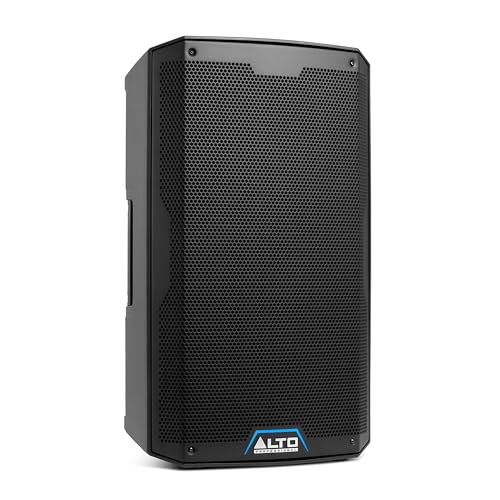
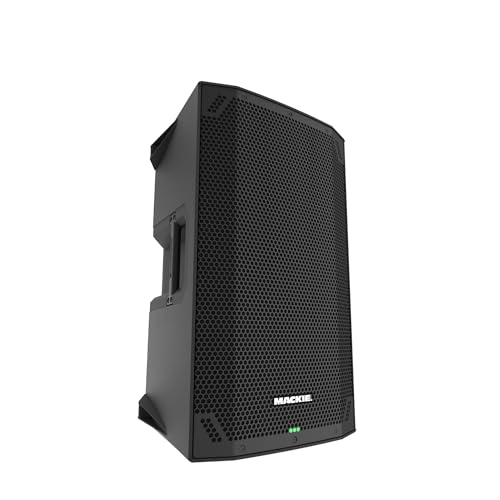


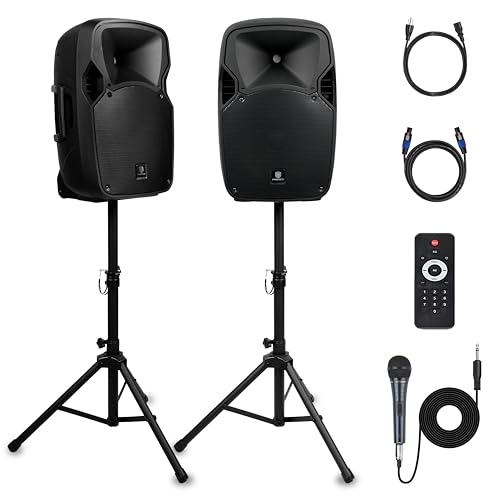


Types of 12 Inch Active Speakers Compared
Four broad types cover nearly every listing you will see. Prices overlap, so do not assume the most expensive type is the best one for you. A rugged outdoor model wastes money in a quiet studio, and a studio focused model will struggle at a pool party no matter how clean it sounds at home.
Outdoor and Rugged Models
Rugged models wrap the driver and amplifier in a tough molded cabinet with sealed controls, carry handles on several sides, and sometimes a rated resistance to splashes or dust. They are built for patios, sports fields, school events, and rental use where gear gets knocked around and carried in the rain. Sound tuning favors loudness and strong bass over fine detail, and some include a battery so they can play for hours away from an outlet.
Expect to pay about $300 to $700 for a solid rugged model. The downsides are weight and refinement: thick cabinets and batteries push many units past 35 lb, and vocals can sound less natural than on a home focused model. Choose this type if your speaker will live in a garage, travel in a truck bed, or play outside in weather you cannot control.
Wireless and Bluetooth Models
Wireless models put convenience first. Bluetooth 5.3 is now common, giving a steadier connection and better range than older versions, and many models let two speakers pair for true stereo or link across a large yard. Some add an app with EQ presets and firmware updates.
These suit backyard gatherings, fitness classes, and anyone who hates running cables. Prices run about $250 to $800 depending on output and features. The trade offs are latency and compression: Bluetooth adds a small delay that matters for video, and standard codecs compress the audio slightly. If your main source is a phone playlist, you will likely never notice either issue in normal listening.
Wired Models
Wired models often skip Bluetooth, putting the whole budget into the driver, the amplifier, and the cabinet. They connect by XLR, quarter inch, or RCA cables and are the standard choice for DJs, bands, churches, and venues where reliability matters more than convenience. With no battery or wireless module to age, a good wired model can serve for a decade with only basic care.
Typical prices run about $200 to $600, often less per watt than any other type. You give up freedom of placement, since every speaker needs a power outlet and a signal cable, and setup takes longer. For a fixed installation or a gig rig that always travels with a mixer, that is a fair and often smart exchange.
Stage Monitor and Home Studio Models
A smaller group of 12 inch active speakers is angled for use as floor monitors or placed close to the listener in rehearsal rooms and home studios. These models favor wired XLR and quarter inch inputs, clear dialogue and vocals, and a tilted cabinet shape that aims sound at the performer. Some include a feedback filter or a built-in mixer so one speaker can handle a small band or a solo act.
Expect about $150 to $500, and expect less weather protection than rugged models. If you mostly play or practice indoors and want one speaker to cover vocals, keyboards, and music playback, this type fits better than a speaker voiced to throw sound across a hall. For a broader look at the category, our guide to the best 12 inch speakers covers passive designs as well.
Outdoor Rugged Models Versus Wireless Bluetooth Models: Which Should You Choose?
These two types overlap the most, so compare them on five points. For durability, rugged models win clearly, with sealed cabinets and impact resistant corners. For convenience, wireless models win, since pairing a phone takes seconds and stereo pairing needs no cables. For sound at distance, rugged models usually play louder with stronger bass throw, while wireless models often sound smoother up close. For run time, battery equipped models are similar, commonly eight to twenty hours at moderate volume. For price, comparable output costs less in a wireless home model than in a sealed rugged one.
So choose rugged if the speaker will travel, get wet, or play for crowds outdoors. Choose wireless if it will mostly stay at home, move between rooms, and serve casual listening where quick setup matters more than surviving a drop onto concrete.
How to Choose the Best 12 Inch Active Speakers
Microphone Inputs and Live Use
If anyone will speak or sing through the speaker, count the microphone inputs before anything else. Many home models have none, while gig and rugged models offer one or two XLR combo inputs with their own volume knobs and basic echo or tone controls. A fitness instructor, celebrant, or busker needs that input daily, and adding it later means buying a separate mixer. Check also whether the speaker can stand upright, tilt back as a floor monitor, or mount on a pole, because placement shapes live sound as much as power does.
Ecosystem and App Features
Companion apps now handle EQ, stereo pairing, input levels, and firmware updates, and they can rescue a speaker that sounds too bass heavy for a small room. Before buying, check that the app supports your phone system and that key settings also exist on the speaker itself, so you are not locked out if the app is discontinued. Brands with a wider ecosystem let you add a matching subwoofer or a second speaker later and control them as one system, which is worth real money if you plan to grow the setup.
Connectivity: Bluetooth Version, Codecs, and Wired Inputs
Look for Bluetooth 5.3 where possible, and multipoint pairing if you want a phone and a laptop connected at once. Codec support matters less at party volumes, but aptX or AAC can sound cleaner on good recordings, while a wired input always gives the most stable result. For live work, balanced XLR inputs reject hum over long cable runs, a detail that separates pro models from home ones. Our guide to the best 12 inch powered speakers explains the same input choices from a pure sound reinforcement angle, since powered and active mean the same thing in practice.
Placement and Room Size
A 12 inch woofer moves serious air, and in a small room that can mean boomy bass if the speaker sits in a corner or against a wall. Give it space, raise it toward ear level on stands or shelves, and use the EQ to trim low end rather than turning everything else up. Outdoors the problem reverses: bass disappears into open air, so a larger audience may need two speakers or a subwoofer. As a rough guide, one good 12 inch active speaker covers about 30 to 75 people indoors depending on ceiling height and how loud the event needs to be.
Sound Quality and Tuning
Read the frequency response range with care, and note whether it is quoted with a tolerance, since a range without one is marketing rather than measurement. A typical honest figure reaches from about 50 Hz to 20 kHz, deep enough for most music without a subwoofer. Consider tuning as well: some models boost bass and treble for excitement, while flatter models suit speech and studio style listening where accuracy matters. If vocal clarity is your priority, midrange performance counts most, and our guide to the best 12 inch midrange speakers digs into driver design for exactly that band. For stage work, compare options in our guide to the best 12 inch pa speakers, where coverage angle and output are the deciding specs.
Care and Maintenance Tips
- Keep firmware updated through the companion app, because updates often fix pairing bugs and improve battery management.
- Store the speaker in a padded case or cover when it travels, since most damage happens in vehicles rather than during the event itself.
- Wipe grilles and cabinets with a dry cloth after outdoor use, and never spray cleaner directly into ports or vents.
- Charge battery models partly for storage. Keeping a lithium battery near half charge during long idle months slows aging far better than storing it full or empty.
- Coil cables loosely and check them each season. A frayed signal cable causes crackles that owners often blame on the speaker itself.
12 Inch Active Speakers: Your Questions Answered
Do I need feedback suppression on a 12 inch active speaker?
It helps if you use a microphone in the same room as the speaker. Feedback suppression or a notch filter cuts the squeal that appears when the mic picks up the speaker output. It is not essential if the speaker is only playing music from a phone or mixer. Clean amplifier power and good placement matter more, and pointing the speaker away from the microphone solves most problems.
What IP rating do I need for outdoor use of a 12 inch active speaker?
Most active PA speakers have no formal rating, so keep them under cover unless the listing states one. For covered patio use, splash resistance around IPX4 is enough to shrug off light rain and drink spills. For poolside or beach use where jets of water are possible, look toward IP65 or IP67 designs and keep charging ports sealed while playing. Remember that the rating covers the speaker, not your phone or mixer, so keep source gear under cover.
Do I need a special codec for a 12 inch active speaker?
No special codec is required, since every Bluetooth speaker accepts the standard SBC codec that all phones support. Higher codecs such as AAC on Apple devices or aptX on many Android phones can preserve a little more detail, which you may notice on quiet acoustic music at home. At outdoor volumes or through a crowd, placement and output will matter far more than the codec badge on the box.
Wired or wireless: which sounds better for a 12 inch active speaker?
A wired connection sounds better in strict terms because it carries the full signal with no compression and no dropouts. The gap is small with modern Bluetooth at short range, and many listeners cannot hear it on pop or rock recordings. Choose wired for DJ work and video where delay also matters, and wireless where freedom to place the speaker away from the source is worth more than the last trace of detail.
How long does the battery last in a 12 inch active speaker?
Most 12 inch active speakers run from mains power and have no battery at all. Battery models in this size typically play eight to twenty hours at moderate volume, and far less at full output, where three to five hours is realistic. Quoted figures are usually measured at half volume, so halve the claim if you play loud outdoors. Mains powered models have no limit beyond the event itself, which is why rental and venue buyers still prefer them for long days.
Our Verdict
Decide the type first, then judge inputs and placement, and only then compare wattage and price. The product table gathers current models so you can check weight, battery claims, and connection options side by side. Matched to the right job, the best 12 inch active speakers give you amp, driver, and controls in one box that is ready to play minutes after it comes out of the case.