Best Salad Shooter: A Complete Buying Guide for Home Cooks
Disclosure: We may earn a commission when you buy through links on this page, at no extra cost to you. As an Amazon Associate I earn from qualifying purchases. Learn more

Grating a block of cheddar by hand leaves knuckles scraped and a sink full of dishes for one topping. A salad shooter skips that step entirely, turning whole vegetables and cheese into ready-to-use pieces through a spinning cone instead of a flat blade. It is a small, single-purpose machine, and that narrow focus is both its selling point and its limit. Here is what actually matters before buying one, based on how the tool performs once it leaves the box.

Where the Idea Came From
The concept dates back to the late 1980s, when a small appliance maker built a countertop slicer around one idea: point a vegetable at a spinning cone and let the motor do the cutting. The design barely changed over the following decades, and that is part of the appeal. Buyers today are often replacing a unit that lasted a decade or two, not upgrading from something newer. The category never grew into a crowded field of competing brands the way blenders or air fryers did, so most of what is sold now still follows the same basic layout: a motor base, a feed chute, and a set of interchangeable cones.
What Happens Inside the Chute
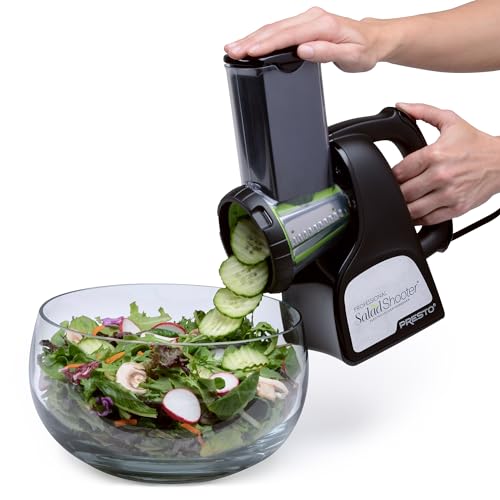
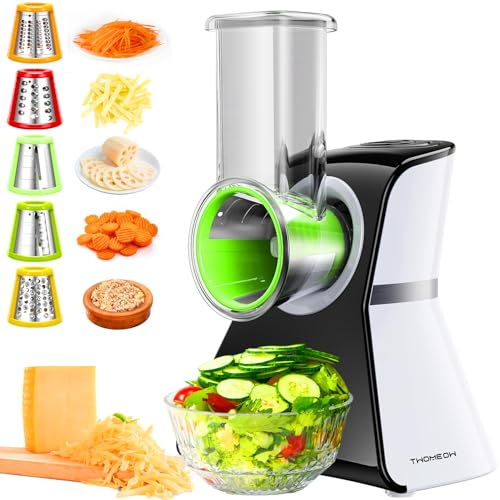
Whole or halved produce goes in through a chute at the top. A cone fitted with a slicing or shredding blade spins underneath, and the motor pushes food against the blade edge as gravity pulls it down. Finished pieces drop out the front into a bowl or onto a plate. There is no bowl of blades to manage like a food processor, and no manual back-and-forth motion like a mandoline. The tradeoff is that everything routes through one narrow cone at a time, so it processes a single texture per pass rather than mixing or pureeing anything.
The Cone Set Decides How Much You'll Use It
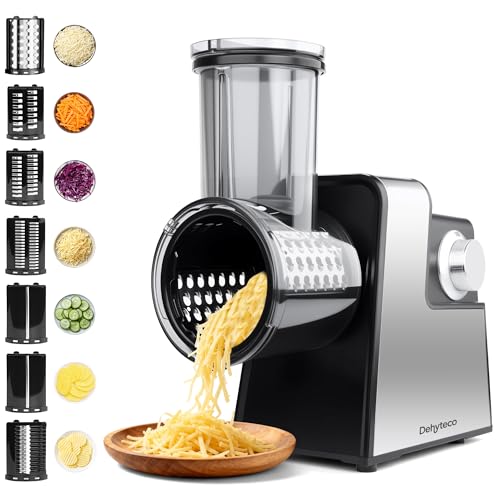
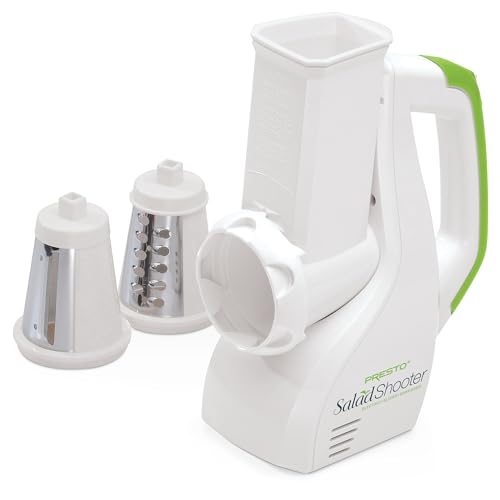
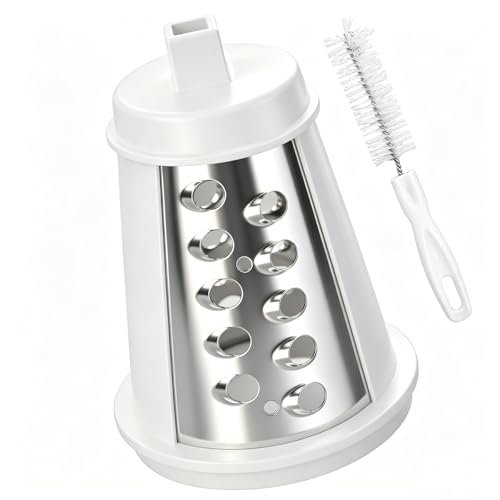
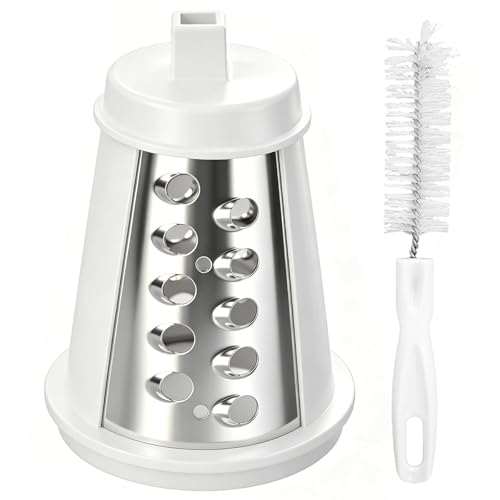
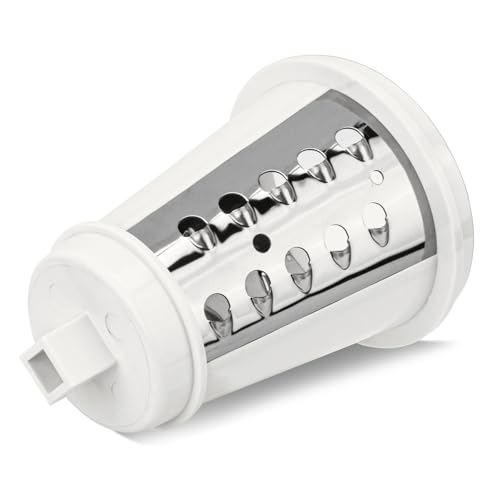
Most units ship with two to five cones, and the count matters more than any other spec on the box. A basic set usually covers one slicing thickness and one shredding grade, which handles cucumbers and cheddar fine but leaves little room for variety. A fuller set adds a ripple or thin-slice cone, a fine shred for garnishes, and sometimes a crumbing or grating cone for hard cheese and bread. Stainless steel cones hold their edge longer than plastic ones and resist staining from carrots and beets, which matters if produce prep is a weekly habit rather than an occasional one. Anyone who only plans to shred cheese now and then can get by with the minimum set; anyone slicing for salads, sandwiches, and slaw regularly will use the extra cones often enough to justify a fuller kit.
Motor Power and the Foods That Fight Back
Wattage on these machines runs modest compared to a full-size appliance, and that is normal for the category. What it means in practice is that firm, dense produce like carrots, cabbage cores, and cold block cheese take more effort than soft items like tomatoes or ripe cucumbers. A weaker motor can bog down mid-cone on a thick carrot, and pushing harder rarely helps since the blade still has to work through the material at its own pace. Softer or overripe produce causes a different problem: it tends to mash or jam rather than slice cleanly, since there is not enough resistance for the blade to cut against. The fix in both cases is picking firm, cold produce and not forcing anything through faster than the motor wants to take it. Chilling cheese in the freezer for ten or fifteen minutes before shredding also helps, since a firmer block resists the blade instead of smearing against it.
The Noise Nobody Mentions in the Ads
Product listings rarely dwell on this, but it comes up constantly in buyer feedback: these machines are loud. The motor whines under load, and the vibration against a countertop adds a rattle on top of it. It is not dangerous or a sign of malfunction, just a byproduct of a small, high-speed motor in a lightweight plastic housing. Setting the base on a towel or silicone mat cuts down on the rattle somewhat, though nothing eliminates the motor noise itself. Anyone prepping food early in the morning or in a shared kitchen space should factor that in before buying.
Cleanup Takes More Steps Than It Looks
The appliance looks simple in a product photo, but a full cleaning involves several small parts: the chute cover, the cone itself, the pusher, and sometimes a retaining ring that holds the cone in place. Most of those pieces are dishwasher safe, but the blades inside a cone are exposed and thin, so hand-washing them calls for some care. The motor base is wipe-clean only and should never go under running water. Foods like carrots and beets can leave a stain on plastic cones over time; a light coating of oil rubbed on before washing helps limit that. None of this is difficult, but it is more disassembly than a single rinse-and-done blender jar, and that gap between the marketing and the actual routine is one of the more common complaints from owners.
Salad Shooter, Food Processor, or Mandoline
These three tools get compared constantly, and each one solves a different problem. A food processor is larger, more powerful, and far more versatile, capable of pureeing, mixing dough, and handling big batches in one bowl, but it takes up more counter and cabinet space and has more parts to wash. A mandoline is manual, with no motor at all, relying on a fixed blade and a hand guard; it gives more control over exact thickness but takes longer per batch and carries a real risk of cut fingers if the guard is skipped. A salad shooter sits between the two: faster and smaller than a food processor, less hands-on than a mandoline, but limited to slicing and shredding rather than the full range either alternative covers. If most of the work is turning vegetables into salad toppings or shredded cheese, it is often the fastest of the three. For prep work before or after using one, a decent kitchen knife set still earns its keep on tasks like coring or dicing that no cone shape handles well. A separate electric food slicer is a better fit for even, consistent slices from a single large cut like a roast or a block of deli meat, which is a different job than shredding produce for a bowl. None of the three tools makes the other two obsolete, and a well-stocked kitchen often ends up with more than one on hand for exactly that reason.
Uses That Have Nothing to Do With Salad
Despite the name, most of what these machines process is not lettuce. Shredded cheese for tacos or pizza is one of the most common uses, along with shredded cabbage for coleslaw and shredded zucchini or carrots for baking into muffins or bread. Sliced potatoes come out thin and even enough for scalloped potatoes or homemade chips. Bell peppers and onions run through quickly for stir-fry prep. None of that overlaps with a salad spinner, which only dries washed greens and has no blade or motor at all; the two tools solve completely different steps in the same meal and are not interchangeable.
Questions Buyers Ask Before Ordering One
Can it handle a full head of cabbage?
Usually only after quartering it first. The feed chute is not wide enough for a whole head, so some pre-cutting is unavoidable no matter how firm the cabbage is.
Does the slice thickness adjust?
Not on most models. Thickness is set by which cone is loaded, not by a dial, so a thicker or thinner cut means swapping to a different cone rather than adjusting a setting.
Is it safe to put raw meat through it?
No. These machines are built for firm produce and cheese, not raw meat, and manufacturers do not rate them for that use.
How long does a typical unit last?
Longer than most small appliances. It is common to hear from owners who kept the same one running for well over a decade with regular use, largely because there is so little inside it to fail beyond the motor and the blade edges.
Why did the food jam halfway through the cone?
Usually because the produce was too soft, too ripe, or pushed through too fast. Firm, cold produce fed at a steady pace almost always clears the cone without sticking.
Getting the Most Years Out of One
The units that last longest are the ones cleaned right after use, before residue dries onto the blade edges, and stored with the cones together rather than loose in a drawer where an edge can chip. Beyond that, matching the cone set to what actually gets cooked matters more than chasing extra wattage or a bigger housing. A basic two-cone set is plenty for someone who shreds cheese occasionally; a fuller set pays off for anyone slicing and shredding several times a week. Buy based on that pattern rather than the packaging, and the appliance tends to earn its spot on the counter instead of getting pushed to the back of a cabinet.