Best Electric Food Slicer for Home Use: A Complete Buying Guide
Disclosure: We may earn a commission when you buy through links on this page, at no extra cost to you. As an Amazon Associate we earn from qualifying purchases. Learn more

Slicing bread, cheese, and deli meat by hand with a chef's knife works fine occasionally, but it gets tedious fast, and the results are rarely even. Finding the best electric food slicer for home use means matching blade size and motor power to what your kitchen actually needs, not the industrial-grade machines built for delis and restaurants. A good home slicer should sit comfortably on a counter, break down for easy cleaning, and produce consistent slices for sandwiches, charcuterie boards, or dehydrated fruit. This guide walks through the practical criteria that matter for everyday cooking, what these machines handle well, how they fit into a normal kitchen, and how to keep one clean and safe over years of use, so you can choose confidently without overpaying for commercial features you will never touch.




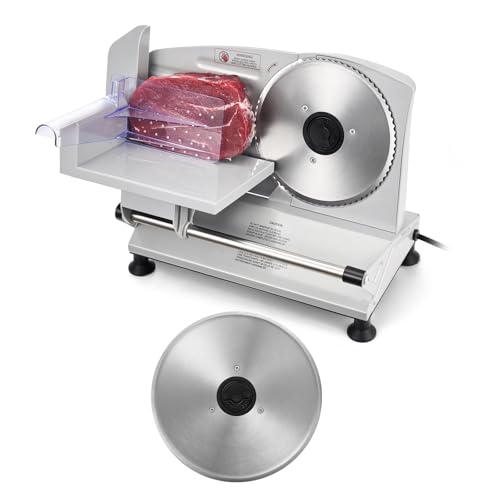
Blade Size, Thickness Control, and Motor Power That Match Your Kitchen
A home slicer does not need to match the machine at your local deli counter. Most people do fine with a smaller blade, a smooth thickness dial, and a motor built for short bursts of everyday use rather than hours of continuous slicing.
Blade size
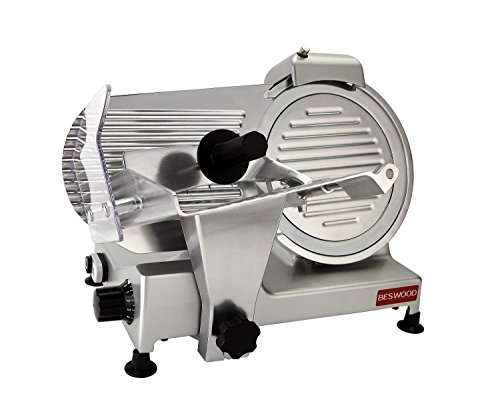
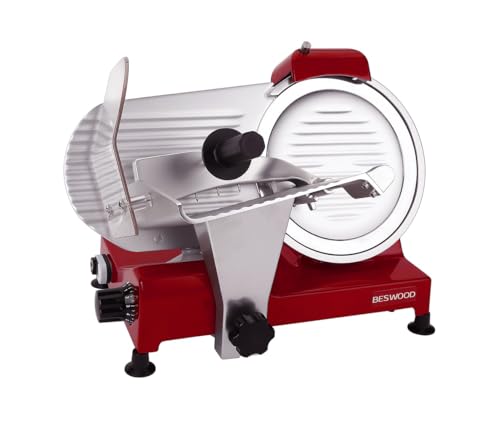
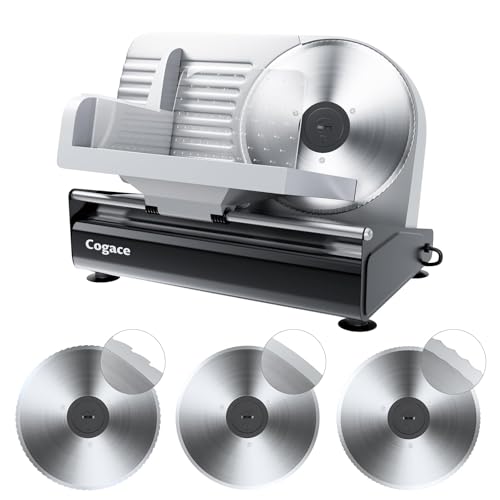
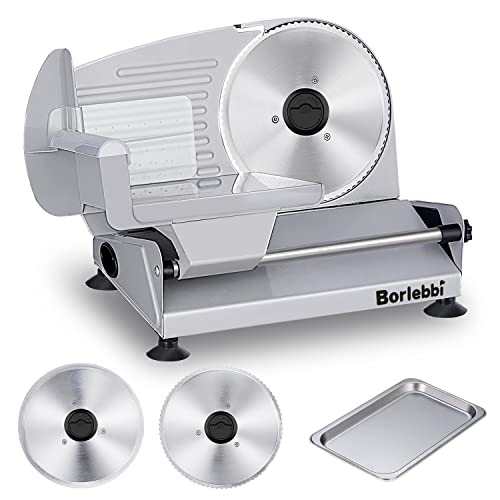
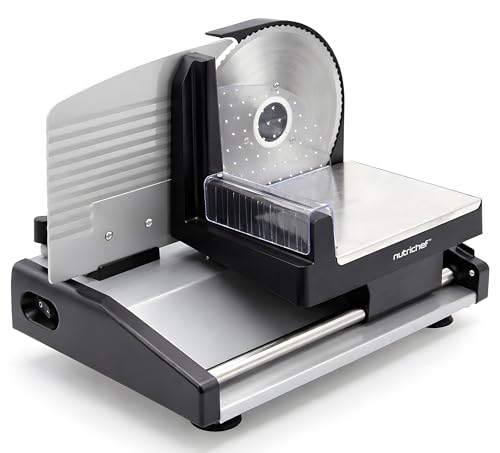
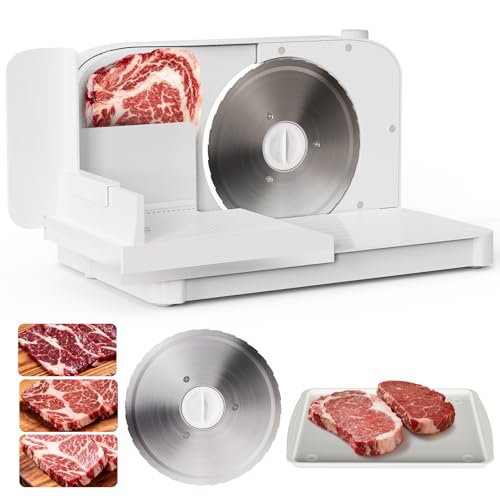
Blades in the 7 to 10 inch range cover nearly everything a home cook slices. A smaller blade suits sandwich-sized loaves and blocks of cheese, while a slightly larger one makes quick work of a whole ham or roast without requiring extra passes. Bigger is not automatically better; a blade sized for a restaurant kitchen just takes up more space on your counter.
Thickness dial
Look for a dial with clear markings so you can repeat the same setting next time. A wide range, from paper-thin to nearly half an inch, lets one machine handle delicate prosciutto-style slices and thicker cuts for sandwiches.
Motor power
For occasional home use, a motor in the 100 to 200 watt range is plenty for bread, cheese, and cooked deli meats. If you plan to slice semi-frozen meat or tougher vegetables regularly, a motor toward the higher end of that range will bog down less and last longer.
What You'll Actually Slice: Bread, Cheese, and Everyday Meal Prep
Before comparing specs, it helps to picture what lands on the tray most weeks. Most people shopping for the best electric food slicer for home use are looking for help with a handful of recurring tasks, not restaurant-level meat volume.
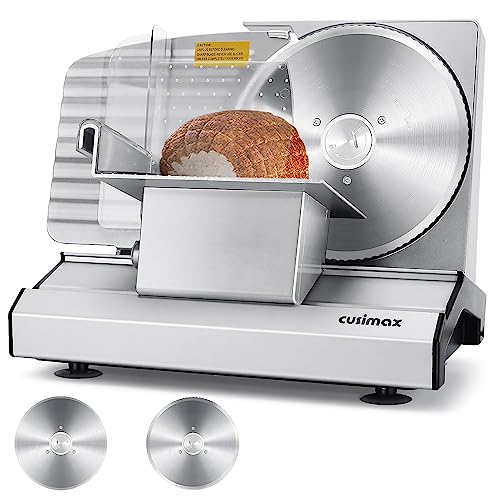
Bread is one of the most common uses, especially for anyone who bakes homemade loaves and wants clean, even slices for sandwiches or toast. Semi-firm cheeses slice well too, and a consistent thickness setting makes cheese boards look far more polished than hand-cut wedges.
Deli meats, whether cooked ham, turkey breast, or roast beef you have prepared yourself, are where a slicer earns its keep, turning a block of meat into sandwich-ready portions in minutes. Many home cooks also use theirs for vegetables like cucumbers, zucchini, or potatoes, prepping them on a stable cutting board before loading the carriage, and for fruit destined for a dehydrator, where uniform thickness means everything dries at the same rate.
Counter Space and Storage: Fitting One Into a Real Kitchen
Kitchen counter space is often the deciding factor for home buyers, more than any spec sheet. The best electric food slicer for home use is one you will actually pull out and use, not a bulky unit that gets shoved to the back of a cabinet after the first month.
Compact vs. bulkier designs
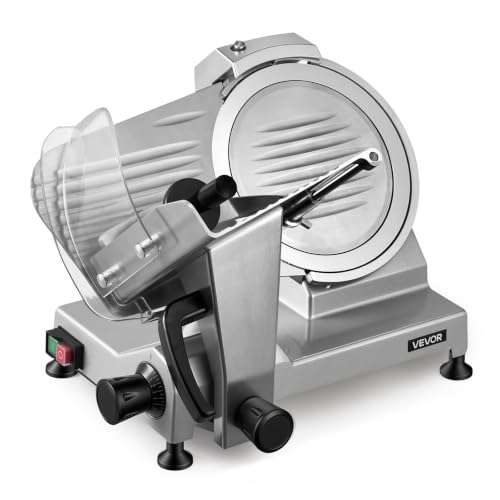
Home-oriented slicers tend to have a smaller footprint than commercial-style units, with some folding flat or featuring a retractable blade guard that lets the whole machine store upright in a cabinet. If counter space is tight, look for a model with a compact base and a blade that locks safely when not in use.
Weight and portability
Lighter models are easier to move between a counter and a pantry shelf, which matters if the slicer only comes out for weekend meal prep or entertaining rather than daily use. A rubberized, non-slip base is worth prioritizing regardless of size, since it keeps the machine steady during use no matter where you set it up.
Cleaning and Safety Between Uses
A slicer that is a hassle to clean ends up used less often, so ease of cleaning matters as much as slicing performance for most households.
Removable parts
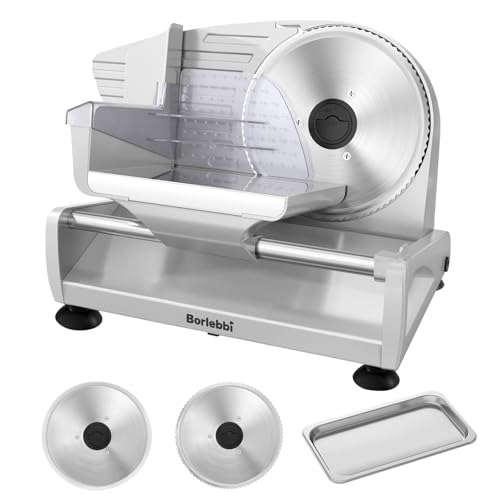
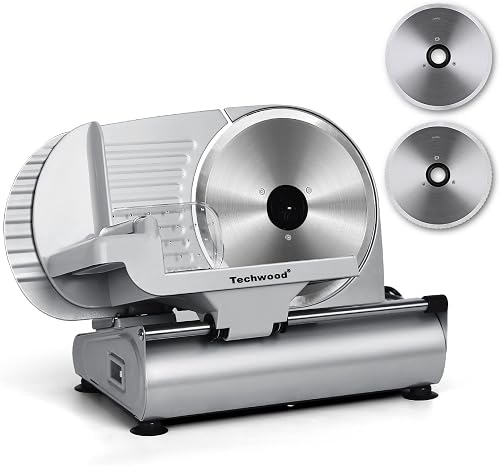
Look for a blade that releases with a single latch or knob, along with a removable food carriage and blade guard that can be rinsed separately. Machines that require you to reach around a fixed blade to wipe it down are harder to clean thoroughly and less safe to maintain.
Food-safe materials
Stainless steel blades and BPA-free plastic housings resist staining and odor buildup from meats and cheeses far better than lower-grade materials. A blade guard that stays in place during cleaning, rather than one you have to hold aside, reduces the chance of an accidental cut while you are scrubbing.
Everyday safety habits
Keep the thickness dial set to zero before storing the machine, and unplug it before removing or attaching the blade. If you also keep a sharp utility knife on hand for trimming food before it goes on the carriage, you will get cleaner cuts and put less strain on the slicer's motor.
Frequently Asked Questions
What size blade is best for a home kitchen?
A 7 to 8.5 inch blade fits most everyday needs, handling bread, cheese, and deli meats without taking up excessive counter space. Only step up to a 10 inch blade if you regularly slice whole roasts or large hams.
Can an electric food slicer handle frozen meat?
Most home slicers work best on meat that is raw or fully cooked, not frozen solid. Semi-frozen meat, chilled just enough to firm up, slices more cleanly than fully frozen or room-temperature cuts, and it is easier on the motor.
How thin can a home slicer cut?
Most home models adjust from nearly paper-thin up to about half an inch. The thinnest settings work well for prosciutto-style cuts and deli meat, while thicker settings suit sandwich bread or vegetables meant for cooking.
Is it safe to wash the blade in a dishwasher?
Check the manufacturer's instructions first, since some slicer blades are dishwasher-safe while others require careful hand washing to protect the sharp edge and coating. When in doubt, hand wash with a brush and thick gloves for safety.
Do I need a slicer if I already own a good knife?
A sharp knife works fine for occasional slicing, but a slicer saves time and produces more even results for repeated tasks like sandwich prep or entertaining. It is most worthwhile for households that slice bread, cheese, or meat several times a week.
How much counter space does a food slicer need?
Compact home models typically need a footprint similar to a toaster oven, roughly a square foot of counter or cabinet space. Folding designs and detachable food carriages can shrink that further when the slicer is not in use.
Can a home slicer handle vegetables and fruit, not just meat?
Yes, most models slice firm vegetables like cucumbers, zucchini, and potatoes as easily as deli meat. They are also useful for slicing fruit evenly before dehydrating, since consistent thickness helps everything dry at the same rate.
Bringing It Into Your Weekly Kitchen Routine
The right slicer earns a permanent spot on your counter or in an easy-to-reach cabinet, not because it is the most powerful model available, but because it matches how you actually cook. Focus on blade size, a repeatable thickness dial, and parts that come apart for real cleaning, and the rest of the decision gets much simpler. A slicer chosen this way tends to get used weekly rather than gathering dust after the first few sandwiches.