
Best Salad Spinner: A Complete Buying Guide
Disclosure: We may earn a commission when you buy through links on this page, at no extra cost to you. As an Amazon Associate I earn from qualifying purchases. Learn more

Wet lettuce ruins a salad before the dressing ever touches it. Water left clinging to the leaves dilutes vinaigrette, keeps croutons from staying crisp, and speeds up wilting in the fridge. A good salad spinner solves that problem in seconds, but the shelves are full of nearly identical-looking bowls with very different mechanisms, capacities, and build quality underneath the lid.
This guide breaks down what actually separates a spinner worth keeping on the counter from one that ends up in the donation pile after a month. We researched how the major mechanisms perform, what capacity actually suits different households, and where a spinner falls short compared to simpler drying methods.
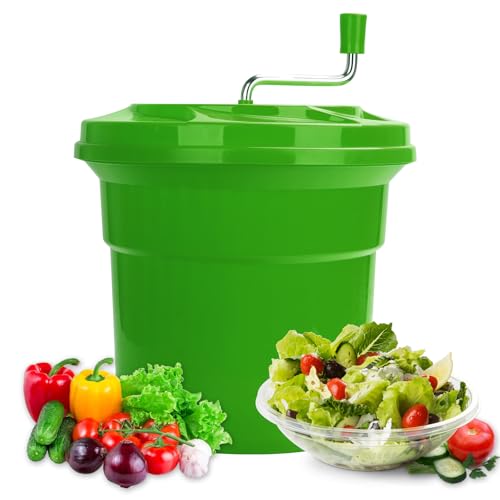
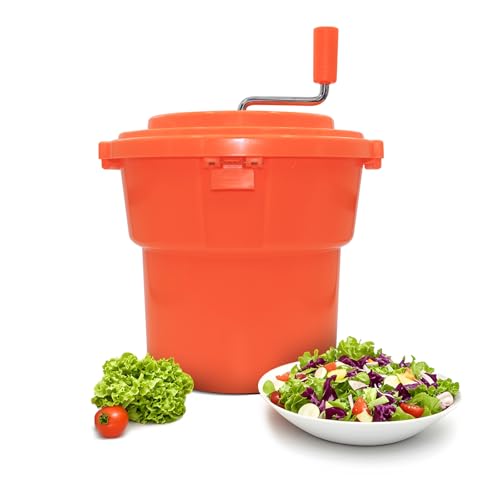
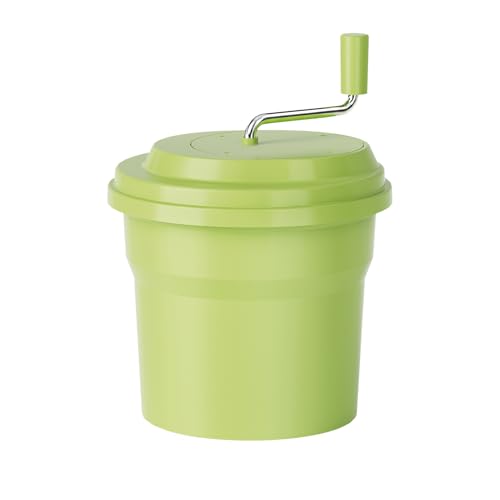

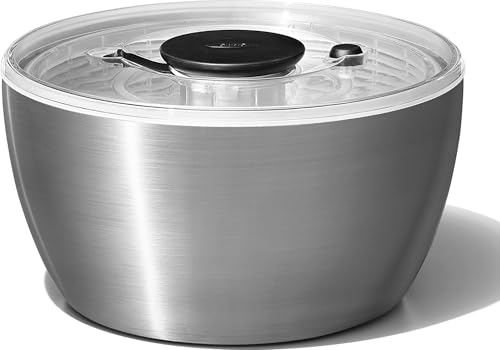

Pump, Pull Cord, or Push Button: How the Mechanisms Compare
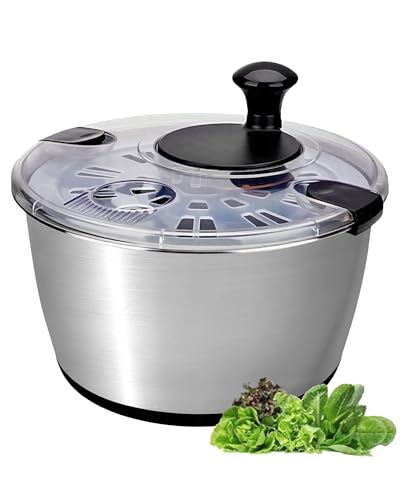
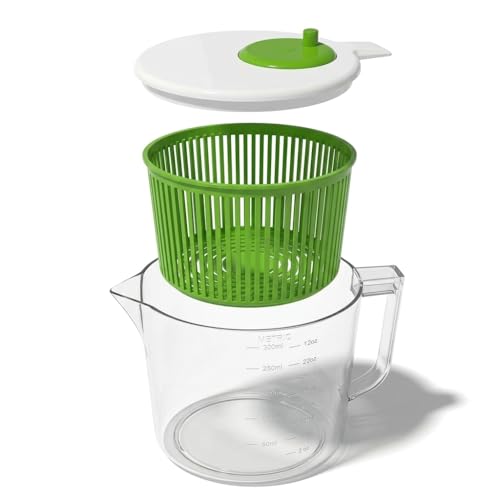
Nearly every spinner on the market uses one of three spinning mechanisms, and the difference shows up the first time you use one. Pump models use a plunger on top of the lid; a few presses with an open palm build up speed, and one hand can hold the bowl steady while the other pumps. This is the mechanism most test kitchens land on as the easiest for daily use, since it requires no wrist twisting and works well for people with limited hand strength.
Pull-cord spinners work like a small lawnmower starter. Yanking the cord spins the basket quickly, often reaching higher speeds in a single pull than a pump does in several. The tradeoff is that the cord mechanism wears out faster over years of use and requires a bit more arm effort to engage. Anyone with wrist pain or reduced grip strength often finds pull-cord models the least comfortable of the three options over repeated daily use.
Push-button spinners, sometimes paired with a pump mechanism, let you hold a button down to keep the basket turning and release it to brake. These tend to be the most compact internally since there's no external plunger housing, which matters if cabinet space is tight.
Matching Bowl Capacity to Your Household
Capacity is where most buyers guess wrong. A spinner that looks roomy in a product photo often holds less than expected once the inner basket and its holes are accounted for. For one or two people making salads a few times a week, a bowl in the 2.5 to 3.5 quart range is usually enough and stores more easily in a cabinet.
Households that cook in bulk, meal prep for the week, or regularly wash large batches of kale or spinach for cooking should look at 5 to 6.5 quart models instead. Undersized bowls force you to spin in multiple batches, which adds time and usually leaves the last batch less thoroughly dried since the basket gets crowded. If in doubt, sizing up one step from what feels necessary tends to pay off, since a larger bowl can still handle small jobs, but a small bowl can't handle large ones.
Capacity also affects how the spinner performs, not just how much it holds. An oversized bowl paired with a small load of greens spins with less resistance and dries faster, while a bowl loaded near its limit takes noticeably longer to reach an even, dry result. Anyone regularly washing bulky vegetables like cabbage or brussels sprouts leaves alongside leafy greens should factor that extra bulk into the capacity decision as well.
Bowl Material and Basket Design That Hold Up
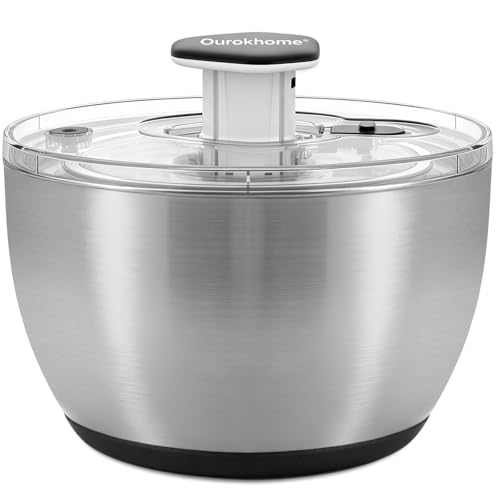
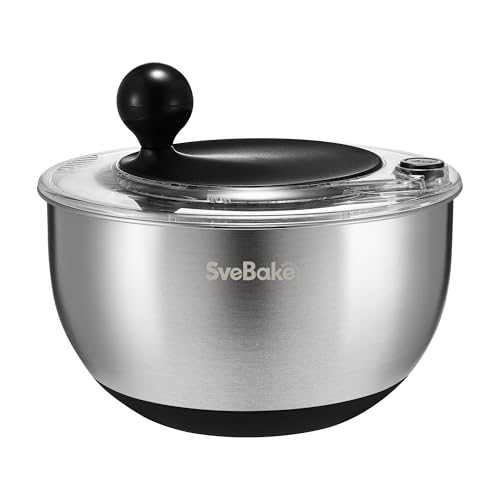
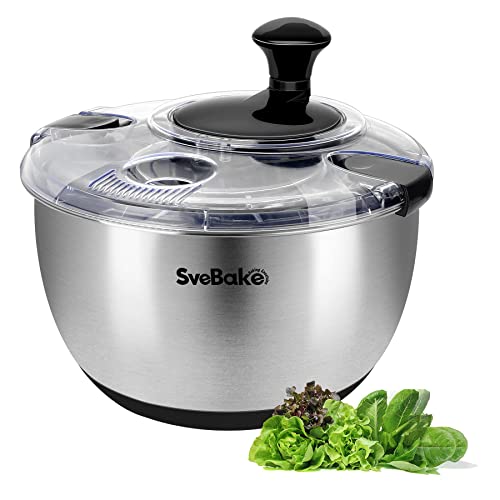
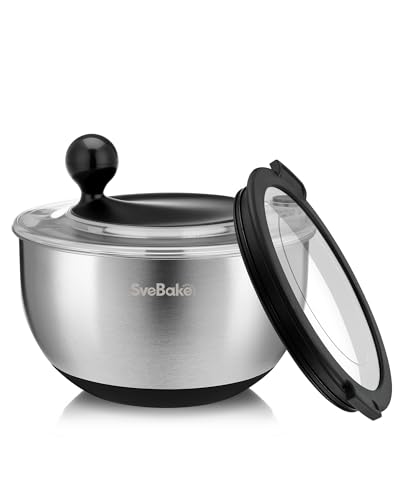
Most bowls are polypropylene plastic, which is lightweight, dishwasher safe, and inexpensive to replace. Over time, though, plastic bowls can pick up stains from beets or turmeric and start to smell faintly of whatever produce sat in them last. A stainless steel bowl resists both problems and generally lasts longer under daily use, though it adds weight and cost.
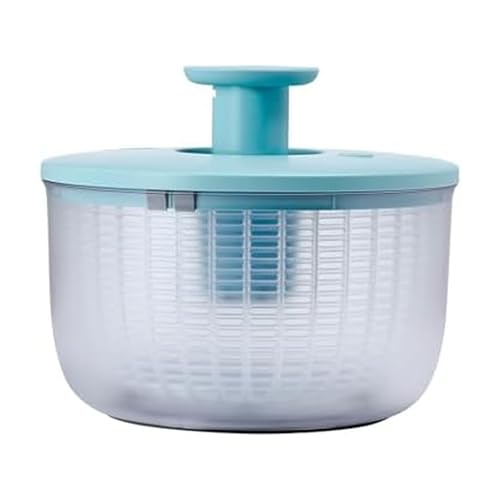
The inner basket matters as much as the outer bowl. Baskets with smaller, more numerous holes drain water faster and are gentler on delicate herbs like cilantro or dill, which can tear in baskets with wide slots. Check that the basket lifts out cleanly for use as a colander or serving bowl on its own, since that doubles its usefulness beyond just drying. Keeping a sturdy cutting board nearby rounds out a full prep station for washing, chopping, and drying in one spot.
Getting Fully Dry Greens Every Time
Even a well-built salad spinner only works as well as the technique behind it. Overfilling the basket is the most common mistake; greens need room to move past each other so water can escape through the holes. Filling the basket about two-thirds full, rather than to the brim, produces noticeably drier results.
Draining the outer bowl between spins also matters, since water pooled at the bottom can splash back onto the basket during braking. For leafy greens that hold onto moisture stubbornly, such as curly kale, a second short spin after a brief rest often finishes the job better than one long spin. Store washed greens loosely wrapped in a paper towel inside an airtight storage container rather than packed tight, since trapped moisture against the leaves is what causes premature wilting in the fridge, not the washing itself.
Countertop and Cabinet Space Considerations
Full-size spinners are bulky, and that bulk is often the real reason people stop using one. Collapsible models that compress down to a few inches in height solve the storage problem, trading some spinning efficiency for a shape that slides into a narrow cabinet gap or a drawer. Compact spinners in the 2 to 3 quart range serve the same purpose for small kitchens, apartments, or anyone who simply doesn't want another bulky bowl taking up shelf space.
Before buying, it helps to measure the actual gap where the spinner will live, not just estimate by eye. A bowl that needs to be wedged in sideways or stacked under other items tends to get used less often, regardless of how well it dries greens. Pairing a compact spinner with good nesting mixing bowls can also free up cabinet room, since matched sets stack more efficiently than mismatched pieces.
When Greens Dry Better Without a Spinner
A spinner isn't always the fastest or most practical option. For a single serving of greens, rolling washed leaves in a clean kitchen towel and giving it a few shakes often dries them almost as well with zero extra dishes to wash. Home cooks who travel light or cook in small rental kitchens frequently rely on this method, and it pairs well with a stack of absorbent kitchen towels kept on hand for prep work.
Air drying on a rack works too, though it takes considerably longer and isn't practical for a quick weeknight dinner. The towel-roll method also travels well for picnics or potlucks where bringing a full-size spinner isn't realistic. None of these alternatives beat a dedicated spinner for large batches or daily use, but they're worth knowing for the times a spinner is overkill or simply not on hand.
Frequently Asked Questions
How long do salad spinners typically last?
A well-built spinner with a pump or push-button mechanism can last many years with regular use. Pull-cord models tend to wear out sooner since the cord and internal gears take more mechanical stress with each use.
Can a salad spinner go in the dishwasher?
Most plastic baskets and bowls are top-rack dishwasher safe, but the lid mechanism, especially pump and pull-cord models, often needs to be hand washed to avoid damaging the internal gears with heat and moisture.
Does spinning greens too hard damage them?
Yes, delicate herbs and tender lettuces like butter lettuce can bruise or tear if spun at high speed for too long. A shorter, gentler spin protects fragile leaves better than one long, fast cycle.
What size salad spinner do I actually need?
Match capacity to how often and how much you wash at once. Occasional single-serving use fits comfortably in a small bowl, while weekly meal prep or cooking for a family usually calls for something in the 5 quart range or larger.
Is a stainless steel salad spinner worth the extra cost?
It depends on how often the spinner gets used. Frequent daily use justifies the durability and stain resistance of steel, while occasional use rarely needs anything beyond a quality plastic model.
Can the basket be used separately from the bowl?
On most models, yes. The perforated basket works fine on its own as a colander for rinsing produce or draining pasta, which adds some flexibility beyond its main job of drying greens.
Why does my salad spinner wobble on the counter?
A wobble usually means the base isn't wide enough relative to the bowl height, or the counter surface itself is uneven. Models with a wider, non-slip base tend to stay put even during a fast spin.
Choosing the Spinner That Fits Your Kitchen
The right spinner comes down to how it will actually be used, not which model looks most impressive on a shelf. A pump mechanism suits most households for its ease of use, a larger bowl pays off for anyone prepping greens in bulk, and a stainless steel build earns its keep with daily wear.
Buying based on real kitchen habits, rather than the biggest or flashiest option, is what makes a spinner earn its cabinet space for years instead of months.