Best Outdoor Solar Flood Light: A Complete Buying Guide
Disclosure: We may earn a commission when you buy through links on this page, at no extra cost to you. As an Amazon Associate I earn from qualifying purchases. Learn more
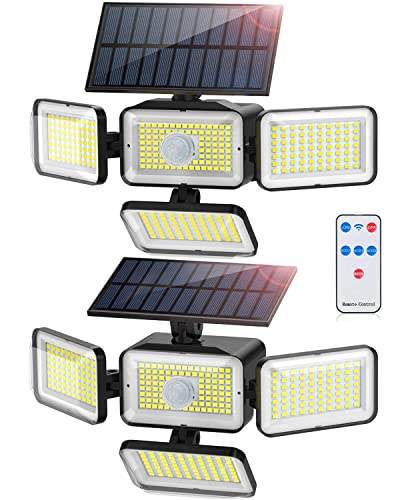
A solar path light or a string of stake lights is fine for a garden border, but it does nothing for a dark driveway, a wide-open backyard, or the side of a barn at night. Those spaces need a fixture built to throw serious light across real square footage on solar power alone, with a motion sensor that actually catches movement instead of a soft glow that only shows up if you are standing right next to it. Finding the best outdoor solar flood light means understanding a few things most product listings gloss over: how bright is bright enough, why motion sensors trigger on nothing at all, and how much a fixture's output really drops once winter cuts into charging time. This guide walks through each of those before getting into fixture styles and installation.




How Bright a Solar Flood Light Actually Needs to Be
Lumen numbers on the box are a starting point, not the whole story. For a driveway, most sources land somewhere between 1,200 and 2,400 lumens for full coverage end to end. A backyard needs more, generally 2,000 lumens and up, and a large yard, parking pad, or anything approaching commercial-style coverage can call for 5,000 lumens or more. Security-focused installs sit in a similar range: 1,200 to 3,000 lumens for basic deterrence and visibility, with 3,000-plus reserved for spaces where you genuinely need to see faces or license plates from a distance.
The part that trips people up is that solar fixtures do not perform as consistently as a wired flood light plugged into house current. Cloud cover, a few short winter days in a row, or a panel that only gets partial sun all cut into the light's real output, even if the spec sheet lists an impressive number. A common rule of thumb is to size up: if a wired fixture in that spot would call for 4,000 lumens, look for a solar model rated closer to 8,000 so there is a cushion once conditions are not ideal. Buying based on the box's peak number, measured under lab conditions with a full battery, is how people end up with a driveway light that looks dim within a few months.
Why Motion Sensors Trigger When Nothing Is There
A flood light that switches on every time a car passes on the street, or worse, every twenty minutes overnight for no obvious reason, gets disabled or unplugged fast. The usual explanation is not a faulty sensor. PIR motion sensors detect heat, not movement itself, which is why wind alone does not set them off. What does set them off is a tree branch or shrub that has been warmed by the sun swaying in that same wind, since the moving branch carries a heat signature different enough from the surrounding air to register as motion.
Detection range and angle vary a lot between models. Budget fixtures often cover somewhere around 16 to 32 feet at a 120-degree angle, while better units reach 30 to 100 feet and up to 180 degrees. A wider, longer range sounds like a selling point, but pointed at the wrong spot it just means more false triggers from foliage, passing traffic, or a neighbor's cat cutting through the yard. If constant motion detection is the main feature you care about rather than raw brightness for area lighting, it's worth comparing dedicated options in our solar motion sensor light guide, since those fixtures are built around detection accuracy first. For a flood light meant to stay on a driveway or wide yard, most of the fix comes down to installation: dial back the sensitivity setting, angle the sensor down and away from bushes or tree lines, trim back branches that hang in the detection zone, and keep the fixture pointed at the area you actually want covered rather than toward the street.
What Winter Does to Runtime (and How to Plan Around It)
A flood light that runs all night in July can start cutting off at 2 a.m. by December, and the battery is not necessarily failing. Daylight hours shrink, the sun sits lower in the sky, and cloud cover tends to be more frequent, so a panel that got 14 to 16 hours of usable charging time in summer might only get 8 to 10 in winter. Less charging time means less stored capacity, and a fixture running at full brightness on a partial charge simply runs out before sunrise.
Dimming earlier than usual is typically the first sign a battery is not fully topping off, not a sign the unit is defective. Some newer fixtures build in an automatic low-power mode for shorter days, trading peak brightness for a lower, steadier output that lasts the full night instead of a bright light that dies at 2 a.m. If a model does not do this automatically, manually switching to a lower always-on setting during the darkest months accomplishes roughly the same thing. It also helps to brush snow off the panel after storms, since even a thin layer blocks enough light to noticeably slow charging, and to keep the panel free of frost buildup where the fixture sits somewhere it collects ice.
Single-Head, Dual-Head, or Remote Panel: Matching the Fixture to the Space
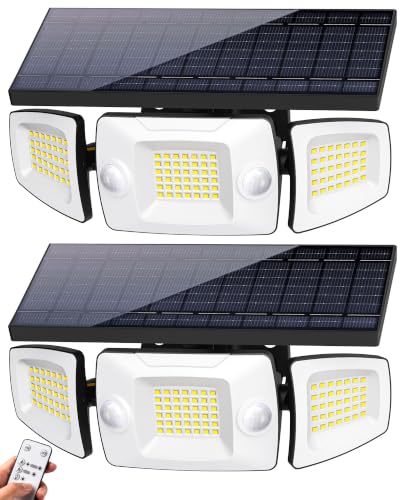
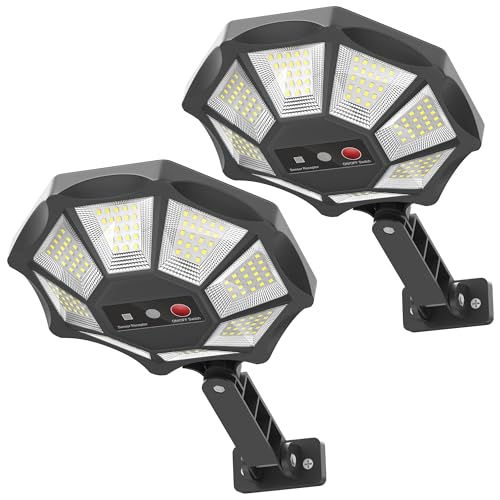
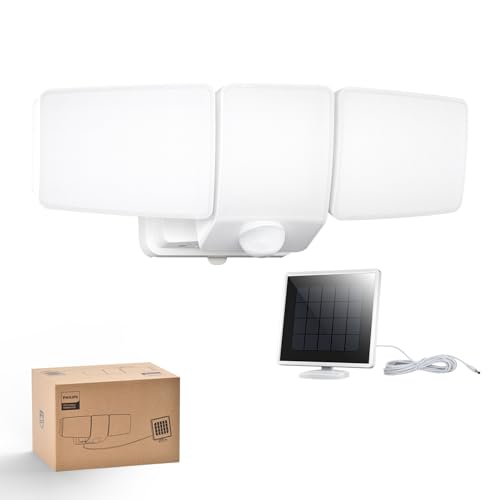
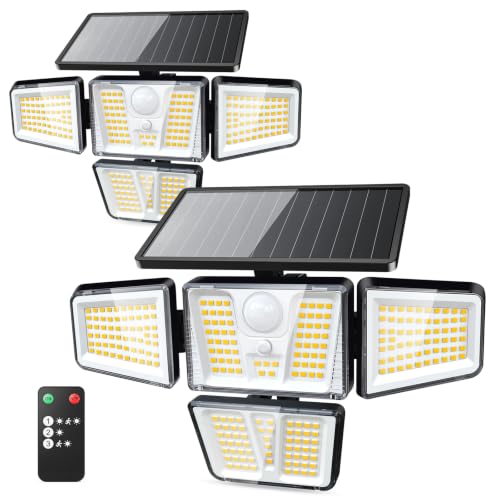
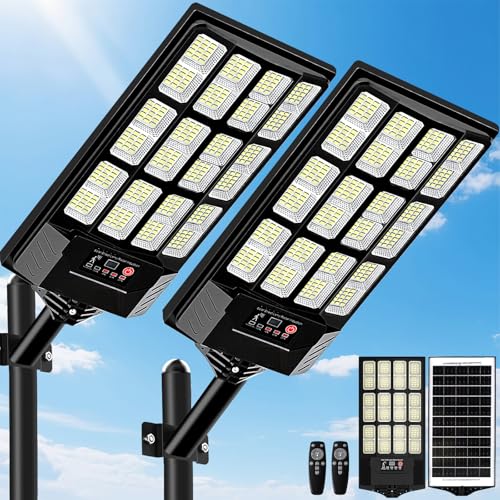
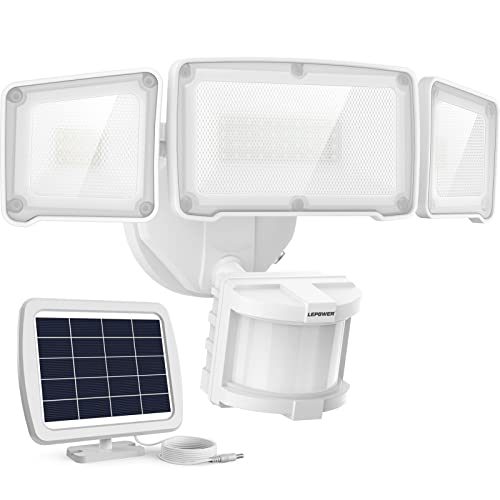
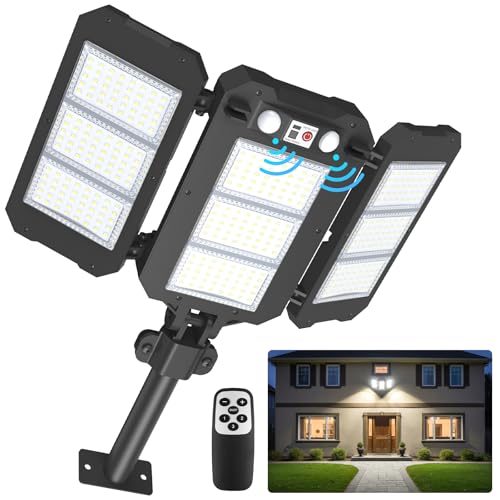
Fixture design affects both coverage and how much flexibility you have with placement. A single-head unit puts all its output into one beam, fixed or adjustable, which suits a garage wall, shed, or one clearly defined area. A dual-head model splits output across two adjustable heads on a shared base, useful for covering a driveway and a side yard from a single mounting point instead of buying two separate lights.
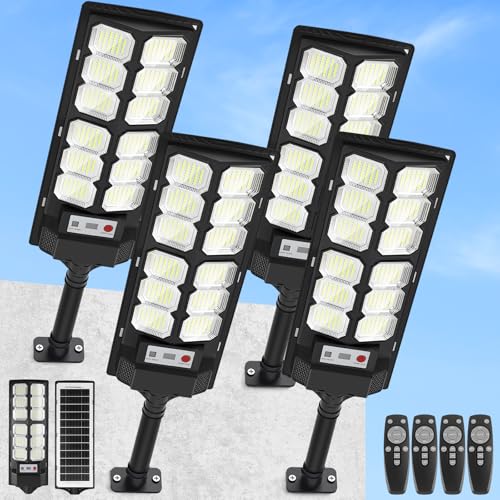
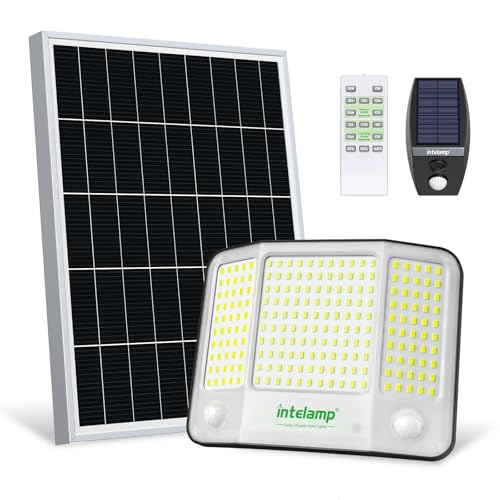
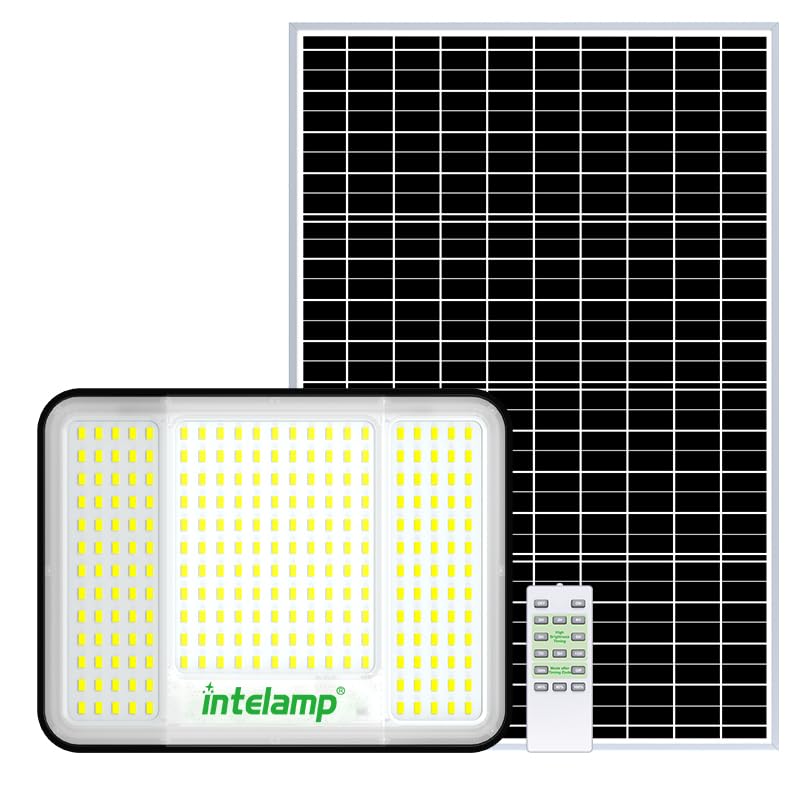
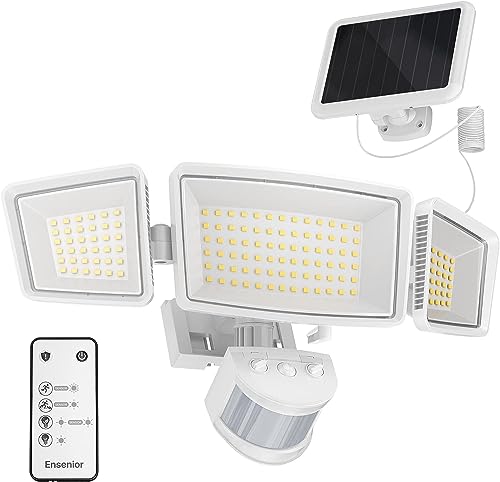
Panel placement matters just as much as the head design. Integrated units combine the panel and light into one housing, which keeps installation simple since there is nothing to run a cable to, but it forces the whole fixture to face the sun even if that is not the best angle for lighting the area below. A remote panel design separates the two, connecting them with a weatherproof cable so the panel can sit on a sunny roofline or open patch of yard while the light itself points exactly where it is needed. For driveways specifically, where the ideal light angle and the sunniest mounting spot rarely line up, it is worth checking our solar driveway lights guide for models built around that layout. And if the real goal is softer, decorative coverage along a walkway or garden bed rather than high-output security lighting, that is a different category of fixture entirely, covered in our broader outdoor solar lights guide.
Build Quality Matters More on a Fixture That Runs at High Output
A flood light pushing 2,000 lumens or more generates real heat while it runs, and it stays outside through rain, snow, and temperature swings year-round without the option of ducking under an eave. An IP65 rating or higher is worth confirming before buying, since anything lower can let moisture work into the electronics after a season or two of exposure. Aluminum housings dissipate heat better than plastic ones and tend to resist cracking and yellowing under constant sun exposure, which matters for a fixture that is meant to last several seasons outdoors rather than get replaced every year. A sealed lens and a proper gasket around the panel connection, especially on remote-panel models where a cable runs between the two pieces, keep water from creeping into the wiring at the weakest point in the design.
LED count is another detail worth a second look. Some listings advertise a high lumen figure spread across a large number of small LEDs, which can look impressive on paper but produce a dimmer, more diffuse beam than a fixture with fewer, higher-output LEDs pushing the same total number. Reading a handful of verified owner reviews, rather than relying on the spec sheet alone, is usually the fastest way to tell which situation you are looking at.
Getting the Angle Right So It Deters Instead of Annoying the Neighbors
Mounting height changes how evenly a flood light spreads its coverage. A fixture placed 8 to 12 feet up generally lights an area more evenly than one mounted low, and it keeps the beam from shining directly into eye level for anyone walking by. Aim the head down and slightly outward from the mounting point rather than straight ahead, which covers more ground and cuts down on glare bouncing back at the house or a neighbor's window.
South-facing panel placement captures the most consistent sun across the day in most of the US, and it should stay clear of roof overhangs, gutters, and tree branches that block light for part of the day. Give a newly installed fixture two or three full days of direct sun before judging how bright it gets at night, since a fresh battery generally needs a few charge cycles to reach its rated capacity. It is worth noting that a flood light only lights an area; it does not record anything. Homeowners who want footage of who or what triggered the light, not just illumination, are better served pairing a fixture like this with an actual recording device, which is a completely separate purchase covered in our solar security camera guide.