Best Outdoor Electric Patio Heater: Complete Buying Guide
Disclosure: We may earn a commission when you buy through links on this page, at no extra cost to you. As an Amazon Associate we earn from qualifying purchases. Learn more

Shopping for an electric patio heater usually starts with one simple hope: keep the patio usable a few extra months a year without dragging a propane tank in and out of the garage. It sounds straightforward until you start comparing listings and realize wattage numbers swing wildly, some units need an electrician and others just plug in, and half the reviews complain the heater "doesn't do much" once the temperature drops below 50 degrees. This guide walks through the decisions that actually matter, in the order most shoppers run into them.



How Much Wattage You Actually Need for Your Patio Size
Wattage is where most people get stuck, partly because retailers don't agree on the math. A workable rule of thumb is about 10 watts per square foot of open patio space, which lines up with the general guidance that a 2,000-watt heater comfortably covers roughly 65 square feet and a 3,000-watt unit stretches to around 100 square feet. For a small bistro table for two, a 1,500-watt tabletop or freestanding model is usually plenty. For a 10-by-12 seating area with a sofa and a few chairs, you're looking at 3,000 to 4,000 watts, or two smaller heaters positioned to cross-cover the space.
Open, uncovered patios need more heaters spread further apart than covered ones since wind carries heat away. A common planning figure is one heater per 300 to 350 square feet for open spaces, compared to one heater per 1,500 to 2,000 square feet under a solid roof where heat isn't escaping upward and sideways as fast. If your patio catches wind off the yard or sits on a second-floor deck, size up rather than down. Reviewers consistently report that lower-wattage hanging heaters feel "almost worthless" once it drops below 50°F, so if you live somewhere winters actually bite, don't buy the minimum wattage that technically fits your square footage.
Freestanding, Wall-Mount, or Ceiling-Mount: Matching the Heater to Your Space
The three common formats solve different problems, and picking the wrong one is a bigger regret than picking the wrong wattage.
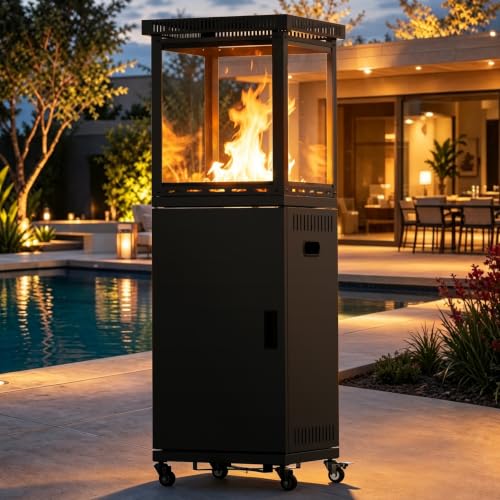
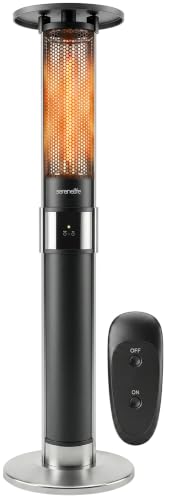
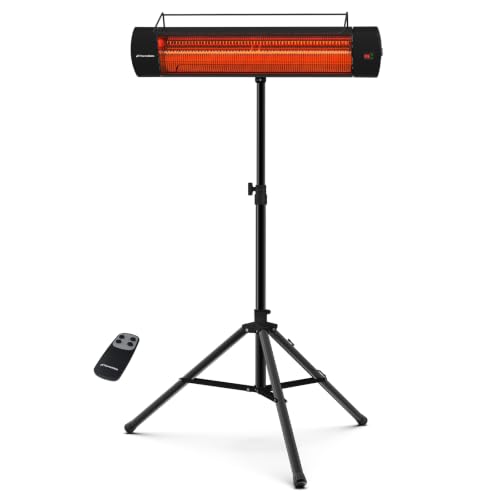
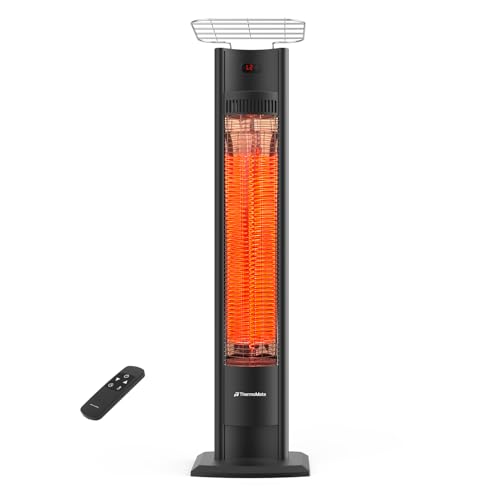
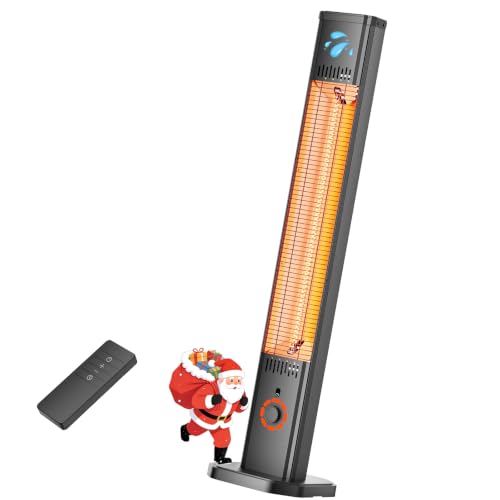
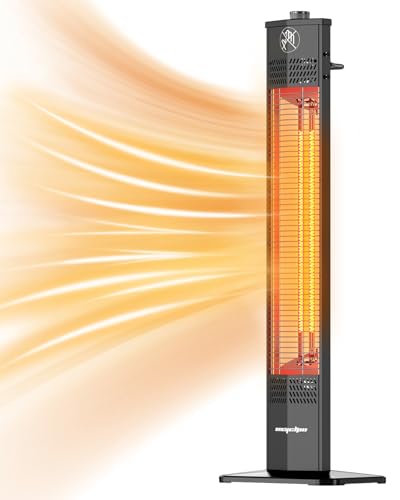
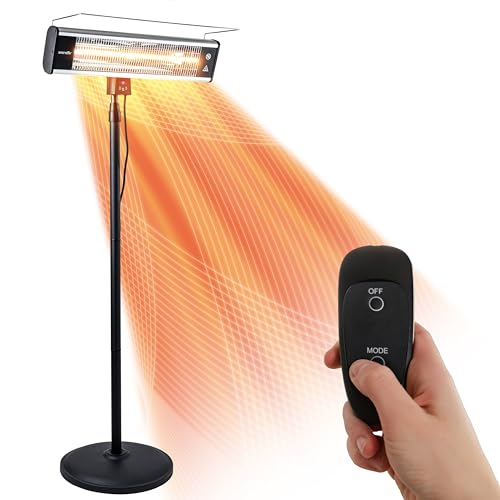
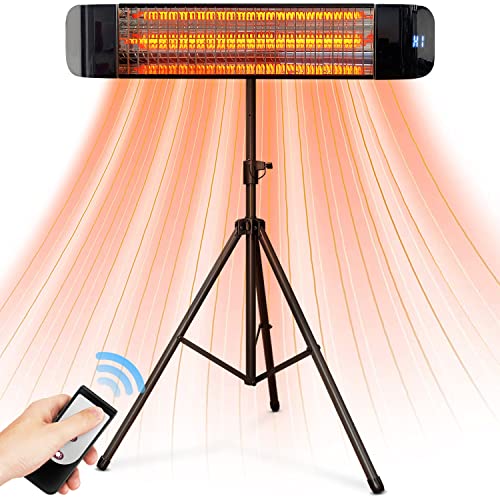
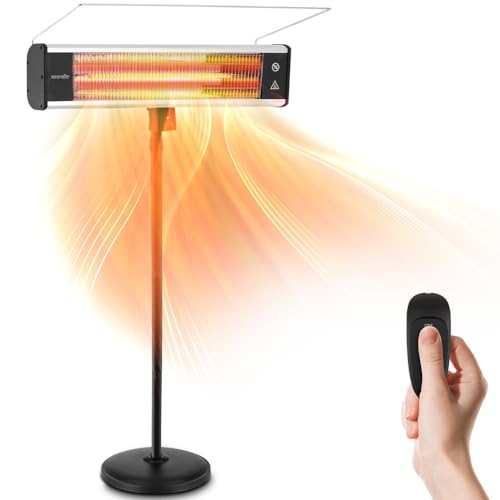
Freestanding and tripod heaters are the easiest entry point. They plug in, need no installation, and can be wheeled to wherever people are sitting that night, which makes them a good fit for renters or anyone who rearranges furniture for parties. The tradeoff is a floor footprint that becomes a trip hazard near a fire pit or dining table, and they're more affected by wind since the heating element sits exposed at head height.
Wall-mounted heaters free up the floor entirely and work well when your seating area is fixed, like a built-in bench or a permanent sectional. They aim heat down and out from a single wall, so placement matters more than with a freestanding unit.
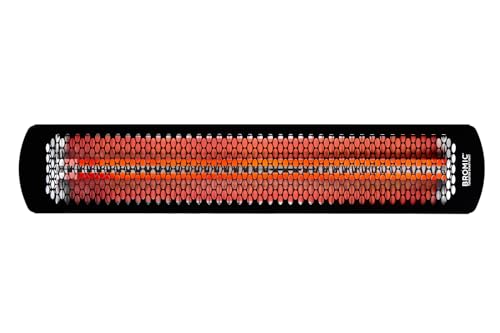
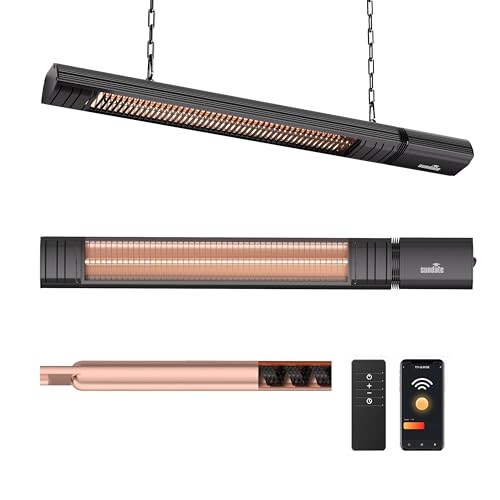
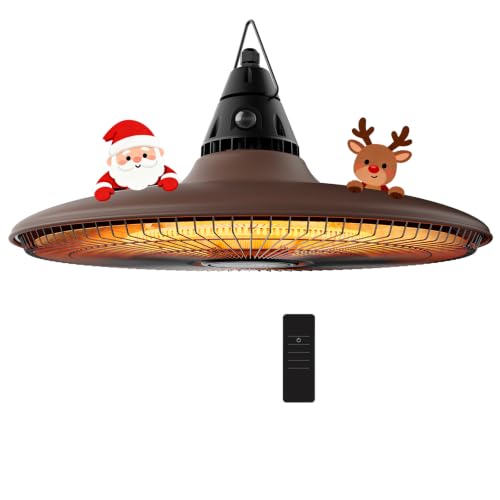
Ceiling-mounted heaters are the option worth considering for a pergola, covered porch, or gazebo you use every week rather than occasionally. Mounted overhead, they distribute heat more evenly across the group below and hold up noticeably better in breezy conditions than a freestanding unit at ground level, since the element isn't getting buffeted directly. They're also the cleanest look for anyone who wants the heater to disappear visually rather than become patio furniture. If you're finishing out a covered structure, it's worth checking a guide to outdoor patio gazebos alongside your heater choice, since ceiling mount height and material affect which units are even an option.
120V Plug-In or 240V Hardwired: What That Choice Really Means
This is the pain point that trips people up after they've already picked a model they like. Most 120V heaters top out around 1,500 watts because that's what a standard household outlet and circuit can handle safely. That's genuinely convenient: no permits, no electrician, just plug it into a GFCI outdoor outlet and go. The catch is that 1,500 watts is on the low end for anything beyond a small table setup.
Heaters in the 2,000- to 6,000-watt range typically require a 240V circuit, which almost always means hardwiring and hiring an electrician to run a dedicated line with a double-pole breaker. It's a real added cost most first-time buyers don't budget for, sometimes rivaling the price of the heater itself. If you're renovating a covered patio anyway, this is the moment to have an electrician rough in a 240V line before the ceiling or wall goes back together, since retrofitting later is far more disruptive. If you'd rather avoid the electrical work entirely, plan around multiple 120V units instead of one large 240V heater, even though it costs a bit more upfront in hardware.
Running a Heater Under a Covered Patio or Pergola Safely
Whether it's actually safe to run a heater under a roof is one of the most common questions people ask before buying, and the short answer is that electric infrared heaters are one of the better choices for covered spaces. Unlike propane or natural gas units, which produce combustion byproducts and rely on adequate airflow to vent properly, electric heaters have no open flame and no exhaust to worry about, which is why they're often recommended over a propane heater for a garage or three-season room with limited ventilation. Most infrared units also radiate heat outward and downward rather than up into the roofline, so a solid covering isn't the same problem it can be for gas heaters that vent heat and fumes upward.
That said, "electric" doesn't mean "hands-off." The heating element still gets hot enough to ignite anything that touches it directly, from a blown napkin to a hanging plant. Keep at least the manufacturer's stated clearance from the roofline, walls, and anything flammable, and angle wall or ceiling units toward the open side of the structure rather than straight down into a corner where heat and any debris can collect. If your patio has curtains, string lights, or fabric shades, route them well clear of the heater's throw path before you mount anything permanently.
What It Actually Costs to Run an Electric Patio Heater
Operating cost is easy to underestimate until the first higher electric bill shows up. As a reference point, a 1,500-watt heater run about two hours a night, twenty nights a month, comes out to roughly $9 a month at a typical $0.15 per kWh rate; a 2,000-watt unit lands around $12, and a 3,000-watt unit around $18 under the same usage pattern. Run it more nights, longer sessions, or in an area with higher electricity rates, and a single heater used a few hours nightly can add $20 to $40 or more to a monthly bill. That's still generally cheaper per hour than propane, which typically runs $1.50 to $3.00 an hour compared to well under a dollar for a mid-size electric unit, but it's not free heat, and multiple ceiling units running together during a long, cold party add up faster than most people expect.
If cost matters more than convenience, look for models with adjustable heat settings or a remote/thermostat rather than a single on/off switch, since dialing back output on a mild evening cuts consumption noticeably compared to running every unit at full power out of habit. A heater with a built-in timer is also worth the extra few dollars; it's an easy way to avoid the classic mistake of leaving a unit running at full output after everyone has gone back inside, which is where a lot of the higher estimates in cost calculators actually come from.
Quick Answers to Common Questions
Do electric patio heaters work in winter, or just for chilly evenings? They work fine in winter as long as the wattage matches the space and the temperature drop. A heater sized for a mild fall evening will feel underpowered once temperatures fall into the 30s and 40s, so buy toward the higher end of your coverage estimate if you plan to use it through a real winter rather than just extending patio season by a month or two.
Can I leave an electric heater outside year-round? Most are rated for outdoor exposure, but check the IP rating and manufacturer guidance before leaving one uncovered through rain and snow. A fitted heater cover for a freestanding unit is a cheap way to extend its life, even on models labeled weather-resistant.
Is infrared better than a heater that just warms the air? For outdoor use, generally yes. Infrared heat warms people and surfaces directly, so it holds up better against wind and open air than heaters that rely on warming the surrounding air, which disperses quickly outdoors.
Where should I place seating relative to the heater? Keep primary seating within the heater's stated coverage radius rather than at the edge of it. If you're setting up a new seating area around the heater, it's worth choosing patio chairs that fit the footprint first, since rearranging furniture after installation is more work with a wall or ceiling-mounted unit than with a freestanding one.
Do I need more than one heater for a larger group? Usually yes, once you're past a single table. Two mid-wattage heaters angled toward opposite ends of a seating area heat more evenly than one large heater trying to cover the whole footprint from a single point, and it gives you the flexibility to run just one on quieter nights instead of always defaulting to full output.