Best Copper Range Hoods: A Complete Buying Guide
Disclosure: We may earn a commission when you buy through links on this page, at no extra cost to you. As an Amazon Associate we earn from qualifying purchases. Learn more

Shopping for the best copper range hoods? Learn how patina, lacquer finishes, and hammered texture affect style and upkeep before you buy.
Choosing among the best copper range hoods starts with matching real ventilation performance to your cooktop, not just picking the prettiest finish. Copper brings warmth and texture that stainless steel can't match, and a hand-hammered copper hood can become the visual anchor of an open kitchen. But the finish is only part of the equation. You still need enough airflow to clear steam and grease from your burners, the right width to cover your cooktop, and a mounting height that keeps smoke rising into the hood instead of drifting past it. This guide walks through what actually matters when comparing copper hoods, from airflow and sizing to how the metal ages over the years you own it.


Sizing a Copper Hood to Your Cooktop and CFM Needs
Airflow is measured in CFM, or cubic feet per minute, and it should scale with how much heat your cooktop puts out. A common starting point for gas ranges is to divide total burner BTUs by 100, so a 60,000 BTU range calls for roughly 600 CFM. Electric and induction cooktops generate less heat and can usually work with less power, often in the 300 to 400 CFM range for a typical home kitchen.
Width matters just as much as power. Your hood should extend at least three inches beyond each side of the cooktop so it can capture smoke that drifts sideways before it escapes into the room. Mounting height also affects performance: hoods over gas ranges typically sit 30 to 36 inches above the burners, while electric setups can go slightly lower. Mount too high and you lose suction; mount too low and you risk heat damage to the copper finish near the burners.
Wall-Mount, Island, and Under-Cabinet Styles
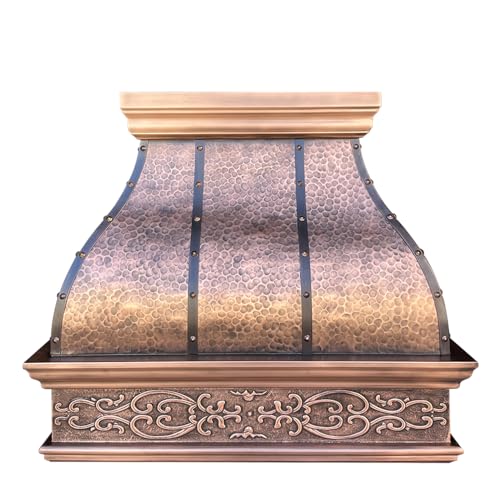
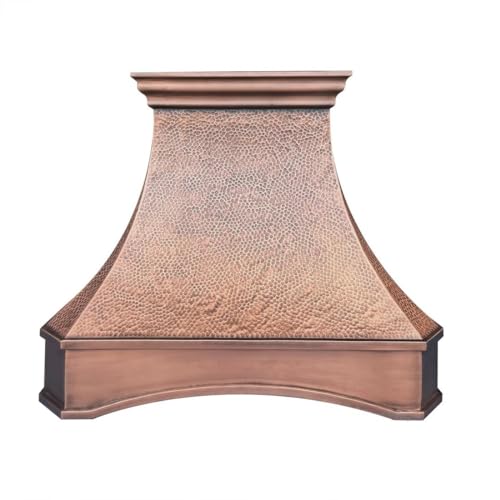
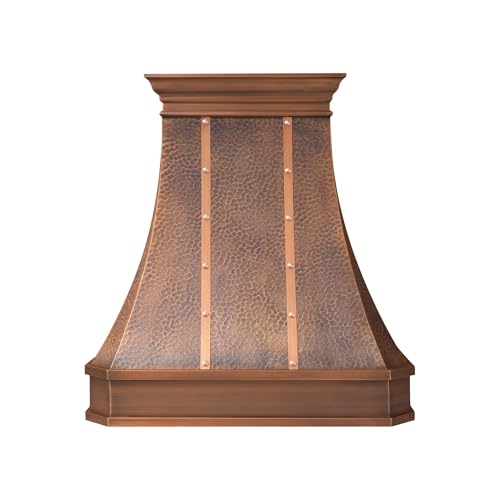
Copper hoods are most common as wall-mount range hoods, since a single finished front and two sides keep fabrication costs down while still showing off the hammered texture. If your range sits against a wall, this style gives you the most design options, from straight-sided box shapes to curved, barrel-front silhouettes.
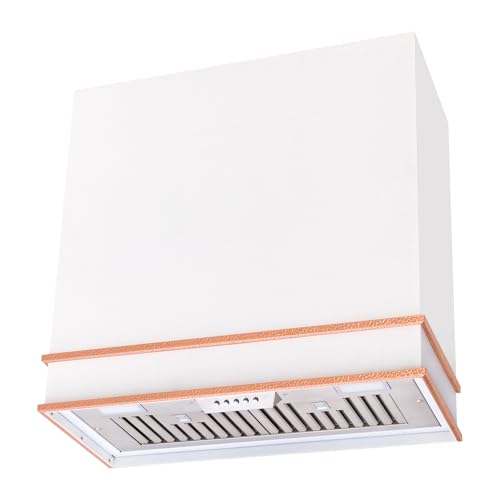
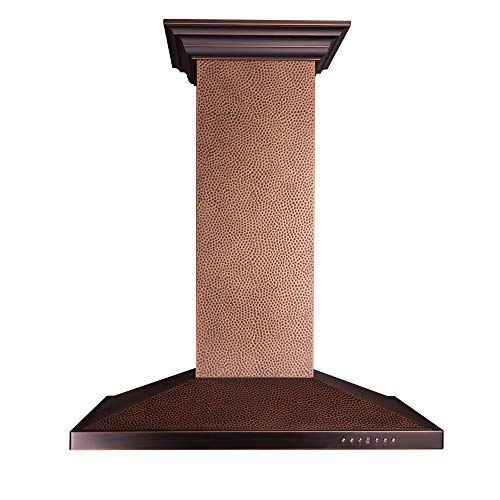
Island hoods are built to be finished on all four sides because they hang in open space with no wall behind them. They tend to cost more to fabricate and ship, but they also become the centerpiece of the kitchen since every angle is visible. Under-cabinet copper hoods are less common, mostly because copper's thickness and weight suit a standalone canopy better than a slim insert, but a few makers offer them for smaller kitchens that need copper's look without a full custom canopy.
Living Patina or Lacquered Finish: How Your Hood Will Age
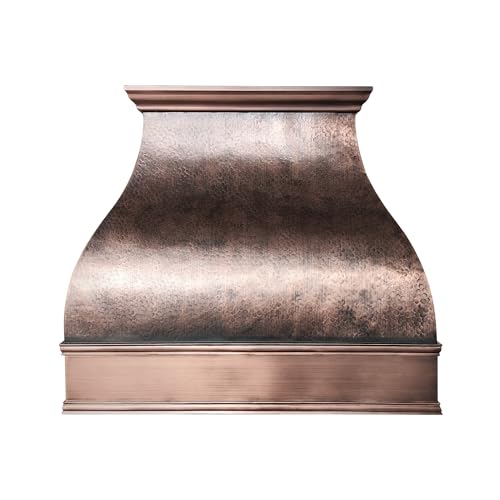
This is the decision that shapes how your hood looks five years from now, and it's worth more attention than most buyers give it. A living finish is bare copper left unsealed. It darkens gradually as it reacts with air, heat, and moisture, moving from bright orange-pink toward warm brown and eventually deep coffee tones. Every hood ages differently depending on how often you cook and how much steam and oil hit the surface, which is part of the appeal for people who want a piece that visibly earns its character.
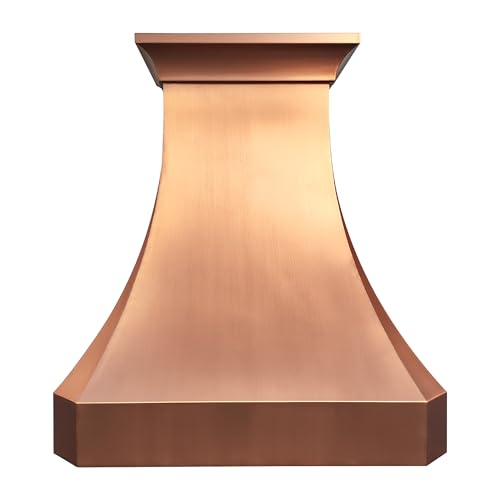
This finish decision is often what separates the best copper range hoods that still look sharp years later from ones that turn patchy and tired. A lacquered finish uses a clear, heat-cured coating to lock the copper at whatever color it was when it left the shop, whether that's bright and polished or a pre-aged antique tone. It's far easier to keep looking consistent since mild soap and water handle routine cleaning, but the coating can chip or cloud over time near heavy heat exposure, and once damaged it's difficult to touch up invisibly. Hammered and textured surfaces hide fingerprints and early oxidation better than smooth copper, which is worth considering if low maintenance matters more to you than a mirror-like finish.
Ducted vs. Ductless Venting for a Copper Hood
A ducted copper hood pulls air through interior ductwork and pushes it outside, which removes heat, grease, and moisture from the kitchen entirely rather than just filtering and recirculating it. This is the setup most copper hood makers recommend, since the metal handles sustained heat and steam better with active exhaust behind it. Ducted installation usually means cutting into a wall or ceiling and running ductwork to an exterior vent, so hiring a licensed contractor is the safer route unless you already have compatible ducting in place.
A ductless range hood setup instead pulls air through charcoal or grease filters and recirculates it back into the room. It's simpler to install since there's no exterior venting required, which makes it an option for apartments, condos, or kitchens where running new ductwork isn't practical. The tradeoff is weaker odor and moisture control, so it's worth checking whether your kitchen layout can realistically support a vented setup before settling for recirculation.
Real Copper vs. Copper-Look Materials
Not everything marketed as copper is solid copper. Some budget hoods use copper-laminate panels, powder-coated steel, or copper-tone finishes over a different base metal to mimic the look at a lower cost. These can be reasonable choices for tight budgets, but they won't develop a true living patina, won't hold up to direct heat the same way, and typically dent more easily than solid copper sheet.
When you're comparing the best copper range hoods, check the gauge or thickness of the copper being used, since thin material is more prone to warping near heat sources and denting during shipping or installation. Hammered copper, made by hand-tooling the surface with a mallet, also hides minor dents and fingerprints better than a smooth, machine-finished panel, which is one reason it stays popular for hoods mounted directly above an active cooktop.
Frequently Asked Questions
Do copper range hoods need special cleaning products?
No harsh chemicals are needed. Mild dish soap and warm water handle routine grease and dust on both living and lacquered finishes. Avoid abrasive scrubbers or acidic cleaners, which can strip lacquer or create uneven bright spots on bare copper.
Will a copper hood turn green like an old penny or statue?
Indoor copper rarely reaches that stage. The deep green patina you see on outdoor copper takes years of direct weather exposure, while an indoor kitchen hood typically shifts through browns and ambers instead, since it isn't exposed to rain or extreme humidity.
How loud is a copper range hood at full power?
Noise depends on the blower, not the copper shell itself. A well-built unit at moderate speed runs around 40 to 60 decibels, similar to normal conversation, though higher CFM settings on any hood will run louder regardless of the exterior finish.
Can a copper hood go over an induction cooktop?
Yes. Induction ranges produce less ambient heat than gas, so a copper hood mounted at standard height is generally fine. You can typically use a lower CFM rating than you would need over an equivalent gas range.
Does the patina rub off onto pots or countertops?
Normal handling won't transfer patina, since it's a surface oxidation layer, not loose paint or coating. Aggressive scrubbing with steel wool or harsh chemicals is really the only thing that would remove it unevenly.
Are copper hoods heavier than stainless steel hoods of the same size?
Generally yes, since copper sheet is denser than stainless steel of comparable thickness. This makes confirming your cabinetry or wall studs can support the weight an important step before installation, especially for larger island hoods.
Can I switch a hood from lacquered back to a living finish later?
It's possible but labor-intensive. A professional can strip the lacquer coating to expose bare copper underneath, after which it will begin developing a natural patina again, though the process is best handled by someone experienced with copper refinishing.
Living With a Copper Hood Day to Day
A copper hood rewards a little patience. The finish you choose today sets the maintenance routine you'll follow for years, so weigh how much the look changing over time appeals to you against how much consistency you want from week to week. Once sizing, venting, and finish are settled, the rest comes down to picking a silhouette that fits how your kitchen is used and shared.