Best Compact Speakers for Turntable of 2026: Complete Buying Guide
Disclosure: We may earn a commission when you buy through links on this page, at no extra cost to you. As an Amazon Associate I earn from qualifying purchases. Learn more
Learn how to choose the best compact speakers for turntable setups, with clear guidance on phono stages, powered designs, inputs, placement, and sizing.
A turntable setup fails in predictable ways. The speakers are passive but nothing powers them, the phono signal arrives too quiet and thin, or the speakers sit on the same shelf and feed vibration back into the needle. Small rooms make every one of these problems more likely, because gear ends up crowded together.
This guide walks you through choosing the best compact speakers for turntable listening without those headaches. You will sort out phono stages, powered and passive designs, connection types, and placement rules that protect sound quality. Start with the comparison table below, then use the buying guide here to check compatibility before you spend anything.


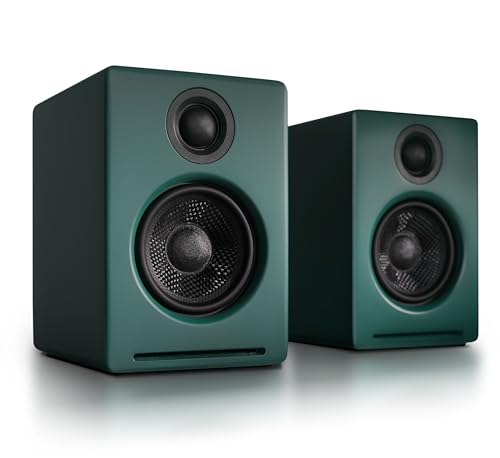


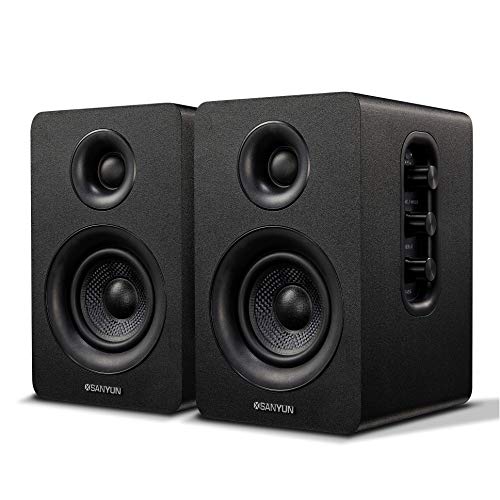
Three Price Tiers at a Glance
Price tiers describe what a budget generally delivers in this category. Use them to set expectations, then judge individual options by the inputs and power figures that match your turntable.
Premium Tier
The premium tier, often about $300 to $600 per pair, suits listeners who play records daily. Expect powered speakers with a built in phono stage or a clean line input for your own preamp, solid cabinets that resist vibration, and enough power for full sound at moderate volume in a small to medium room. A remote control and tone controls are common at this level. The compromise is size, since better cabinets and amplifiers need room. Choose this tier if vinyl is your main source and you want one tidy system with no separate receiver.
Midrange Tier
The midrange tier, often about $150 to $300 per pair, covers most first and second systems well. Powered models in this range usually offer RCA inputs, Bluetooth for casual streaming, and simple volume and tone knobs. You give up some low bass reach and cabinet stiffness, so placement on isolation pads matters more. The compromise is headroom during loud passages. Choose this tier if your turntable already has a built in preamp and your room is small, because a modest powered pair will sound balanced without extra boxes or cables.
Entry Tier
The beginner tier, often under $150 per pair, focuses on easy setup. Look for powered speakers that accept the line level output of a turntable with a switchable preamp, clear labeling on the back panel, and cables included in the box. Sound will be light in the bass and best enjoyed near the desk or shelf where you sit. The compromise is upgrade flexibility. Choose this tier to get playing quickly and cheaply, knowing you can later add a separate preamp or move the speakers to a bedroom when you upgrade. For complete matched setups, see our guide to the best turntable and speakers combinations.
How to Choose the Best Compact Speakers: Buying Guide
This is the section to read twice. Most returns in this category come from a compatibility miss, not from bad sound, so work through each check against the manual of the turntable you already own.
Features That Matter for Turntable
A turntable signal needs a phono stage that applies RIAA equalization and raises the tiny cartridge output to line level. That stage can live in the turntable, in the speakers, or in a separate box, but it must exist exactly once in the chain. Two stages in series sound bloated and distorted, while none sounds thin and quiet. When you shop for the best compact speakers for turntable use, confirm which input expects phono and which expects line, and check for a ground terminal if your turntable has a ground wire, since a missing ground is a common source of hum.
Measuring for Size and Portability
Measure your shelf depth with the turntable lid open, because the lid arc steals inches people forget. Leave space behind each speaker for cables and, on rear ported designs, at least a few inches of breathing room. Note the combined weight if the shelf is a wall mounted board with a load limit. A cardboard mock up at the true cabinet size helps you check sight lines to the record surface. Compact should mean the system fits with working room around the tonearm, not that every box is squeezed edge to edge.
Sound Quality and Tuning
Records reward a smooth, honest midrange, because vocals and acoustic instruments live there. Driver size around 3.5 to 5 inches suits compact cabinets, with a subwoofer output a welcome extra if you crave deeper bass later. Frequency response claims mean little without a tolerance, so favor brands that publish one. Slightly warm tuning flatters older pressings, while a very bright tuning exposes surface noise and sibilance. If a powered speaker offers tone controls, small cuts to treble can calm a lively room without dulling the music.
Placement, Fit, and Weight
Placement is the fit issue that matters for vinyl. Never rest speakers on the same surface as the turntable if you can avoid it, because bass energy travels into the plinth and the stylus reads it as rumble or, at volume, feedback. Separate stands or a different piece of furniture solves most cases. Angle the speakers toward your seat so the tweeters point near ear level, and keep distances to the back wall similar on both sides. Heavier cabinets generally vibrate less, which is another reason a solid cabinet beats a feather light one here.
Ecosystem and App Features
Many powered speakers now add Bluetooth, optical input for a TV, and simple app or remote control. These extras are useful when the record system shares a room with everything else. Bluetooth with multipoint lets a phone and a laptop stay connected for streaming between records. Firmware updates through an app can fix standby and pairing bugs, so check that the maker still supports the platform. Keep perspective, though. For a turntable first system, input quality and a quiet phono stage matter far more than streaming features you may rarely open.
Inputs, Controls, and Everyday Use
Daily convenience decides whether a system gets used. A front or remote volume control beats reaching behind a speaker every time you flip a side. Look for an input selector you can read from your seat, a headphone output if you listen late, and an auto standby that does not cut power during quiet passages. Analog RCA remains the core connection for turntables, while optical and USB serve digital sources. Clear labeling sounds trivial until you are reconnecting cables by feel behind a crowded shelf, so judge the back panel photo as carefully as the front.
If you prefer the amplifier inside the speakers, our guide to the best active speakers for turntable explains that route in depth, while the broader best compact speakers category helps if your listening is mostly digital.
Types of Compact Speakers
Wireless and Bluetooth Models
These powered speakers accept a wired turntable input and add Bluetooth for phones and laptops. They suit shared rooms where one pair serves records, streaming, and TV duty. The risk is paying for radios while the phono input stays basic, so confirm the analog path is a true priority in the design. Best for mixed listening in small spaces.
Wired Models
Wired models cover both powered speakers fed by RCA and passive speakers driven by an amplifier or receiver. They offer the most predictable vinyl sound, no pairing steps, and easy upgrades one part at a time. The cost is cable management and, for passive pairs, another box on the shelf. Best for dedicated listening corners where sound comes before flexibility.
Powered and Active Models
Powered speakers place the amplifier in one cabinet, while true active designs give each driver its own amplifier and an electronic crossover. Both remove the need for a receiver and keep a compact system simple. Sound tends to be clean and controlled at desk and shelf distances. The compromise is repair, since a failed amplifier can silence the pair. Best for buyers who want the fewest boxes and the fastest setup.
Passive Models
Passive speakers need a separate amplifier, ideally one with a phono input or paired with an external phono stage. They reward hobbyists who enjoy swapping parts and upgrading over time, and they often deliver the best cabinets at a given price because no electronics share the budget. The compromise is shelf space and total system cost once amplification is counted. Best for listeners building a long term system step by step.
Setup and Care Tips
- Set the phono switch once and verify it. Match the turntable, preamp, and speaker settings so the phono stage appears exactly once, then test with a familiar record at low volume.
- Isolate the speakers. Use foam pads or separate stands to stop bass vibration reaching the turntable and muddying quiet passages.
- Keep firmware updated on powered models with apps, and note your working settings before an update changes standby behavior.
- Clean connections yearly. Dust and oxidation on RCA plugs cause crackle that people often blame on the record itself.
- Avoid max volume for long sessions. Small amplifiers clip early, and clipping is harsh on tweeters as well as unpleasant to hear.
- Store spare cables neatly. A loose power brick cable pressing on an RCA lead is a quiet source of intermittent hum.
Listeners who stream as often as they spin may also compare the best compact bluetooth speakers for a portable second option, keeping the wired pair as the main vinyl system.
Compact Speakers: Your Questions Answered
What features matter most in compact speakers for turntable?
A correct phono stage, low noise inputs, and cabinets that resist vibration matter most. After that, look for a subwoofer output and tone controls suited to your room. One overlooked feature is standby behavior. Some powered speakers hiss faintly at idle, which you will hear during quiet vinyl passages in a small room, so a low noise specification is worth real money in this category.
How long does the battery last in compact speakers for turntable?
Most speakers in this category have no battery, because they are powered designs that plug into the wall for stable amplifier power. That is a benefit for vinyl, since sessions are planned and an outlet is always near a turntable. Portable Bluetooth speakers with batteries last about 10 to 20 hours, but few offer a proper phono input. Treat battery models as casual second speakers, not as the heart of a record system.
Wired or wireless: which sounds better for turntable speakers?
Wired sounds better and simpler for turntables, because the record signal is analog from the start and a short RCA run keeps noise low. Wireless links are for your phone and laptop in this setup, not for the vinyl path. Running a turntable through extra conversion adds delay and noise risk with no benefit. Keep the record chain wired and short, and enjoy wireless for the digital sources that were born for it.
What IP rating do I need for outdoor use of turntable speakers?
You do not need an IP rating, because turntables and records belong indoors away from rain, dust, and sun. Heat and humidity warp records and stress cartridges, so an outdoor vinyl setup is a poor idea at any speaker rating. If you want music on the patio, stream to a separate rugged speaker and keep the record system inside. This split protects your collection and gives each space a speaker designed for it.
Is ANC worth the extra cost in turntable speakers?
No, because room speakers do not use ANC the way headphones do, and vinyl listening assumes a reasonably quiet room. Money spent chasing noise cancelling claims is better spent on a quieter phono stage or a better cartridge later. If street noise intrudes, heavy curtains and door seals improve every source at once. Save the ANC budget for headphones you use on the train or in a shared office.
The Bottom Line
Get the phono stage right, keep vibration away from the turntable, and choose a cabinet size your shelf can hold with working room to spare. Those three calls decide whether a compact vinyl system sounds calm and full or thin and fussy. With them settled, the best compact speakers for turntable listening in your room is the pair whose inputs match your gear today and whose sound you can enjoy for a whole side without fatigue. Compare your finalists in the product table above and check the back panel details one last time before you order.