Best Commercial Refrigerators: Reach In, Undercounter and Combo Units for 2026
Disclosure: We may earn a commission when you buy through links on this page, at no extra cost to you. As an Amazon Associate I earn from qualifying purchases. Learn more

The best commercial refrigerators match your stock, door traffic and floor space. Compare reach in, undercounter and combo units by capacity and running cost.
A commercial refrigerator holds the stock that keeps a kitchen, bar or shop open, so the best commercial refrigerators are chosen for steady cooling, usable space and easy cleaning, not for a long feature list. A prep kitchen that opens its doors all day needs a very different unit from a break room that chills drinks.
This guide explains the main types, how to judge capacity and what to check about temperature, power and care. The product table above lines up models to compare once you know the type and size you need.



Types of Commercial Refrigerators
Reach in refrigerators
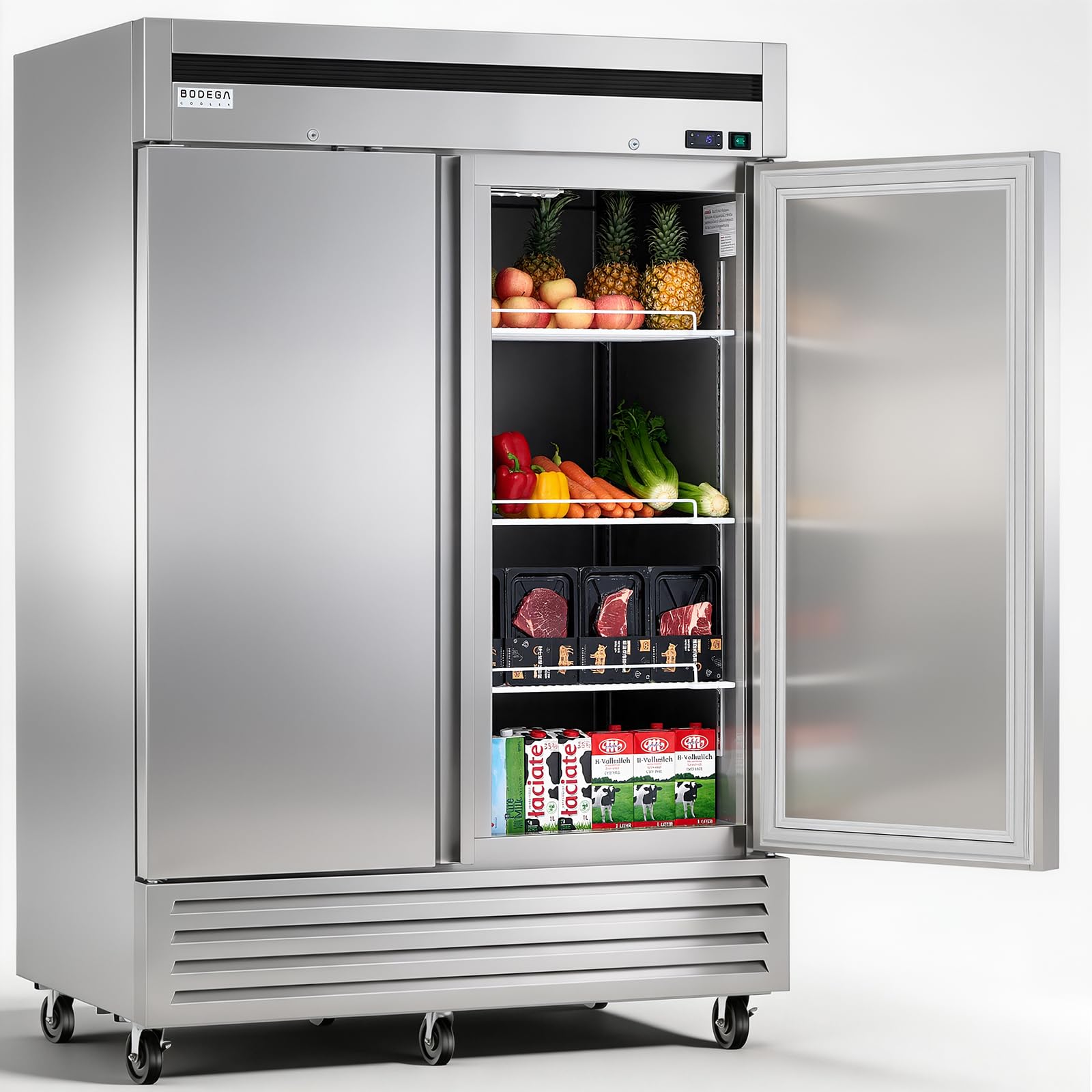
Reach in units are tall cabinets with one, two or three doors, and they are the standard choice for restaurant kitchens. Solid doors hold temperature better and cost less to run, while glass doors let staff and customers see stock without opening them. Choose the number of doors by the volume of food you rotate each day.
Refrigerator and freezer combos
Combo units place a refrigerated section and a freezer section in one footprint, usually side by side. They suit kitchens that need both but have limited floor space. Check that each section has its own temperature control, and that the freezer is big enough for real stock rather than a token compartment.
Undercounter and prep table units
Undercounter refrigerators fit below a worktop and keep ingredients within reach, which suits bars, sandwich stations and small kitchens. Our guide to the best undercounter refrigerators covers compact cabinets. Prep tables add a refrigerated rail for cut ingredients on top of a cold base.
Beverage and display coolers
Glass door merchandisers show drinks and packaged food to customers. See the best beverage refrigerators and the best beer refrigerators if drinks are your main stock.
How to Size Commercial Refrigerators
Count what you store on a busy day: food pans, produce crates, drink cases and bulk containers. Then pick a cabinet with room for that load plus some air space. Cold air must circulate between items, so a cabinet packed solid cools unevenly and makes the compressor work harder, while a half empty giant wastes energy and floor space.
Check the shelf spacing against your largest containers, and look at how many shelves come with the unit. Measure the doorway, the delivery path and the spot where the cabinet will stand, including the space for the doors to swing.
Temperature, Cooling and Food Safety
Steady temperature matters more than a very low headline number. Refrigerated food should be held at or below the safe holding temperature set by your local health rules, and freezers should hold frozen food solid. A digital controller with a clear display makes drift easy to see, and a separate thermometer inside the cabinet is a cheap backup. Ask how fast the unit recovers after the doors open, since recovery speed matters in a working kitchen.
Top mounted compressors often keep cold air near the food and warm air away, while bottom mounted units can pull in less kitchen heat. Choose a design suited to your room, and keep the vents clear.
Power, Placement and Ventilation
Before you compare the best commercial refrigerators on price, confirm what your kitchen can supply. Most commercial refrigerators need a dedicated outlet, and some larger combos need a higher capacity circuit. Leave the space the maker lists around the cabinet so the compressor can shed heat, and never put a unit in a place hotter or colder than its rated range. Our guide to the best garage refrigerators explains why temperature range matters for unheated spaces.
Cleaning and Care
The best commercial refrigerators still need regular attention. Vacuum the condenser coils every few months, more often in a dusty or greasy kitchen. Wipe door gaskets clean and replace any that no longer seal, and defrost or clean evaporator areas as the manual directs. Do not prop doors open during prep, and store food off the floor of the cabinet so air can move. These habits keep energy use down and extend compressor life.
Budget Bands
Undercounter and single door reach in units often cost from a few hundred to a couple of thousand dollars, while two and three door reach in units and refrigerator freezer combos cost more. Compare annual energy use in kilowatt hours, warranty length and the availability of service, not just the purchase price. For general guidance on well reviewed cabinets, see our guide to the best recommended refrigerators.
Common Mistakes When Buying Commercial Refrigerators
- Choosing on price alone, then finding weak cooling, thin insulation or a short warranty.
- Overfilling the cabinet, which blocks airflow and causes warm spots.
- Forgetting to measure door swing, delivery access and ventilation gaps.
- Putting a unit in a hot or unheated room outside its rated range.
- Ignoring service access, so a breakdown leaves stock warming while you wait for a technician.
Frequently Asked Questions
What size commercial refrigerator do I need?
List the food pans, crates and drinks you store on a busy day, then add space for airflow. A single door unit suits a small cafe, while a busy kitchen often needs a two or three door reach in or a combo.
Solid door or glass door?
Solid doors insulate better and cost less to run, so they suit back of house storage. Glass doors help customers and staff see stock, which suits drinks and grab and go items, at the cost of slightly higher energy use.
How long does a commercial refrigerator last?
A well kept unit can last many years. Clean coils, healthy gaskets, steady loading and a room within the rated temperature range extend life, while neglected coils and constant door openings shorten it.
How much electricity does a commercial refrigerator use?
It depends on size, insulation, room temperature and door openings. Compare the annual kilowatt hour figure on the rating label, keep the coils clean and use tight door seals to keep the cost down.
Can I put a commercial refrigerator in a garage?
Only if the maker rates it for that temperature range. Many cabinets are designed for normal indoor temperatures, and freezing winters or hot summers can upset cooling and void the warranty.
Final Thoughts
Start with your busiest day, your floor space and the items you reach for most, then match type and size to them. Use the product table above to compare models, and check energy use, warranty and door clearance before you order. With those points settled, the best commercial refrigerators keep stock safe and your team working without interruptions.