Best Commercial Ranges in 2026: Everything to Know Before Your First Purchase
Disclosure: We may earn a commission when you buy through links on this page, at no extra cost to you. As an Amazon Associate I earn from qualifying purchases. Learn more

Shopping for the best commercial ranges for the first time? Learn the key terms, fuel types, sizing, and setup basics before you buy with confidence.
Buying your first commercial range is a big step, and the specification sheets can look like a foreign language if you have only cooked on home equipment. This guide walks you from the plain basics to a confident decision, so you can compare the best commercial ranges for your kitchen without guessing at terms or paying for capacity you will never use.
You will learn how fuel types differ, what installation really involves, and which sizes fit real commercial kitchens. Use the comparison table below to see how the main types stack up side by side before you read the details.




Commercial Ranges 101: The Basics
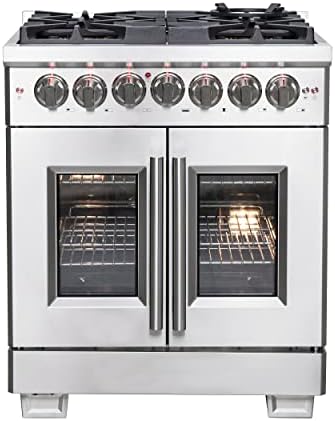
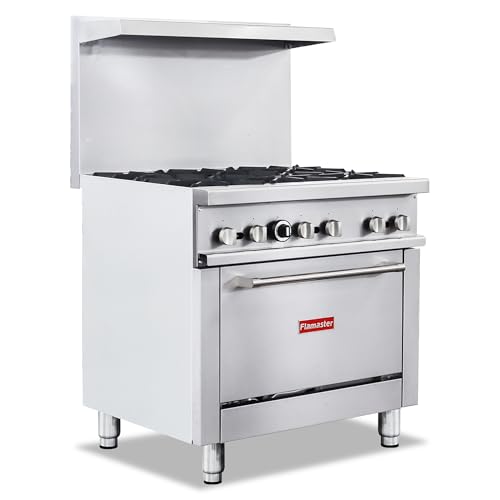
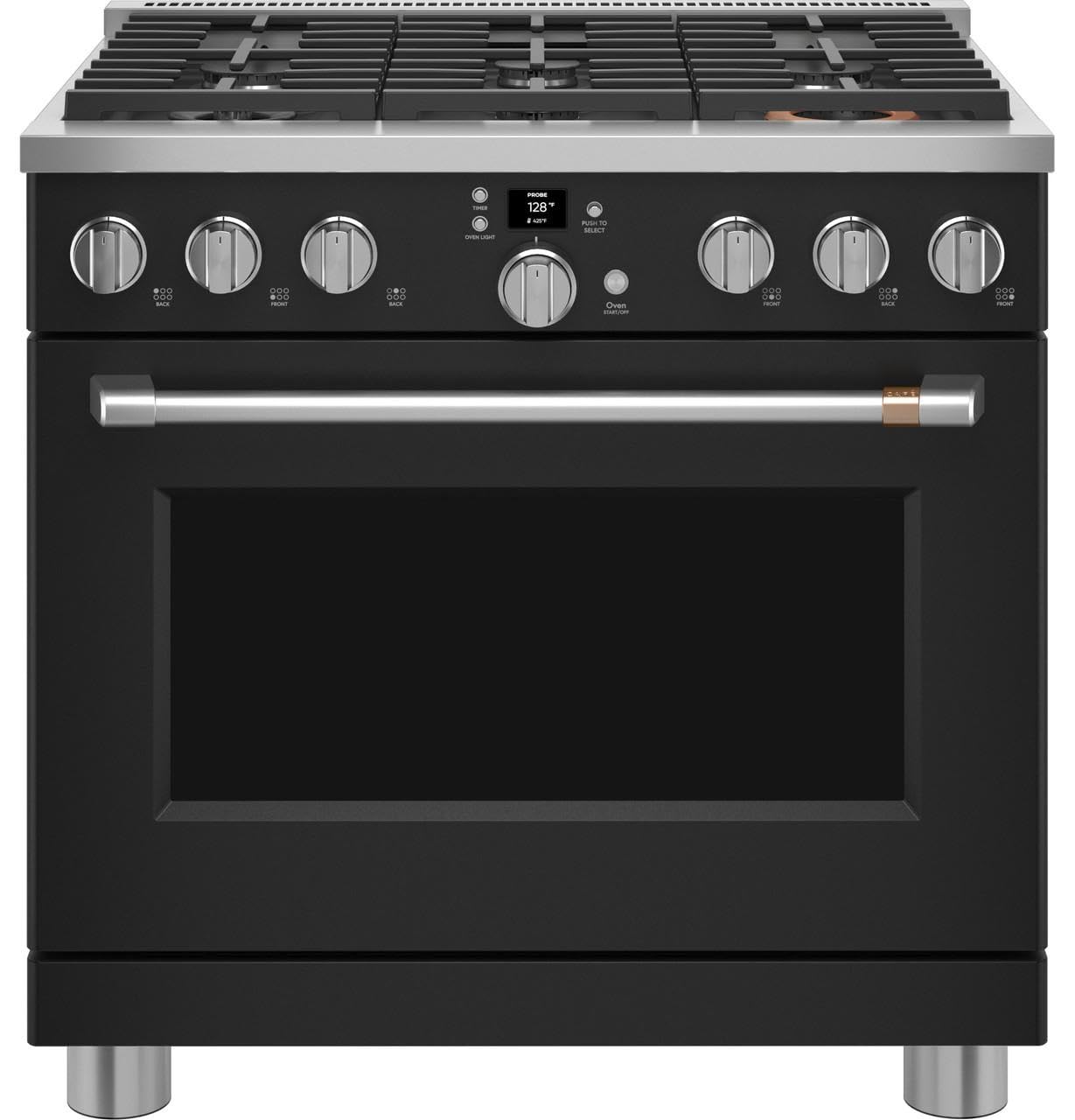
A commercial range is a heavy duty cooking station built for hours of daily service, combining a row of open burners or a flat top on the surface with one or more ovens below. Unlike a home range, it is built from thicker steel, uses larger burners, and is designed to be repaired part by part instead of replaced. Most models are freestanding units that roll into a cooking line next to fryers and griddles.
Three terms unlock most listings. BTU measures burner heat output, and commercial burners commonly run far hotter than home burners. A simmer burner is a low output burner that holds gentle heat for sauces without scorching. Convection means a fan moves hot air inside the oven, which cooks food more evenly and often a little faster than a standard oven.
If you are also comparing the oven side on its own, our guide to the best range ovens explains oven cavity types in more depth.
Key Specs Explained in Plain English
Work through these six points in order and you will understand nearly every listing you meet.
Fuel Type: Gas, Electric, Induction, or Dual Fuel
Gas gives instant flame changes and works with any pan, which is why most professional kitchens choose it. Electric elements heat evenly and are simpler to install where no gas line exists. Induction uses magnetic energy to heat the pan itself, so the surface stays cooler and response is fast, but your cookware must be magnetic.
Dual fuel pairs a gas cooktop with an electric oven for steady baking. If gas is your direction, see our guide to the best commercial gas ranges for burner layouts and grate styles.
Installation, Electrical, and Gas Requirements
Installation is the step first time buyers underestimate most. A gas range needs a properly sized gas line, a shutoff valve, and ventilation that meets local commercial kitchen codes, while a full size electric model may need a dedicated high capacity circuit. Have a qualified installer handle every gas connection and the ventilation hood, and never use a range with a damaged gas connection, a cracked fitting, or a gas smell you cannot explain. Many gas models can be converted to LP (liquid propane) with a kit, but the conversion belongs to the installer, not the kitchen staff.
Self Cleaning and Steam Clean
True self cleaning cycles, often called pyrolytic, burn residue to ash at very high heat over several hours and can produce strong smells while they run. Steam clean cycles are gentler and faster, using water to loosen light soil so you can wipe the cavity out by hand. Busy kitchens usually care more about removable parts and smooth interior surfaces than about either cycle. Whichever style you choose, plan a weekly wipe down routine, because baked on grease gets harder to remove every day you leave it.
Cooktop Surface Material
Open burner models use heavy cast iron grates that support large stockpots and spread heat under the pan. A glass ceramic surface, common on electric and induction models, wipes clean quickly but needs care around the edges to avoid chips. Some ranges swap part of the burner row for a flat steel griddle plate, which suits breakfast service and sandwiches.
Think about what you cook most, because the surface you pick decides your daily cleaning routine. Our overview of the best ovens and ranges shows how surface choices pair with different oven setups.
Controls and Smart Features
Commercial controls stay simple on purpose. Sturdy metal knobs survive greasy hands and heavy gloves better than touch panels, and they can be adjusted without looking down during a rush. A few newer models add extras such as an air fry mode in the oven or WiFi alerts when a timer ends.
Treat those as pleasant bonuses rather than reasons to buy. What matters more is clear temperature markings, knobs that turn smoothly, and an oven thermostat that holds its setting through a full service.
Size and Cutout Dimensions
Commercial ranges are sold by width, most often 36 inch, 48 inch, and 60 inch models, with burner counts rising as width grows. Measure your cooking line space, your doorway widths, and the turning room in hallways before you order, because a 60 inch range that cannot get through the door helps nobody. Freestanding commercial units stand on adjustable legs and do not need the fitted cutout that a home slide in model requires. Leave the clearance around the unit that the maker specifies, especially next to fryers.
Rookie Mistakes to Avoid
- Buying width before checking the gas line. A larger range may need a bigger gas supply than your kitchen has, and upgrading the line costs real money.
- Ignoring ventilation. A powerful range under an undersized hood fills the kitchen with heat and smoke and can fail an inspection.
- Ordering before measuring doorways. Commercial units are deep and heavy, and a range that cannot enter the building cannot cook anything.
- Skipping the utility check. Confirm voltage, phase, and gas type on site instead of trusting an old listing or a landlord's memory.
- Choosing features over service. A range your local technician cannot get parts for will sit cold during your busiest week.
Getting Started: Setup and First Use
Once the installer has connected the range and confirmed it is level, wash the grates and oven racks in hot soapy water to remove factory oils. Run the empty oven at a moderate temperature for about an hour to burn off new appliance smells before food goes in. Use cookware that matches your cooktop: flat bottomed pans for electric and induction surfaces, and sturdy pans that sit stable on cast iron grates for gas.
During the first week, cook one familiar dish at a time so you learn how your burners behave at low settings. Wipe glass cooktops only after they cool fully, and sweep crumbs from around gas burner ports so flames stay even. Keep the maker's manual near the range until the whole team knows the shutoff valve location by heart.
Commercial Ranges: Your Questions Answered
Is induction better than gas for a commercial range?
Neither fuel wins for every kitchen. Induction responds fast, keeps the room cooler, and wipes clean in seconds, which suits small cafes and prep stations. Gas handles any pan, tolerates rough handling, and keeps working during a power outage as long as you can light it safely. Choose based on your menu, your utilities, and whether your existing cookware is magnetic, not on which technology sounds newer.
How long does a commercial range last?
A well kept commercial range often serves about 10 to 15 years in daily use. Burner valves, igniters, and oven thermostats are the parts that usually need service first, and all of them can be replaced without replacing the whole unit. Daily cleaning, prompt repairs, and keeping liquid out of the burner ports stretch that lifespan, while constant boil overs and ignored grease shorten it.
Is convection worth paying extra for in a commercial range oven?
Convection earns its cost if you bake, roast, or reheat in volume. The fan evens out hot spots, so full sheet pans cook more uniformly and trays need less rotating. If your oven mostly holds food warm or finishes the odd baked dish, a standard oven saves money you can put toward burner power instead. High volume bakeries feel the difference in the first week.
Do I need a special outlet for an electric commercial range?
Most full size electric commercial ranges cannot run on a standard wall outlet. They need a dedicated circuit sized to the unit, and some larger models use three phase power that many buildings do not have in the kitchen. Ask an electrician to confirm your panel capacity before you order. Choosing gas instead avoids the electrical upgrade in many older buildings.
What size commercial range do I need for my kitchen?
Match the width to your menu and your peak rush, not to the empty wall space. A 36 inch range with six burners handles most small cafes and food trucks with fixed menus. Kitchens cooking several dishes at once during a rush usually step up to 48 or 60 inch models with a griddle section. Count the pans you run at your busiest moment, then buy for that number plus one spare burner.
Wrapping Up
For a first purchase of the best commercial ranges, three checks matter most: the fuel your building can support, the width your busiest service truly needs, and installation handled by a qualified installer who knows local codes. Get those right and the best commercial ranges on your shortlist will serve through years of daily cooking. Compare your finalists against the product table above, confirm your utilities one last time, and order with confidence.