Best Beverage Refrigerators in 2026: What Actually Matters Before You Buy
Disclosure: We may earn a commission when you buy through links on this page, at no extra cost to you. As an Amazon Associate I earn from qualifying purchases. Learn more

Compare the best beverage refrigerators by shelf layout, steady temperature, placement, noise and door style before you buy a drink fridge for home use.
A beverage refrigerator looks simple from the outside: a small box that keeps drinks cold. The differences that matter show up after delivery, when tall bottles collide with fixed shelves, the temperature wanders every time the door opens, or the compressor hums through a quiet room. Shoppers comparing the best beverage refrigerators do better when they judge the box by how it holds a mixed load, not by the can count printed on the carton.
This guide follows a what matters order: layout and real capacity first, then temperature control, placement, noise and the glass door. The product table lists picks to compare, and the sections below explain what each difference means in daily use for a household that stores cans, bottles, juice and mixers together.





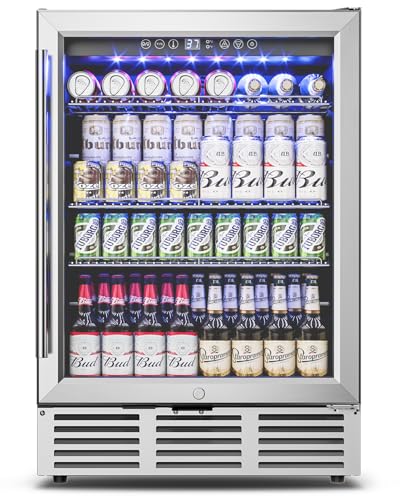
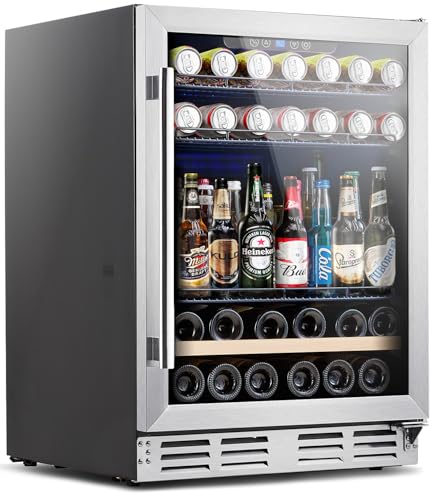
What Actually Matters Before You Buy
Real Capacity: Shelves and Layout Beat the Printed Can Count
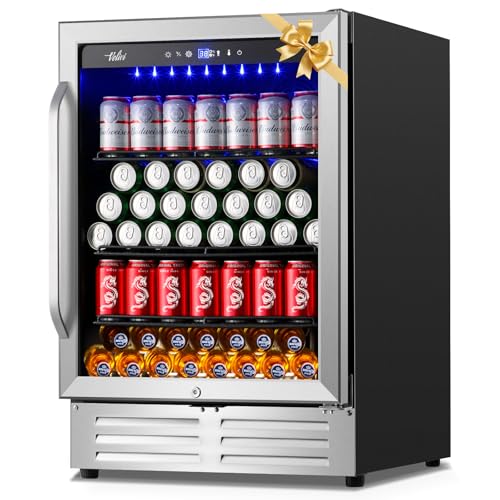
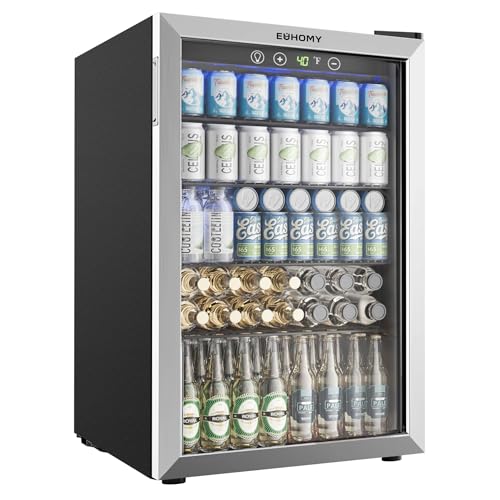
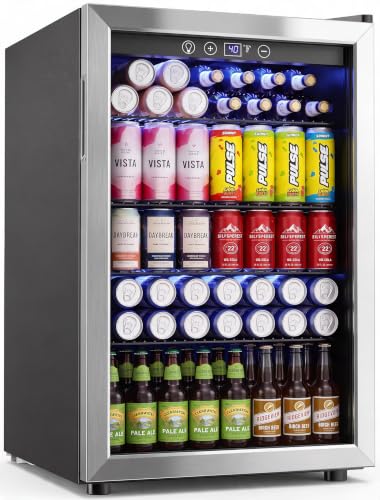
The can count on the box assumes a load of nothing but standard cans stacked in a perfect grid. A mixed drinks household stores tall bottles, juice cartons, mixer bottles and cans of several heights, and that load fits only where shelf spacing allows it. Shelves that slide out and reset at several heights decide real capacity far more than the headline number, because one shelf moved up can free a whole row for bottles.
Before you buy, count your tallest regular bottle and check that at least one shelf setting clears it with room to spare. A slightly smaller unit with flexible shelving often holds more of what you actually drink than a larger unit with fixed racks.
Temperature Steadiness and a Set Point That Stays Put
Drinks taste best cold and consistent, and the weak point of many small units is swing rather than raw cold. A compressor that cycles hard lets the cabinet warm between runs, so the can at the back feels colder than the bottle near the door. Look for a control you set in degrees rather than a vague dial of numbered levels, because a numbered setting cannot be checked or repeated.
A control that locks, or at least resists casual bumps, matters in homes where children help themselves and settings drift. Units that recover quickly after the door has stood open during a party restock are worth more than units that merely reach a low number once in an empty cabinet.
Placement Comes Before Purchase
Where the unit will live decides which class you should buy, so settle the spot before you settle the model class. A freestanding unit moves its heat out through the sides and back, and it needs open air on those sides to do it. Push that same unit into a tight cabinet hole and it will run hot, run loud and wear out early, because the heat has nowhere to go.
Measure the space with the door swing included, and think about the path the door takes when someone carries a tray past it. Placement is the one decision you cannot fix later with an accessory.
Best Undercounter Beverage Refrigerators
Built in undercounter units solve the venting problem by moving heat out through a grille at the front, at floor level. That front venting is the built in requirement, stated plainly: a unit without it does not belong inside cabinetry, whatever the listing implies. Shoppers comparing dedicated cabinet models can also read our guide to the best undercounter refrigerators for the wider built in category.
Undercounter buyers should also check the door height against the countertop overhang and confirm the hinge side suits the kitchen run. Expect to pay more for this class, because the venting, the finished sides and the quieter compressors all cost money to build.
Noise You Can Live With at Living Distance
A beverage refrigerator rarely works alone in a workshop; it sits in a living room, a den or a bedroom corner, a few feet from where people talk and watch television. Compressor hum and fan noise that seem trivial in a store become the background of every quiet evening at home. Listings that state a decibel figure at least give you a comparison point, while listings that stay silent on noise deserve suspicion.
Inverter style compressors, where offered, tend to run at lower speeds for longer stretches instead of switching fully on and off. If the unit will share a room with sleep or study, treat noise as a first order spec, not a footnote.
The Glass Door: Light, Heat and What You Give Up
Most beverage refrigerators wear a glass door, and the glass is a trade rather than a pure upgrade. It lets you find a drink without opening the door, which saves cold air during parties, and it shows guests what is on offer. The costs are real: light through the glass can affect drinks that keep best in the dark, the glass conducts more heat than an insulated solid door, and interior lights add a small amount of warmth the compressor must remove.
Tinted or coated glass softens the light problem, and a lockable door helps where children or office traffic are a concern. Choose glass for display and quick choice; choose solid where efficiency and darkness matter more.
Types and Price Bands
The bands below describe what money buys inside each class. Compact freestanding units for a single room run about $150 to $300. Midrange units with better shelving, degree controls and quieter compressors run about $300 to $700.
Built in undercounter and dual zone classes run about $700 to $1,500 and up, with the premium paying for venting, finish and steadier temperature rather than more space. The table below compares the classes directly.
| Type | Typical capacity | Placement | Watch out for |
|---|---|---|---|
| Compact freestanding | About 1.5 to 3.5 cubic feet | Open floor or counter space with air around the sides | Fixed shelves and wide temperature swing |
| Undercounter built in | About 4.5 to 5.5 cubic feet | Inside a cabinet run, venting through the front | Higher price and exact width requirements |
| Dual zone | About 4 to 6 cubic feet split in two zones | Freestanding or built in, depending on the design | Each zone is smaller than the total suggests |
| Outdoor rated | About 3 to 5.5 cubic feet | Covered patios and outdoor kitchens | Costs more and still needs shelter from direct weather |
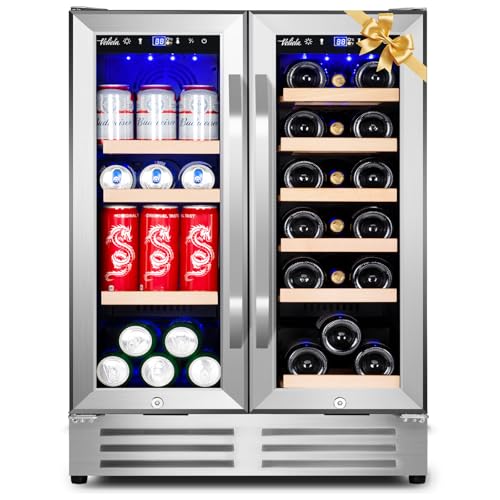
Dual zone designs deserve one extra note, because the split is the whole point of the class. Two zones let one household keep soda near freezing while wine rests a little warmer in the same cabinet. The trade is that neither zone holds as much as a single zone unit of the same outer size.
Who Should Buy Which Beverage Refrigerator?
The Mixed Drinks Household
If your fridge will hold cans, bottles, juice boxes and mixers for a family with different tastes, shelf flexibility is your deciding feature. Choose a single zone unit with several shelf positions and at least one shelf that removes completely for party loads. Capacity in the middle of the range suits most homes, because drinks turn over fast and a giant cabinet mostly stores air. Spend on the control and the shelving before you spend on lighting effects or door finishes.
The Wine Leaning Household
Wine stored for more than a few weeks asks for steadier, slightly warmer conditions than soda does, plus racks that cradle bottles instead of flat shelves. If wine becomes the main load rather than an occasional guest, read our guide to the best wine and beverage refrigerators for the dual zone detail this category deserves. A household with a handful of bottles alongside the juice can manage with one zone set a touch warmer. A growing collection cannot, and pretending otherwise is how good bottles get stored badly.
The Garage and Party Overflow Buyer
A second unit in the garage swallows party overflow and bulk buys that crowd the kitchen fridge. Garages swing hot and cold with the seasons, so look for a class rated for wide ambient temperature ranges, often sold as garage ready. Our guide to the best garage refrigerators covers full size options for the same job.
For a beverage unit, a solid door beats glass here, because insulation matters more than display where nobody is admiring the contents. Keep the unit out of direct sun and off bare concrete if the floor floods or sweats.
The Beer First Household
Some homes store one drink almost exclusively, and that load is simpler than the mixed case. Cans stack densely, bottles want upright rows, and temperature can sit at one cold setting without compromise. If that sounds like your household, a separate guide to the best beer refrigerators takes the can first view in full. Everyone else should resist beer fridge sizing logic, because a cabinet planned around cans alone will frustrate the first week a tall mixer bottle arrives.
Quick Buyer Checklist
- Have you measured your tallest regular bottle and found a shelf setting that clears it?
- Does the control set a temperature in degrees rather than numbered levels?
- Is your placement freestanding with air space, or built in with front venting?
- Have you measured the space including the full door swing?
- Does the listing state a noise figure you can compare?
- Do the shelves slide or reset at several heights?
- Does the door style suit the room: glass for display, solid for efficiency?
- Is the capacity based on your real mixed load, not the printed can count?
Red Flags to Watch For
- A capacity claim given only in cans, with no cubic feet figure and no shelf details.
- A temperature control described only as levels or a dial, with no degree range stated.
- A freestanding unit marketed with photos of it sealed inside cabinetry.
- No stated noise figure on a unit clearly aimed at living rooms and bedrooms.
- A warranty so short or so hedged that the compressor, the expensive part, is barely covered.
Care and Everyday Habits
Small refrigerators ask for little care, but the little matters. Keep the vents and the front grille clear of dust, and vacuum the condenser coils about twice a year so the compressor is not pushing against a blanket of lint. Level the unit on its feet so the door seals evenly and does not drift open.
Wipe the door gasket clean and check that a sheet of paper grips lightly when closed in the seal; a gasket that leaks warm air makes the compressor run and the temperature wander. Leave a small air gap behind and beside freestanding units every time you move them back into place.
Beverage Refrigerator Questions Answered
How long should a beverage refrigerator last?
A beverage refrigerator commonly serves about eight to twelve years before repair costs start to rival replacement. The parts that usually tire first are the door gasket, the fan and the thermostat controls rather than the compressor itself. Keeping coils clean and vents unblocked is the cheapest life extender you control. When a unit starts running almost constantly in a normal room, treat that as the beginning of the end and budget accordingly.
Can I put a beverage refrigerator in a cold garage?
Yes, but choose a class rated for it, because a cold garage creates the opposite problem from a hot one. When the air around the unit drops near the set temperature, a basic thermostat can stop calling for cooling and let the cabinet drift warmer than intended. Garage ready designs sense and handle that swing better.
In a hot garage the compressor simply works harder and uses more electricity. Either way, keep the unit shaded, level and clear of stored clutter that blocks airflow.
How much electricity does a beverage refrigerator use?
Most small beverage refrigerators use roughly 100 to 300 kilowatt hours per year, which at typical household rates costs a modest monthly sum rather than a major bill. The yellow energy guide label on the listing gives the maker estimate for that specific unit, so compare labels instead of guessing from size. Room temperature and door openings move real use more than the badge suggests. A unit in a hot garage will use noticeably more than the same unit in a cool kitchen.
What size beverage refrigerator does a mixed drinks household need?
Size for a party week, not an average week, because the average week fits almost anything. Count the drinks your household holds at its fullest regular moment, including a party or a bulk shop, then match that load to shelf layouts rather than can counts. Most mixed households land between about 3 and 5 cubic feet. Buying one step larger than the everyday load is sensible; buying two steps larger mostly pays to refrigerate empty air.
Can a beverage refrigerator store milk and food?
Only if the unit can hold a steady temperature at or below the level food safety requires, and many beverage units cannot. Plenty of drink fridges are tuned to bottom out around the high thirties in degrees, and their temperature swings more than a kitchen refrigerator does. Check the stated minimum temperature and the maker's description of intended use, and follow the manufacturer's instructions before trusting one with milk or leftovers. For drinks the swing is a taste issue; for food it is a safety issue, and the two should not be confused.
Final Thoughts
The pattern across this guide is simple: layout decides real capacity, a degree control decides steadiness, and placement decides which class you may buy at all. Noise and the glass door trade come after those three, and they matter most in quiet living spaces. Households that keep those priorities in order tend to end up with the best beverage refrigerators for their actual drinks rather than the most impressive carton. Return to the product table with your tallest bottle, your measured space and your placement class in hand, and the right choice usually narrows itself.