The Best Beer Refrigerators: A Buying Guide for 2026
Disclosure: We may earn a commission when you buy through links on this page, at no extra cost to you. As an Amazon Associate I earn from qualifying purchases. Learn more
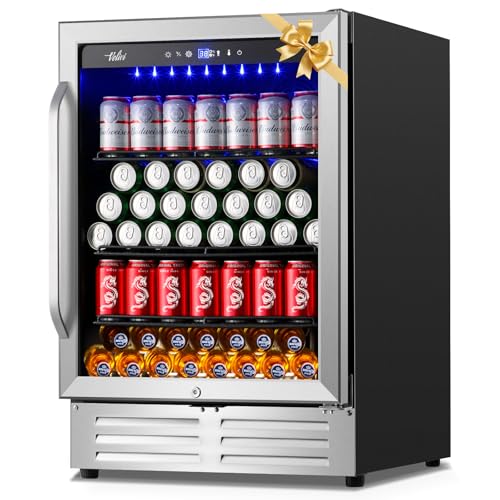
Choose the best beer refrigerators with honest guidance on can capacity, steady temperatures, keg options, garage placement and noise for your space.
A beer fridge has one job, and the main kitchen refrigerator does it badly: door shelves swing warm and cold, cans crowd out food, and the good bottles end up behind the leftovers. A dedicated unit keeps drinks at a steady temperature and frees the household fridge for groceries. Shoppers comparing the best beer refrigerators are really choosing among capacity claims, temperature habits and placement options, and those three checks decide most of the purchase.
This guide works through the classes first, then the checks that separate a good buy from a noisy box that never quite gets cold. It covers keg units as their own branch, garage placement as its own risk, and the running costs nobody mentions at checkout. The product table lines up options in the main classes so you can map the sections onto your space.



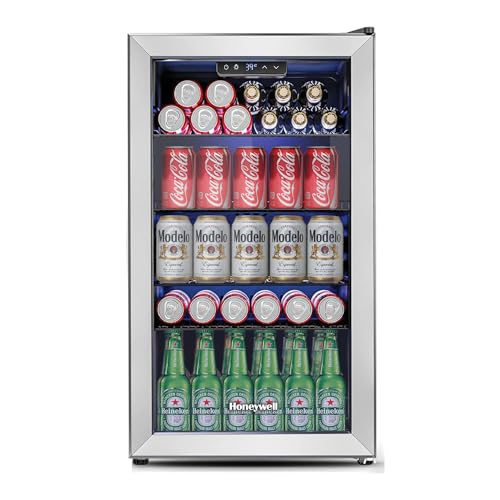

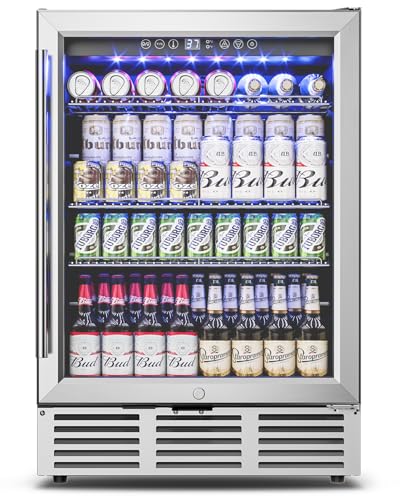


Types of Beer Refrigerators
A beer fridge is a beverage fridge tuned for cans and bottles, and the classes differ mostly in size, venting and how they are installed. Shoppers who also chill wine and mixers can compare the broader field of best beverage refrigerators, but if beer is the point, the four classes below cover the market.
Compact and Mini Classes
The smallest units sit on a counter, under a desk or beside a couch and hold roughly a case or two of drinks. They suit dorm rooms, offices and single drinkers who restock weekly rather than stocking up. The trade off is temperature muscle: the cheapest classes cool gently and work best in rooms that stay comfortable. Measure the shelf height against your tallest bottles before buying, because mini interiors forgive nothing.
Freestanding Beverage Centers
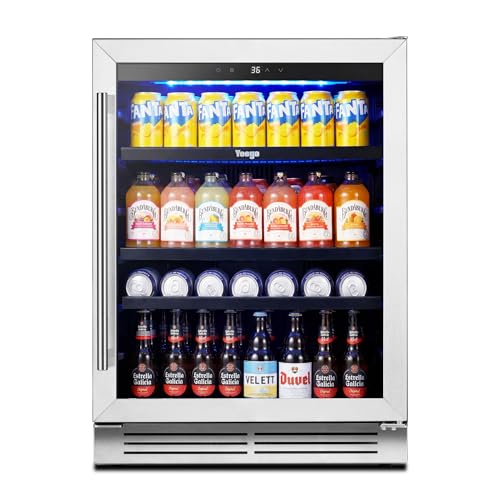
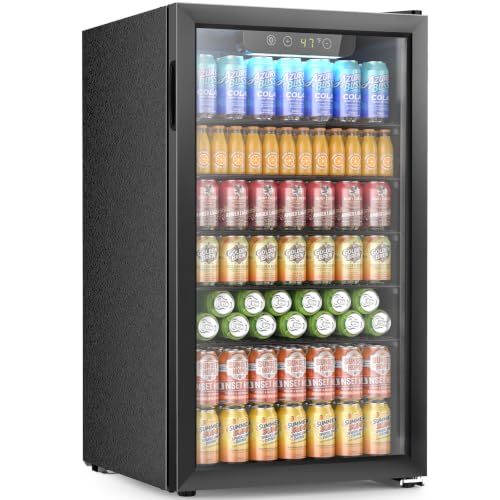
Freestanding centers are the mainstream choice, standing on the floor with adjustable shelves that swap between cans, bottles and tall variety packs. Most wear a glass door and a handle built for daily use, and their compressors handle warm rooms far better than the mini classes. They need air space around the cabinet to shed heat, so plan a gap rather than a tight squeeze. For most households, this class is the honest default.
Built In and Undercounter Classes
Built in units vent at the front, which lets them slide between cabinets or under a counter with almost no clearance. That engineering is why they cost more per cubic foot than freestanding models of the same size. They suit finished bars and kitchen remodels where a freestanding box would look and fit poorly. Readers planning a full built in run can compare best undercounter refrigerators for the wider field beyond beer focused models.
Keg Refrigerators: The Separate Branch
A keg refrigerator holds a keg and a tap tower instead of shelves, which makes it a different purchase in every way: couplers, a gas cylinder and line cleaning join the budget. It serves households that pour draft beer regularly and buy kegs often enough to finish them fresh. Occasional party buyers usually find cans and a beverage center cheaper and simpler. If the draft route is yours, compare the dedicated field in our guide to best beer keg refrigerators before pricing anything else.
How to Choose the Best Beer Refrigerators
Choosing among the best beer refrigerators comes down to six checks: honest capacity, steady temperature, door style, noise, dimensions and placement. Work through them in that order and most models eliminate themselves. The warranty and energy label close the decision at the end.
Capacity: Count Cans With Suspicion
Maker can counts assume one standard can size packed perfectly, which no household ever does. Bottles stand taller, tall cans stack worse, and a mixed variety pack wastes space that the headline number pretends is usable. Treat the printed count as a ceiling and expect a real mixed load to land well below it.
Adjustable shelves that move or remove entirely matter more than the number on the box. The honest method is to count your usual purchase, cases and bottle shapes included, and buy the class that swallows it with room to spare.
Temperature: Steady Beats Ice Cold
Beer stores and pours happily across a broad range, roughly the mid 30s to the mid 40s in degrees Fahrenheit, so the coldest setting is rarely the smartest one. What matters is steadiness: a fridge that holds its set point through a hot afternoon beats one that swings several degrees with every door opening. Digital controls with a visible display make that steadiness easy to confirm. One caution follows from the physics: the simplest cooling classes only drop a fixed amount below room temperature, so they struggle exactly where buyers love to put them, in warm garages and sunlit rooms.
Glass Doors, Solid Doors and Light
A glass door shows the stock at a glance and looks the part in a bar corner, which is why most beverage centers wear one. The honest costs are heat and light passing through the panel, making the compressor work a little harder. Better glass classes carry ultraviolet filtering, which is a genuine plus for bottles stored long term, though it is a help rather than a shield. Solid doors insulate better, hide a messy load and usually cost less. Choose glass for display in a lived in room and solid for storage in a working space.
Noise: What You Hear in the Room
A beer fridge cycles its compressor day and night, so its hum becomes part of the room. Inverter compressor classes run quieter and steadier than basic units, in general terms, because they vary speed instead of slamming on and off. Published decibel figures are measured differently by each brand, so they compare poorly across listings.
Placement is the reliable lever: near seating, a media room or a bedroom wall, quiet is worth paying for. In a garage or a busy kitchen, it barely matters at all.
Dimensions, Door Swing and Clearance
Measure three things before ordering: the space, the door swing and the route the box travels to reach its spot. A unit that fits the alcove can still fail on a hallway turn or a door that opens into a wall. Freestanding classes need the air gap their manuals state, usually a few inches at the back and sides.
Built in classes avoid that requirement with front venting, which is the real reason for their higher price. Write the numbers down and compare them against the listing, not against your memory of the space.
Placement: Kitchen, Bar Corner or Garage
Placement decides how hard the fridge works. A kitchen or bar corner keeps the unit in mild air where any class performs as promised. A garage swings from summer heat to winter cold, and that range stresses a small fridge twice: cooling power fades in deep heat, and in serious cold some classes stop cooling properly because their sensor reads the chilly room instead of the cabinet. Look for a stated wide ambient range, often sold as garage ready, if the unit will live out there. Buyers set on that plan can also compare best garage refrigerators built for those swings.
Energy Use and Warranty
A small fridge runs around the clock, so its yearly energy label figure, stated in kilowatt hours, is worth reading before price. Multiply that figure by your local electricity rate and you have the true yearly running cost to set against the sticker. Efficient classes earn their premium slowly but surely at that math.
For reliability, the compressor warranty is the signal that matters, since the compressor is the part whose failure ends the appliance. A longer compressor warranty at the same price is the better buy, every time.
Sizes and Mixes: Specific Needs
Best Small Beer Refrigerators
Small units win on footprint and lose on everything else, so buy them for the space, not the feature list. The checks that matter are shelf height for your tallest bottle, a door that seals fully at this size, and a compressor class if the room runs warm. Countertop placement near a desk or couch is the classic fit. Expect to restock often and treat the unit as a serving station fed by a case stored elsewhere, and a small fridge becomes a pleasure instead of a compromise.
Best Wine and Beer Refrigerators
Combined units exist because wine and beer prefer different temperatures, with wine generally stored warmer, around the mid 50s in degrees Fahrenheit, and beer colder. Dual zone classes keep the two apart properly and cost the most. A single zone unit forces a compromise setting that serves one drink well and the other adequately, which many households accept without complaint. Shelf shape is the quiet detail: wave style shelves cradle wine bottles lying down, while flat shelves stack cans better. Count what you actually drink before paying for two zones.
How to Make Your Beer Refrigerator Last Longer
- Hold a steady set point instead of chasing the coldest setting, because constant deep cold works the compressor harder for no benefit to the drinks.
- Brush or vacuum the condenser coils about twice a year so the unit can shed heat efficiently instead of running hot and long.
- Leave the air space the manual states around a freestanding unit, since a fridge pushed tight against walls and boxes strains to cool itself.
- Wipe the door seals and confirm the door closes fully, because a leaking seal lets cold air out and invites frost and extra run time.
- Load the interior sensibly, full enough to hold temperature between openings but never packed so tight that air cannot move between cans.
Beer Refrigerators: Your Questions Answered
What size beer refrigerator do I need?
Match the size to your restocking habit, not to your biggest party of the year. A useful unit of measure is the case: count how many cases and loose bottles you normally keep cold at once, then buy the class that holds that load without Tetris skills. Party overflow can chill in a cooler with ice for one night far more cheaply than a permanently oversized fridge. Undersizing is the common regret, so when two classes both fit the space, take the larger one.
Are counter depth refrigerators worth it?
For a beer fridge, the depth question matters less than the venting question. A shallow unit that vents at the front can sit flush and safe between cabinets, while a deeper freestanding unit in the same slot may overheat for lack of air space. Depth alone does not make a unit safe to build in. Check where the vent sits before you pay for a flush look, and the counter depth choice usually makes itself.
How long should a beer refrigerator last?
Many owners get about a decade of service from a compressor based beer fridge, with smaller and cheaper classes tending to retire sooner. Treat any average as rough, because placement and heat load swing the outcome widely. The compressor warranty length is a better guide to what the maker expects than any general figure. Steady temperatures, clean coils and honest clearance are the habits that move a unit toward the long end of its range.
Can I put a beer refrigerator in the garage?
Yes, if the class is built for wide temperature swings, and that condition is the whole answer. Garages run far hotter and colder than kitchens, and a basic indoor class may cool weakly in summer heat or stop cooling in deep winter cold when its sensor reads the room. Check the stated ambient range on the listing against your climate before ordering. A shaded interior wall, away from the door that bakes in afternoon sun, gives any garage unit an easier life.
How much electricity does a beer refrigerator use?
A compact beer fridge uses a modest amount, broadly comparable to a couple of old style light bulbs running all day, but the label figure is the number to trust. Read the yearly kilowatt hour estimate on the energy label and multiply by your local rate for the true cost. Glass doors, warm placements and the coldest settings all push the figure upward. A full fridge also cycles less than a nearly empty one, because cold cans hold temperature better than cold air.
Wrapping Up
Buy in this order: honest capacity for the mix you actually drink, a temperature that holds steady, and a class that suits the room it will live in. Check the product table above to see those three checks priced side by side before you commit. Chosen that way, the best beer refrigerators disappear into daily life, keeping every can cold, quiet and within reach, which is all this small appliance ever promised to do.