
Best CO2 Air Quality Monitor 2026: Types Compared and Buying Guide
Disclosure: We may earn a commission when you buy through links on this page, at no extra cost to you. As an Amazon Associate I earn from qualifying purchases. Learn more
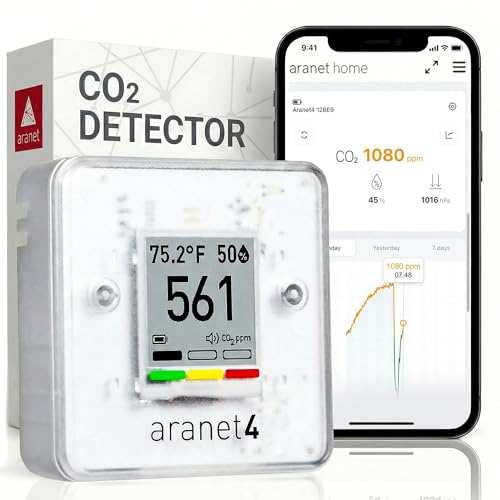
The best co2 air quality monitor tells you when a room needs fresh air: compare NDIR sensors, desktop, portable and connected types, and what to spend.
A room can feel stuffy long before you can name the cause, and carbon dioxide from normal breathing is often the missing clue. Choosing the best co2 air quality monitor is harder than it looks, because models differ in sensor accuracy, in the extra pollutants they track, and in how they share their data. This guide compares monitor types by reliability, smart platform compatibility, and ease of setup so you can match one to your space.
Use the comparison table below to see the main types side by side, then read on for the criteria that separate a trustworthy reading from a rough guess. If you also want broader pollutant coverage, our guide to the best air quality monitor explains how CO2 models fit into the wider category.


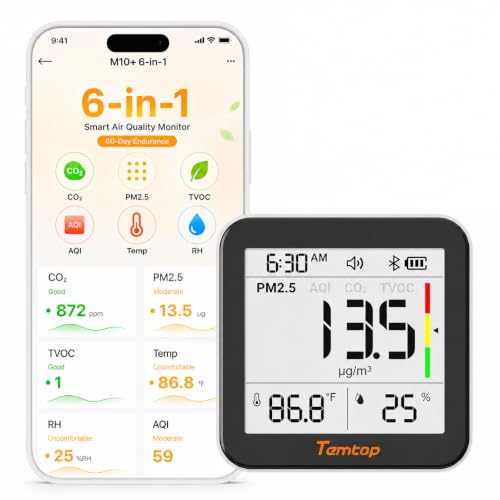

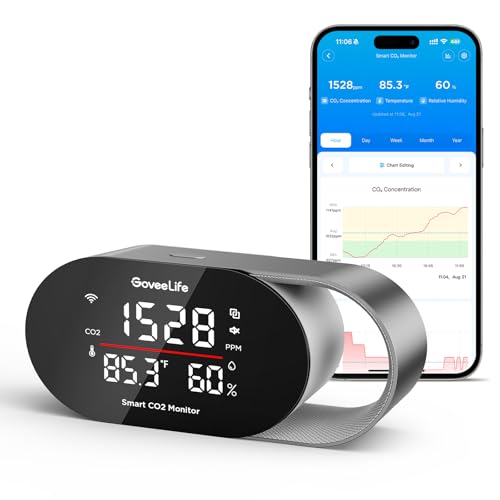

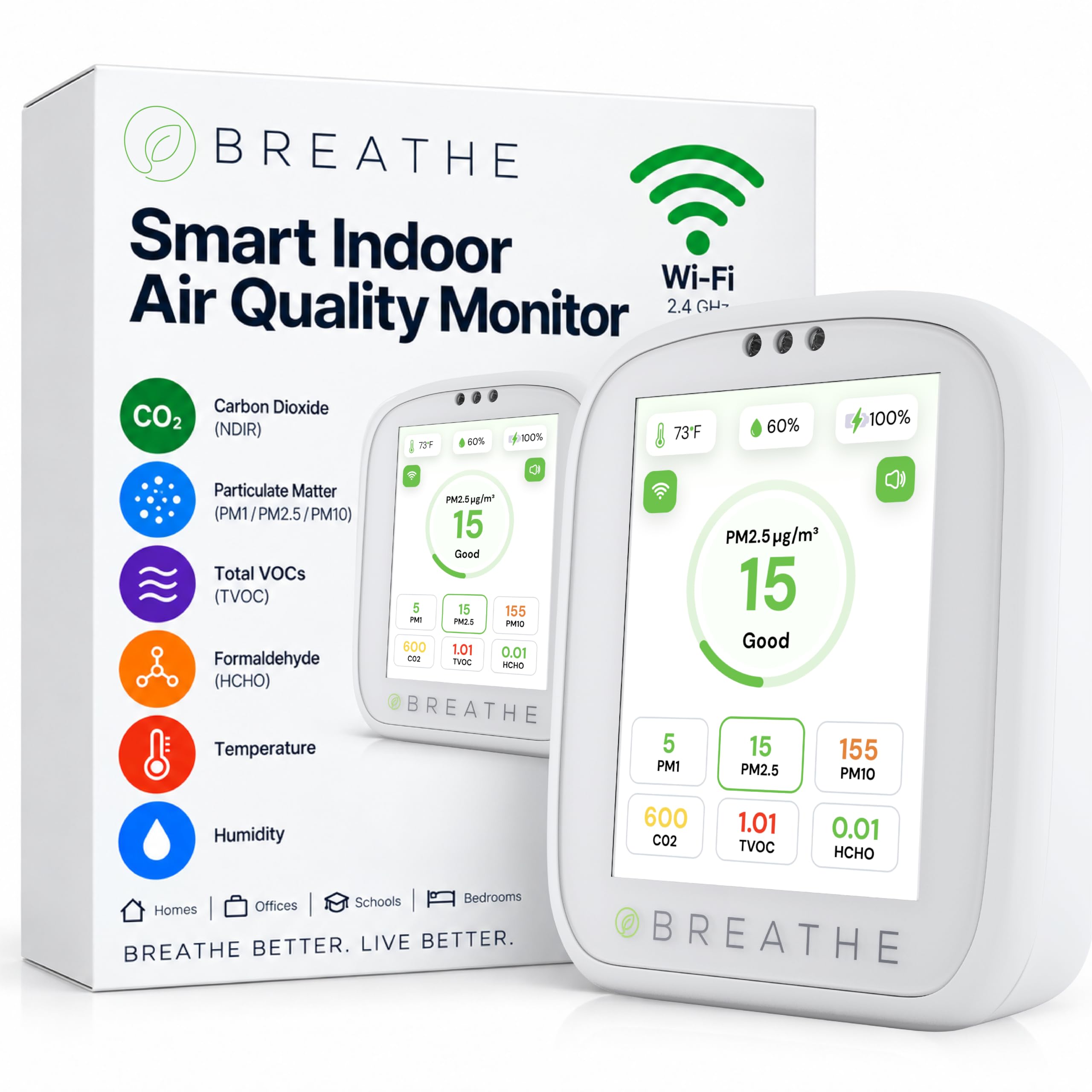
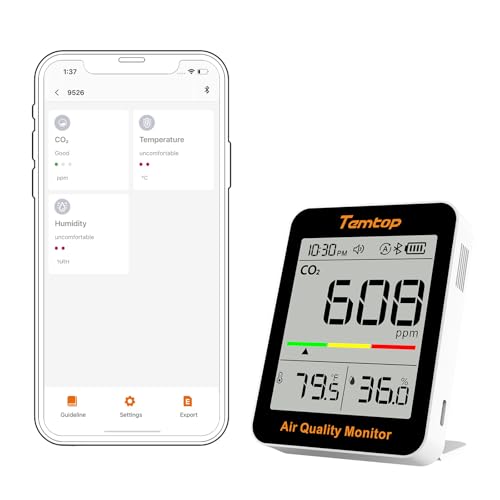
Monitor Types at a Glance
Every CO2 monitor in this guide measures carbon dioxide as its core job. The real differences are what else it senses, how it is powered, and where it is meant to live.
- Desktop consoles: a clear display and constant power for one main room.
- Portable models: compact size and battery power for moving between rooms or buildings.
- Connected stations: app history, alerts, and extra sensors such as particles, humidity, and temperature.
None of these types is better in the abstract. The right choice depends on whether you value a glanceable display, freedom to move the unit, or a long record of readings you can review later.
Three Types of Co2 Monitors Compared
Desktop Consoles for One Main Room
A desktop console sits on a desk, shelf, or counter and stays plugged in, so the display can stay on and update often. This is the easiest format to live with in a bedroom, study, or classroom where one person checks the reading at a glance. Look for large digits, a simple color indicator, and a dimming option for nighttime use. If the room is where your household spends most evenings, comparing options in our guide to the best air quality monitor for home can help you weigh whole home coverage against a single room focus.
Portable Models for Room to Room Checks
A portable monitor is built to move. You might carry it from a home office to a meeting room, a rental property, or a classroom to spot rooms where ventilation falls behind occupancy. Small size and battery power matter more here than a large display, and a protective case helps during transport. Readings need a few minutes to settle after a move, since the air around the sensor changes. Our roundup of the best portable air quality monitor covers the wider portable category if you need particle sensing on the go as well.
Connected Stations With Extra Sensors
A connected station pairs CO2 sensing with an app, stored history, and often extra sensors for fine particles, volatile organic compounds, humidity, and temperature. That context helps you tell whether a stuffy feeling tracks with occupancy, cooking, or cleaning products, rather than guessing from one number. The trade off is complexity. You will manage an account, WiFi setup, and firmware updates, and some features may sit behind a subscription. Choose this type when you want alerts on your phone and a record you can review week by week.
How to Evaluate a Co2 Monitor
Start with the sensor. The best co2 air quality monitor models use a nondispersive infrared sensor, often shortened to NDIR, which measures how much infrared light CO2 absorbs. This method is specific to carbon dioxide and holds its accuracy far better than cheap estimation methods that infer CO2 from other gases. Treat any model that estimates CO2 indirectly with caution, because its readings can drift when other pollutants change.
Beyond the sensor, weigh five things: stated accuracy in parts per million, how the unit handles calibration, which smart platforms it supports, how it is powered, and what the app costs after purchase. A clear data policy matters too, since a connected monitor records patterns of when a home is occupied.
How to Choose the Right Air Quality Monitor
Type and What Else You Need to Measure
Decide whether CO2 alone answers your question. If your concern is ventilation and occupancy, a CO2 focused model is enough, and its single job keeps the display simple. If you also worry about smoke, dust, or cooking particles, look for added particle sensing, and add volatile organic compound sensing if new furniture, paint, or cleaning products are part of the picture. Radon is different again, since it needs its own sensor and long term averaging. Paying for sensors you will never act on adds cost and clutter without improving your decisions.
Ecosystem Compatibility
Check smart platform support before you buy, because it varies widely and cannot be added later. Some monitors work only with their own app over Bluetooth or WiFi, while others connect with Alexa, Google, HomeKit, or Matter so readings can trigger a fan or appear beside your other home data. Confirm the exact platform you use is named in the product details, not just a vague claim of smart features. Also check whether automations need the brand app running in the background, since that affects how reliable an alert or trigger will be in daily use.
Wired vs Battery Power
Constant power suits a monitor that guards one room all day. A wired model can sample often, keep its display lit, and never surprise you with a dead battery during the week you cared most about. Battery models trade sampling frequency for freedom, stretching charge by waking the sensor at intervals and dimming or sleeping the display. Low power displays can run for months, while bright color displays may need charging every few weeks. Match the power style to your habits, because a portable unit you forget to charge gives you no data at all.
Subscriptions and Local Storage
Ask what the purchase price actually includes. Some monitors store history on the device or in a free app tier, while others charge for long histories, data export, or advanced alerts. Local storage and export options give you control and keep your records if a service changes its pricing. Cloud storage is more convenient for checking readings away from home, but it ties your history to an account staying active. Before buying, confirm how many days of history you can see for free and whether you can download your own data as a file.
Privacy and Security
A connected monitor reveals more than air data. Occupancy patterns, sleep schedules, and time away from home can all be inferred from CO2 curves, so read the privacy policy before creating an account. Prefer brands that state what they collect, how long they keep it, and whether they sell or share data. Use a strong account password and turn on two factor sign in where offered. If privacy matters more than remote access, choose a model with a good onboard display and local history, and simply leave the cloud features off.
How Much Should You Spend?
Budget models under about $50 often rely on indirect CO2 estimation, so treat their numbers as rough indicators only. The about $100 to $200 range is where true NDIR sensing, a readable display, and a usable app usually come together for home use. Spending about $200 to $300 can add extra sensors, longer history, and broader smart platform support. Above that, you are mostly paying for build quality, business features, or multi room bundles. Spend first on sensor accuracy, because every alert and decision downstream depends on that number being right.
Co2 vs Other Air Quality Monitors: Pros and Cons
A CO2 monitor answers one question well: is fresh air keeping up with the people in the room? It cannot tell you about dust, pollen, smoke, or damp, so it is not a complete picture of indoor air. A broader monitor adds those readings but may estimate CO2 rather than measure it directly. Many households end up pairing a true CO2 sensor in the most occupied room with particle sensing where cooking or traffic dust is the bigger concern.
- CO2 monitor pros: direct ventilation feedback, fast response when a room fills up, and a simple number anyone can act on by opening a window or raising fan speed.
- CO2 monitor cons: no warning about particles, allergens, or chemical vapors, and no help with damp problems.
- Broader monitor pros: several pollutants on one display, useful for allergies, smoke, and renovation dust.
- Broader monitor cons: higher cost, more sensors to understand, and CO2 figures that may be estimates.
Note that a CO2 reading says nothing about mold risk, which follows moisture and hidden damp instead. If damp is your concern, see our guide to the best air quality monitor for mold for the humidity focused features that matter there.
FAQ
Are co2 air quality monitors worth it?
Yes, if you act on the readings. A simple check shows the value: log a room for one afternoon, then open windows or raise ventilation for an hour and watch the curve fall. That before and after proof tells you whether a bedroom, office, or classroom needs a lasting ventilation fix or just a habit change. If nobody will respond to the number, the monitor becomes decoration, so decide in advance who opens the window or adjusts the fan when readings climb.
What CO2 reading means you should ventilate a room?
Outdoor air sits at about 400 parts per million, and indoor readings climb as people breathe in a closed space. Many building guidelines use about 800 to 1000 parts per million as the point where adding fresh air is sensible, and readings well above that suggest ventilation is lagging behind occupancy. Treat these figures as practical guides, not health limits, since comfort and alertness vary by person. Use the trend in your own room rather than chasing a single perfect number.
How long does a co2 air quality monitor last?
The NDIR sensor in a typical home monitor is rated for many years of use, often a decade or more, while batteries and displays usually wear out sooner. Accuracy can drift slowly over that life, which is why models with a stated sensor lifespan and a way to refresh calibration are a safer buy. If readings in fresh outdoor air no longer settle near the expected baseline, or the display and battery have both faded, replacement is more sensible than repair for most home units.
How do you clean a co2 air quality monitor?
Keep the sensor vents clear, because dust in the openings slows the air reaching the sensor and can dull response. Wipe the case with a dry or slightly damp soft cloth, and use a gentle blast of dry air or a soft brush on the vents rather than liquids or sprays. Never spray cleaner into the openings, and keep the unit away from kitchen grease, heavy steam, and cigarette smoke during cleaning or storage, since residue inside the sensing chamber cannot be washed out at home.
Where should you place a co2 air quality monitor in a room?
Place it at about breathing height where people sit or sleep, on a shelf or desk away from walls and corners where air sits still. Keep it out of direct breath range, because someone exhaling near the sensor spikes the reading and does not reflect the room. Avoid spots beside an open window, a supply vent, or a stove, since each skews the result. Give a moved monitor several minutes in its new spot before trusting the number, and compare rooms at similar times of day for a fair picture.
Final Thoughts
The right monitor is the one whose type fits your room, whose sensor you can trust, and whose data you will actually use. Desktop consoles suit a single main room, portables suit spot checks across spaces, and connected stations suit anyone who wants history and alerts. Review the product table above once more, pick the format that matches your habits, and the best co2 air quality monitor for your home will be the one still giving you useful readings a year from now.

