
Best CO2 Monitors: A Buying Guide for Fresher Indoor Air in 2026
Disclosure: We may earn a commission when you buy through links on this page, at no extra cost to you. As an Amazon Associate I earn from qualifying purchases. Learn more
Compare the best co2 monitors by sensor type, accuracy, calibration and price, and learn what the readings mean for ventilation in your home.
A closed room with several people in it slowly fills with exhaled air, and the clearest sign of that buildup is rising carbon dioxide. The best co2 monitors measure that buildup and turn it into one simple number, so you know when a room needs fresh air instead of guessing from how stuffy it feels.
One distinction matters before anything else in this guide. A co2 monitor tracks carbon dioxide as a ventilation signal, and it is not a carbon monoxide alarm: carbon monoxide is a different, poisonous gas that needs its own dedicated alarm, and no co2 monitor can detect it or take its place. With that clear, the sections below explain what the readings mean, which sensor classes deserve your trust, and how to place and use a monitor at home, starting with the comparison table below.


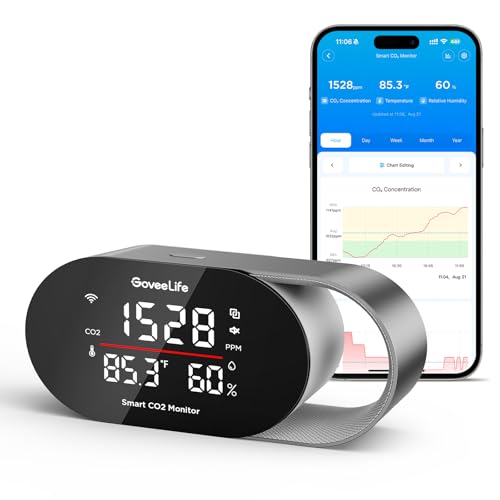
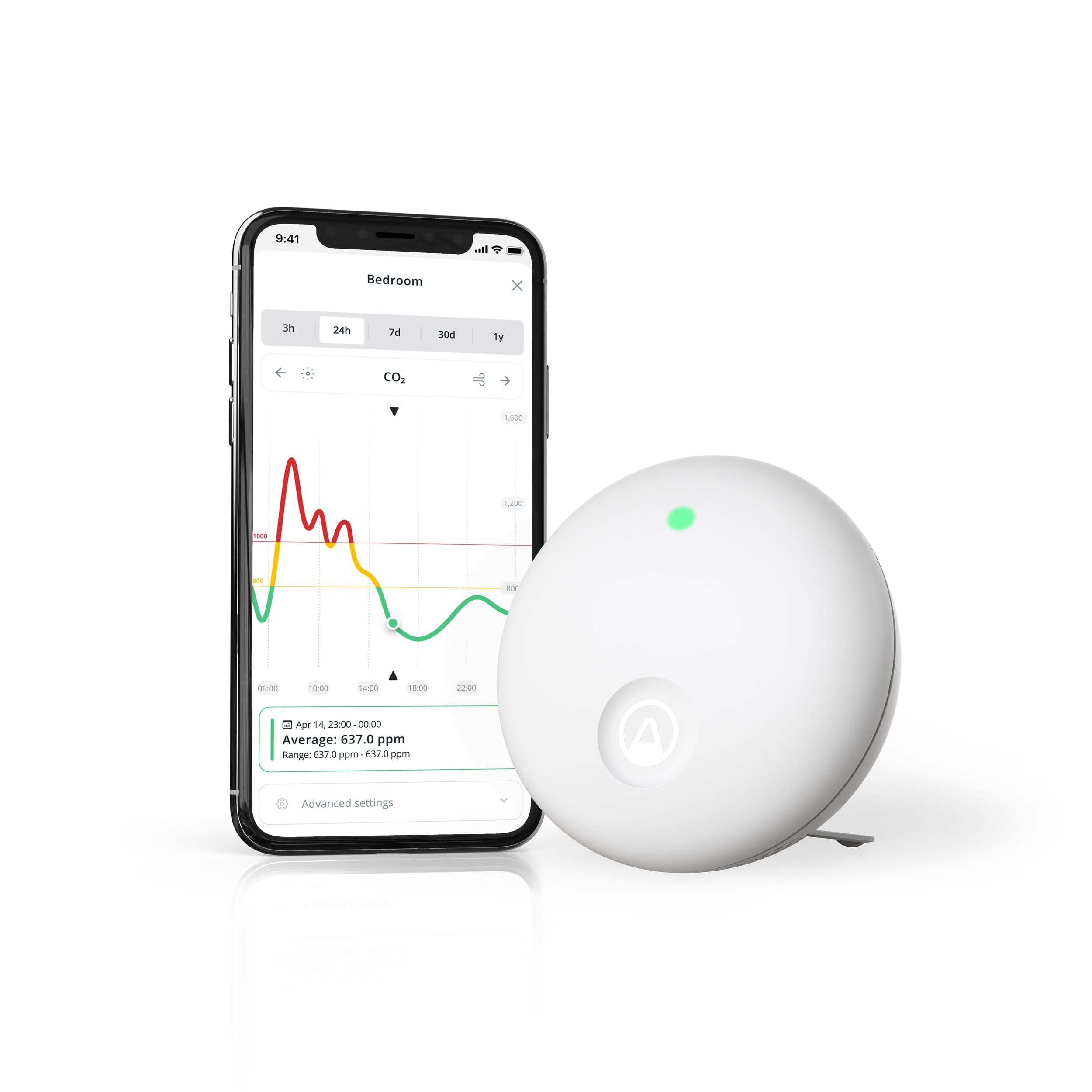
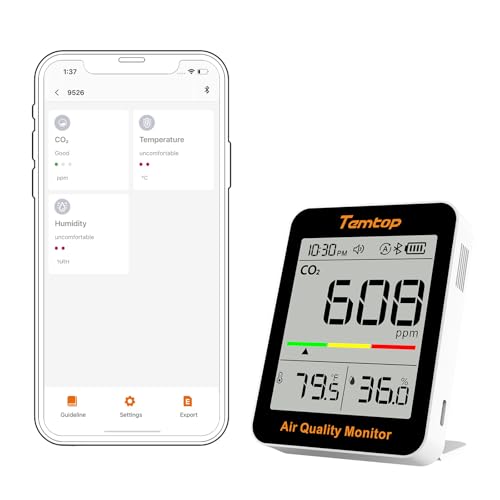
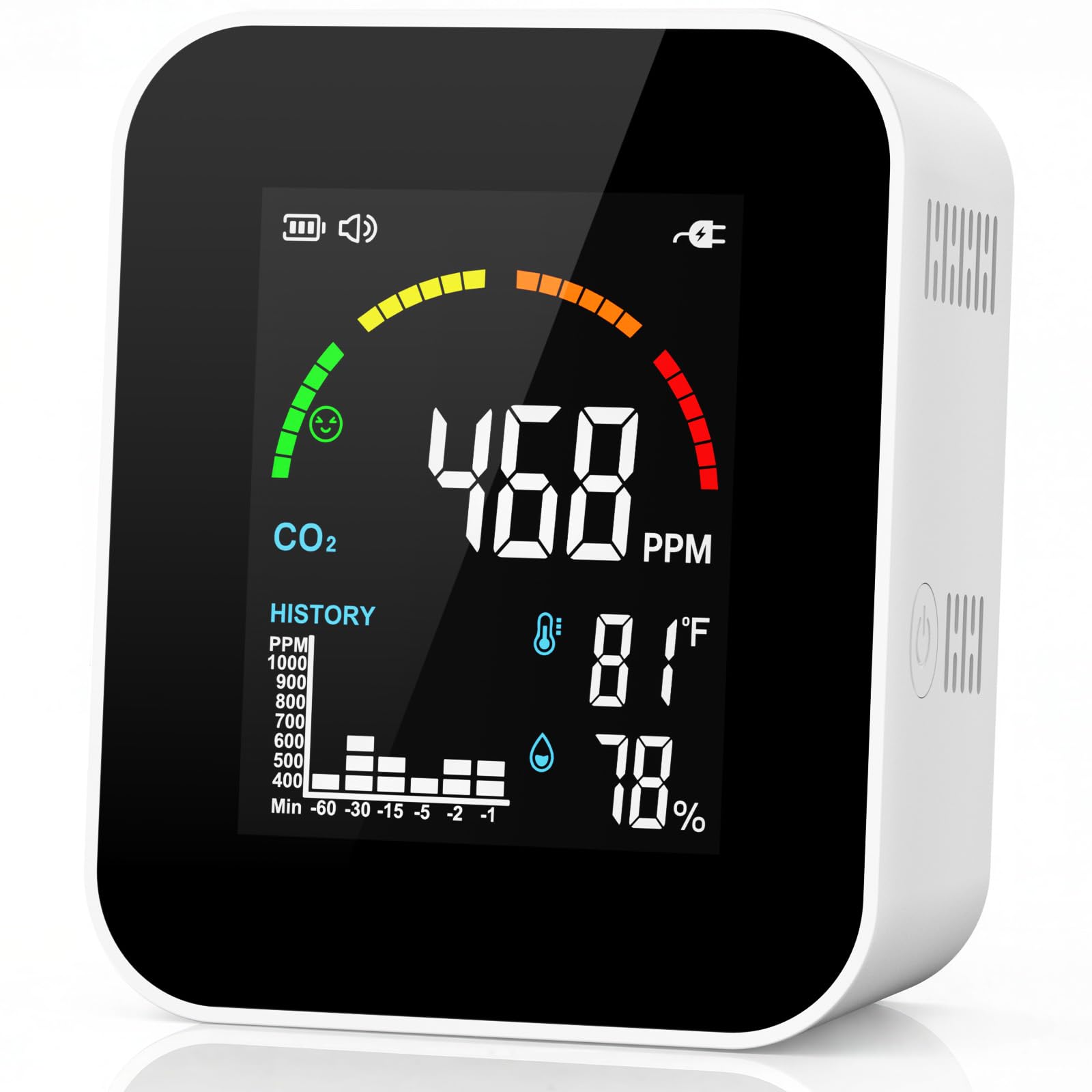

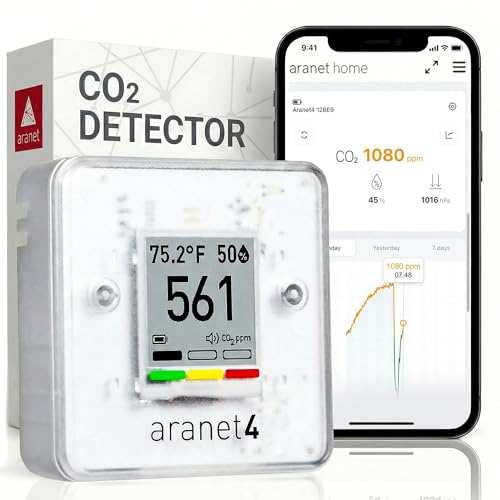
What the Number Means: co2 as a Ventilation Signal
Outdoor air sits near 400 parts per million of carbon dioxide, and every breath a person takes adds more of it to a room. In a closed space the reading climbs steadily while people are present and falls again once windows open or a ventilation system exchanges the air. That rise and fall is exactly what the monitor reports, which makes co2 a practical proxy for how much fresh air a room is getting.
Building and ventilation guidance often treats readings under about 1,000 parts per million as a sign that the fresh air supply is keeping up, and readings well above that as a sign a room is under ventilated. Treat those bands as ventilation conventions, not medical limits, because a monitor measures air exchange and cannot diagnose anyone's health. A stuffy room simply feels unpleasant, and the right response to a high reading is fresh air: open windows, run the ventilation, or take a break outside.
One unit only ever reports on the air in the room where it sits. That single room focus shapes everything else in this guide, from sensor choice to placement.
How to Choose: A co2 Monitor Buying Guide
Monitors that look identical on a shelf can measure in completely different ways. Work through the five points below and the differences that matter will stand out.
Sensor Technology: True Measurement Versus Estimates
NDIR sensors shine infrared light through a small air sample and measure how much of it the carbon dioxide absorbs, which is a direct measurement and the long standing standard for home units. Photoacoustic sensors listen for the tiny sound pulses the gas makes when it absorbs light pulses, and they also measure directly while allowing very compact designs. The cheapest class estimates co2 from other gases in the air and reports an equivalent value, and those estimates can drift when cooking fumes or cleaning sprays are present. Treat estimating models as rough indicators and the two direct classes as the trustworthy readings.
Accuracy and Calibration
Accuracy figures on a box are maker figures measured under lab conditions, so they are a rough guide rather than a promise for your living room. All co2 sensors drift slowly over time, and better classes handle that drift with calibration. Self calibrating models assume the room regularly reaches outdoor air levels, so they correct themselves whenever the space gets fresh air. A permanently sealed room can fool that logic, which is why manual calibration classes exist: you carry the unit outside, let it settle in fresh air, and set the baseline yourself.
Display, Alerts and Data Logging
An onboard display lets anyone in the room read the number at a glance, while app connected models trade the screen for history graphs on your phone. Those graphs are genuinely useful, because they show patterns such as a bedroom climbing all night behind a closed door. Color coded indicators that shift from green toward red help non technical users react without learning the numbers. In bedrooms, choose visual alerts over audible ones, since a beeping monitor in the middle of the night teaches people to unplug it.
Placement and Room Coverage
Place the monitor at breathing height, roughly where people in the room sit or sleep, so it samples the air they actually breathe. Keep it away from open windows and supply vents, which feed it fresh air that the rest of the room never gets, and away from anyone breathing directly onto it, because a single exhale can spike the reading. One unit only ever reads its own room, so a house with several closed bedrooms may need more than one. Kitchens also spike during cooking on gas burners, which is normal combustion rather than a fault.
Power Options and Battery Life
Plug in models powered over USB run continuously, which suits logging and always on displays. Battery powered portable models trade runtime for freedom, and their screens usually dim or sleep to save charge. If you want a record of a full week in a bedroom, a plug in unit avoids the gap when a battery dies overnight. Check whether the battery is replaceable or sealed, since a sealed battery decides the working life of a portable unit.
Types of co2 Monitors
Single Room Desktop Units
Desktop units are the default home choice: a small box with a screen that sits on a shelf, desk or dresser and reports on that one room. They favor clear displays and continuous plug in power over portability. Pick this class when one room, usually a bedroom or home office, is where you spend most of your hours.
Portable co2 Monitors
Portable units are pocket sized and battery powered, built to move between rooms, travel in a bag, or check a classroom or meeting room on the spot. Their smaller screens and shorter battery life are the trade for that freedom. If you want to survey several spaces before buying fixed units, see our guide to the best portable co2 monitors for the travel ready classes in more depth.
Connected and Wall Mounted Units
Connected models send readings to an app and can trigger a fan or air exchanger through a smart home setup when levels rise. Wall mounted units stay out of the way in classrooms, offices and rental properties where a desktop box might wander off. These classes cost more and take more setup, and they earn it where several people share the air and nobody owns the job of opening a window.
Choosing a co2 Monitor for Your Situation
Best CO2 Monitors for Your Home
At home, quiet behavior matters as much as accuracy. Look for a display you can dim or switch off at night, alerts that flash instead of beeping, and a self calibrating sensor, since homes get fresh air whenever windows and doors open. Start with the bedroom and the main living room, because those are the rooms where your household spends the most hours breathing the same air.
Classrooms, Offices and Shared Spaces
Shared rooms fill with exhaled air faster, so readings climb quickly after a class or meeting starts. A larger display that reads across the room helps a teacher or host act without walking over to check. Logging earns its keep here too, because a week of recorded peaks is a persuasive way to show whoever controls the building ventilation that a room needs more fresh air.
Setup and Care Tips
- Set the unit at breathing height on a shelf or dresser rather than on the floor or near the ceiling, because you want the air people actually breathe.
- Keep it a few feet from the nearest sleeper or desk chair, so normal breathing does not spike every reading and train you to ignore the display.
- Calibrate as the manual directs, outdoors in fresh air and away from traffic exhaust, and repeat it on the schedule the maker suggests.
- Keep the sensor openings clear of dust, wipe the case with a dry cloth, and never spray cleaner into the vents.
- Watch the pattern for a full week before changing your habits, so you learn which routines, such as closed doors at night, drive your readings.
co2 Monitor Questions Answered
Is a co2 monitor the same as a carbon monoxide alarm?
No, they detect completely different gases and one can never replace the other. Carbon monoxide is a poisonous gas produced by faulty fuel burning appliances, and it needs its own dedicated alarm on each level of a home and near sleeping areas. A co2 monitor senses only carbon dioxide as a ventilation signal and would stay silent through a carbon monoxide leak, so keep both devices doing their separate jobs.
What co2 reading should I aim for in my home?
Aim to keep readings closer to outdoor levels, and treat about 1,000 parts per million as the commonly used sign that fresh air is keeping up. That figure is a ventilation convention used in building guidance, not a health limit, so do not panic over a brief peak during a family gathering. If a room sits well above that band for hours, the fix is simple: open windows or run the ventilation until the number falls.
Where should I place a co2 monitor in a bedroom?
Place it at breathing height on a dresser or shelf, across the room from the bed rather than on the nightstand. A unit beside the pillow catches every exhale and reads high all night, while one by an open window reads the outdoor air instead of the room. Keep it out of closed cabinets and wardrobes too, since trapped air inside furniture tells you nothing about the room.
Do co2 monitors need calibration?
Yes, every co2 sensor drifts slowly and needs its baseline refreshed over time. Self calibrating models handle it automatically as long as the room regularly gets fresh air, which most homes do when windows open. Models with manual calibration ask you to set them outdoors in fresh air now and then, a five minute job that keeps an older unit honest instead of letting its readings creep.
How long does a co2 monitor last?
The sensor is the long life part: many makers rate their sensor class for roughly a decade of service, and the case and display usually outlast it. Portable units age faster at the battery, which can lose capacity after a few years of charging cycles. A plug in desktop unit in one room is the longest lived setup, while a travel unit earns its shorter life by covering many rooms.
Can one co2 monitor cover a whole house?
No, because each unit samples only the air in its own room, and closed doors make every room a separate air pocket. Start with the rooms where people spend the most hours, usually the main bedroom and the living room or home office. A portable unit moved between rooms for a week at a time is a smart way to map your home before you commit to several fixed monitors.
Wrapping Up
Choose a direct measuring sensor you can calibrate, place it where it samples the air you actually breathe, and read its number as a ventilation signal rather than a health verdict. Do that and the best co2 monitors become what they should be: a quiet reminder to let fresh air in. Look back at the product table above to compare the classes side by side before you buy, and keep your separate carbon monoxide alarms in place either way.

