Best Closed Toe Sandals For Wide Feet Explained for 2026
Disclosure: We may earn a commission when you buy through links on this page, at no extra cost to you. As an Amazon Associate I earn from qualifying purchases. Learn more

Learn how to choose best closed toe sandals for wide feet with confidence, covering fit, features, costs, and care for a sound daily choice.
Most sandals are cut on a medium last, and a wide foot spills over the edge of the footbed, presses against the strap buckles and jams into the toe cap. The best closed toe sandals for wide feet fix that with a broader sole, a roomier toe box and straps that adjust far enough to hold a wide foot without pinching. This guide explains how to judge true width, toe room and support so a covered toe sandal stays comfortable all day, and the comparison table below lets you scan the main options quickly.
Width labels mean different things from one brand to the next, so this guide works from measurements and fit checks rather than from the letter on the box.



Who Needs Wide Closed Toe Sandals
Walkers With Broad Forefeet
If the ball of your foot is wide but your heel is average, a standard sandal lets the forefoot overhang the footbed and the strap edge cuts across the widest point. A true wide last widens the forefoot of the sole and moves the strap anchors outward, which is why sizing up in a medium never quite solves the problem.
People With Bunions or Swelling
A bunion or feet that swell through the day need a soft, adjustable strap over the forefoot and a toe cap that sits above the toes rather than across them. Look for straps without hard edges at the widest point and for a toe box with height as well as width. Persistent pain, redness or skin breakdown over a bunion deserves a clinician's advice before you change footwear.
Workers Who Stand All Day
Feet spread under hours of standing, and a wide, stable base keeps that spread from turning into pressure points. A wide closed toe sandal with a firm footbed and a cushioned midsole suits warm workplaces where a boot would be too hot, as long as the dress code allows an open heel.
Key Features to Compare
True Width and Sole Shape
Judge the sole, not the label. Stand on the sandal: your whole foot should sit on the footbed with a small margin at the widest point, and the widest part of your foot should line up with the widest part of the sole. Brands that publish a dedicated wide width or that build on a roomy original fit are the safest bets. A sandal that is simply longer leaves the heel floating and does nothing for width.
Toe Box Room and the Toe Cap
The toe cap should clear your toes in height as well as width, so the little toe is not pressed against the side wall. Leave about a thumb width ahead of your longest toe, and check that the seam where the cap meets the upper does not cross the top of the toes. On descents your foot slides forward, which is when a narrow cap pinches.
Strap Reach and Adjustment
Straps on a wide fit need extra length, and a bungee or hook and loop closure should still have adjustment left when the sandal is comfortable, otherwise it is already at its limit. Independent straps at the forefoot, instep and heel let you leave the forefoot roomy while snugging the heel. A single elastic strap rarely holds a wide foot steady.
Arch Support and Footbed Firmness
Wide feet are often flatter, so a moderate, firm arch and a cupped heel keep the foot from rolling inward on the broad base. Very soft footbeds feel kind in the shop but let a heavy or wide foot sink and wobble. Press the footbed with your thumb: it should give a little and spring back rather than collapse.
Outsole and Weight
A wider sole adds weight, so look for a sandal that stays light enough for a full day. Siped rubber grips wet pavement and smooth floors, while shallow lugs handle paths and grass. The sole edge should not flare so far beyond the upper that you catch it on steps.
Types of Closed Toe Sandals for Wide Feet
| Type | Best For | Trade Off |
|---|---|---|
| Wide width sport sandals | Walking, travel, light trails | Limited color choice in wide sizes |
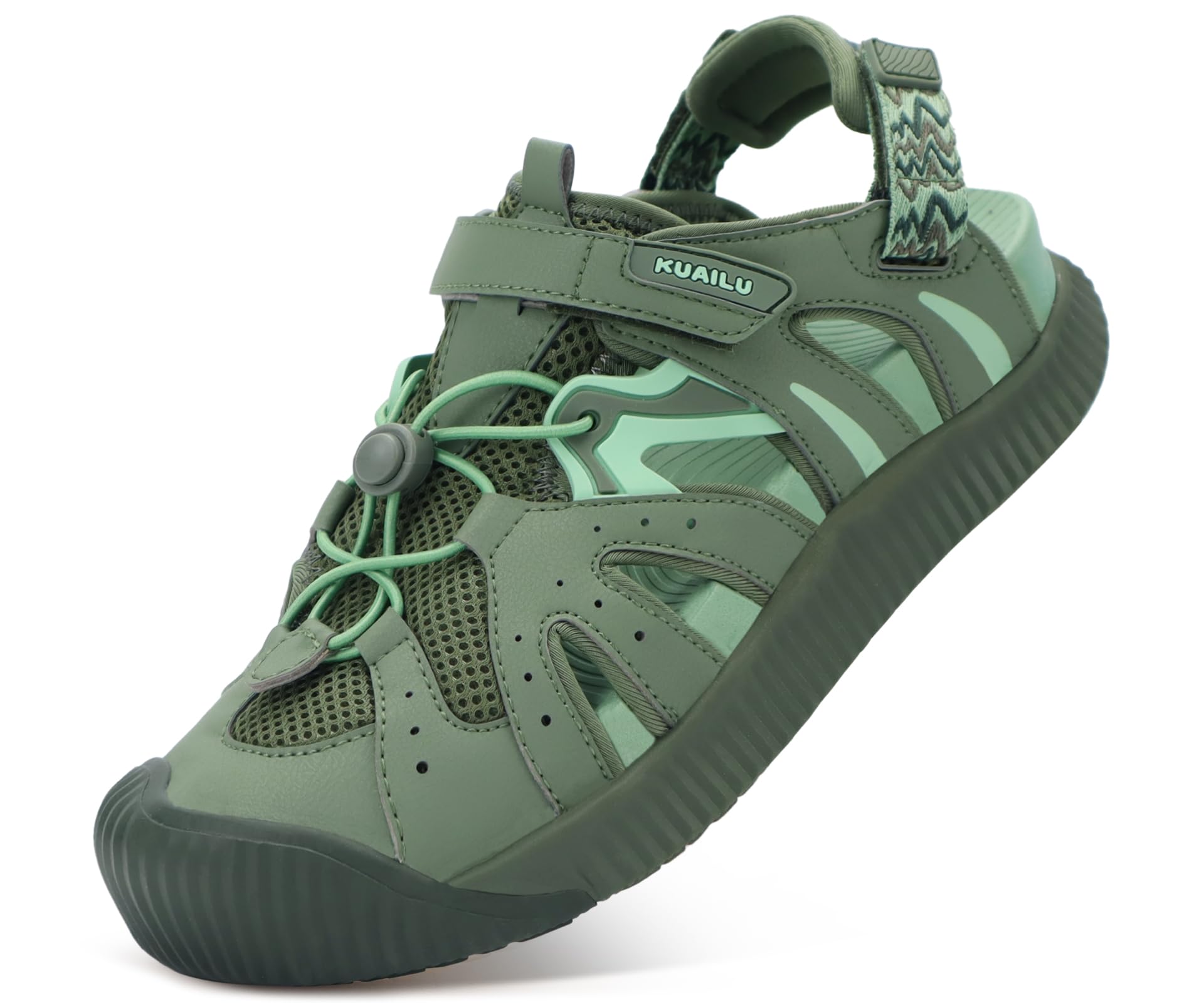
| Roomy fit hiking sandals | Trails, uneven ground, water | Heavier, sportier look |
| Stretch or knit upper sandals | Bunions and swelling | Less toe protection, stretch loosens over time |
| Leather fisherman sandals | Smart casual and work settings | Need a break in period |
Wide width sport sandals are the most common answer and the easiest to size. Roomy fit hiking sandals, built on a generous last with a bungee closure, suit wide feet even without a wide label. Stretch and knit uppers forgive bunions and swelling but protect less. Leather fisherman styles look smarter and soften to the foot over a couple of weeks.
How to Measure and Fit a Wide Foot
- Stand on paper in the afternoon and trace both feet, then measure the length and the width at the widest point.
- Compare both numbers with the brand chart; if only length is listed, assume the fit is medium.
- Order the wide width in your true length rather than a longer medium.
- Fasten the heel strap first, then the instep, then the forefoot, and check that adjustment remains on every strap.
- Walk for ten minutes on a hard floor and down a step, watching for overhang at the sole edge and pressure on the little toe.
Common Mistakes to Avoid
- Buying a medium one size longer and hoping the straps will stretch, which leaves the heel loose and the width unchanged.
- Accepting a sandal where the foot overhangs the sole, since the edge wears unevenly and the straps carry the load.
- Choosing the softest footbed, which lets a wide foot sink and roll.
- Skipping a walk on a hard floor, so width problems only show up after hours of wear.
- Keeping a pair past the return window because it almost fits.
Care and Long Term Use
Rinse grit from the straps and footbed after dusty or wet days, scrub with mild soap when odor builds, and dry in the shade. Check the strap anchors, because a wide foot loads them harder than a narrow one, and tighten or replace hook and loop closures when they stop gripping. Replace the pair when the footbed stays compressed, the straps no longer hold at their tightest usable setting, or the sole edge wears down where the foot overhung.
Safety Notes
Foot pain that persists or worsens, swelling, numbness or broken skin over a bunion or the little toe deserves advice from a clinician or podiatrist. Sandals can improve comfort and fit, but they do not treat the cause of pain, and sudden pain, severe swelling or an inability to bear weight needs prompt care.
Related Guides
If an open style suits your routine, our guide to the best sandals for wide feet covers slides and strap sandals built on broad lasts, and women can see the best sandals for wide feet women's for narrower heel options with a wide forefoot. For the covered toe style in general, the best closed toe sandals overview explains toe caps and footbeds, the best closed toe sandals for women covers fit for women, and the best closed toe sandals for walking focuses on long pavement days.
Frequently Asked Questions
How do I know if a sandal is truly wide?
Measure the width of the footbed at its widest point and compare it with your foot tracing, then stand in the sandal and check that your foot sits fully on the sole with a small margin. A wide label alone is not proof, because makers define wide differently.
Should wide feet size up in sandals?
No. Sizing up adds length, not width, and the longer footbed lets the heel slip and the toe cap sit too far forward. Choose a true wide model in your measured length and use the straps to fine tune.
Are closed toe sandals good for wide feet?
Yes, when the toe box is roomy in both width and height and the cap sits above the toes. A cramped cap causes more trouble than an open design, so the cap shape is the first thing to check.
What straps work best for wide feet?
Independent, adjustable straps at the forefoot, instep and heel work best, because you can leave the forefoot roomy and snug the heel. Avoid a single elastic strap that cannot be adjusted, and check that every strap has adjustment to spare when the sandal is comfortable.
When should I see a podiatrist about wide foot pain?
See a podiatrist if pain persists or limits walking, if a bunion becomes red or swollen, or if the skin breaks down where a strap or cap presses. Footwear changes help comfort, but ongoing pain needs a diagnosis rather than another pair of sandals.
Final Thoughts
Measure width as well as length, judge the sole and the toe cap rather than the label, and demand straps with adjustment to spare. Those three checks remove most wrong choices before you look at price. Compare the product table above with your measurements in hand, and choose the best closed toe sandals for wide feet that let your whole foot rest on the footbed from the first step to the last. Talk with your clinician or a podiatrist about any ongoing foot pain before you rely on footwear alone.