Best Chef Knife with Sheath (2026): Cover Fit, Steel and Storage
Disclosure: We may earn a commission when you buy through links on this page, at no extra cost to you. As an Amazon Associate I earn from qualifying purchases. Learn more

How to choose the best chef knife with sheath: a cover that fits, steel you can maintain and safe storage.
Picture a busy weeknight in a small kitchen. Dinner needs chopping, the counter is crowded, and your main knife lives loose in a drawer. Every reach into that drawer risks a nicked finger and a dulled edge. That is exactly the problem a best chef knife with sheath pairing solves, because the cover guards the blade and your hands.
This guide helps you choose by what matters in a real home: your counter and drawer space, how many people cook, and what you can spend. Work through the checklist below and use the comparison table below to match a style to your routine.




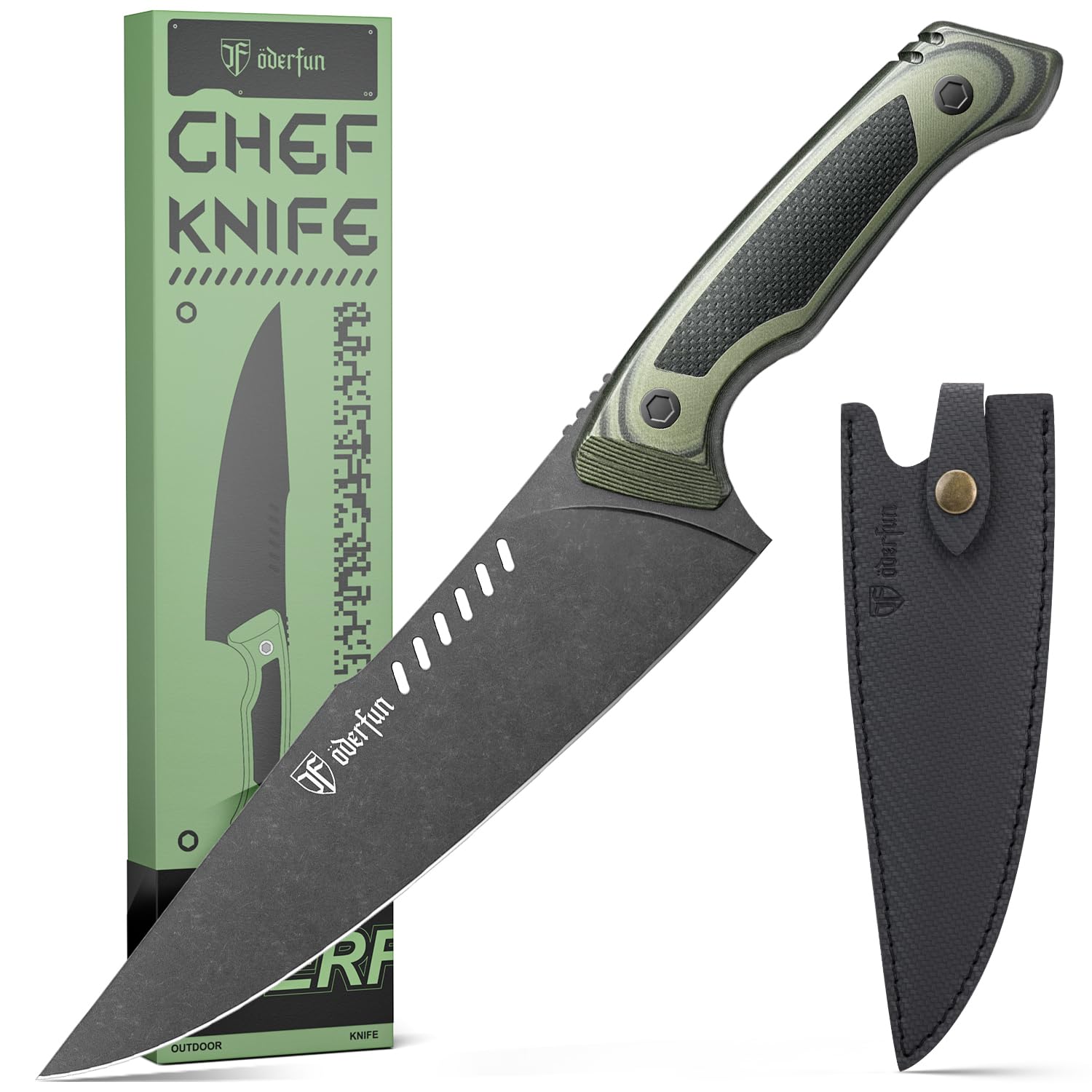
Quick Answer: Which Type Suits Your Home
Start with your storage and your cooking habits. Most homes do well with an eight inch blade in stainless steel and a snug sheath that vents moisture. Homes that store the knife in a drawer benefit most, because the cover prevents edge damage every day.
- German style blades suit cooks who rock the knife through herbs and root vegetables and want a forgiving edge.
- Japanese style blades suit cooks who slice fish and vegetables and want a thinner edge that glides.
- Light stamped blades suit small kitchens and new cooks who want low cost and easy upkeep.
Before You Buy: A Quick Checklist for Choosing a Chef Knife
Size: Match It to Your Space
Blade length shapes everything else. A six or seven inch blade feels nimble in a small kitchen and suits smaller hands and boards. An eight inch blade is the most versatile choice for most homes, long enough for a cabbage yet controlled enough for an onion. Blades of nine or ten inches, often listed as 210 mm or 240 mm in Japanese sizing, give extra reach for large roasts and melons but need a bigger board and deeper drawers. Measure your drawer before you order, because the sheath adds length beyond the bare blade.
Which Type Fits Your Routine
German and western style knives use a curved belly that supports a rocking motion, while Japanese gyuto blades run flatter and favor push cutting and slicing. Carbon steel takes a keen edge and needs drying after use, while stainless steel resists rust and suits busy homes. Forged blades feel dense and balanced, and stamped blades feel light and cost less. Damascus blades layer steels for appearance, but the layers alone do not make an edge sharper. If you also keep a shorter blade for vegetables, our chef knife vs santoku comparison explains where each one earns its drawer space.
Features Worth Paying For, and Ones to Skip
The sheath itself is the feature that matters most here. Look for a cover that fits your exact blade length, grips without forcing, and lets air move so trapped moisture can escape. A wood handle feels warm and looks classic, but it needs oiling and can swell if it soaks. Dimples along the blade, often called a granton edge, can help slices of potato or cucumber release, yet they do little on most other foods. Skip decorative blade coatings and bundles of accessories you will never use.
Steel Type and Hardness
Hardness is listed as an HRC number, and it tells you how the edge will behave. Softer steels around 54 to 57 HRC dull sooner but sharpen fast and resist chipping, which suits rough use. Harder steels around 58 to 62 HRC hold an edge longer and cut cleaner, but they can chip if you twist the blade or pry at frozen food. High carbon stainless blends are a practical middle ground for most homes. Readers drawn to harder, thinner blades can explore our guide to the best japanese chef knife styles.
Blade Geometry: German Style and Japanese Style
Geometry is the shape of the blade, and it decides how food separates as you cut. German style blades are thicker behind the edge, so they split dense squash and sweet potato with authority and shrug off hard use. Japanese style blades are thinner behind the edge, so they pass through onion and tomato with less wedging and tearing. Neither shape is better in the abstract. Match the geometry to your groceries: heavy root vegetables point one way, and delicate slicing points the other.
Handle, Bolster and Balance
A good handle lets your hand relax. Rounded handles suit a pinch grip, where your thumb and index finger hold the blade just ahead of the handle. A full bolster adds weight and a finger guard feel some cooks trust, while a half bolster lets you use the whole edge and makes sharpening the heel easier. Balance should sit near the pinch point, not far into the handle or the blade. If the knife tips forward or drags backward, your wrist will notice within a week.
Realistic Budget Ranges
Spending more buys better steel, better fit of parts, and a sheath that fits properly instead of loosely. Under about $30, expect a stamped stainless blade and a simple plastic cover, fine for a first apartment. Between about $50 and about $100, you find forged blades, better balance, and covers that stay put. Between about $100 and about $200, steel quality and edge life step up again. Above about $200, you pay for finer finishing and harder steels.
Types Compared: German, Japanese and Everyday Options
This guide compares types rather than named models, so use this section to narrow your search. Any best chef knife roundup mixes these three families, and knowing the family you want makes the final choice easier.
German style with sheath. These blades pair a thick spine, a curved belly, and softer steel with a sturdy cover. They forgive rough boards and the odd knock in a drawer, and they suit family kitchens where several people cook daily. The trade off is weight and an edge that needs honing more often.
Japanese style with sheath. These blades pair a thin profile, harder steel, and often a wooden cover called a saya. They reward cooks who slice precisely and store the knife with care. For readers cooking most nights, our guide to the best chef knife for home cooks shows how this style fits daily routines. The trade off is care, since the edge chips if you scrape food sideways off the board.
Everyday stamped options. These light blades come with simple snap on covers and cost the least to replace. They suit students, shared houses, travel kits, and backup knives for picnics or rentals. Edge life is short, but a basic sharpener restores them quickly.
How to Judge Quality Before You Order
Choosing the best chef knife with sheath for your home starts before you order. Check the stated blade length, steel type, and HRC range, and confirm the sheath is made for that exact model rather than sold as a universal fit. Read buyer comments for patterns about loose covers, handles that crack, or edges that arrive dull. Prefer clear return terms, because grip comfort is personal and hard to judge from photos.
Do You Really Need a Chef Knife With Sheath?
You need the sheath most when the knife will live in a drawer, travel with you, or share a kitchen with children and guests. A cover turns a loose drawer knife into a safe one, because hands can sort utensils without meeting an exposed edge. It also protects the edge itself, since drawer contact with metal tools is a leading cause of dull spots and small chips. Small kitchens without room for a counter block gain the most.
A sheath matters less if your knife already lives on a magnetic wall strip or in a slotted block and never travels. Even then, a cover helps for trips to a cooking class or a vacation rental where you cook with your own tools. Cooks who carry knives to work have stricter needs still, as the best professional chef knife guide notes for roll storage and transport. For most drawer stored homes, the cover is the storage system.
Common Mistakes to Avoid
- Buying a blade too long for your board and drawers, which leaves the covered knife too long to store flat.
- Choosing a loose universal cover, which slides off in the drawer and leaves the edge exposed.
- Storing the knife wet inside the sheath, which traps moisture against the steel and invites rust spots.
- Paying for decorative layers or coatings while ignoring steel type, balance, and cover fit.
- Ignoring the cost of a sharpener and a honing rod, which every chef knife needs at any price.
- Cutting on glass or stone boards, which dulls or chips any edge fast.
Cost of Ownership and Care
The purchase price is only part of the cost. Plan for a honing rod at low cost, a basic sharpener or a whetstone in a modest range, and a replacement sheath if the original cracks or loosens. Hand wash the knife, dry it fully, and only then slide it into its cover. Store it in a drawer away from heavy tools, or keep the covered knife in a kitchen bag when you travel.
Sharpening is the one recurring task. Hone lightly and often to keep the edge aligned, and sharpen fully when honing stops helping. Our walkthrough on how to sharpen a chef knife covers angles and stones in detail. A wooden cover may need a light coat of food safe oil once or twice a year so it does not dry and split. Plastic covers need only washing and full drying.
FAQ
What makes a chef knife brand reliable over time?
Reliability comes from consistent heat treatment, honest steel labeling, and handles that stay tight after years of washing. Brands earn trust when their blades sharpen evenly and their covers fit the same model year after year. A famous name alone means little if the HRC range is vague or the sheath is a loose universal fit. Check that spare covers exist for the exact model you want, because support after the sale is part of reliability.
How do you clean a chef knife that comes with a sheath?
Wash the blade by hand with warm water and mild soap right after cutting acidic foods like tomato, citrus, or onion, because acids left sitting can stain even stainless steel. Dry the blade with a towel from the spine side so your hand never wipes along the edge. Wash the inside of the cover if residue got in, then let it air dry fully. A cover closed over a damp blade invites rust spots and stale smells.
Is a chef knife worth buying if you already own a knife set?
Often, yes, because most sets spread their cost across many pieces you rarely touch, while one good chef knife handles the great majority of daily cutting. If your set knives feel thick, dull quickly, or force you to saw at onions, a single better blade changes daily cooking more than another gadget would. Keep the set knives for guests and rough jobs, and let the chef knife be your main tool.
How long does a chef knife last with regular home use?
A sound forged or well made stamped knife can serve for many years, and quality blades often last decades. Life ends when the blade has been sharpened down so far that the edge geometry thickens, when deep chips reach past the edge, or when a handle cracks. Note the signal most owners miss: when the cover starts to loosen, protection ends long before the blade wears out, so replace the cover first.
Is a chef knife with sheath worth it for a small apartment kitchen?
For a small apartment, it is often the smartest storage choice you can make. A covered knife lies flat in a shallow drawer, needs no counter block, and stays safe in rentals where you cannot mount a wall strip. It also packs neatly if you move often or cook in a shared kitchen. The only case against it is a kitchen that already has a proper block and no travel needs.
Final Thoughts
Start with your storage, then your cutting style, then your budget. Pick the blade family that fits your groceries, insist on a cover made for that exact blade, and set aside a little money for a honing rod and sharpener. Do that, and the best chef knife with sheath for your home becomes an easy, safe daily tool. Compare your shortlist against the product table above before you order.