Best Chef Knife Under $50 (2026): Value Blades Worth Buying
Disclosure: We may earn a commission when you buy through links on this page, at no extra cost to you. As an Amazon Associate I earn from qualifying purchases. Learn more

How to choose the best chef knife under 50: what this budget buys and how to care for the blade.
Picture a weeknight dinner in a busy home kitchen. Onions, carrots, and chicken all need cutting, the board is small, and a dull knife keeps sliding instead of slicing. A sharp best chef knife under 50 solves that daily problem without stretching the household budget. It becomes the one knife you reach for most meals.
This guide helps you choose by counter and storage space, how many people share the knife, what you cook most, and how much upkeep you will actually do. Start with the comparison table below, then use the checklist that follows. For broader context beyond this budget, see our guide to the best chef knife.



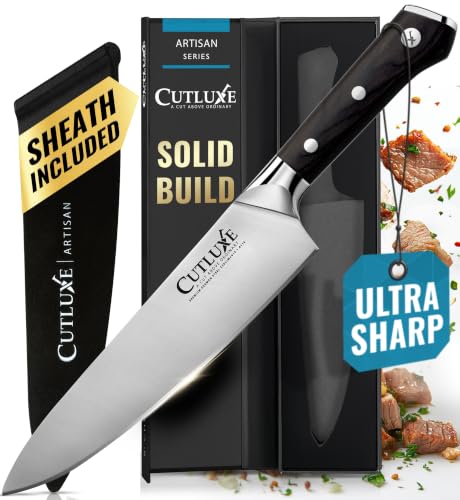


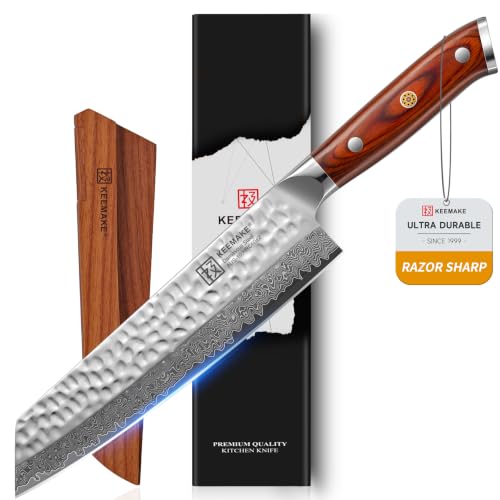
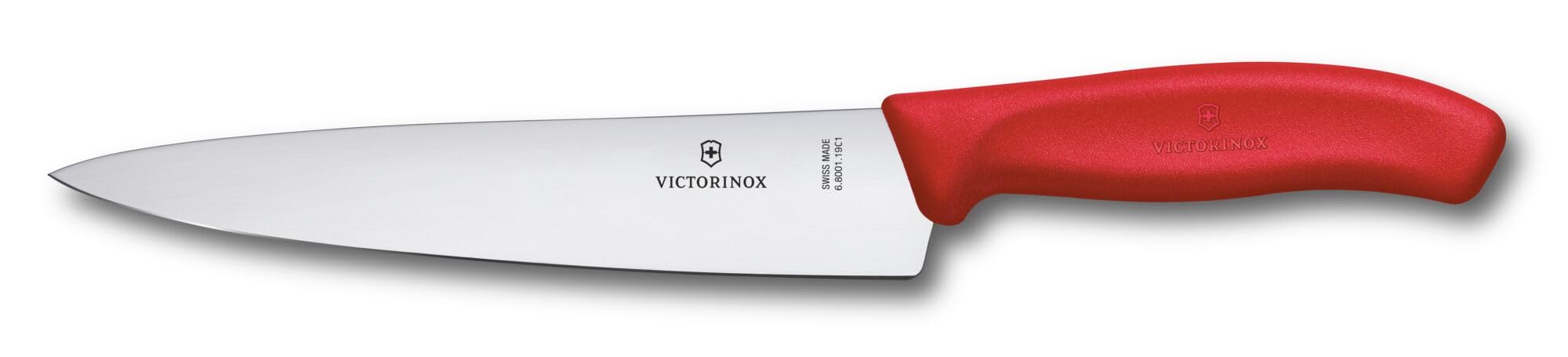
Quick Answer: Three Routes in 30 Seconds
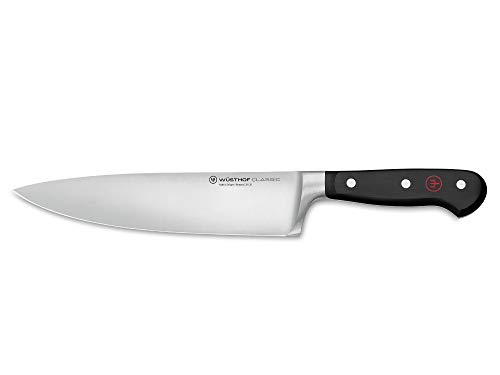
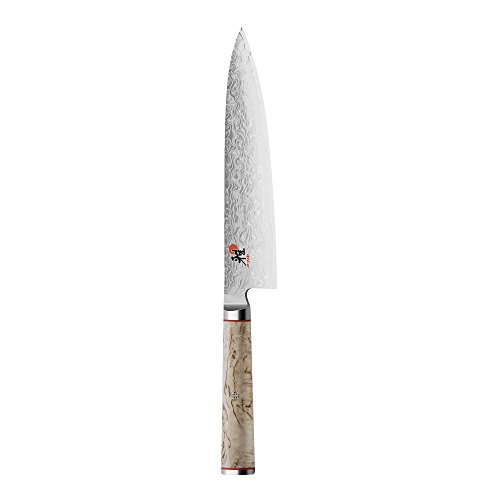
Three sensible routes exist at this price. Most households do best with a balanced 8 inch German profile, sturdy for squash yet comfortable for daily vegetables. Cooks who prefer a lighter touch often choose a slim Japanese influenced blade. Tight budgets favor a simple stamped or basic forged knife that spends money on steel and edge rather than decoration.
- For shared kitchens: a balanced 8 inch German profile with a full size handle.
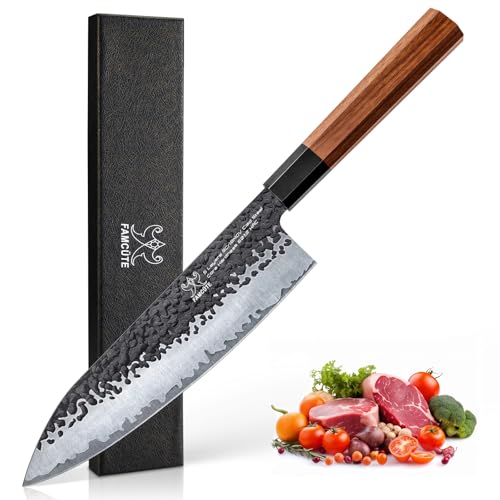
- For a tight budget: a plain blade with no costly decorative finish.
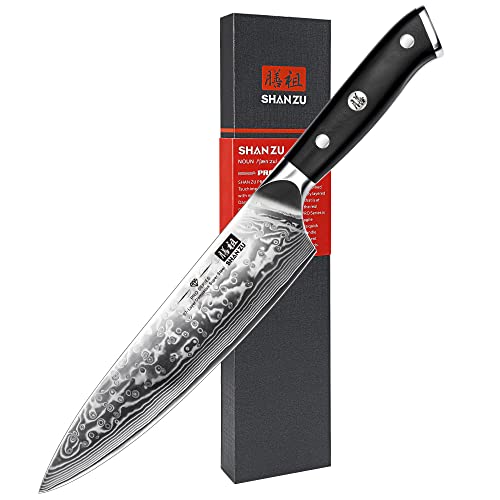
- For extra features: a slim blade with food release dimples and a sheath included.
Before You Buy: A Quick Checklist for Choosing a Chef Knife
Price alone tells you little at this level. Two knives under $50 can feel completely different in your hand and on the board. Work through the points below in order, starting with size and routine, before comparing steel numbers.
Size: Match It to Your Space
An 8 inch blade suits most homes because it is long enough for cabbage and melons yet easy to control for onions and herbs. Choose 6 or 7 inch if your board is small or you mostly cut fruit and single portions. A 9 or 10 inch blade helps with large roasts but needs a wide board and long storage. Measure your drawer, block slot, or board first, since a knife that does not fit your space will stay in a box.
Which Type Fits Your Routine
German style knives have a thicker spine and a curved belly built for rocking through herbs and piles of vegetables. Japanese style knives are thinner and lighter, made for straight push cuts and precise slices. A santoku has a flatter edge and shorter length that some cooks find less intimidating, so a chef knife vs santoku comparison helps if you rarely rock chop. Match the type to how you already cut, not to how you think you should.
Features Worth It (and Ones to Skip)
A fitted sheath is worth having if the knife will live in a drawer, because it protects the edge and your fingers when you reach inside. Dimples along the blade can help wet slices of potato or cucumber release instead of sticking, though they do not change sharpness. A wood handle looks warm but needs careful drying. Skip paying for printed patterns that imitate layered steel, oversized bolsters that crowd your grip, and large bundled sets when you only need one good knife.
Steel Type and Hardness (HRC)
Most knives at this price use stainless steel or high carbon stainless steel, which resists rust from tomatoes and onions. Plain carbon steel takes a fine edge but darkens and needs drying right after acidic foods, a habit many busy homes will not keep. Hardness is listed as HRC. Blades around 54 to 58 HRC sharpen easily and tolerate rough contact better. Blades near 58 to 61 HRC hold an edge longer but can chip if you twist them sideways in hard squash.
Blade Geometry: German vs Japanese
Geometry shapes how a knife moves through food more than the steel name does. A German blade carries more curve near the tip, so the edge stays in contact with the board during a rocking cut. A Japanese blade is flatter and thinner behind the edge, so it glides through onions with less wedging. If that lighter feel sounds right, explore our guide to the best japanese chef knife for options beyond this budget. Thick spines add confidence but can split dense vegetables.
Handle, Bolster, and Balance
Hold matters as much as steel when several people share one knife. A molded polymer or composite handle tolerates wet hands well, while smooth wood can feel slippery unless the shape fills your palm. A half bolster leaves the full edge usable and gives your fingers room in a pinch grip, which our guide on how to use a chef knife explains in detail. Good balance puts the weight near your grip, so the knife feels calm rather than tipping toward the tip or handle.
Realistic Budget Ranges
Under $30, expect a thin stamped blade, basic steel, and a simple handle. Such a knife can still cook dinner well if you hone it often. About $30 to $50 is the rewarding zone for this guide, where forged construction, better heat treatment, and comfortable handles appear. Above $50, extra money usually buys harder steel and finer finishing. If your budget is firm, staying under $50 and reserving a little for a honing rod and a decent board often gives better daily results.
Three Types Worth Your Money Under $50
Instead of chasing a single winner, think in types. The three routes below cover shared family kitchens, careful budget shoppers, and cooks who want useful extras without paying for decoration.
1. The Balanced 8 Inch German Profile for Most Homes
This type is the safe center of the category. An 8 inch blade with a gentle belly handles rocking cuts for herbs, straight cuts for onions, and heavier work on sweet potatoes without feeling fragile. Moderate weight helps the blade through dense food, and a full size handle suits different hand sizes at the same counter. That flexibility suits shared homes, a point our guide for the best chef knife for home cooks also stresses. Choose it if one knife must please two or three cooks.
2. The Plain Blade That Skips Decoration
Value at this price comes from spending where you can feel it: decent steel, sound heat treatment, and an edge that arrives sharp. A stamped blade keeps weight and cost down, while a simple forged blade may feel sturdier. Both can be excellent buys when the handle is secure and the finish is clean. What you give up is polish. Expect a plain box and no extras beyond the knife itself. For a single person or a first apartment kitchen, that trade is usually smart.
3. The Slim Japanese Influenced Profile
This type favors precision over toughness. A thinner blade, a flatter edge, and a lighter build make fine slices of garlic, herbs, and raw fish feel controlled on the board. Some versions add dimples for food release or include a sheath, both useful in small kitchens. The trade off is care. A harder, thinner edge dislikes twisting, prying, and scraping food with the edge. Choose this route if you mostly cook vegetables and boneless proteins and will treat the edge gently.
Our Selection Process for the Best Chef Knives Under $50
We judge the best chef knife under 50 on five criteria: steel and edge retention, balance and ergonomics, sharpness on arrival, ease of maintenance, and value. Our comparisons draw on manufacturer specifications plus patterns in verified buyer reviews about comfort, chipping, and handle wear.
What You Get (and Give Up) Under $50
You get more than many shoppers expect. A good knife in this range arrives sharp, balances well, and covers nearly every daily task, from breaking down a chicken to slicing tomatoes cleanly. For a family that cooks most nights, one tool covers the great majority of prep and keeps the drawer simpler than a large block set does.
What you give up is mostly refinement. Edge retention will be shorter than on premium steel, so plan on honing more often. Fit and finish can vary, with small gaps or rough spots on the handle or spine, and warranties tend to be basic. None of that stops the knife from cooking well, but do check the return policy and inspect the blade when the box arrives.
Common Buying Mistakes to Avoid
- Buying a blade too long for your board, so the tip runs off the edge and control suffers.
- Spending the whole budget on the knife alone, leaving nothing for a honing rod or a suitable board.
- Choosing the hardest steel for rough habits, then chipping the edge on bones or frozen food.
- Storing a bare blade loose in a drawer, which dulls the edge and risks cuts when reaching inside.
- Judging sharpness by pushing down harder, when extra force usually means the edge needs attention instead.
Cost of Ownership and Care
Ownership costs stay modest. A honing rod costs about $10 to $25, a basic whetstone about $15 to $40, and a sheath only a few dollars more. Those small items protect the money you spent on the knife itself, with no other ongoing costs.
For care, hand wash the knife in warm soapy water, dry it fully, and store it on a magnetic strip, in a block, or in its sheath. Hone lightly and often to keep the edge aligned. When honing stops restoring the bite, follow a step by step guide on how to sharpen a chef knife rather than pressing harder. Use wood or soft plastic boards, since glass and stone dull any edge quickly.
Your Questions, Answered
Can you get a good chef knife for under $50?
Yes, provided you spend the budget on one knife instead of spreading it across a set. Concentrating about $30 to $50 on a single 8 inch blade buys better steel and a better handle than the same money divided among six pieces. What separates a good one is clean finishing, a secure handle, and an edge that arrives evenly sharp from heel to tip.
How do you clean a chef knife?
Wash the knife by hand right after use, with the blade facing away from your fingers, then dry it completely before storing it. The point many owners miss is the handle joint. Food and water collect where the blade meets the handle, so wipe that seam carefully and never leave the knife soaking in a sink. Soaking hides the blade from view and can invite rust spots even on stainless steel.
How long does a chef knife last?
A well kept knife at this price can serve a home kitchen for many years, often a decade or more. Its working life ends when repeated sharpening has thinned the edge so much that the blade wedges in food. You can slow that process by honing regularly, which restores cutting ability without removing metal, and by sharpening only when honing no longer helps.
Is a chef knife worth it for a home cook who owns a knife set?
It can be, if the knives in your set are dull, uncomfortable, or rarely used beyond one favorite. Many households find that one good 8 inch knife replaces the three or four set pieces they actually reach for, freeing counter space and simplifying care. If your current main knife already cuts cleanly and feels comfortable, spend the money on a whetstone and a better board instead.
What is the best chef knife under $50 for a small kitchen?
For a small kitchen, the best choice is usually a 6 or 7 inch blade or a compact santoku shape with in drawer storage. The detail that matters most is total length, not blade length alone, because a long handle can crowd a shallow drawer. Choose a knife sold with a fitted sheath, or budget a few dollars for one, so no bulky block takes up scarce counter space.
Final Thoughts: The Bottom Line
Choosing the best chef knife under 50 for your home comes down to fit, not hype. Match the size to your board and storage, pick the German or Japanese profile that suits how you cut, and leave a little budget for honing and safe storage. Use the product table above to compare the three types side by side, then order the one that matches your kitchen and your habits.