Best Ceramic Saute Pans (2026): Buying Guide
Disclosure: We may earn a commission when you buy through links on this page, at no extra cost to you. As an Amazon Associate I earn from qualifying purchases. Learn more

Choose the best ceramic saute pan for your stove and household: compare size, coating safety, induction fit, oven limits, care and budget before you buy.
Picture a weeknight dinner where chicken, peppers and a pan sauce all need the same pan, and nothing sticks or spills over the side. That is exactly the job a saute pan does well, thanks to its wide flat base and tall straight sides. Choosing a best ceramic saute pan for your home comes down to fit more than hype. Your cabinet space, your household size and your stove type should drive the decision.
This guide focuses on everyday life at home rather than showpiece cooking. You will find sizing help, coating facts, stove and oven checks, honest budget ranges and care steps that stretch the life of the coating. Use the product table to compare current options, then use the checklist to narrow your choice with confidence.


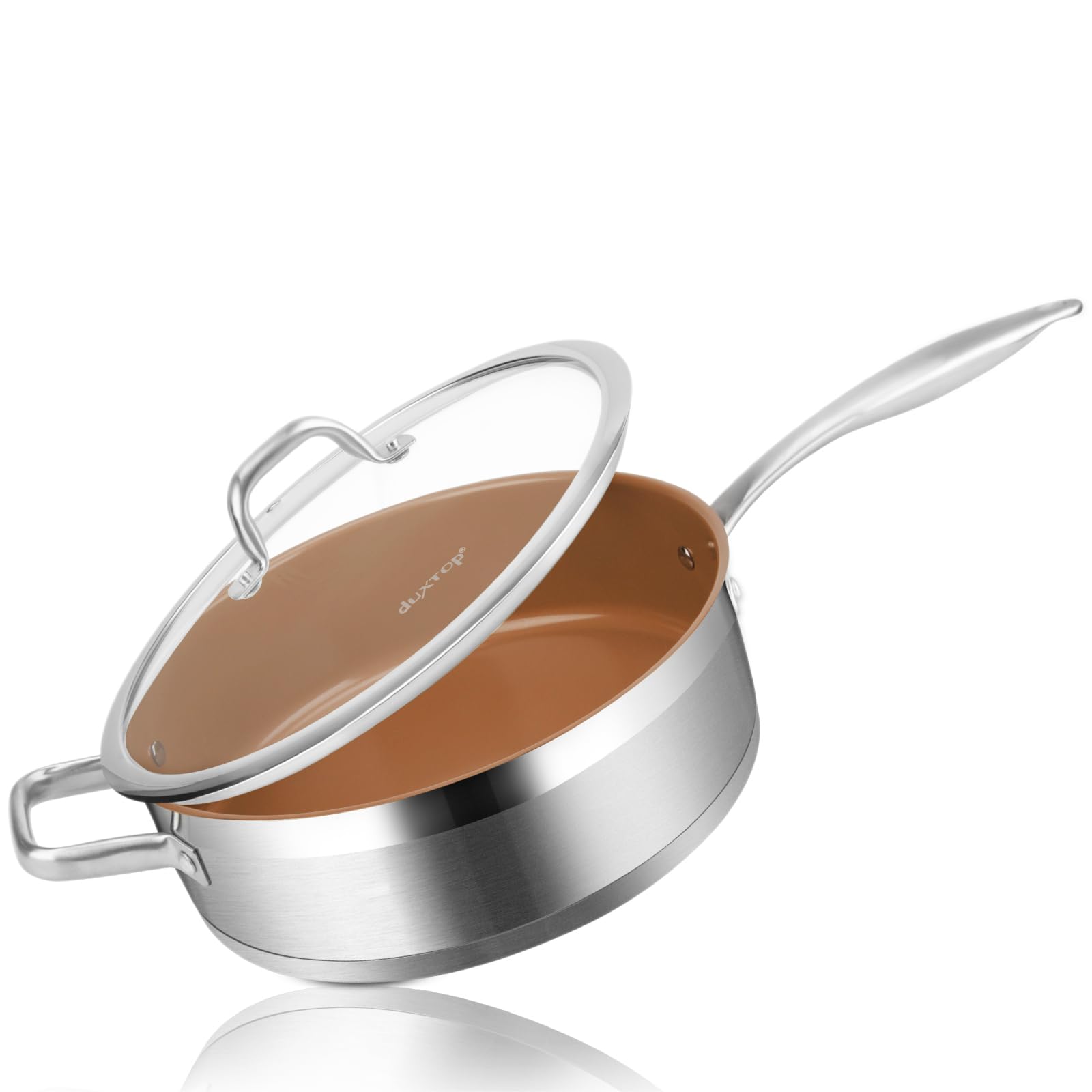

Quick Answer: How to Choose in 30 Seconds
If you want one simple starting point, choose a 3.5 quart ceramic saute pan with a lid, a helper handle and a base that matches your stove. That size feeds two to four people, fits most burners and still stores without a struggle. Add induction compatibility only if your stove needs it, and plan on medium heat cooking to protect the coating.
Households that cook larger batches should size up to 5 quarts, while single cooks usually do better at 3 quarts. If you are still deciding between pan styles, our overview of the best saute pan types shows how ceramic compares with other materials.
Before You Buy: A Quick Checklist for Choosing a Saute Pan
The checklist below follows the order that matters most in a real kitchen. Work through size first, then material and features, then safety and stove fit, and finish with budget. A pan that fails an early check rarely becomes a good buy later.
Size: Match It to Your Space
Capacity and diameter do different jobs, so check both before you order. A 3 quart pan suits one or two people and reheats sauces without crowding. The 3.5 quart and 4 quart sizes cover most family dinners, from sauteed vegetables to one pot pasta finishes. A 5 quart or 6 quart pan handles batch cooking, but it needs a large burner and deeper storage space, and a 12 inch base can overhang smaller burners and heat unevenly. Our guide on what size saute pan do i need walks through measuring your burner and storage space step by step.
Which Type Fits Your Routine
Ceramic in this category means a ceramic coating over a metal body, usually aluminum, rather than a pan made of solid ceramic. That coating gives easy food release for eggs, fish and delicate sauces, and it cleans up fast on busy nights. It is not the tool for hard searing at high heat, where a stainless steel saute pan builds deeper browning and tolerates the broiler. A best cast iron saute pan holds heat longer for steady frying, but it weighs far more and needs seasoning care. Pick ceramic when gentle cooking and simple cleanup top your list.
Features Worth Paying For and Ones to Skip
A fitted lid is worth having because it traps steam for braising, wilting greens and finishing grains in the same pan. A short helper handle opposite the main handle is also worth it, since a full pan is heavy and two hands make lifting safer. Glass lids let you watch food without lifting, though solid lids often tolerate higher oven heat. Skip novelty extras such as bundled utensils that duplicate what your kitchen already holds.
Is a Ceramic Saute Pan Non Toxic?
Ceramic coatings are made with a sol gel process and are generally sold as made without PFAS and PTFE, the chemicals used in traditional nonstick coatings. That said, the phrase non toxic is a marketing term rather than a regulated standard, so read the maker disclosure for the exact pan you are considering. Stainless steel and cast iron avoid coatings entirely, which some buyers prefer for very long service life. Whatever you choose, retire a ceramic pan once the coating is deeply scratched or food starts sticking across the whole surface.
Induction, Gas and Glass Top Compatibility
Your stove decides whether a pan works at all, so confirm the base before anything else. Induction cooktops need a magnetic base, and plain aluminum will not respond unless the maker adds a bonded steel plate. Gas burners forgive almost any base, but flames should stay under the pan rather than licking up the sides and scorching the coating. On glass tops, pick a flat smooth base and lift the pan instead of sliding it, which protects both the glass and the coating edge.
Oven Safe Temperature and Handles
Many ceramic saute pans list oven limits around 450 to 600 degrees F, but the lid and handle often set a lower limit than the pan body. Phenolic handles and glass lids commonly top out lower than metal parts, so check each part rather than the headline number. If you finish dishes in the oven often, choose metal handles and confirm the full set is rated for your usual temperature. Always use oven mitts in the oven, even if handles stay comfortable on the stove.
Realistic Budget Ranges
Under $50, expect a lighter body, a basic lid and a coating that rewards gentle use for a shorter span. The middle band of about $50 to $100 usually brings a thicker base, better heat spread and sturdier handles. At about $100 to $200, you are paying for induction ready construction, higher oven limits and a body built for years of daily service. Across all tiers, budget for eventual coating replacement as a normal cost of ownership.
Three Buying Profiles and What to Prioritize
Instead of chasing a single winner, match the pan to the way your household actually cooks. The three profiles below cover most homes, and each one points to a different balance of size, price and durability.
The All Purpose Family Pan
Most homes do best with a 3.5 quart or 4 quart pan, a glass lid and a helper handle. This profile covers weeknight proteins, vegetable sides and pan sauces without swapping cookware mid recipe. Prioritize an even heating base and a coating from a maker that states its materials clearly. If your burners are compact, our notes on the best 12 inch saute pan size explain when a wide base helps and when it crowds a small stove.
The Value Profile for Smaller Budgets
If cost leads your decision, a 3 quart pan in the lowest price band can still cook very well with kind treatment. Cook on medium heat, preheat gently and wash by hand, and a modest pan will serve small households reliably. Prioritize a snug lid and a comfortable main handle over extra quart capacity you may rarely fill. This profile suits first apartments, dorm adjacent cooking and second pans bought for side dishes.
The Long Term Investment Profile
Buyers who cook daily and keep cookware for years should look at the top band with a thick forged body and an induction ready base. The body and handles in this tier hold up well, even though the ceramic surface itself remains a wear item with a finite life. Prioritize the highest oven rating, metal handles and a warranty that covers defects in materials and workmanship. This profile makes sense when one pan must handle weeknight dinners and weekend batch cooking alike.
What to Check Before You Order
Before you buy, verify five things on the product page and the maker site. Check base construction, since thin bases warp and spin on glass tops. Read the coating and material disclosures rather than relying on headline claims. Confirm stove and oven compatibility in writing, including the lid. Match capacity to your household size, and scan recent buyer comments for patterns about sticking or loose handles rather than single complaints.
Ceramic Compared With Other Saute Pan Materials
Ceramic coated pans win on release and cleanup. Eggs slide, cheese sauces rinse away and delicate fish lifts without tearing, all with less oil than bare metal needs. The trade off is heat tolerance and lifespan, since the coating softens its release as it ages and strong heat speeds that decline.
Stainless steel and cast iron take the opposite deal. They sear harder, shrug off metal utensils and can serve for decades, but food sticks more readily and cleanup takes more effort. Many kitchens own both styles, using ceramic for gentle daily cooking and bare metal for high heat work. Choose based on the meals you cook most often.
Common Buying Mistakes to Avoid
Most regrets with this pan style come from fit and heat habits rather than the brand on the box. Watch for these frequent errors.
- Buying a 6 quart pan for a small stove, which leaves the edges undercooked and the cabinet door unable to close.
- Assuming every ceramic pan works on induction, which leads to a pan the cooktop will not even detect.
- Cooking on high heat to save time, which dulls the coating and shortens its useful life within months.
- Skipping the lid to save money, which limits braising and forces you to borrow a lid that never seals well.
- Ignoring replacement cost, which makes a cheap pan bought three times cost more than one mid priced pan.
Cost of Ownership and Care
Owning a ceramic saute pan costs little day to day, but the coating sets a replacement clock that bare metal does not have. With gentle use, many home cooks get about 2 to 4 years of strong release before sticking increases. Stretch that span by cooking on low to medium heat, preheating briefly, and keeping cooking sprays off the surface, since their additives bake into a sticky film.
For daily care, let the pan cool before washing so cold water does not shock the coating. Wash with warm soapy water and a soft sponge, and use wooden or silicone utensils instead of metal. Store the pan with a cloth protector between it and other cookware, or hang it so the coating never scrapes rough edges.
Your Questions, Answered
What is the most reliable saute pan brand?
No single brand is the most reliable for every kitchen, because reliability depends more on build and care than on a name. Look for a thick flat base, firm handles and clear material disclosures. One useful extra check is the warranty terms, since makers that publish specific defect coverage tend to support the pan longer. Recent owner comments about handle looseness over time also tell you more than a star average alone.
How do you clean a ceramic saute pan?
You clean a ceramic saute pan with warm water, mild dish soap and a soft sponge once the pan has cooled. For a browned oil film, simmer a little water in the pan for a few minutes, then wipe the softened residue away. Avoid steel wool and harsh scouring powders, which scratch the coating and invite future sticking. Drying the pan fully before storage also keeps the rim and base free of water marks.
Is a saute pan worth it if you already own a skillet?
A saute pan is worth it when you cook saucy or high volume dishes that a skillet handles poorly. Its straight sides hold more liquid than a sloped skillet of the same diameter, so braises and one pot meals fit without spilling. The fitted lid also gives you covered cooking that most skillets only manage with a borrowed lid. If you mainly fry eggs and sear single portions, a skillet alone may still cover your needs.
How long does a ceramic saute pan last?
A ceramic saute pan typically gives about 2 to 4 years of reliable release with home use, and the body often remains sound after the coating fades. Heat level is the biggest factor, since repeated high heat breaks the surface down faster than any other habit. Watch for early signs such as a dull or faded cooking surface and eggs that need more oil than before. Those changes signal that replacement is near, even if the pan still cooks safely.
Are ceramic saute pans worth it?
Ceramic saute pans are worth it for cooks who value easy release and fast cleanup for eggs, fish, vegetables and light sauces. They make the most sense when you cook those foods several times a week and accept periodic replacement as part of the deal. If your cooking leans on hard searing and broiler finishing, the value drops because the coating cannot handle that style well.
What is the best ceramic saute pan?
The right answer depends on your stove, your household size and how you cook, rather than on one universal model. A 3.5 quart pan with a fitted lid, a helper handle and a base matched to your burners covers the widest range of homes. Before ordering, measure your largest burner and the cabinet or drawer where the pan will live. That simple check prevents the most common return, which is a good pan in the wrong size.
The Bottom Line
A ceramic saute pan earns its place when it fits your stove, your storage and the size of the meals you actually make. Use the checklist above, review the product table above once more, and favor honest material disclosures over bold marketing claims. Choose the profile that matches your household, treat the coating gently, and your best ceramic saute pan will make weeknight cooking simpler from the first meal onward.