
Best 12 Inch Saute Pans (2026): Size, Features and Buying Tips
Disclosure: We may earn a commission when you buy through links on this page, at no extra cost to you. As an Amazon Associate I earn from qualifying purchases. Learn more

What matters when choosing the best 12 inch saute pan: size, features, budget and the mistakes to avoid.
It is a weeknight, you have chicken thighs, sliced onions, and a sauce that all need the same pan, and your 10 inch skillet is already crowded. That is when a 12 inch saute pan earns its cabinet space: the wide flat base browns food in a single layer while the tall straight sides hold sauce without splashing the stove. If you are hunting for the best 12 inch saute pan for your household, this guide sorts the choice by kitchen space, family size, stove type, and budget, and the product table on this page lists current options.
Start with how you actually cook rather than the longest feature list. A pan that fits your largest burner and suits the meals you make most will get used daily. For the broader picture, our guide to the best saute pan covers the full range of sizes and shapes.


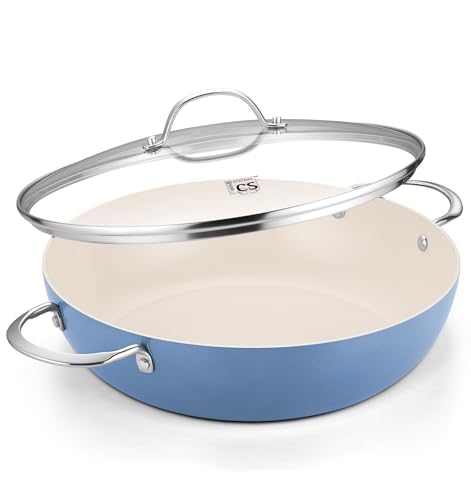

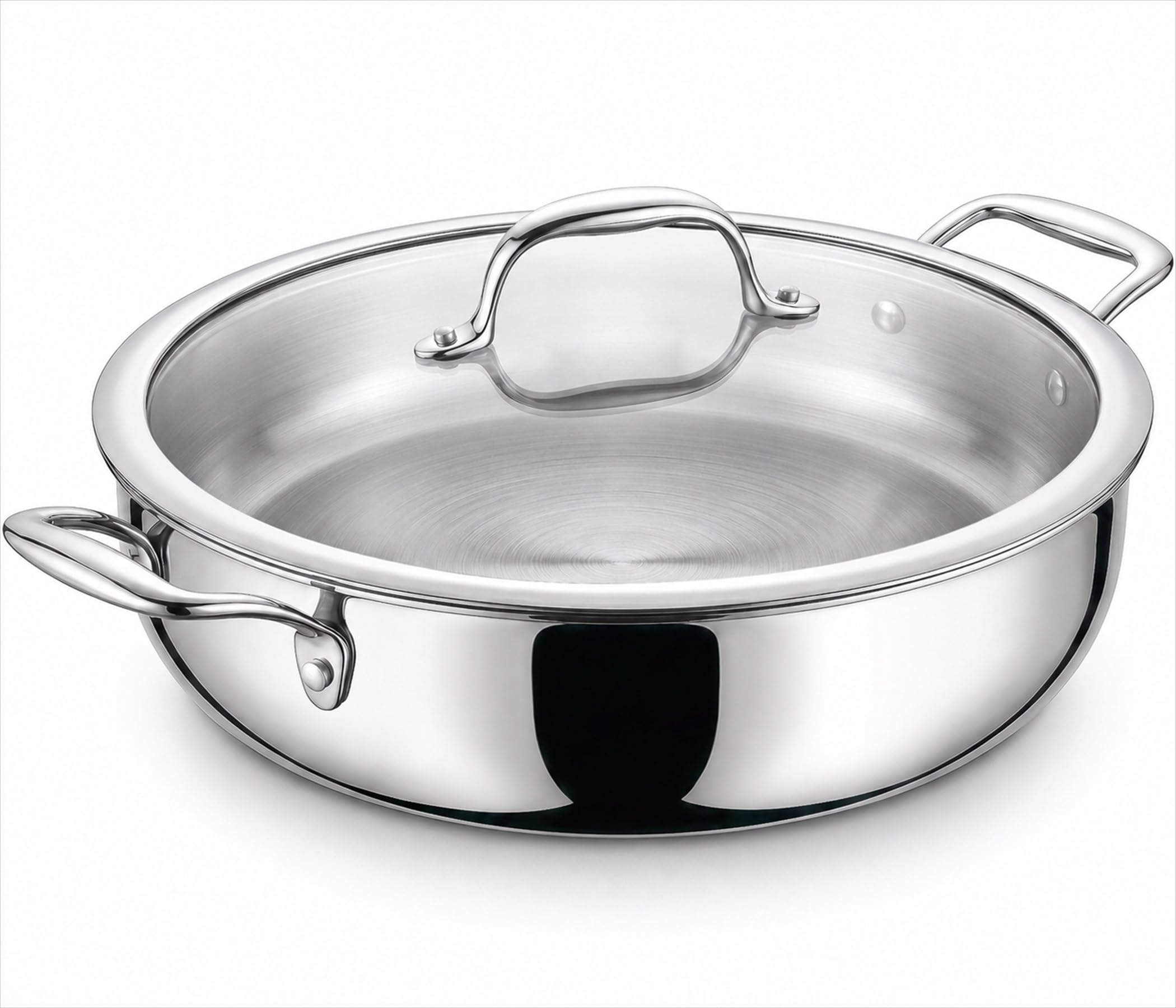

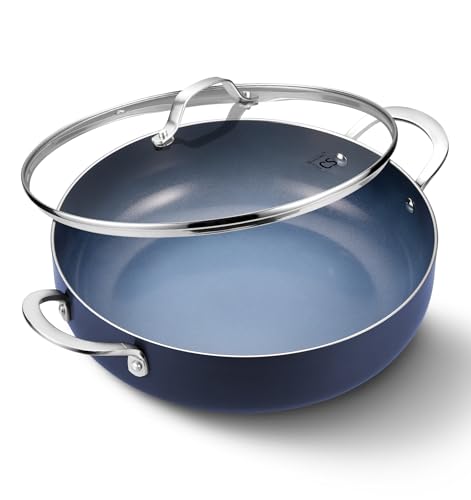

Quick Answer: The Short Version
For most homes, a clad stainless steel pan around 3.5 to 4 quart is the safest long term buy, since it sears well, handles sauces, and has no coating to wear out. A ceramic coated version suits cooks who make eggs and fish often. Cast iron costs less and holds heat beautifully, but it is heavy. Match the base to your stove, insist on a lid and a helper handle, and spend on construction rather than extras.
Before You Buy: A Quick Checklist for Choosing a Saute Pan
Size: Match It to Your Space
Twelve inches describes the diameter across the top, but capacity decides how much food fits. Most pans this size hold about 3 to 6 quart. A 3 or 3.5 quart pan is shallower and lighter, fine for a couple. A 4 or 5 quart version handles family portions and one pot meals, while a deep 6 quart pan borders on a braiser and needs a large burner plus serious storage. Measure your cabinet depth and biggest burner first, and see our guide on what size saute pan do i need if you are torn between depths.
Which Type Fits Your Routine
Stainless steel, especially tri ply clad with an aluminum core, is the workhorse choice: it browns meat well, tolerates metal utensils, and goes from stove to oven without drama. Nonstick and ceramic coated pans release delicate foods with little fat, but the coating is a wear item you will replace one day. Cast iron holds heat through a big batch of searing and costs little, though the weight rules it out for some cooks. Copper heats fast but needs polishing and sits at the top price tier.
If clad steel sounds right, the guide to the best stainless steel saute pan explains layer counts and core materials. If a slick coating matters more, see the guide to the best ceramic saute pan for how ceramic surfaces age.
Features Worth Paying For, and Ones to Skip
A fitted lid is worth it, since it turns the pan into a braiser and keeps sauces from reducing too fast. A helper handle opposite the main handle is also worth it, because a full 4 quart pan of stew is a two hand lift. Skip bundled extras you will never use, such as steamer inserts sized for this diameter alone and oversized sets full of pieces that stay in the box.
Is It Non Toxic?
The safety concerns differ by material. Traditional nonstick uses a PTFE coating, which is stable at normal cooking heat yet should never be heated empty on high, and it must be replaced once scratched or flaking. Ceramic coatings avoid PFAS and PTFE but wear faster. Stainless steel and cast iron have no coating at all, so nothing can peel into food, which is why cautious buyers often land there. Follow the maker heat limits and retire any coated pan whose surface has broken down.
Induction, Gas, and Glass Top Compatibility
For induction, the base must be magnetic, so check listings for an induction ready base or a bonded steel plate on the bottom. Plain aluminum and copper pans will not work on induction without that plate. On gas, almost any sturdy pan works. On a glass top stove, pick a flat, smooth bottom that sits fully on the element, and lift rather than slide the pan, since rough iron bases can scratch the surface.
Oven Safe Temperature and Handles
Check the oven rating for both the pan and its lid, because glass lids often carry a lower limit than the pan itself. All metal handles tolerate the highest heat, while silicone wrapped handles and phenolic grips cap out lower. A long handle that stays balanced in your grip matters when the pan is full, so test the hold with mitts on before the first braise.
Realistic Budget Ranges
For about $50 or less, expect a single material pan, a basic nonstick model, or plain cast iron, all serviceable but with thinner bases that can heat unevenly. About $50 to $100 is where clad stainless and better ceramic coated pans appear, the best balance of performance and price for most homes. About $100 to $200 gets thicker cladding, stronger handles, and longer warranties. Paying more mainly buys longevity, so set your budget by how many years you expect the pan to serve.
Three Types Compared: Which Saute Pan Suits Your Home
Clad Stainless Steel for Everyday Versatility
Pick this type if you want one pan for searing, simmering, and finishing in the oven. The aluminum or copper core spreads heat across the base and up the sides, so sauces cook evenly and meat browns instead of steaming. It tolerates deglazing with wine or stock, shrugs off metal spatulas, and can last decades. The trade off is that eggs and fish will stick without enough fat and a properly heated pan, and stuck on fond needs a soak before washing. For households that cook varied meals and dislike replacing pans, it is the default answer.
Ceramic Coated Nonstick for Easy Release and Gentle Cleanup
Choose this type if your week runs on eggs, pancakes, fish fillets, and leftovers that must not cling. Food slides out with little oil, and washing takes seconds, which matters in busy homes where the same pan works daily. The limits are real: keep heat at low to medium, use wood or silicone tools, and accept that the slick surface fades after a few years. Treat replacement cost as part of the deal.
Cast Iron for Hard Searing on a Modest Budget
Cast iron earns its place when deep browning is the priority and the budget is tight. A thick iron base holds heat through a crowded load of chicken pieces, and the pan moves from stove to oven to table without complaint. Many cooks start with our guide to the best cast iron saute pan for this mix of price and searing power. The costs are weight and upkeep: a full iron pan is a two hand lift for many people, and the seasoning needs attention after acidic sauces.
Our Selection Criteria for the Best 12 Inch Saute Pans
We judge pans in this size on five points: even heat across a wide base, construction that resists warping, material safety with clear maker guidance, compatibility with common stoves and ovens, and cleaning effort after a family meal. Those judgments draw on maker specifications and patterns in verified buyer feedback, not personal use claims, so treat the criteria as a checklist for any listing you open.
Is a 12 Inch Saute Pan the Right Size for You?
This size fits households of three to five people best. It browns about four chicken breasts or a pound and a half of ground meat in one layer, and it holds a full batch of pasta sauce with room to stir. Couples cooking small portions may find a 10 inch pan lighter and faster to heat, while cooks who braise big roasts often step up to a Dutch oven. Storage is the quiet deciding factor: with its long handle this pan measures close to 20 inches overall, so confirm it fits your cabinet and oven.
Common Buying Mistakes to Avoid
- Buying by diameter alone and ignoring depth, so the pan either overflows with sauce or heats a shallow puddle.
- Skipping the stove check, then finding the base will not work on induction or rocks on a glass top.
- Forgetting replacement costs, since a cheap coated pan replaced every two years can outspend one clad pan over a decade.
- Paying for features you will not use, such as bundled inserts, when the money would buy a thicker base.
- Choosing a pan too heavy to lift when full.
Cost of Ownership and Care
Ownership cost is mostly about lifespan. A clad steel or iron pan asks only for basic tools and the odd scouring pad, while a coated pan adds a replacement cycle and gentle utensils. Wash steel with hot soapy water, dry it on low heat to stop water spots, and use a powdered cleanser when rainbow stains appear. Season bare cast iron lightly after heavy use, and store pans with a cloth pad between stacked pieces.
Your Questions, Answered
What is the most reliable saute pan brand?
No single brand wins for every kitchen, and reliability tracks construction more than the name on the base. Look for thick, even bases, handles attached with sturdy rivets or solid welds, and a warranty that covers warping for years rather than months. Responsive support matters too, since a maker who sells replacement lids keeps a good pan in service far longer than a famous logo on a flimsy pan.
How do you clean a saute pan?
Let the pan cool until warm rather than hot, then wash it in hot soapy water with a soft sponge. For stubborn browned bits, simmer a cup of water in the warm pan and lift the residue with a wooden spoon, a gentle trick called deglazing. A paste of baking soda and water lifts light stains from steel. Dry the pan fully before storing it, since standing water can start rust on bare iron rims.
Is a saute pan worth it?
Yes, if your cooking sits between what a skillet and a Dutch oven do best. The tall straight sides hold sauces that would slosh out of a skillet, while the wide base browns far more food at once than a stockpot can. If you mostly fry eggs and toast sandwiches, a skillet alone will do. If one pot dinners show up weekly, a saute pan becomes the most reached for pan you own.
How long does a saute pan last?
A clad stainless or cast iron pan can serve for decades, often outliving the stove it sits on. Ceramic and traditional nonstick pans usually give two to five years of good release before the coating tires. Watch for the warning signs: a base that spins or wobbles on a flat surface has warped, and a scratched or flaking coating has reached the end of its life.
What size saute pan do I need?
Start from your largest regular meal rather than your biggest holiday one. A 12 inch pan around 3.5 to 4 quart covers family dinners for three to five people, and smaller households that love leftovers also do well with it. One more check helps: measure the pan you reach for most now. If its sides are too low for sauces, gain depth; if food crowds and steams, go wider.
What is the best 12 inch saute pan?
The best answer depends on your stove and your habits. Cooks who want one durable pan for searing, sauces, and oven work should start with clad stainless steel. Cooks who prize easy release for eggs and fish should look at ceramic coated options and budget for eventual replacement. Cooks who sear hard and spend carefully should consider cast iron. Match the base to your cooktop first, then let your most common meals settle the rest.
The Bottom Line
The product table above pulls the main types together so you can compare base material, capacity, and stove fit at a glance. For most real homes, the best 12 inch saute pan is a clad stainless model around 4 quart with a lid and a helper handle: it fits family portions and works on nearly every stove. Pick ceramic coated if easy release rules your mornings, and cast iron if searing power on a budget matters most.


