
Best Celestron Binoculars 2026: Matching the Right Model to Your Routine
Disclosure: We may earn a commission when you buy through links on this page, at no extra cost to you. As an Amazon Associate I earn from qualifying purchases. Learn more
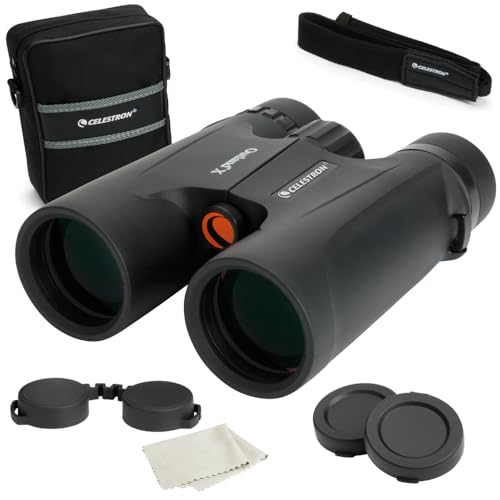
Match celestron binoculars to your main use, from birding and travel to stargazing, with clear checks on power, lens size, coatings and eye relief.
There is no single Celestron model that suits every outing, because the night sky, a woodland trail and a stadium ask for different optics. The best celestron binoculars for you match your main subject, the light you use most and how far you carry your gear. Use the comparison table below to line up size, weight and price against that main use.
Start by deciding what you will view most often. Birds and wildlife need quick focus and a wide view, the moon and planets reward larger glass and steady support, and travel calls for a small body you will actually pack. The sections that follow turn those needs into clear choices on power, lens size, coatings, fit and sealing.
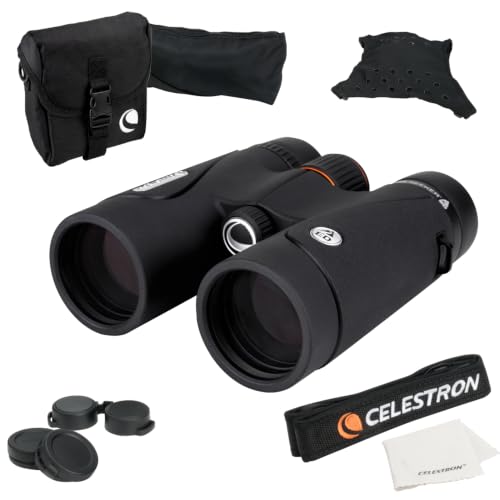


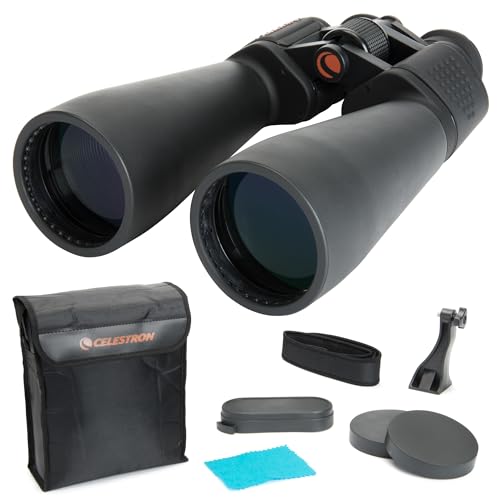


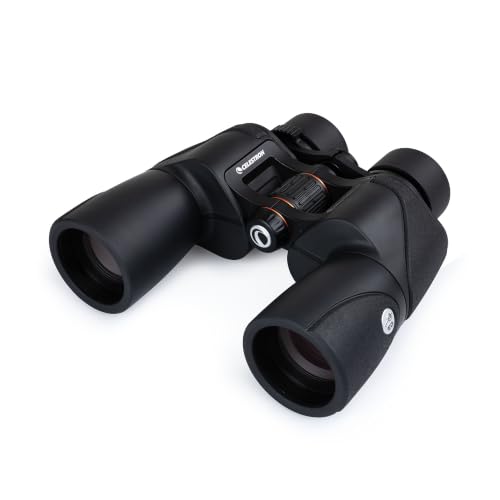

Who Should Buy Which Celestron Binoculars?
Pick by the outing you repeat each week, not by the highest power printed on the box. A model that feels right for two hours under the stars may feel bulky on a trail, while a pocket model can look dim once the light fades.
Astronomy Fans Watching the Moon and Bright Clusters
You need brightness and steady support more than a wide field. Choose a larger objective lens, often 50 mm or more, with moderate to high power for lunar detail and bright clusters. Weight matters less at home, so a heavier body is easier to accept. A mount point for a tripod matters too, because shake grows with power and hides fine detail.
Birders and Wildlife Watchers on Trails
You need to find a moving subject fast, follow it, and focus close when it lands nearby. Choose 8x or 10x power, a wide field, a smooth center focus wheel and a close focus distance of about 6 to 10 feet. To see how field and focus shape tracking, see our guide to the best binoculars for birdwatching. Readers who scan fields at dawn can also see our guide to the best rated binoculars for hunting.
Travelers, Sports Fans and Concert Goers
You need a small, light pair that fits a day bag and comes out fast when action starts. Choose a compact body with about 25 to 32 mm lenses and 8x power, which is easier to hold steady in a crowd and kinder on your neck. You give up some brightness after sunset, but you gain a pair you will carry all day.
Key Features to Compare
Compare these points in the same order each time, because power alone tells you little about brightness or comfort. When you compare best celestron binoculars in this order, the tradeoffs between size, light and stability become easier to judge.
Magnification and Objective Lens Size
The first number is magnification and the second is the front lens size in millimeters, so 8x42 means a subject looks eight times closer through 42 mm lenses. A larger front lens gathers more light and can give a brighter image, but it adds weight and bulk. Choose 8x if you view while walking or from an unsteady spot, because shake is easier to control. Choose 10x when you mostly view from a still position and need extra reach.
Prism Design and Lens Coatings
Prisms fold the light path inside the body, and their glass and coatings shape contrast and clarity at the edge of the view. BaK 4 glass is generally preferred over BK 7 glass because it tends to give a cleaner view with less dimming near the edges. Coatings on lens surfaces cut glare and help colors look true in bright sun or under stadium lights. On roof prism models, phase coating helps keep contrast strong.
Field of View and Exit Pupil
Field of view tells you how wide a scene you see at a set distance, often listed as feet at 1,000 yards. A wider field helps you locate a bird, boat or player and follow it without constant searching. Exit pupil is the lens size divided by magnification, so an 8x42 pair gives about 5.3 mm. A larger exit pupil tends to look brighter at dawn, at dusk and under tree cover.
Eye Relief, Focus Wheel and Fit for Eyeglasses
Eye relief is the distance your eye can sit from the rear lens and still see the full view, and glasses wearers usually need about 15 to 20 mm. Eyecups that twist up and settle at set stops let you adjust that distance for glasses or bare eyes. The barrels must also match the spacing between your eyes, so check that the hinge range suits smaller or wider faces. A diopter dial balances focus between your eyes, then the center wheel handles daily focusing.
Durability, Weather Sealing and Weight in Hand
Sealed binoculars use rings and nitrogen purging to keep moisture and dust out, so the inside stays clear when you move from a cool room into warm, damp air. Rubber armor improves grip with gloves and softens small bumps against a fence, boat rail or stadium seat. Weight shapes comfort as much as optics do. A full size pair often weighs about 20 to 30 ounces, so consider a padded neck strap on long walks.
Celestron Size Classes for Sky, Trail and Travel Use
Compact models use lenses of about 25 mm, ride in a pocket or small bag, and suit daylight travel, sports and concerts. Their small exit pupil limits them once light falls. If you want a wider market view before you settle on one brand, see our guide to the best rated binoculars for how sizes and prices compare across makers.
Full size models around 42 mm are the most balanced choice for birds, wildlife, boats and general nature viewing, with enough brightness for early and late light. Giant models with lenses of about 70 to 80 mm belong mainly to astronomy and need a solid tripod. For support for a large sky pair, see our guide to the best tripod for celestron skymaster 20x80 binoculars.
Common Mistakes to Avoid
These errors look small on a product page and feel much larger outdoors.
- Choosing the highest power you can afford gives you a narrower field and more visible shake, so subjects are harder to find and follow.
- Ignoring eye relief when you wear glasses leaves dark edges around the view and makes long viewing tiring.
- Buying a giant astronomy pair without a tripod leaves you with a heavy body you cannot hold steady enough to enjoy.
- Judging brightness by magnification alone overlooks lens size and coatings, so a strong pair can still look dull at dusk.
- Skipping the warranty terms and return window leaves you stuck if the hinge, focus wheel or eyecups do not suit your face.
Care and Maintenance for Celestron Binoculars
Keep lenses clean without grinding dust across the glass. Blow loose grit away first, brush gently, then wipe in small circles with a clean lens cloth and a drop of lens fluid if a smear remains. Never use a shirt or paper towel, because trapped grit and rough fibers can mark the coating. Keep caps on in a bag and let damp armor dry before closing the case.
Store your binoculars in a dry, padded bag away from heat, and avoid leaving them in a hot car where heat can stress seals and lubricants. Check the strap, hinge tension and eyecup movement now and then. If you view near sea spray, wipe the outside with a cloth dampened with plain water, dry it fully, and store it only once the case feels dry.
Frequently Asked Questions
What specs matter most for beginners choosing Celestron binoculars?
Beginners choosing Celestron binoculars should start with 8x42, a wide field and a smooth focus wheel. That mix is steady in hand and bright enough for most daylight and early evening use. Before you buy, hold a similar size for a full minute if you can, because wrist fatigue and eyecup comfort often decide whether a first pair gets regular use.
What does 8x42 or 10x42 mean on Celestron binoculars?
On Celestron binoculars, 8x42 and 10x42 mean eight or ten times magnification through 42 mm front lenses. The lens size stays the same, so the 10x view looks closer but a little narrower and often a touch dimmer in low light. A sign at 80 yards will fill more of your view with a 10x pair, but hand tremor will also look larger.
How much should you spend on your first Celestron binoculars?
You should expect to spend about $50 to $150 on a sound first pair for general use, with simpler compact models below that range and stronger glass above it. Spending a little more inside that range usually buys better coatings and smoother focus rather than more power. Save a little of your budget for a padded case and a better strap.
Which Celestron binoculars are better for low light viewing?
Celestron binoculars with a larger exit pupil, such as a 7x50 or 8x42 configuration, are better for low light viewing. They place a wider beam of light at your eye when your pupil opens in dim conditions. Light pollution still limits what you can see in town, so a darker site will improve a night sky view more than a small step up in lens size. Older viewers may notice less gain, because pupils tend to open less with age.
Is a smartphone camera enough instead of Celestron binoculars for distant viewing?
No, a smartphone camera is not enough instead of Celestron binoculars for sustained viewing of distant subjects. Phone zoom usually crops the image, so detail falls fast and the screen is hard to watch for long in bright sun. Binoculars give both eyes a steady, natural view with real depth, which suits birds, boats and the moon. A phone still wins when you want a photo to share.
Final Thoughts
Match the size class to your main outing first, then check power, exit pupil, coatings and eye relief in that order. Use the product table above to confirm weight, field and price for the few models that fit your use.
When those checks line up, best celestron binoculars stops being a search for the strongest specs and becomes a simple fit for your sky, trail or seat. Choose the balanced option for the viewing you do most, and you will use it far more often.


