Best 20x80 Binoculars for 2026: How to Pick the Right One for Every Need
Disclosure: We may earn a commission when you buy through links on this page, at no extra cost to you. As an Amazon Associate I earn from qualifying purchases. Learn more

Compare the best 20x80 binoculars by use case, with clear guidance on exit pupil, coatings, eye relief, tripod mounting, weight, price and care.
No single pair suits every job, because a 20x80 binocular is a specialist tool. The best 20x80 binoculars for you depend on where you will sit, what you will watch, and how steady your support is. Use the comparison table below to match brightness, weight, focus style and price to your main use.
At 20 times magnification with 80 mm front lenses, these binoculars pull in distant detail and gather much light, but they also magnify hand shake and demand a tripod for most sessions. If that trade fits your viewing, the sections below will help you choose.


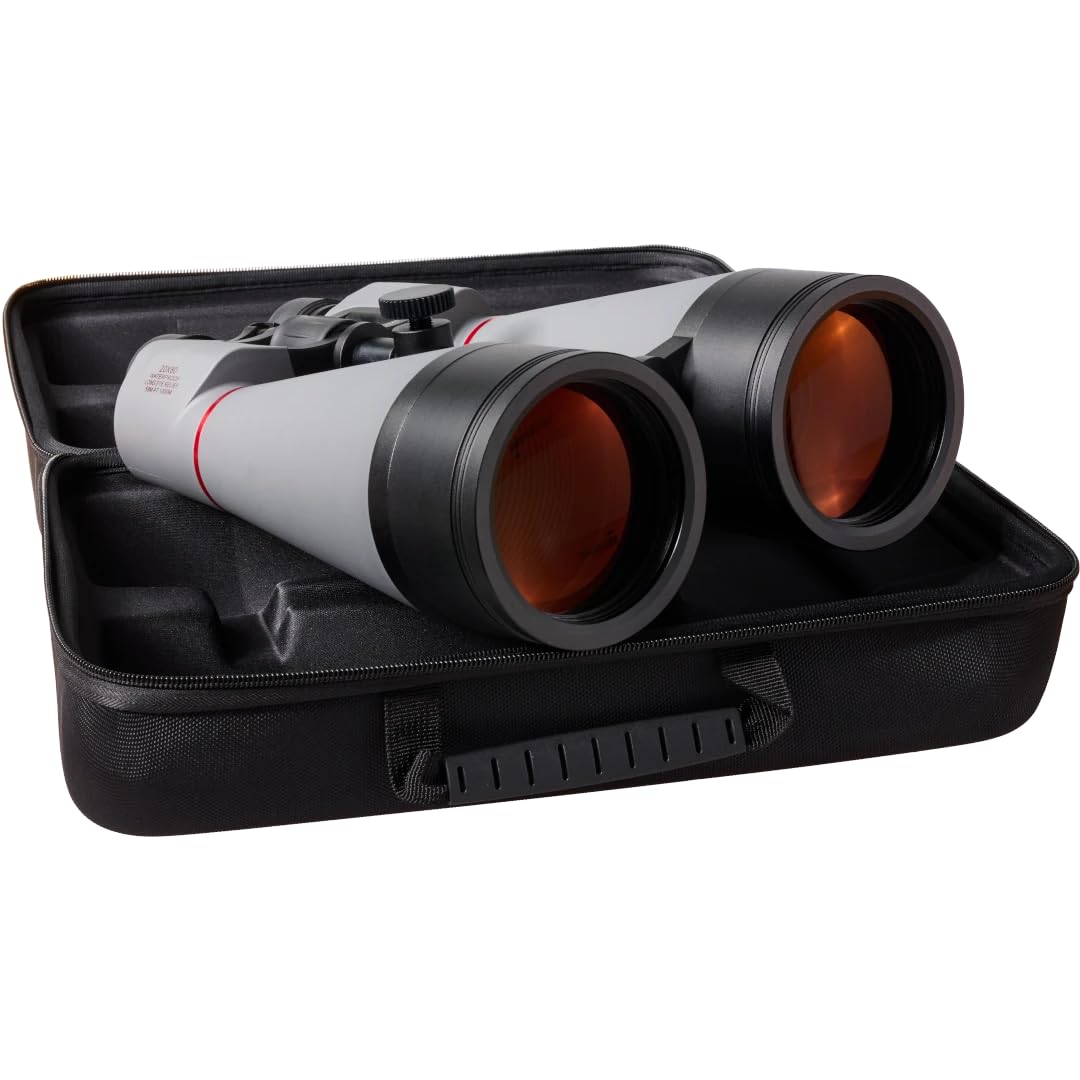
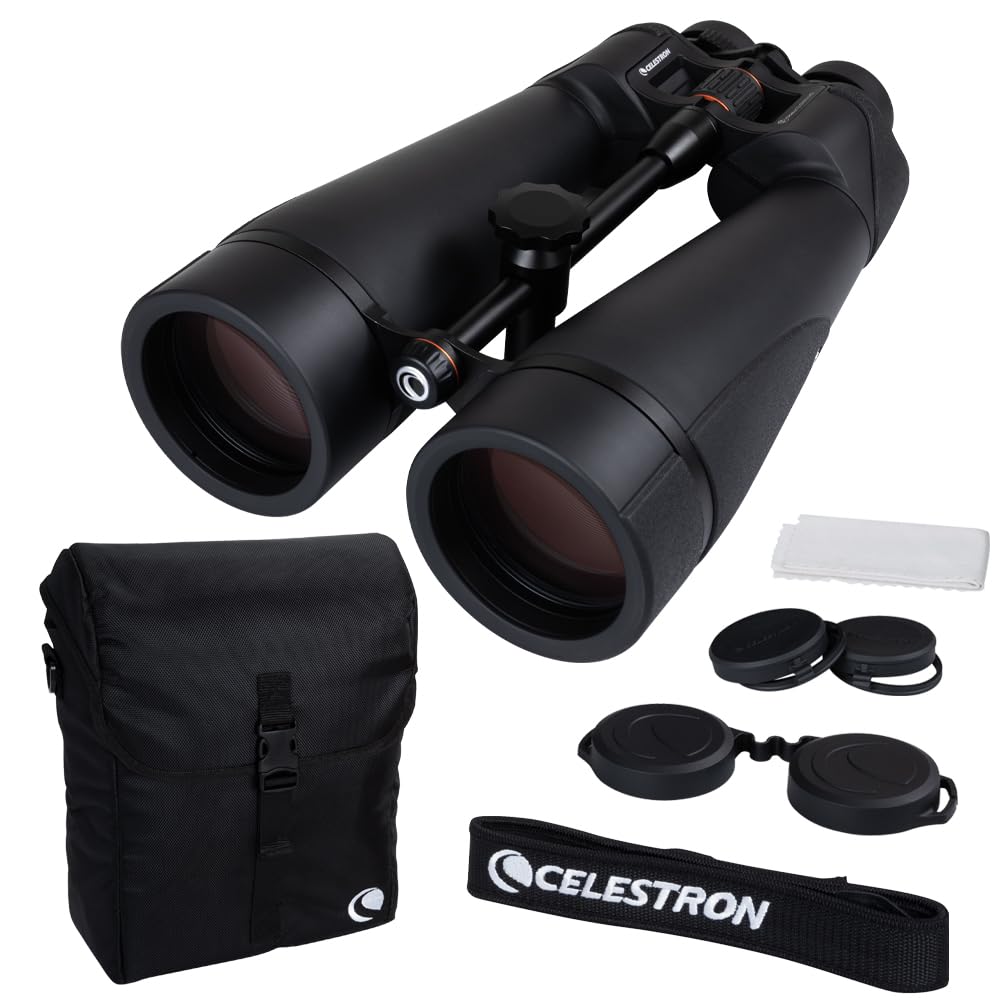


Who Should Buy Which 20x80 Binoculars?
Start with the place you will view from most often. A fixed spot with a tripod favors this size, while walking, scanning and quick handheld use usually do not.
Stargazers Viewing From a Porch, Yard or Dark Site
You want star fields, the Moon, bright clusters and faint objects to show more structure than a smaller glass can give. Prioritize coatings, prism glass and a smooth tripod mount, because you will aim upward for long stretches. A reclined chair and a tall tripod make that angle comfortable. Choose individual focus if you mostly view the sky, since focus changes little once set for your eyes.
Watchers Following Distant Wildlife and Landscapes
You watch deer across a field, raptors over a ridge, or landmarks far across a valley, often from one overlook. Prioritize center focus, good edge clarity and enough eye relief to keep the full view while you follow slow movement. This size is poor for close woodland birds that move fast, and if that is your main interest, see our guide to the best binoculars for birdwatching for smaller options.
Coastal and Harbor Watchers With a Steady Viewpoint
You scan water, shoreline and shipping lanes from a deck, pier or hillside where distance stays large and light changes through the day. Prioritize sealing against damp air, a stable mount and coatings that hold contrast when glare bounces off water. A pair kept at one viewpoint suits you, because you rarely carry it far. Keep a solid case there so salt air stays off the lenses.
Key Features to Compare
Compare optics first, then comfort and support. When you compare the best 20x80 binoculars side by side, small differences in prism glass, eye relief and mounting matter more than a long list of minor extras.
Exit Pupil and Brightness at Dusk
Divide the front lens size by the magnification and you get the exit pupil, which is 4 mm on a 20x80 model. That beam of light reaches your eye, so a 4 mm pupil gives a fairly bright view at dusk and under a dark sky, though less than the roughly 5 mm pupil of a 10x50 glass. For dawn, dusk and night use, treat this number as a core check.
Prism Glass and Lens Coatings
Most 20x80 binoculars use a Porro prism layout, which gives the wide body and a strong sense of depth. Prisms made from high index barium crown glass, often marked BaK4, pass light more cleanly than standard borosilicate prism glass, often marked BK7, and keep the edges of the view bright. Coatings matter just as much. Fully multi coated optics cut reflections and lift contrast on faint stars and shaded slopes.
Field of View and Limits at Close Range
A typical 20x80 view covers about 3 to 3.2 degrees, which feels like a narrow window on the world. That narrow view makes finding a target slower, so many owners first spot the area with the naked eye, then move to the big pair. Close focus is also long, often about 60 feet or more, so feeder birds and nearby detail are outside its range. Choose this size only when subjects stay far away.
Eye Relief, Eyecups and Focus Style
Eye relief is the distance your eye can sit from the eyepiece and still see the whole view, and about 15 to 18 mm suits many glasses wearers. Eyecups that twist or fold set that distance, so check them with your glasses on if you can. A center focus wheel suits changing land distances, while individual eyepiece focus suits astronomy and set distance viewing on water. Individual focus takes longer at first, but holds its setting well.
Weight, Balance and Tripod Mounting
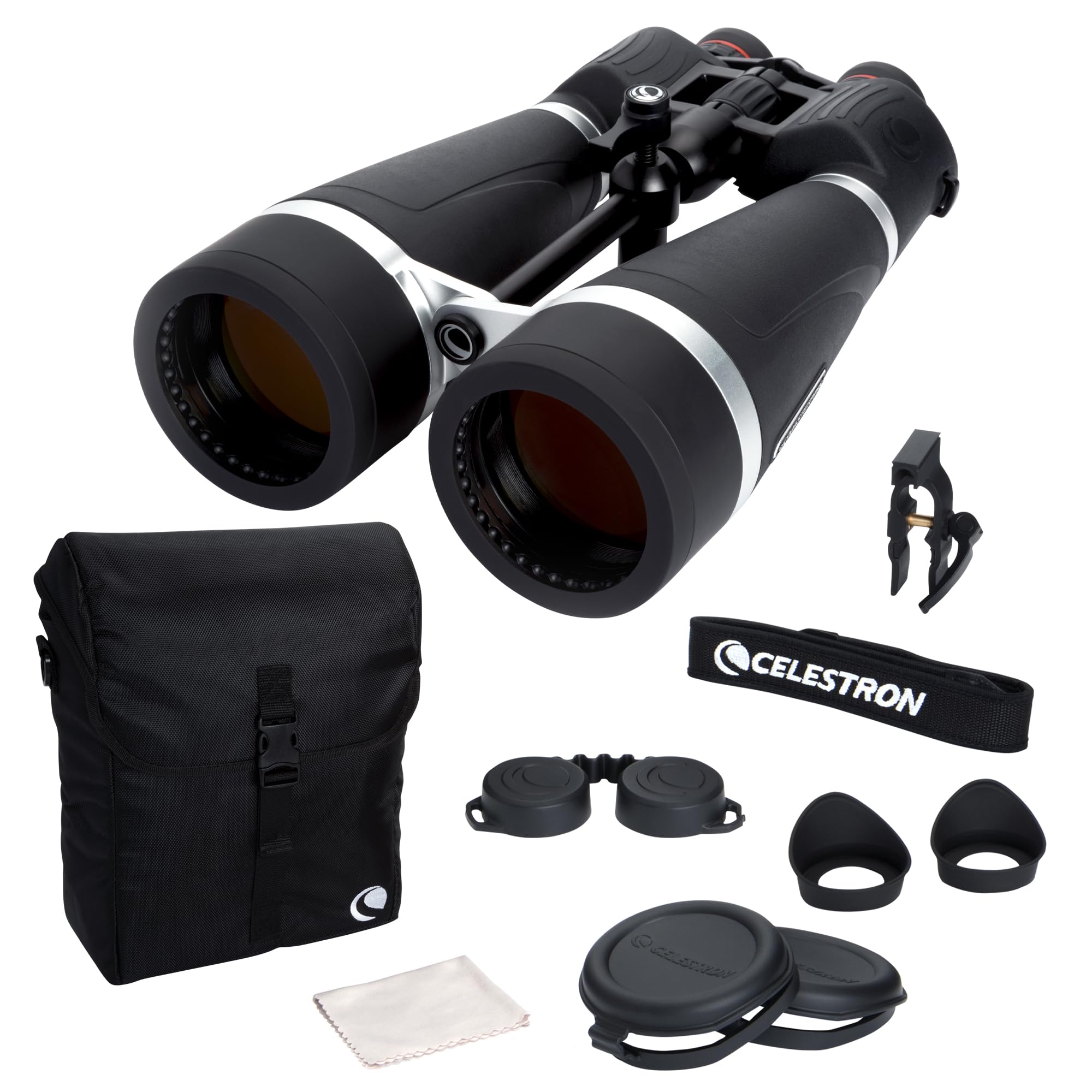
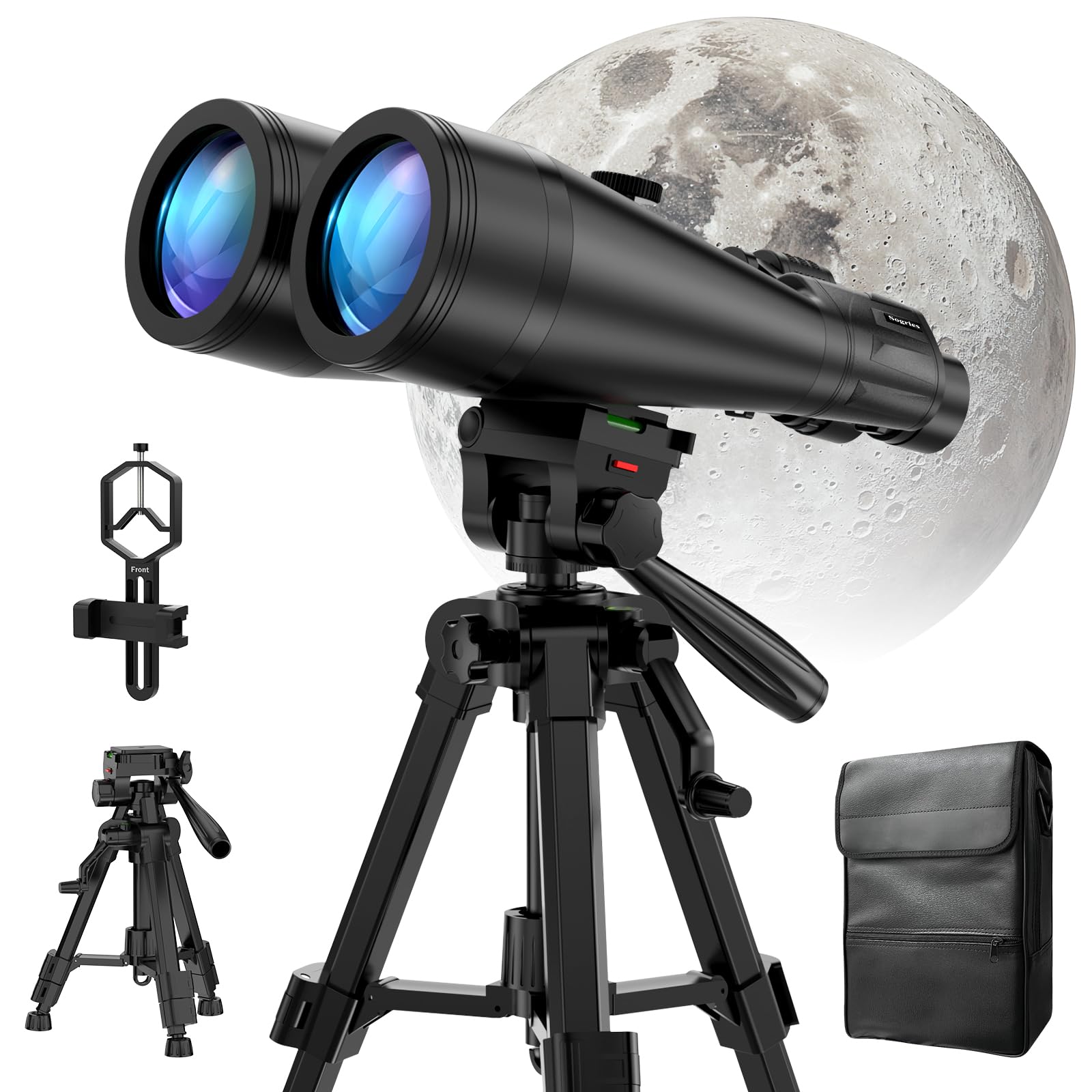
Most pairs weigh about 4 to 7 pounds, and that weight makes hand shake obvious at 20 power within seconds. Look for a built in tripod adapter or a center bar that takes one, plus a mount point that balances the body without creeping. A fluid head helps you track slow targets. For a mount matched to this size, see our guide to the best tripod for celestron skymaster 20x80 binoculars before you buy.
Sealing, Build Quality and Alignment of the Two Barrels
Good sealing keeps damp air and light spray out, and nitrogen filling helps stop internal fog when you move from a warm room to cool night air. Build quality shows in smooth focus motion and firm hinges. Alignment matters most of all, because the two barrels must point at the same spot or your eyes will strain to merge the images. If a pair gives you double vision, choose a different unit.
How to Set Up 20x80 Binoculars on a Tripod and Align the View
Attach the adapter first, lock it onto the tripod plate, and check for wobble before you raise it. Extend the legs on level ground and set the height so the eyepieces meet your eyes without stooping. A setup that flexes will blur detail even when the optics are good.
Next, set the distance between the eyepieces so the two circles merge into one round view. Focus the main wheel on a distant object, then use the diopter ring, often on the right eyepiece, to sharpen that object for your other eye. Note your diopter setting, since returning to it speeds up your next session.
For context on how models in this class are judged, see our guide to the best rated binoculars. Ratings alone cannot tell you if the weight and eye relief fit your eyes, so treat them as a starting point.
Common Mistakes to Avoid
Most regret with this size comes from ignoring support, fit or viewing distance.
- Planning to view by hand for long sessions leaves you with a shaking image and tired arms.
- Choosing on magnification alone ignores coatings and prism glass, so the view looks dim and flat.
- Skipping eye relief checks means glasses wearers lose the outer part of the view.
- Buying without a tripod budget forces a large binocular onto a weak mount that drifts.
- Using this size for close subjects frustrates you, because nearby targets fall inside its minimum focus distance.
Care and Maintenance for 20x80 Binoculars
Keep lens caps on when you are not viewing, and clean glass only when marks affect the view. Blow loose grit off first, then use a clean lens cloth with gentle strokes, never your shirt, because trapped grit can scratch coatings. Let seals dry before you close the case.
Store the pair in a dry, padded bag, away from heat and damp basements. Check the hinge, focus wheel and adapter threads every few months for looseness or grit. If the two images stop merging after a knock, stop using the pair and seek service, since realignment needs proper tools.
FAQ
Can you hold 20x80 binoculars by hand without a tripod?
You can hold them for a brief look, but a tripod is the practical choice for any session longer than a minute or two. Bracing your elbows on a wall or rail helps for a quick check of the Moon or a distant ship. For seated viewing, a monopod is a lighter option that still removes most shake.
What do the numbers 20 by 80 mean on binoculars?
The numbers mean the binocular magnifies the view 20 times and each front lens is 80 mm across. A larger second number gathers more light, but it also adds size and weight, so an 80 mm glass is far less portable than a 42 mm one. As a quick comparison, an object 200 yards away appears as if it were about 10 yards away through a 20 power view.
How much should you spend on your first pair of 20x80 binoculars?
Expect to spend about $100 to $300 for a sound first pair, plus a separate amount for a tripod and adapter if you do not own them. Very low prices often show up as weak coatings or poor alignment. Keep part of the budget for a taller tripod, since short photo tripods place the eyepieces too low for sky viewing.
Are 20x80 binoculars good for low light viewing?
Yes, 20x80 binoculars are a strong low light choice for distant subjects, thanks to their large front lenses. Their advantage shows most when the target stays still, such as deer at a field edge at dusk. In deep shade, though, the narrow view can make a target hard to locate, so spot it first with your eyes or a smaller glass.
Which specs matter most for first time buyers of 20x80 binoculars?
Alignment, prism glass and a solid tripod mount matter most for first time buyers of this size. Add a strap wide enough for the weight, because a thin strap digs into your neck on even a short carry to the yard. Also check the return policy before you order, since eye fit and image merging are personal and hard to judge from a spec sheet alone.
Final Thoughts
Choose by your viewpoint first, then by exit pupil, prism glass and coatings, and finally by eye relief and focus style. Budget for the mount from the start and keep the lenses clean and dry. Use the product table above to compare weight, price and those core specs.
When those checks line up, the best 20x80 binoculars give you distant detail and night views that a smaller glass simply cannot match. Pick the pair built for the job you repeat most, and it will earn its place beside your tripod.