Best Ceiling Mount Surround Sound Speakers 2026: Guide
Disclosure: We may earn a commission when you buy through links on this page, at no extra cost to you. As an Amazon Associate I earn from qualifying purchases. Learn more

Wired or wireless, aimable or fixed: how to pick the best ceiling mount surround sound speakers for your room and receiver.
Ceiling speakers promise surround sound without boxes on stands or cables across the floor, but the range of types makes choosing harder than it looks. Passive and powered designs, shallow and deep housings, and models built for movies or damp rooms all behave differently. This guide compares the types so you can match the best ceiling mount surround sound speakers to your room, your receiver, and your wiring plan.
Your ceiling depth, seating position, and receiver channels will rule out half the field before sound quality even enters the decision. The product table above lists current in-ceiling options, and the sections below explain how to read them.


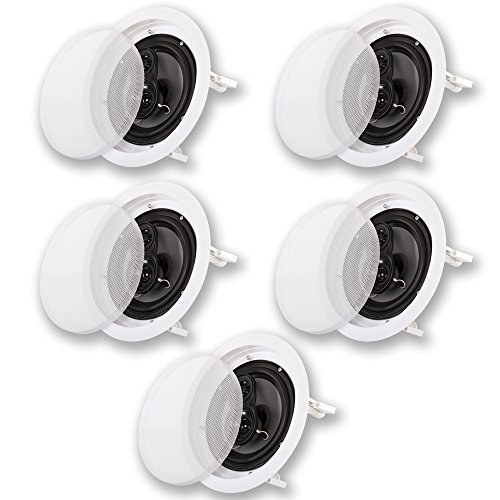

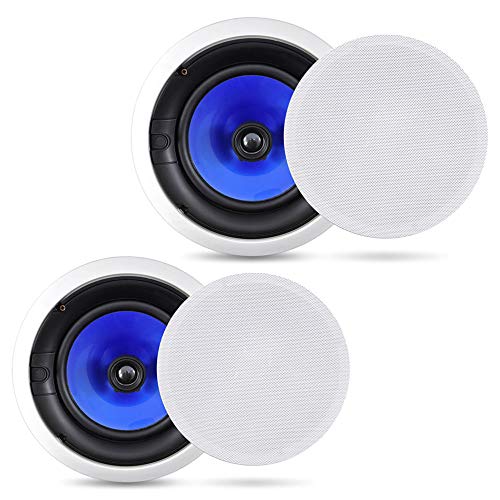


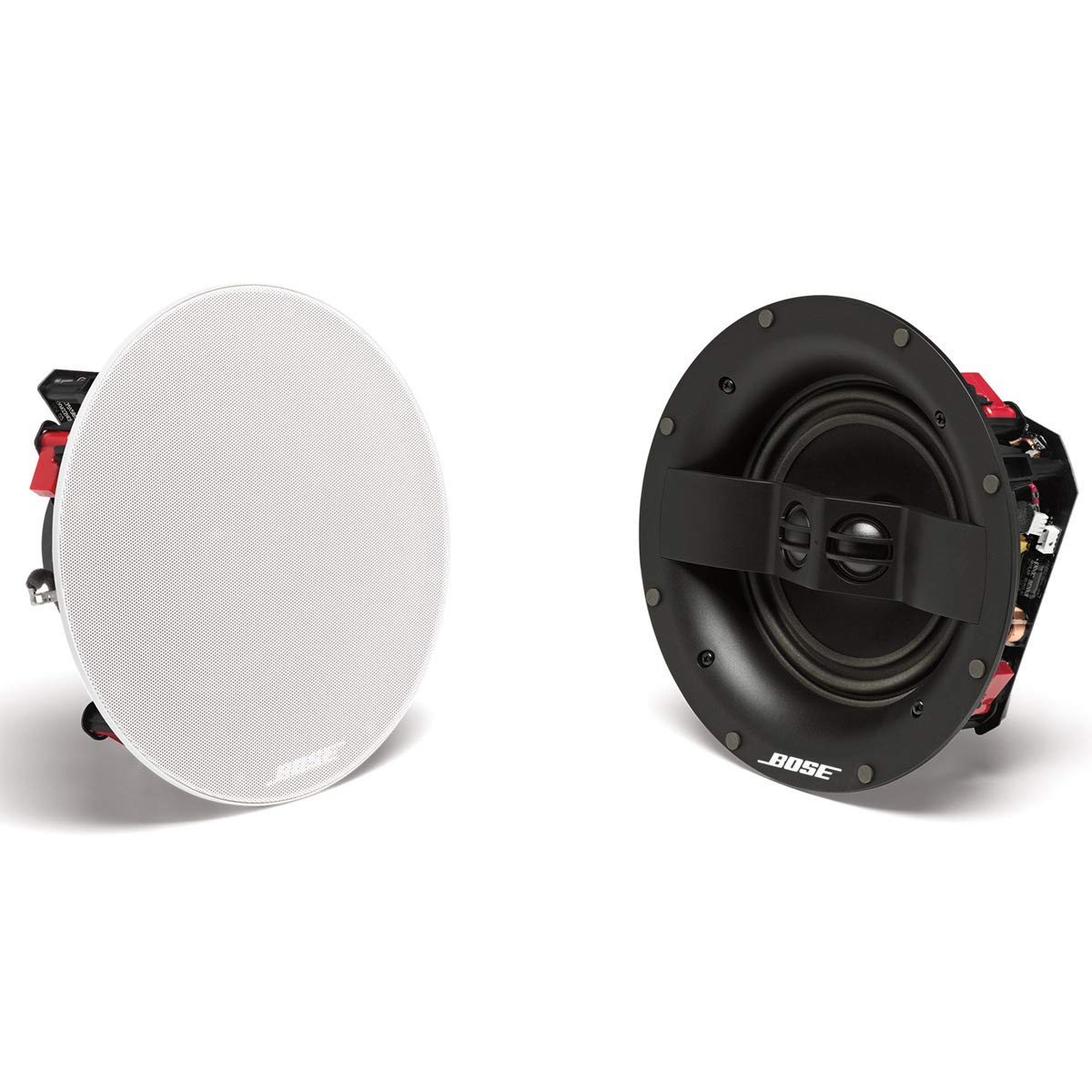

Types of Ceiling Mount Surround Sound Speakers
Most ceiling speakers share a round grille and a driver behind it, yet the types below differ in how they get their signal, how they aim sound, and where they survive. For a wider shortlist of flush fitting options, see our guide to the best ceiling speakers for surround sound after you settle on a type.
Passive In-Ceiling Speakers
Passive speakers take power from your receiver over speaker cable, which keeps the wiring simple and the electronics in one cabinet. They are the standard choice for a home theater, because a receiver can drive several of them and adjust each channel for distance and level. Check impedance and sensitivity so the receiver can drive them at movie volume without strain. Sold as pairs, singles, or multi packs, they suit rear surround and height positions alike.
Angled and Aimable Models
Angled baffles and pivoting tweeters point effects toward the listening seats instead of straight at the floor. That aim improves the sense of motion from the rear and overhead, and it makes dialogue and effects easier to follow from a sofa. They matter most in rooms with high ceilings or seating placed away from the room center. Placement mistakes are more obvious with this type, so plan seating and speaker positions together.
Powered and Wireless Models
Powered ceiling models carry a built in amplifier and receive audio over WiFi or Bluetooth instead of long speaker cable runs. They suit rooms where opening walls is impractical and they simplify adding a rear pair to an existing setup. Each unit still needs mains power at the ceiling, which can mean an electrician visit that erases the wiring savings. Some wireless links also delay rear audio enough to blur dialogue timing, so look for a low latency mode.
Moisture Rated Models
Moisture rated models use sealed cones, rust resistant grilles, and tolerant parts for covered patios, pool rooms, and bathrooms. An IP rating or an explicit humidity rating tells you how much moisture the unit can face. They trade some fine detail for durability, which is the right bargain where steam or splashes are routine. Mount them under cover and keep connections protected inside rated junction boxes.
Wired or Wireless: Which Should You Choose?
On wiring, wireless models win where cable runs are blocked, though each speaker still needs power. On timing, wired setups win clearly, because a direct cable adds no delay and the receiver handles delay correction across all channels. On cost, wireless pairs often cost more per speaker but can save on installation in finished rooms. On flexibility, wireless systems grow one pair at a time, while wired systems reward a full plan up front.
Choose wireless for a finished room and casual movie nights. Choose wired for a dedicated media room where timing and channel accuracy come first. For placement heights and angles that suit either type, see our guide to the best height to mount surround sound speakers in a typical room.
How to Choose Ceiling Speakers for Surround Sound
Channels and Placement
Surround channels belong to the sides or slightly behind your main seats, while ceiling channels in an overhead layout sit above or just ahead of the seating. Match the number of ceiling speakers to what your receiver supports, since extra speakers do nothing without channels to feed them. Keep speakers away from ceiling joists, lights, and vents, and measure the cutout depth your ceiling can accept before ordering. If ceiling fitting proves impossible in part of the room, see our guide to the best wall mount surround sound speakers as an alternative for those channels.
Driver Size and Sound Quality
Driver size shapes what a ceiling speaker can do. Units around 6.5 inches balance vocal clarity and modest bass for surround duties, while 8 inch models move more air for bigger rooms. Aimable tweeters help you point detail at the seats, and tone controls on some models let you tame brightness from hard ceilings. A subwoofer elsewhere in the system should handle deep bass, which frees the ceiling units to stay clear.
Matching Front and Ceiling Speakers
Surround effects sound natural when the ceiling speakers share a similar tone with the front speakers. Mixing very different brands or driver types can make sounds change character as they move across the room. If your front speakers are in-wall or in-ceiling, buying from the same family usually gives the smoothest blend. For complete systems beyond the ceiling pair, see our guide to the best surround sound speakers.
Isolation and Room Acoustics
Ceiling speakers do not offer headphone style noise cancelling, so ignore any claim of that kind. Back boxes and enclosed designs reduce sound leaking into the floor above and tighten the sound in your room. Soft furnishings and rugs reduce reflections that smear surround effects. If a household member sleeps above the media room, isolation features and a modest listening level protect everyone far better than raw power.
How Much Should You Spend?
Basic in-ceiling pairs cost about $60 to $150 and suit a modest room or rear channels. Mid range pairs, about $150 to $300, bring better tweeters and stronger frames. Premium speakers above that add clarity and build quality for a dedicated cinema. Cable, a receiver with enough channels, and installation can cost as much as the speakers themselves.
Setup and Care Tips
Plan cable paths and joist positions before cutting any ceiling holes, and use a stud finder plus a small inspection hole to confirm the cavity is clear. Run cable rated for in wall use and leave a little slack at each end for service. Dust grilles with a soft brush, and never spray cleaner directly onto a driver. If you remove a grille for painting, store it flat so the thin metal does not bend.
Frequently Asked Questions
How many ceiling speakers do I need for surround sound?
That depends on your receiver and the layout. A basic overhead layout uses two ceiling speakers, and larger layouts use four. Match the count to the channels your receiver supports.
Can I use ceiling speakers as my rear surround channels?
Yes, in rooms where wall mounting is awkward. Aim for a position slightly behind or beside the seats, and choose aimable models if the seats sit far from the ceiling speakers.
Do I need a special amplifier?
Passive speakers need a receiver or amplifier with enough channels and a matching impedance range. Powered models include their own amplifier, so they need only mains power and a source signal.
Are ceiling speakers good for bathrooms and patios?
They can be, if the model carries a moisture or humidity rating and sits under cover. Direct rain and constant standing water shorten the life of almost any speaker.
Wired or wireless: which sounds better?
Wired usually sounds better and stays in sync, because the signal path is simple and delay free. Wireless can sound very good for music and casual viewing. For a main home theater, wire the ceiling channels if you can. For flush fitting wired options across uses, see our guide to the best ceiling mount speakers.
The Bottom Line
Decide wired or wireless first, then match driver size and aim to your seats, and confirm your ceiling depth and receiver can support the plan. Compare your shortlist in the product table above, and the best ceiling mount surround sound speakers for your room will be the set that disappears visually while keeping effects clear, timed, and contained.