
Best Bread Box With Cutting Board: Layouts, Size and Care (2026)
Disclosure: We may earn a commission when you buy through links on this page, at no extra cost to you. As an Amazon Associate I earn from qualifying purchases. Learn more

Best bread box with cutting board guide to board layouts, sizes, lids and materials for tidy slicing and storage.
Picture a Saturday morning in a busy family kitchen. A loaf sits half wrapped on the counter, crumbs cover the board by the sink, and someone is hunting for the bread knife. A best bread box with cutting board solves that small daily mess by giving the loaf a home and the slicing a fixed spot beside it.
This guide helps you choose by the counter space you can spare, how many people you slice for each day, and the budget you want to stay within. Use the product table to scan the main layouts, then work through the checklist before you settle on a size or a material.




Quick Answer: What a Good One Does for Your Kitchen
A good box does two jobs at once without taking over the counter. It shields the loaf from dry air, pets, and stray splashes, and it keeps a board close enough that slicing never sends you across the kitchen. The board should feel steady under the knife, with grooves that catch crumbs before they spread.
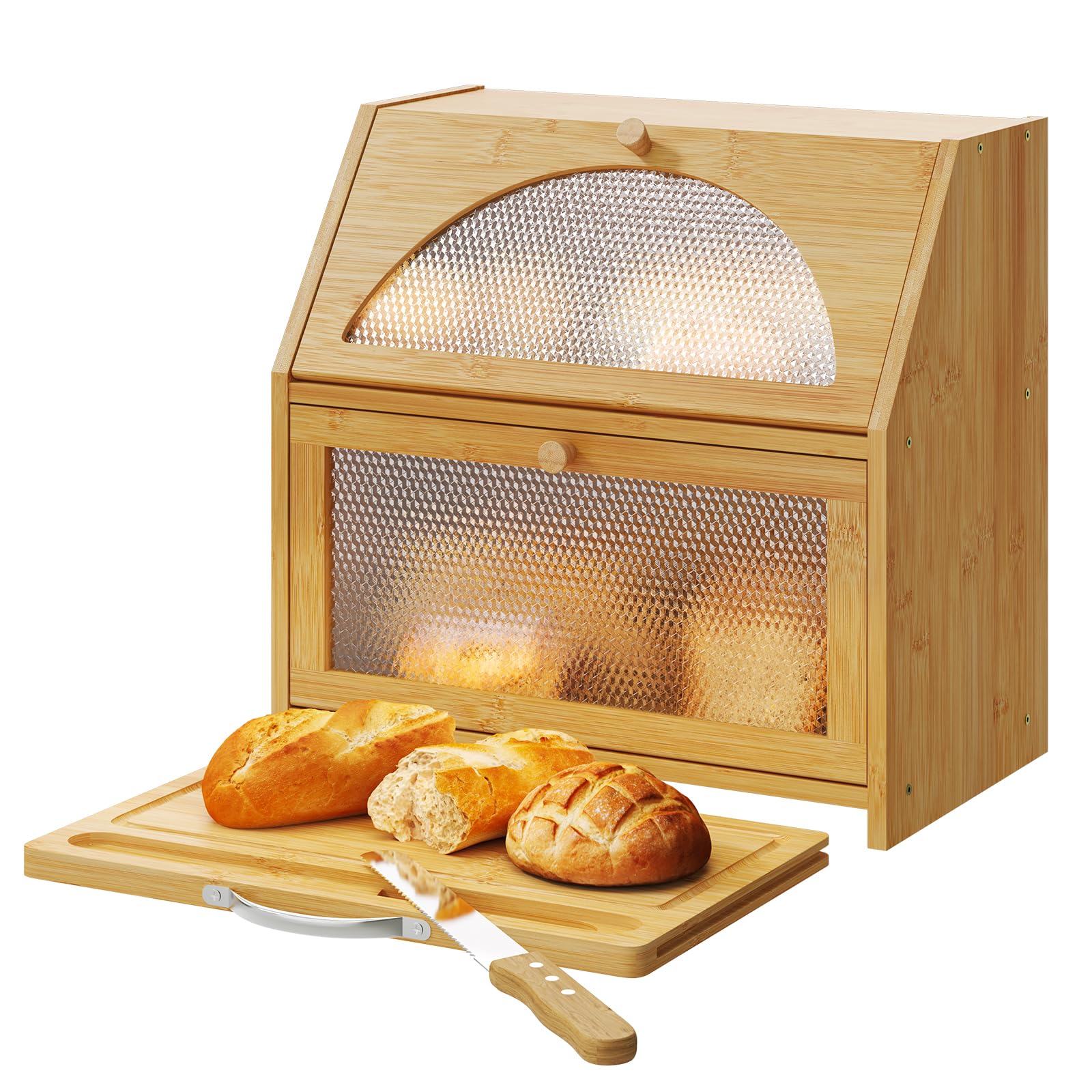
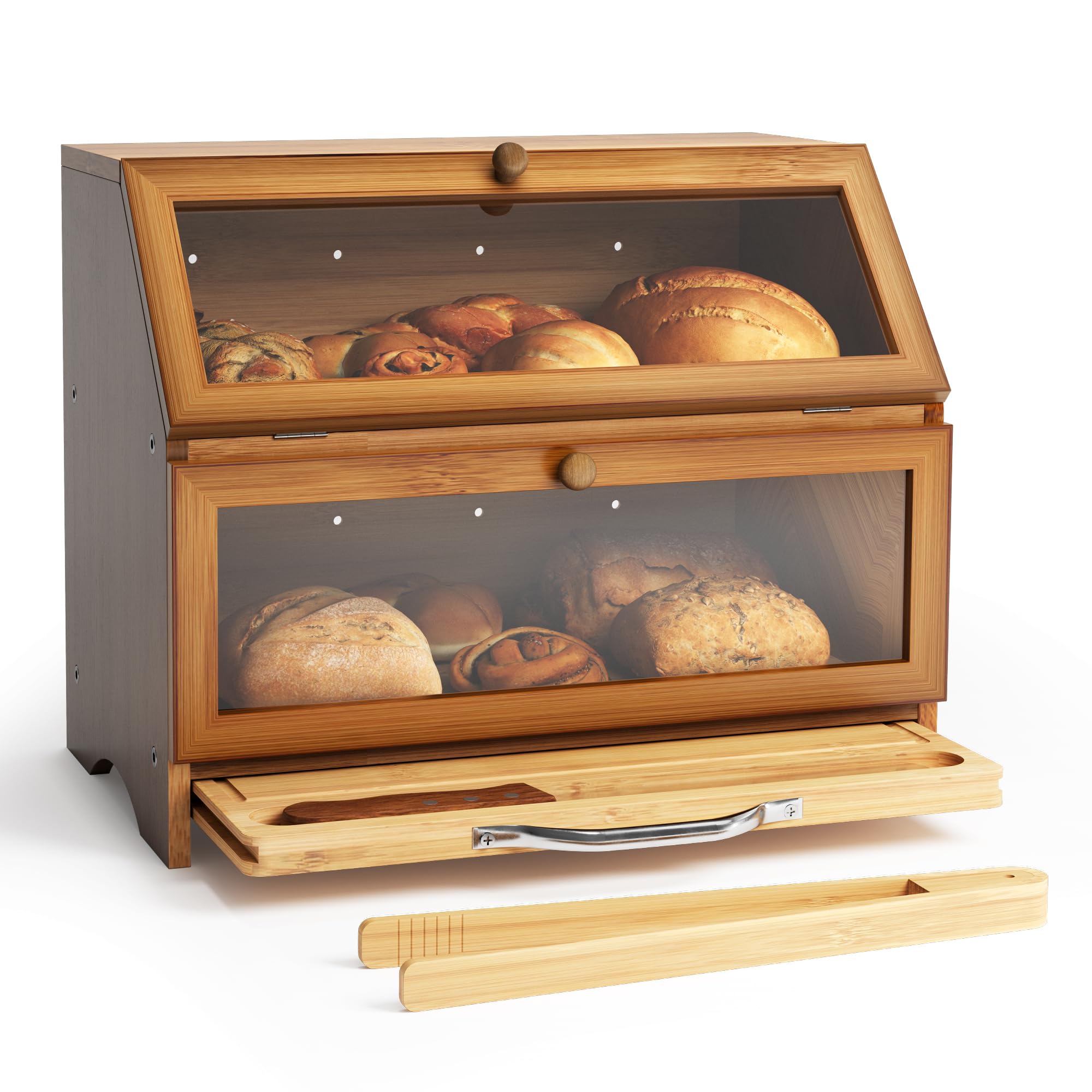
Three layouts cover most homes: a board stored beneath the box for tight counters, a board that serves as the lid for people who slice on the spot, and a board that slides out from the front for families who slice often. Measure first, because the best bread box with cutting board for your home is the one that fits your space and your loaf at the same time.
Before You Buy: A Quick Checklist for Choosing a Bread Box
The checklist below follows the order that prevents returns. Start with fit, then look at how you live with the box each day, and only then compare finishes and prices.
Size: Match It to Your Space
Measure the spot where the box will live, including the height up to any cabinet above it, and leave room for the lid to open fully. Then measure your usual loaf, since a tall round loaf needs more inside height than a flat sandwich loaf. Small boxes hold one standard loaf, while large and double width boxes hold two loaves or a loaf plus rolls. Check inside dimensions rather than outside ones.
Which Type Fits Your Routine
Wood and bamboo feel warm in most kitchens and pair well with a board you use daily. If that natural look appeals to you, compare the options in our guide to the best wooden bread box before you decide. Stainless steel and other metal boxes wipe clean fast and suit busy counters where spills happen often. Enamel and ceramic boxes add color and weight, but they can chip if a heavy pan strikes them.
Features Worth Paying For and Ones to Skip
A window is worth paying for if your household forgets what is inside a closed box, since a quick glance stops people from buying a second loaf by mistake. Pay for a board with real thickness and a groove near the edge. Skip extras you will never use, such as tiny crumb trays too small to help or novelty shapes that waste inside room.
Seal, Ventilation, and Materials Made Without BPA
Bread asks for balance. A fully airtight box traps moisture from a fresh crust, and that trapped moisture can soften the crust and invite mold on warm days. A lid that closes snugly but lets a little air move keeps the crumb soft while the crust stays pleasant. For plastic parts, choose materials described as made without BPA, and check that any liner or window panel is meant for contact with food.
Heat and Cold: Where This Product Does and Does Not Belong
A bread box is a countertop storage piece, not a cooking or freezing tool. It does not belong in an oven, a microwave, or a freezer, and heat can warp lids, damage finishes, and ruin the fit of the board. Keep it away from the stove as well, since steam and grease settle on the lid and work their way inside. A cool, dry stretch of counter away from direct sun suits bread best.
Realistic Budget Ranges
Listings in the product table run from about $40 to $69. The lower end covers simple bamboo or steel boxes with a lighter board that suits occasional slicing, while heavier materials, smoother lid action, larger capacity, and a thicker board that feels like a proper kitchen tool cost more.
Types Compared: Three Layouts to Choose From
Since the board is the whole point of this style, compare layouts by how the board stores, how it behaves under a knife, and how much counter room the act of slicing needs.
Board Stored Beneath the Box
In this layout the board sits in a slot under the storage space, and the box itself rests on top of it. The footprint stays compact because slicing gear adds no width, which helps in small kitchens. The trade off is height, since the slot and board lift the whole box and can crowd low cabinets. The board also tends to be thinner here, so it suits sandwich loaves better than crusty ones.
Board That Serves as the Lid
Here the board lifts off the top and goes straight to work, often with a groove on one side and a flat side for serving. This layout suits households that slice once a day and want the fewest parts possible. The watch out is the seal, because a board resting on top may not close as evenly as a fitted lid. Check that it sits flat with no rocking, since a gap at one corner lets dry air reach the loaf all day.
Board That Slides Out From the Front
A front sliding board works much like a drawer, and on many designs it gives you the largest and thickest board of the three layouts. That makes it the natural choice for families who slice at breakfast and again at dinner. Rails and tracks collect crumbs, so pick a design where the board lifts out fully for washing instead of stopping at a fixed point.
Do You Really Need a Bread Box With Cutting Board?
If your household slices bread most days, the pairing earns its place. The loaf stays in one spot, the board stays in the same spot, and crumbs land where you expect them. If you buy pre sliced bread and eat it within a day or two, a simpler option may be all you need, and our guide to the best bread box covers plain designs without a board.
Your baking habits point to the right capacity. Crusty round loaves need height and a board wide enough for a full slice across the middle, and readers who bake that style often start with the best bread box for sourdough. Households turning out sandwich loaves and rolls each week need width more than height, a need covered in the best bread box for homemade bread guide.
Common Mistakes to Avoid
- Buying by outside dimensions only, then finding your tallest loaf will not fit with the lid closed.
- Choosing a fully sealed box for fresh warm loaves, so trapped moisture softens the crust and speeds up mold.
- Paying for the largest capacity in a small kitchen, then losing the counter space you need for meal prep.
- Treating the board as a bonus and ignoring its thickness, so it flexes or slides when you cut a crusty loaf.
- Skipping the cost of care items such as board oil and a replacement liner, which adds up over years of use.
- Placing the box beside the stove, where heat, steam, and grease undo the storage conditions you paid for.
Cost of Ownership and Care
Ownership costs stay low, since there are no filters, parts, or power needs to budget for. The real costs are small and occasional: food safe oil for a wooden board, a replacement liner if yours wears out, and a soft brush for crumb grooves. Plan on about $10 to $20 a year at most. For the full routine step by step, read our guide on how to clean a bread box, which covers the box itself in detail.
Day to day care takes minutes. Empty crumbs from the box and the board groove each week, wipe inside surfaces with a damp cloth, and dry everything fully before the lid goes back on, since a box closed while damp invites musty smells. Wash the board with warm water and mild soap, dry it standing up so air reaches both sides, and keep it out of standing water that can split the wood.
Your Questions, Answered
Can a bread box with a cutting board hold a bakery loaf and a bag of rolls at the same time?
Often yes, but shape matters more than the stated capacity. A wide single space box lets a loaf sit beside a small bag of rolls, while a box split into two levels keeps them apart but limits loaf height on each level. Before ordering, compare the total width of your usual load with the inside width, and leave a finger of space around the loaf so you can lift it out without tearing the crust.
Should you slice bread on the board straight over the counter, or move the board first?
Move the board to a flat, stable patch of counter whenever you cut a crusty loaf. Boards stored in slots or resting as lids can shift under firm downward pressure, and a shifting board is how knives slip. Place a damp cloth under the board if it still slides on a smooth surface. That habit also keeps the box free of knife marks, since no cutting happens against its frame or lid.
Can warm bread go straight into a bread box after baking?
Let the loaf cool on a rack first, until it feels only faintly warm and no steam rises when you hold a hand above it. Warm bread sealed into any box releases moisture for hours, and that moisture settles on the crust and the box walls. Cooling also finishes the inside texture, since slices cut too early can turn gummy. Once cooled, the box is the right home for it.
Does a bread box with a cutting board suit a household that freezes most of its bread?
It can, but buy for the bread that stays out, not the bread in the freezer. Many homes keep one loaf on the counter for toast and sandwiches while extra loaves wait frozen, and a standard size box covers that pattern well. Slice before freezing any surplus, since frozen slices toast straight from the freezer and nothing goes stale waiting. The board still earns its place daily in that routine.
What should you check first if bread goes stale fast in a new bread box?
Check the lid fit before blaming the bread. Run a hand around the closed lid and feel for spots where room air moves freely, and look for a board used as a lid that rocks on an uneven loaf inside. Next, check placement, since a box over a dishwasher vents warm dry air across the loaf all day. Moving the box and fixing a loose lid solves most early staleness complaints.
Final Thoughts
The right choice comes down to fit, routine, and honest capacity. Measure your space and your loaf, pick the board layout that matches how often you slice, and spend where thickness and lid fit reward you daily. Judged that way, the best bread box with cutting board is simply the one your household uses without thinking about it. Look back at the product table above and compare your shortlist against the checklist.


